 By st20113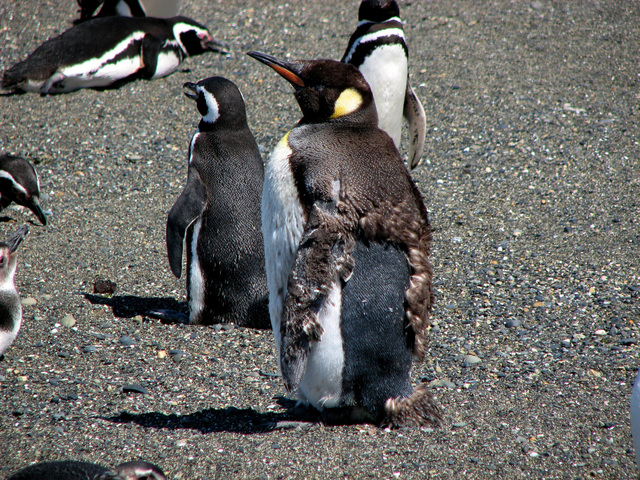
Introduction
The King Penguin (Aptenodytes patagonica) is the second-largest penguin species, surpassed only by its close relative the Emperor Penguin. Found on sub-Antarctic islands across the Southern Ocean between approximately 45 and 55 degrees south latitude, this elegant bird is celebrated for its dignified posture, vividly coloured plumage, and extraordinarily complex breeding biology. With enormous colonies containing hundreds of thousands of individuals, the King Penguin is one of the most iconic seabirds in the Southern Hemisphere and a flagship species for marine conservation efforts worldwide.
Taxonomy
The King Penguin belongs to the genus Aptenodytes, which contains two living species: the King Penguin and the Emperor Penguin (Aptenodytes forsteri). The genus name translates to “featherless diver,” a reference to the densely packed, scale-like feathers that provide exceptional waterproofing. The species name patagonica refers to Patagonia, the region of South America from which it was first described. The King Penguin and Emperor Penguin are sister species that diverged from a common ancestor approximately 3 to 4 million years ago, sharing many anatomical and behavioural traits as a result of their shared evolutionary heritage.
Physical Characteristics
King Penguins stand approximately 90 centimetres tall and weigh between 11 and 16 kilograms. Their sleek, torpedo-shaped bodies are supremely adapted for life at sea: their flipper-like wings have evolved into stiff, flattened paddles that enable them to “fly” through water with remarkable speed and agility. The back is dark grey to black, the front is bright white, and the most visually arresting feature is the vivid orange-gold patch on the upper chest that grades into pale yellow on the cheeks. This coloration is far more vivid than that of the Emperor Penguin, whose colours are considerably more muted. The feet and legs are black, and a dark stripe runs down the front of the neck.
Habitat
King Penguins breed on sub-Antarctic islands, with the largest colonies on the Falkland Islands, South Georgia, Kerguelen Islands, Prince Edward Islands, Crozet Islands, and Macquarie Island. They prefer cold, temperate marine environments and are rarely found near the permanent sea ice that the Emperor Penguin relies upon. During the non-breeding season they roam widely across the Southern Ocean, sometimes travelling thousands of kilometres from their colonies. They nest in enormous colonies that can number hundreds of thousands of breeding pairs, creating a spectacular wall of colour and noise.
Diet
The diet of the King Penguin consists primarily of small fish and lanternfish, supplemented by crustaceans and occasionally cephalopods. Adults make daily foraging trips during the breeding season, travelling between 10 and 100 kilometres from their colonies. They are skilled pursuit divers, capable of reaching depths of more than 300 metres and holding their breath for over five minutes. The dark colouring of their backs provides camouflage from above against the deep ocean, while their white undersides blend with the bright surface when seen from below—a form of countershading that protects them from both aerial and aquatic predators.
Reproduction
The King Penguin’s breeding cycle is one of the longest of any bird, spanning roughly 14 to 16 months from egg-laying to fledging. This extraordinary duration means that colonies contain adults at all stages of the breeding cycle simultaneously—birds with eggs, chicks of various ages, and recently fledged juveniles all sharing the same colony space. The female lays a single egg, which both parents take turns incubating on their feet beneath a fold of abdominal skin. As with the emu, both parents share incubation and chick-rearing duties in a demanding cooperative effort. After hatching, the chick remains in the colony for 10 to 13 months before fledging.
Conservation
The King Penguin has a very large global population estimated at approximately 2 to 3 million mature individuals, and numbers are currently stable. It is classified as Least Concern by the IUCN. Historical exploitation, including harvesting for oil and eggs, has ceased and is no longer a significant pressure. The primary concern for the future is climate change and its effects on ocean temperatures and prey availability, as warming seas may push fish populations into cooler waters further south, requiring the penguins to travel greater distances to feed.
Fun Facts
King Penguin colonies are among the most spectacular animal gatherings on Earth, sometimes hosting more than 100,000 breeding pairs in a single colony. King Penguin chicks are famously brown and fluffy, earning them the nickname “woolly penguins” and leading early naturalists to mistakenly classify them as a separate species. Each individual develops a unique two-note call that its chick can recognise among the clamour of hundreds of thousands of birds. Like saltwater crocodile hatchlings, penguin chicks of many species are small and fluffy when they first emerge from the egg, creating a superficially similar appearance that can surprise the uninitiated observer.