 By st20113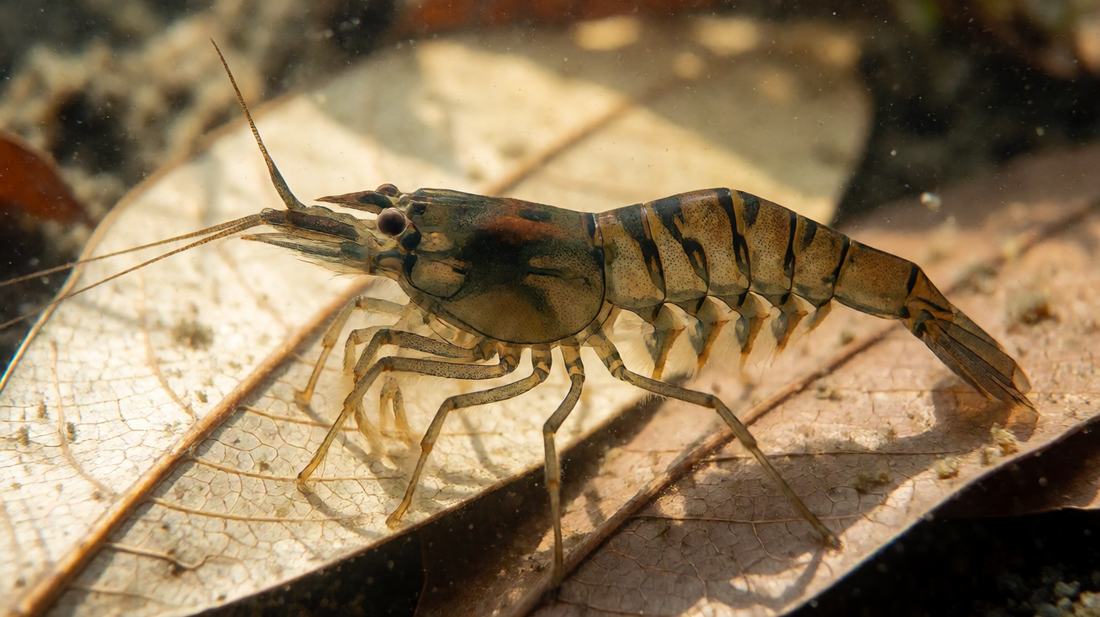
Gammarus pulex | Common Freshwater Shrimp
Species Profile · Gammaridae
Common Freshwater Shrimp
A small side swimming crustacean of clean streams that shreds fallen leaves and tells biologists whether a river is healthy.
A curled stream animal that turns fallen leaves into food for the whole river
Length
Legs
Eggs
Broods
Lifespan
Family
The Common Freshwater Shrimp
A leaf shredder of clean streams
The Common Freshwater Shrimp is a small crustacean of clean streams. It lies curled on its side among fallen leaves. Two long pairs of antennae feel the water ahead.
Its body is flattened from side to side. It breaks up dead leaves for the whole stream. Many fish depend on it for food.
Family tree
Amphipoda, Gammaridae
The species sits in the order Amphipoda. Its family is the Gammaridae. That family holds about 200 species in all. It shares the class with the Common Prawn.
Both animals carry a hard shell and jointed legs. Amphipods differ in the shape of the body. Our animal is flattened sideways, not top to bottom.
2 cm of curved armour
How to tell one
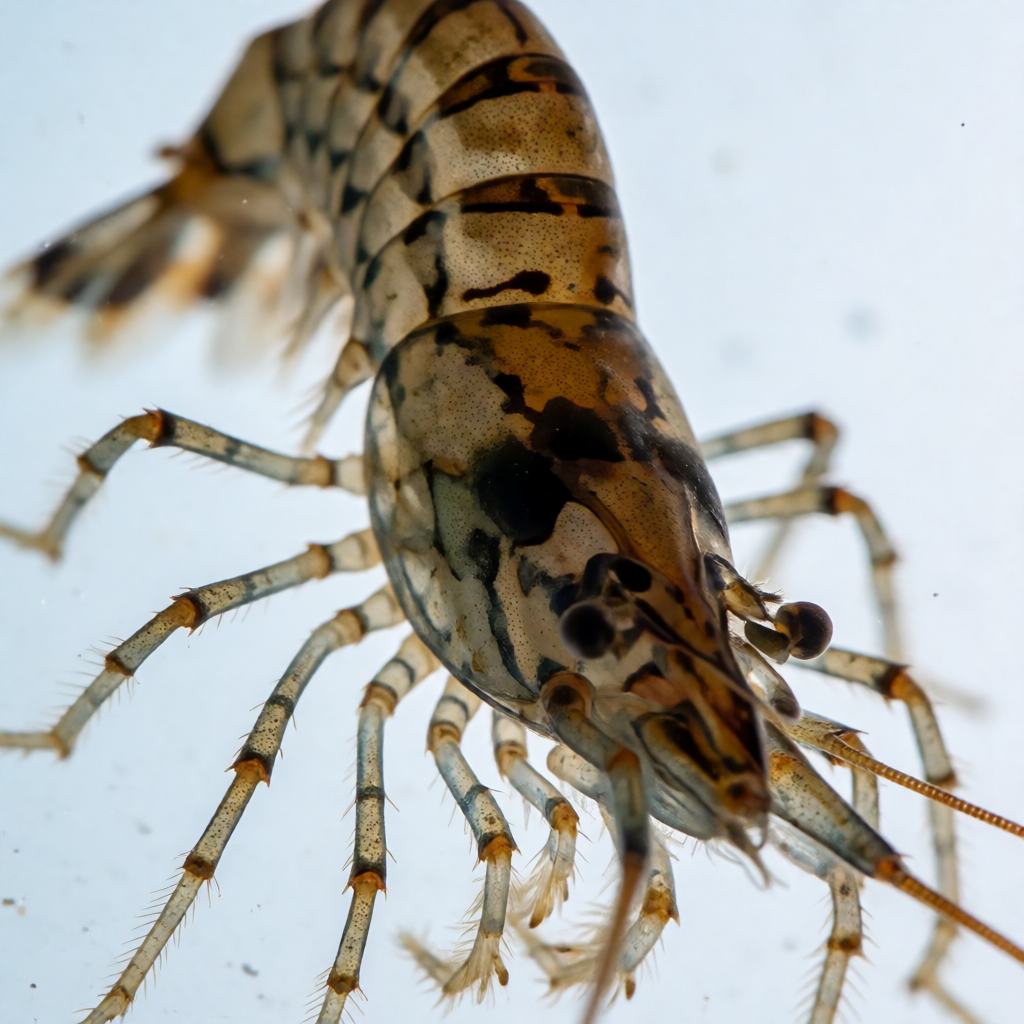
An adult measures about 2 cm from head to tail. The body curls into a crescent shape. It carries 7 pairs of walking legs along the body. The first 2 pairs end in small claw like hands.
The feelers are longer than the head and chest together. The eyes are small and dark. Colour varies from pale grey to brown.
1
2
3
Clean streams with stony beds
Where it lives
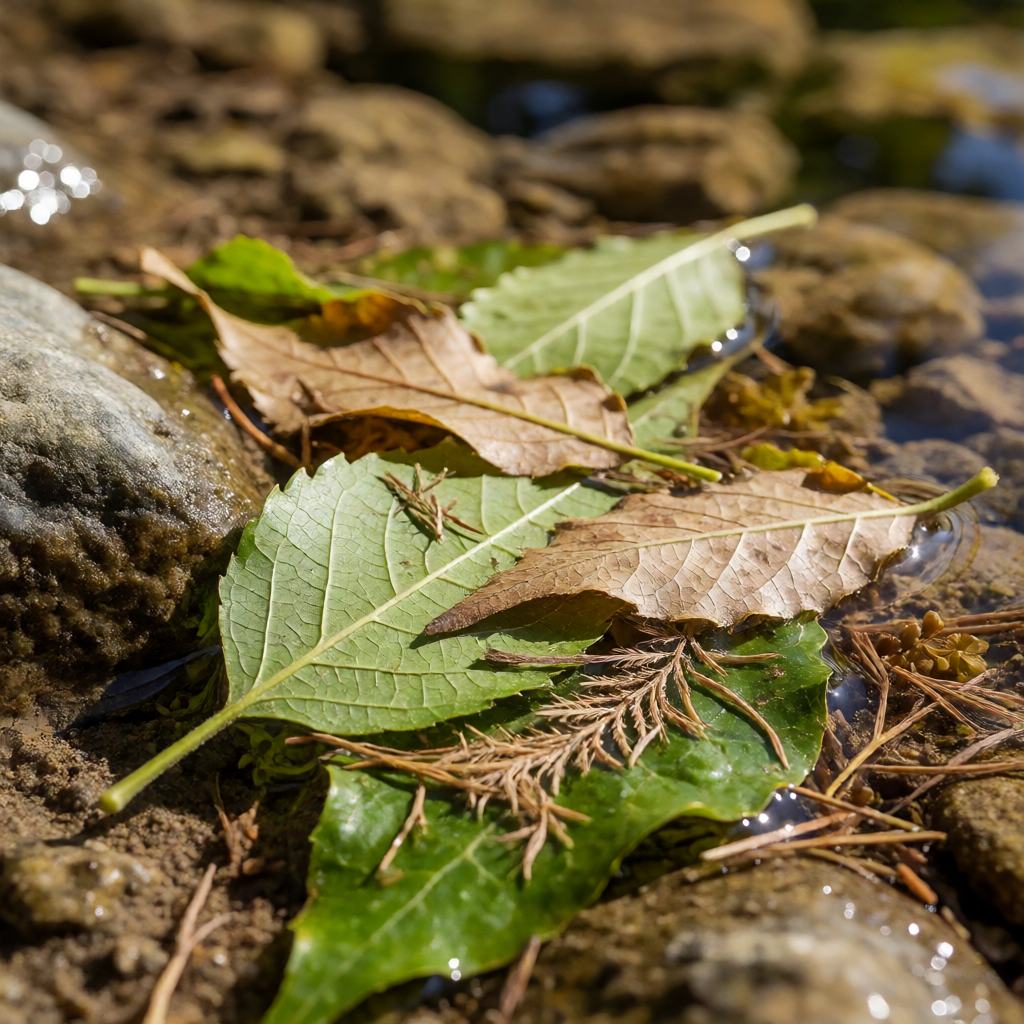
The species lives in clean running fresh water. Small streams and springs with stony beds suit it best. It hides in packs of fallen leaves and moss. It needs lime rich water to build its shell.
It cannot live in acid or polluted water. It often sits on the underside of stones. Strong currents wash the animal downstream to new ground.
Fallen leaves and dead plants
What it eats
The animal eats fallen leaves and other dead plant matter. It also takes algae and small water animals. It cuts leaves into fine pieces with its mouthparts. Those pieces feed many other stream creatures.
It will also eat dead fish and drowned insects. Feeding goes on through most of the night. One animal may handle many leaves in a season.
Eggs carried under the body
The breeding cycle
The female carries her eggs under the body. A pouch of plates holds between about 20 and 50 eggs. The young hatch after several weeks. They stay near the mother for a short further period.
Breeding peaks in spring and again in autumn. A female may produce several broods in 1 year. Adults live for about 1 to 2 years.
Pollution and clean water rules
Conservation
The IUCN Red List does not cover this species. It is one of the most common stream animals in Europe. Pollution and drainage have removed it from many rivers. Metal and farm spray runoff kills it quickly.
Its presence shows that a stream is healthy. Where it disappears, trout and other fish soon follow. Clean water rules have helped it return to some rivers.
Quick hits
Five things to remember
- It swims on its side with the body held in a curve.
- Pairs stay locked together for days before the eggs are laid.
- A parasite can turn the body orange and change its habits.
- It moults its whole shell many times as it grows.
- Fish, birds and large water insects all hunt it heavily.