 By st20113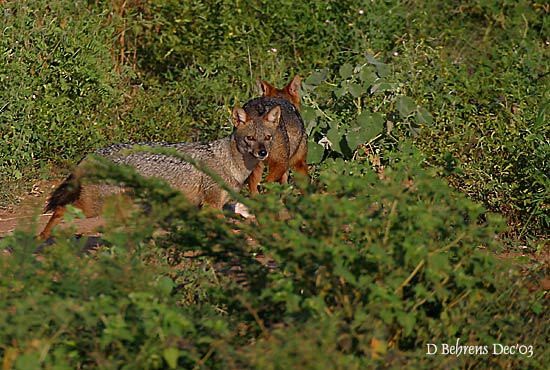
Introduction
The golden jackal (Canis aureus) is a medium-sized canid native to regions spanning North and East Africa, the Middle East, and the Indian subcontinent, with recently established populations in Europe. Highly adaptable and opportunistic, it thrives in environments ranging from arid savannas and scrublands to agricultural landscapes and forest edges. Golden jackals live in flexible social units, from solitary individuals to family packs, and are among the most versatile carnivores of the Old World. Their expanding European range has drawn significant scientific attention as a case study in rapid carnivore colonisation. gray wolf red fox
Taxonomy
The golden jackal is a member of the family Canidae, genus Canis, which also includes wolves, coyotes, and domestic dogs. Long considered a single widespread species, genetic research has revealed that African and Eurasian populations are distinct, leading to the recognition of the African golden wolf (Canis lupaster) as separate. The Eurasian golden jackal retains the name Canis aureus. It can hybridise with both gray wolves and domestic dogs where ranges overlap, producing fertile offspring, complicating conservation and taxonomic assessments across its broad distribution.
Physical Characteristics
Golden jackals are slender canids with a pointed muzzle, large pointed ears, and a bushy tail comprising roughly one-third of body length. Adults stand 38 to 50 centimetres at the shoulder and weigh 7 to 15 kilograms. Their coarse coat is typically sandy to golden-yellow, seasonally darker in winter, with a darker stripe along the back in some populations. They are built for endurance rather than speed, with long legs adapted for trotting across open country. Males are marginally larger than females. Their keen senses of smell, hearing, and sight make them effective scavengers and hunters alike.
Habitat
The golden jackal occupies an extraordinary breadth of habitats, from semi-deserts and grasslands to riverine forests, coastal dunes, and human-modified farmland. It avoids dense closed forest and true desert interiors but readily exploits edges and mosaics where prey is abundant. In Europe, colonising jackals have established in the Balkans and steadily expanded northward into Central Europe, often using fragmented woodlands and agricultural land. They require access to water, den sites such as burrows or dense thickets, and sufficient prey or carrion, all of which are readily available across their expanding range.
Diet
As an opportunistic omnivore, the golden jackal consumes an exceptionally varied diet. Small mammals, ground-nesting birds, reptiles, amphibians, insects, and fruit all feature prominently, with proportions shifting seasonally. They are effective hunters of rodents and hares, skilled scavengers at carcasses and garbage, and occasional predators of livestock and game birds, bringing them into conflict with humans. In wetland areas they take amphibians and fish, while in arid zones they rely heavily on fallen fruit and invertebrates. This dietary flexibility underpins their success across dramatically different environments and their rapid range expansion.
Reproduction
Golden jackals are generally monogamous, forming pairs that may remain together for multiple breeding seasons. The female gives birth to a litter of three to six pups after a gestation of roughly 60 to 63 days, typically in a burrow, rock crevice, or dense vegetation. Both parents participate in rearing, and older siblings from previous litters often remain to help provision and guard the pups. Young are weaned at about eight to ten weeks and begin accompanying adults on foraging trips shortly after. Sexual maturity is reached at one year, and dispersing juveniles may travel considerable distances to establish new territories, facilitating rapid colonisation of new areas.
Conservation
The golden jackal is classified as Least Concern by the IUCN, with a large and expanding global population. Its European expansion has prompted both interest and concern, as it may compete with endangered native predators and affect ground-nesting birds. In parts of its range it is persecuted as a livestock predator or for the fur trade, yet it remains abundant. Management approaches vary by country, ranging from protection to regulated control. Continued monitoring of hybridisation, disease, and population spread is important to balance ecosystem roles with human interests across its widening distribution.
Fun Facts
Golden jackals can run at speeds up to 50 kilometres per hour when chasing prey or fleeing danger. They use a rich repertoire of vocalisations, including the characteristic high-pitched howl that gives the species its name. Pairs often hunt cooperatively, with one individual distracting prey while the other attacks. The recent establishment of golden jackals in Europe represents one of the fastest natural carnivore range expansions documented on the continent. In some cultures the jackal features prominently in folklore as a symbol of cunning and adaptability.