 By st20113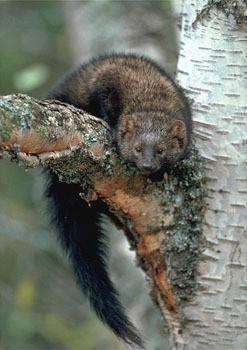
Introduction
The fisher (Pekania pennanti), also called the fisher cat or pekan, is a large arboreal mustelid native to the boreal and mixed forests of North America. Despite its name, the fisher is not closely related to cats and rarely eats fish; it is a powerful, agile predator equally comfortable moving through tree canopies and on the forest floor. Historically trapped for its dense, glossy fur, the fisher has recovered across much of its range following reintroduction programmes. Fishers are solitary, mostly nocturnal animals known for their remarkable ability to prey on porcupines, a defence that deters most predators. weasel marten
Taxonomy
The fisher belongs to the family Mustelidae, which includes weasels, otters, and badgers. Once classified within the genus Martes, it is now placed in its own genus Pekania based on genetic and morphological evidence. The species Pekania pennanti was formally described by Schreber in 1777. Two subspecies are sometimes recognised, though their distinction remains debated. Genetic studies confirm the fisher’s closest living relative is the tayra of Central and South America, and the genus represents an ancient North American lineage within the martens.
Physical Characteristics
Fishers are stocky, low-slung mammals with short legs, a long bushy tail, and a muscular body built for climbing. Adults measure 65 to 125 centimetres from nose to tail, with males substantially larger than females, weighing 3.5 to 6 kilograms compared to 2 to 2.5 kilograms for females. Their fur is dark brown to black, often with a grizzled appearance from lighter guard hairs, and is denser and glossier in winter. The head is pointed with rounded ears, and the paws bear retractable claws that aid in climbing and gripping prey. Fishers possess a keen sense of smell and excellent hearing, compensating for modest vision.
Habitat
Fishers occupy continuous mature and old-growth forests across Canada, the northern United States, and parts of the Appalachian Mountains. They prefer closed-canopy woodlands with abundant hollow trees, snags, and coarse woody debris that provide denning sites and prey habitat. Unlike many mustelids, fishers avoid open agricultural land and fragmented woods, requiring large home ranges of 6 to 50 square kilometres depending on sex and season. They den in tree cavities, rock crevices, and abandoned burrows, frequently using the same sites repeatedly across years. Forest management that retains structural complexity is critical for their persistence.
Diet
The fisher is an opportunistic carnivore with a remarkably varied diet. Small mammals such as squirrels, rabbits, mice, and voles form the staple, supplemented by birds, carrion, and seasonal fruits and nuts. The fisher is one of the few predators able to successfully kill a porcupine, employing a deliberate strategy of repeated bites to the face and neck while avoiding the quill-defended body. In winter, fishers may plunder snowshoe hare runs and scavenge deer carcasses. Their climbing ability allows them to raid birds’ nests and pursue arboreal squirrels through the canopy. A single fisher may consume prey equivalent to roughly one-third of its body weight weekly.
Reproduction
Fishers have a complex reproductive cycle featuring delayed implantation. Mating occurs from late winter to early spring, but the developing embryo does not implant in the uterus until late winter of the following year, resulting in a total gestation of around 350 days. Females give birth to a litter of one to four kits in dens located in hollow trees or rock cavities. Kits are born blind and helpless, opening their eyes at about seven weeks and remaining with the mother through their first summer. Females typically breed annually once established, though first reproduction occurs at one to two years of age. Young fishers disperse in late summer and establish their own territories by autumn.
Conservation
Once heavily persecuted for the fur trade and locally extirpated across much of the eastern United States, the fisher has rebounded following legal protection and extensive reintroduction efforts begun in the mid-twentieth century. Today the species is listed as Least Concern by the IUCN, with stable to increasing populations in many regions. Ongoing threats include habitat fragmentation, vehicle strikes, and rodenticide exposure through prey. In some areas, fishers have adapted to suburban forest fragments, occasionally coming into conflict with poultry keepers. Monitoring programmes track population trends to ensure the recoveries are sustained across the species’ range.
Fun Facts
The fisher is among the few mammals that routinely hunts and kills porcupines, using extraordinary agility to avoid the quills. Despite the common name “fisher cat,” it belongs to the weasel family and is not a feline. Fishers can rotate their hind feet nearly 180 degrees, allowing them to climb down trees headfirst like a squirrel. Their dense fur was once so prized that a single pelt could fetch extraordinary prices during the peak of the fur trade. Fishers are surprisingly vocal, producing a range of chirps, hisses, and growls, particularly during the breeding season and when threatened.