 By st20113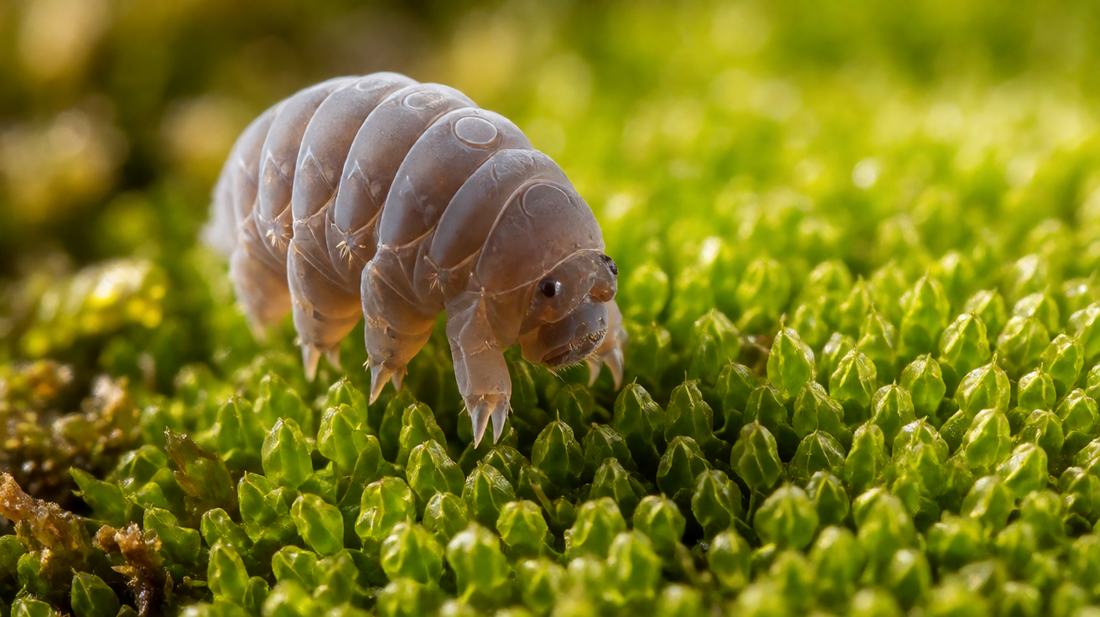
Hypsibius dujardini | Hypsibius Tardigrade
Species Profile · Hypsibiidae
Hypsibius Tardigrade
A water bear the size of a dust speck that can dry out completely, wait for years, and then walk away as if nothing happened.
Not evaluated
Length
Legs
Segments
Dry state
Cold
Rating
The Hypsibius Tardigrade
A water bear in the moss
This is a tiny water bear. Adults measure 0.3 mm to 0.5 mm. Eight stubby legs carry it along.
Each leg ends in small claws. Moss and lichen hold the usual home. Because the animal lives in a film of water, a dry spell is a deadly threat.
Its answer is to shut down completely. The body curls into a barrel called a tun. Though the tun looks dead and can survive freezing, boiling, vacuum and radiation, it wakes within minutes once water returns.
Family tree
Tardigrada, the water bears
This animal sits in the phylum Tardigrada. Its line split from other animals long ago, though the body plan has barely changed. It sits near the velvet worms and the arthropods. Doyere described this species in 1840.
Its name honours a French biologist, Dujardin. About 1,300 tardigrade species are known. Members of the Tardigrade group are far older than that count suggests. Fossil tardigrades date back 500 million years.
Numbers keep growing as samples are sorted. Because the animals are so small and so widespread, new species turn up in ordinary garden moss without anyone looking far afield.
0.5 mm of plump body
How to tell one
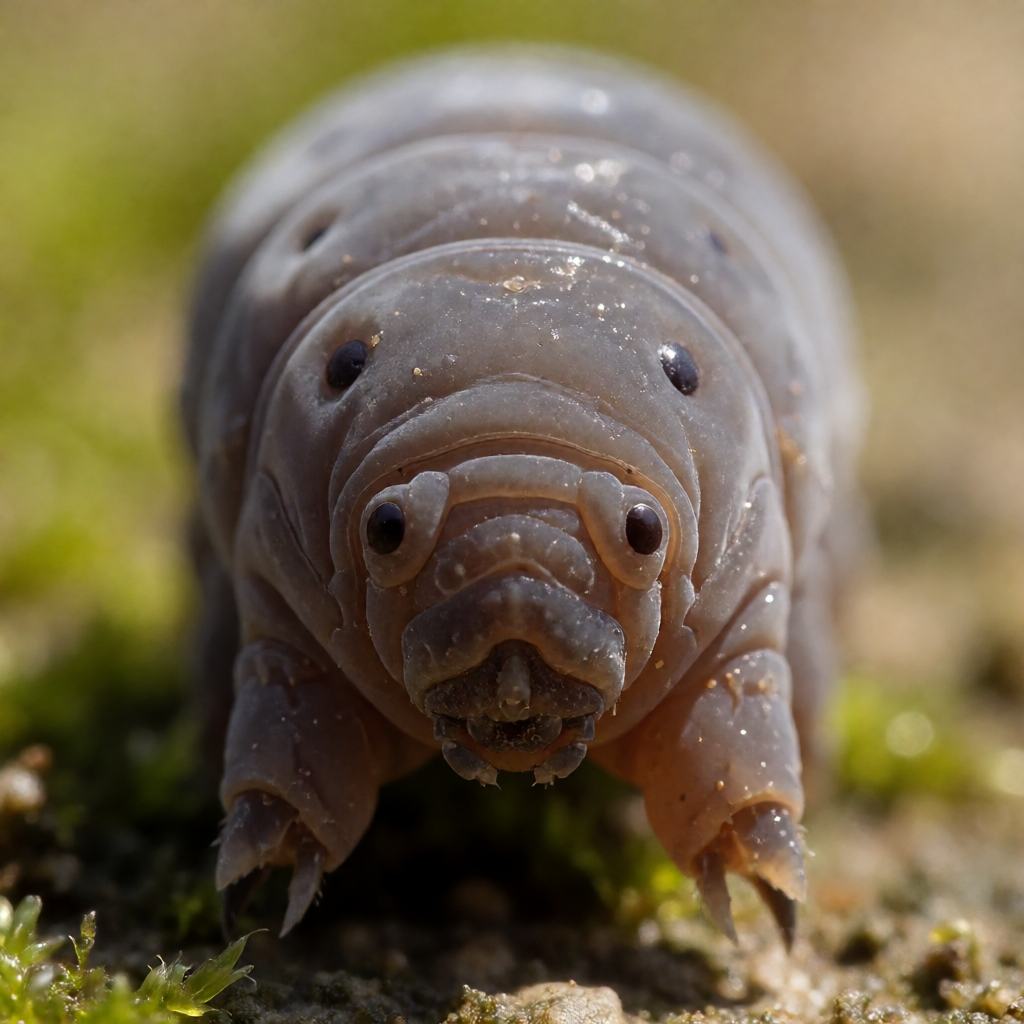
Its body is plump and segmented. Four pairs of legs push it forward. Skin looks clear, so the gut shows through. Muscles work the legs in a slow walk.
A tube shaped mouth holds two stylets. Those stylets pierce plant cells. No heart or lungs exist inside, yet it moves and feeds. Fluid moves through the body cavity, while the gut handles the rest.
Claws grip moss fibres like hooks. Because the body holds very little water and can shed almost all of it, the animal shrinks into a compact ball that resists almost any kind of damage.
1
2
3
Moss, lichen and fresh water
Where it lives
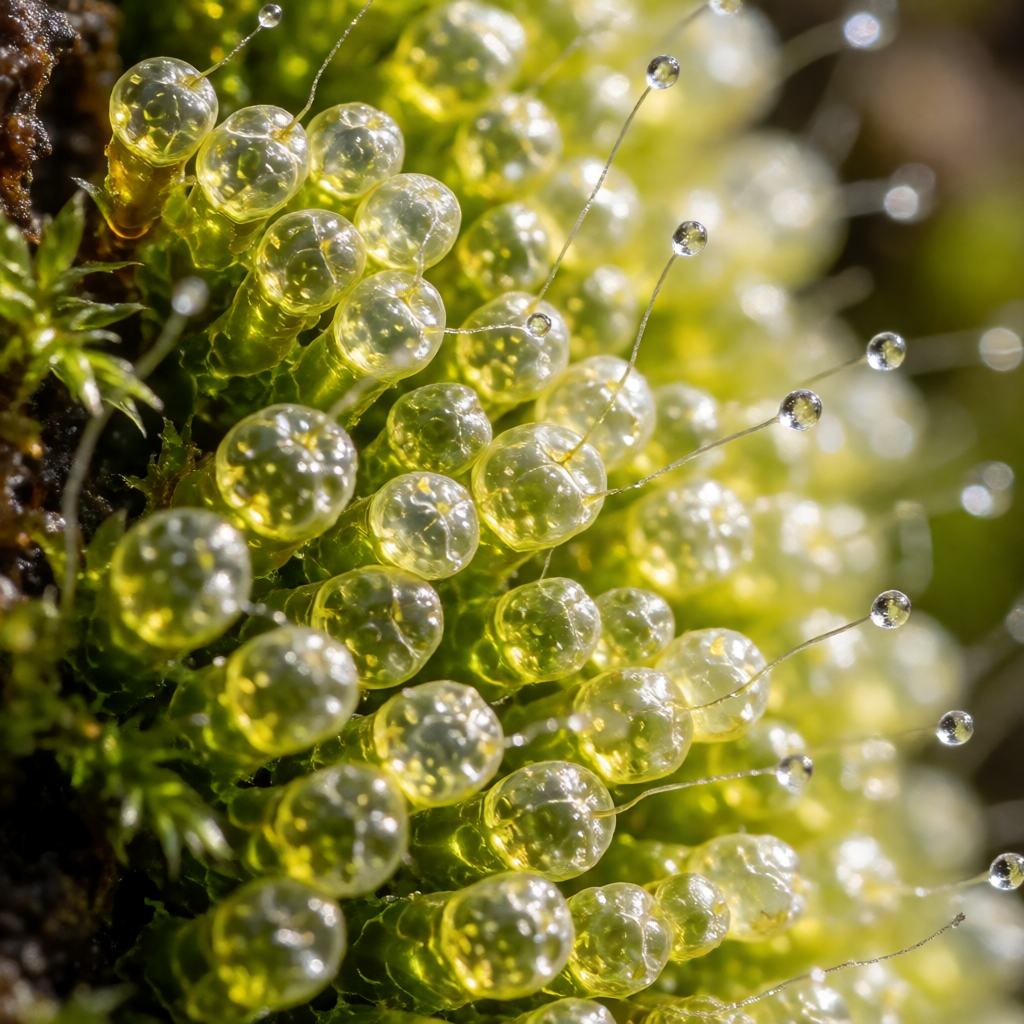
Fresh water suits most of them. Damp moss is the classic hiding place. Lichen on a roof will do. Soil, dunes and lake beds all hold them.
Some live in hot springs, while others sit under Antarctic ice. A few survive on bare mountain tops. This species turns up on every continent. Dry spells simply pause its life, since the tun needs no food.
Rehydration, however, restarts it. Although the animal needs water to grow and breed, its tun state lets it ride out years of drought and travel on the wind as dust.
Plant cells and small animals
What it eats
Algae and bacteria are the main food. Plant cells are drained as well. Moss provides most of the meal. The stylets stab a cell wall.
A pump then sucks out the contents. Small animals are eaten too, while moss stays the staple. Rotifers and roundworms may be caught. Because the mouth is so small, the prey must be tiny.
A meal can last the animal weeks. Since food is often scarce in moss, the tardigrade survives on very little and simply waits for better conditions.
Eggs, or no mate at all
The breeding cycle
Most individuals are female. Some species breed without a partner. Others need a male. Eggs are laid in the old skin.
A female may leave 30 eggs at once. Hatchlings look like small adults. The young moult several times. Growth takes about a month, though it depends on food.
Adults live a few months, while a tun can wait for years. Some survive far longer as tuns.
No IUCN rating
Conservation
The IUCN has not assessed this animal. No organisation gives it special status. Numbers look stable. Moss and lichen cover most of the planet, though cities flatten it.
Pollution can still hurt local groups. Paving removes the moss. Climate change shifts the damp belts. This species has survived worse, yet its habitats keep shrinking.
Its tun can outlast a hard century. Because the animal tolerates almost anything except dry air, nobody treats it as a species at risk, and the main threat sits in the loss of mossy ground.
Side by side
How It Compares
| Trait | Tardigrade | Rotifer |
|---|---|---|
| Length | 0.3 mm to 0.5 mm | 0.1 mm to 0.5 mm |
| Legs | 8, each with claws | none, a ring of cilia instead |
| Body segments | 5 | up to 16 |
| Drying out | curls into a tun | usually dies |
| Food | plant cells and small animals | bacteria and algae |
| Home | moss, lichen, fresh water | still fresh water and damp moss |
Common misreadings
What People Get Wrong
- Tardigrades are insects. They sit in a phylum of their own.
- Most of its genes came from other species. That claim fell apart.
- A tun is a dead body. It is a living, dried state.
Going further
Sources and Further Reading
- IUCN Red List entry for Hypsibius dujardini
- Wikipedia, Hypsibius dujardini
- Jonsson, K. I. et al. 2008. Tardigrades survive exposure to space in low Earth orbit. Current Biology.
- Koutsovoulos, G. et al. 2016. No evidence for extensive horizontal gene transfer in the genome of Hypsibius dujardini. PNAS.
Quick hits
Five things to remember
- Its body is 0.5 mm long at most.
- It has been exposed to open space and lived.
- Eight legs carry tiny claws.
- Its mouth holds two piercing stylets.
- A dried tun can wait for years.