 By st20113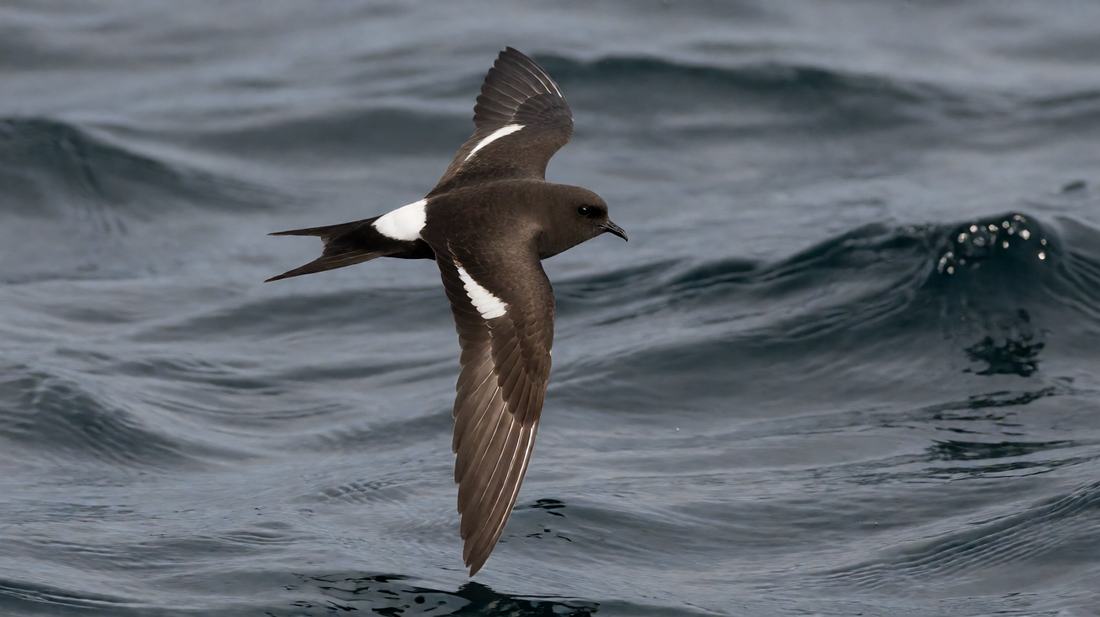
Hydrobates leucorhous | Leach’s Storm Petrel
Species Profile · Hydrobatidae
Leach’s Storm Petrel
One of the most numerous seabirds of the North Atlantic and one of the least seen — a sooty sprite that touches land only in the dark and patters across the surface of the sea.
IUCN: Least Concern
Range
Length
Weight
Nest
Incubation
Mother Carey’s chicken
A seabird of the darkness
Leach’s storm petrel is a small and sooty-black seabird of the open ocean. It is one of the most numerous birds of the North Atlantic. It is also one of the least seen. The way it lives explains that puzzle. The bird spends the whole of the daylight hours over the open sea. It comes to the land only in the darkness of the night. Then it drops into the burrow of the remote island where it nests. It leaves again before the dawn. So a bird with a world population of several millions can fill an island. The ordinary observer never knows that it is there.
The species is the largest and the most oceanic of the storm petrels of the north. Sailors of the Atlantic call it Mother Carey’s chicken. They use that name for the other small petrels as well. The name comes from an old belief. People once thought that the birds were the souls of dead sailors. The bird is also famous for one habit. It patters on the surface of the water with its feet as it feeds. That habit gave the whole family its name. The word petrel comes from Saint Peter and from his walk upon the water. The flight of the bird is like no other seabird of the region.
It is a fluttering and erratic and bat-like progress. It is carried out on long and narrow and very bendy wings. The bird seems to stagger and to tumble through the air. Yet it can travel for thousands of kilometres over the open ocean. It can then find the same small island on its return. Leach’s storm petrel is a long-lived bird. Its rate of reproduction is very low. So it is very open to the changes that people have made on the nesting islands. Introduced rats and cats and the artificial lights of the coast have cut its numbers in a great many places. The bird is now the subject of one of the most intensive conservation programmes of the North Atlantic.
Family tree
Hydrobates, the storm petrels
Leach’s storm petrel was described by the French naturalist Vieillot in 1818. Modern work places it in the genus Hydrobates. That genus sits in the family Hydrobatidae. The genus is a small group of the northern storm petrels. Its members are the smallest of all the seabirds. The bird is a close relative of the European Storm Petrel (Hydrobates pelagicus). That is the other member of the genus that breeds in the north-east Atlantic. The 2 are very alike in general appearance and in the way of life. People compare the 2 all the time on the Atlantic. Leach’s storm petrel is the larger of the 2. Its tail is longer and more deeply forked. Its upper wing carries a paler and more obvious diagonal bar. The European storm petrel is smaller and darker.
Its tail is almost square. Its white rump is much more restricted. The bird was named for William Elford Leach. He was a keeper of the zoology at the British Museum in the early part of the 19th century. The species name means white-rumped. It refers to the pale patch on the rump. That patch is one of the most useful field marks of the species. Modern work accepts 2 or 3 subspecies. People split the birds of the north-east Atlantic from those of the north-west Atlantic. They also split both from the birds of the north Pacific. The split rests on average size and on small details of the plumage. Those differences are slight. They are hard to see in the field.
The bird is only seen in the darkness of the night at the mouth of a burrow. The position of the whole family has been revised very heavily in the modern period. Genetic studies show that the northern storm petrels are not close relatives of the southern ones. Older classifications had placed them together. The northern birds now sit in a family of their own. The revision showed something else as well. The closest living relatives of the group are the diving petrels of the southern oceans. So the likeness of the northern storm petrels to the southern ones is a case of convergence. The 2 groups met on the same way of life rather than sharing a recent ancestor. The bird is one of the best studied of the petrels in the modern period. The work uses tiny radio tags and geolocators. Those devices record the light levels. They let people rebuild the whole winter journey of a single bird.
Sooty body, white rump
How to identify one
An adult Leach’s storm petrel is between 18 and 21 centimetres long. Its wingspan is between 43 and 48 centimetres. Its mass runs from about 40 grams in the smaller birds. The heaviest individuals reach 55 grams. Those birds are fattening before the breeding season. The bird is one of the smallest of the seabirds. It is not much bigger than a house martin. The whole of the plumage is a plain sooty black-brown. Two things stand out. One is the white of the rump. The other is the pale grey diagonal bar on each upper wing. The white rump is the most obvious field mark. It is the reason for the older name of the species. A line of dark feathers runs along the middle of that patch.
That division separates the species from the European storm petrel. Its rump is white in the middle and dark at the sides. The wing is long and narrow. The bird carries it in a way that looks like a small gull or tern when it glides. The shape of the wing bones stiffens the wing. The bird uses a special technique of flight. People call it dynamic soaring. The bird rides the gradient of the wind that the waves create. It gains height without spending energy. The albatrosses use the same technique on a far larger scale. One thing separates the flight of the petrel from the flight of a gull. The petrel is in almost constant contact with the wind gradient close to the water. The tail is long and deeply forked. That fork is one of the most useful field marks.
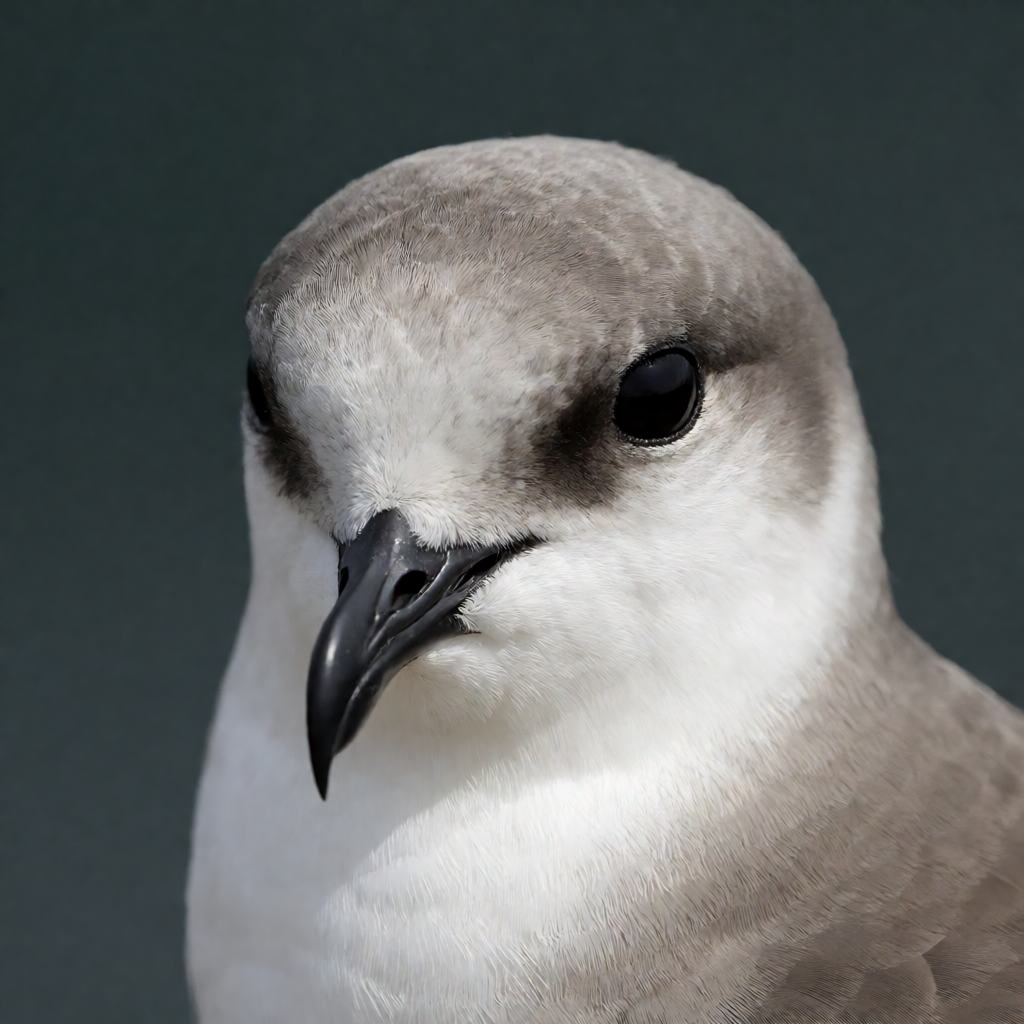
The tail of the European storm petrel is much shorter. It is only very slightly forked. The bill is black and slender and short. It carries the raised and tubular nostrils that mark the whole of the order. Those tubes let the bird smell its way back to the colony in the darkness. They also help it find the food in the open ocean. The sense of smell of the storm petrels is one of the most developed of all birds. The legs and the feet are black. They are long and slender for a bird of this size. The feet trail behind the bird in flight. They are used in the pattering on the surface of the water that is the signature of the family. The gait on the land is a shuffling crawl towards the burrow. The bird is almost unable to walk.
1
2
3
Remote island and open ocean
Where it lives
Leach’s storm petrel is a bird of the open ocean. It comes to the land only for the breeding. It spends the whole of its life outside the nesting period over deep water. That means the North Atlantic and the North Pacific. The bird is one of the most pelagic of all the birds of the region. It rarely comes near the coast except at night in the nesting season. The breeding colonies sit on a small number of remote islands. The bird needs soft ground for the burrow or a crevice of the rock. It also needs the absence of ground predators. It is commonest on the islands off the coast of the north-east of North America. The colony on Baccalieu Island off Newfoundland is the largest in the world. It has held several million pairs.
Other big colonies sit on the islands of the British Isles. They also sit off the north of Norway and off Iceland and off the far east of Russia. The bird is strictly nocturnal at the colony. That behaviour avoids attack by the gulls and the skuas and the other birds of prey. Those birds would take the petrel from the air in the daylight. So the petrel has also evolved the habit of silence at the colony. Reduced calling cuts the risk of detection. The whole of the arrival and the departure of the birds is squeezed into the hours of darkness. The surface of the island is busy for only a small part of the night. The bird is drawn to the artificial lights of the coast and of the ships. That pull is a very serious problem for the young birds. They confuse the lights of a human settlement with natural light.
They are pulled inland and then die against the buildings or on the roads. That pull of the lights is one of the most important modern threats to the species. Programmes of light reduction on several islands of the North Atlantic have tackled it. The species is a long-distance migrant in the southern part of the range. The birds of the north Atlantic move south after the breeding season. They reach the waters of the tropics and of the south Atlantic. The birds of the north Pacific move to the seas of the south of Japan. They also reach the waters off the coast of California. Geolocator studies have shown something remarkable. One bird may travel more than 20,000 kilometres in the course of a single year.
A patter of the surface
What it eats
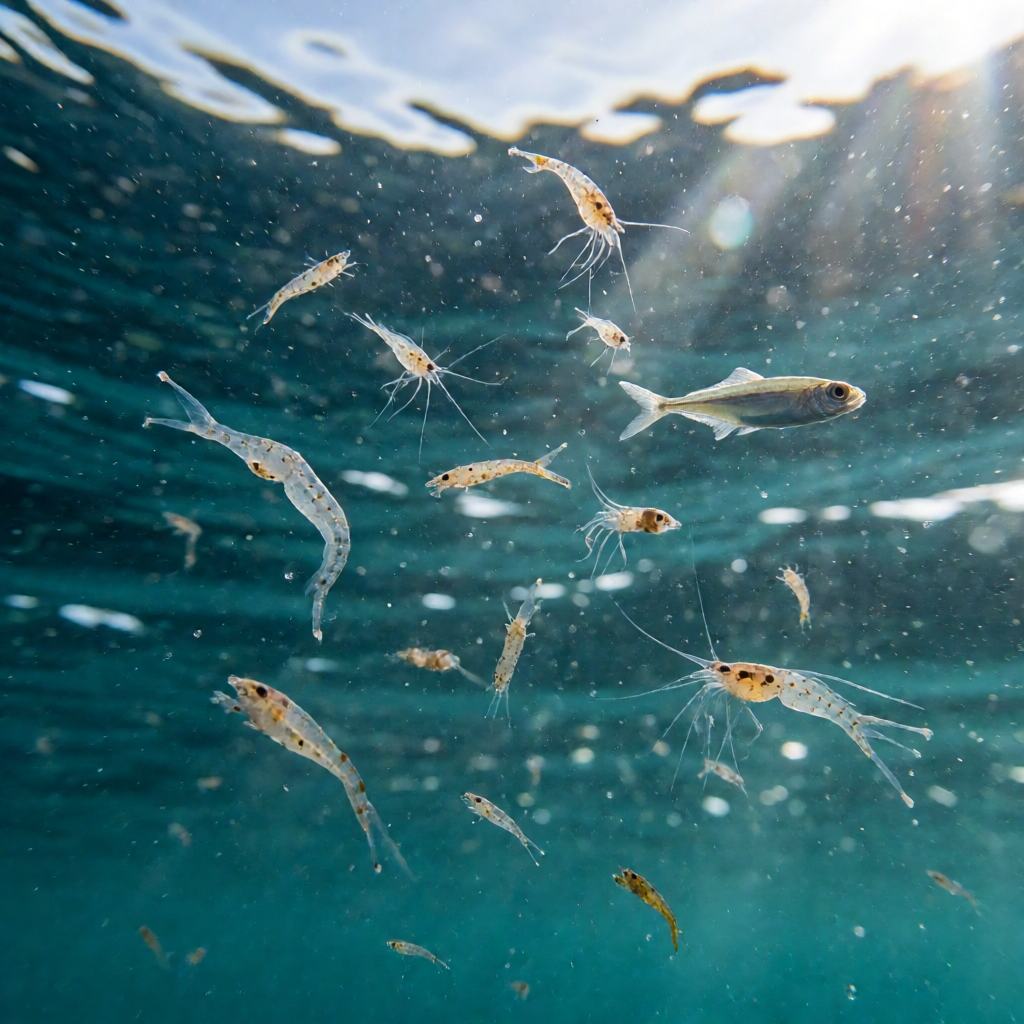
Leach’s storm petrel feeds on the small animals of the surface layer of the open ocean. The greater part of the diet is planktonic crustaceans. Amphipods and euphausiids and copepods make up the bulk of the food. Small decapod larvae matter too. Small fish and squid and fish eggs are also taken. They become more important when the crustaceans are scarce. The bird feeds by a technique that people call surface seizing. The bird hovers or patters over the surface of the water. It picks the prey from the top few centimetres. The pattering is done with the feet and with help from the wings. That behaviour gives the family its name and its reputation.
The bird also feeds by dipping. It drops to the surface and takes the prey without landing on the water. The bird does not dive to any depth. It does not chase the prey under the water. So the whole of the feeding is concentrated on the very surface layer. The bird depends on the concentration of the plankton by the currents and by the fronts. Other ocean features bring the food to the surface as well. The study of the links between the petrels and the currents is one of the most interesting parts of modern research on the species. The bird feeds in flocks when the food gathers. Those flocks are often linked with larger animals. Petrels gather where the whales and the dolphins and the tuna have driven the prey to the surface.
They follow the fishing boats for the same reason. The species makes a stomach oil. That oil is a waxy substance made from the prey. The bird uses it to feed the chick and to defend itself and the nest. The oil is stored in the stomach. The bird can spit it at an intruder. The oil also explains something useful. The chick can be fed at intervals of several days. The adults may be away from the colony for a long time on the search for food.
A burrow in the turf
The breeding cycle
Leach’s storm petrel returns to the breeding colony in the spring. The birds of the north Atlantic begin to visit the colony in April. The laying takes place in the late May and in the June. The bird is very faithful to the site. The pair bond is a lasting one. The same 2 birds hold the same burrow for many years in succession. The nest is a burrow that the bird digs in the soft soil of the island. It can also be a crevice of the rock or a cavity under a boulder. The burrow is often a metre or more in length. It is dug with the bill and the feet. The nest chamber at the end of the burrow is lined with dry grass and feathers and moss. The bird returns to the same burrow for the whole of its life.
The clutch holds a single egg. The egg is white with faint reddish-brown marks at the larger end. The single egg is the rule for the whole of the family. It follows from the very long period of the rearing of the chick. The season of the north is short. Both parents sit. Incubation lasts for between 40 and 43 days. The sitting bird is relieved at the intervals of 2 or 3 days. The partner that is not on the nest is at sea on the search for food. The relief of the sitting bird takes place in the darkness. The changeover often comes with loud and chattering calls. Those calls are the most familiar sounds of the colony in the night.
The chick is covered in down. It is brooded for the first days and then left alone in the burrow. Both parents feed it for between 60 and 70 days. The feeding takes place at the intervals of the 1 or 2 days. The chick is given a meal of the stomach oil and of the whole prey. That period of the rearing of the chick is one of the longest of any bird of the size. So the whole breeding cycle takes the greater part of the year. The young bird leaves the burrow in the night. It makes its own way to the sea with no contact with the parents. It can fly and feed at once. It does not return to the land for the first 3 or 4 years of its life. The bird does not breed until it is at least 5 years old.
Millions, but falling
Conservation
Leach’s storm petrel is assessed as Least Concern on the global Red List. The world population is very large. The numbers of the species have been estimated in the several millions of pairs. The bird is one of the most numerous of all the seabirds. The global assessment hides a very serious decline in the north-west Atlantic. The colony on Baccalieu Island is the largest in the world. It has fallen very heavily over the last 30 years. People blame 3 things for those losses. One is the arrival of the predators. One is the change in the food supply. One is the death of the young birds at the artificial lights.
Introduced rats and cats are the most serious threat on the breeding islands. The bird has no defence against ground predators. It cannot run. It is active only in the darkness. So the removal of the introduced mammals from the islands is the single most important measure for the bird. The artificial lights of the coast are the second great threat. Young birds on their first flight to the sea are pulled inland by the lights of the roads and of the buildings. They are killed in very large numbers. Programmes of light reduction and of the rescue of the grounded birds have been carried out. Those programmes work on the islands of Newfoundland and of the Hebrides and of the other parts of the range. Oil pollution is a further pressure.
So is the plastic and the chemical contamination of the sea. The bird is also affected by the changes in the oceanography of the north Atlantic. The warming of the climate has brought those changes about. The timing and the abundance of the plankton have changed. That is a very serious concern for this bird. Its whole breeding cycle is timed to the season of the richness of the sea. The species is protected by the legislation of the countries of the range. It is also covered by the international agreements on the seabirds. The key colonies are reserves and special protection areas. The monitoring of the species has run for the last half century at a great many colonies. So the bird has become one of the standard signs of the state of the open ocean of the north.
Quick hits
Five things to remember
- Sailors of the Atlantic call the bird Mother Carey’s chicken. The name goes back to an old belief. People once thought that the small petrels which followed the ships were the souls of the drowned sailors.
- The bird patters on the surface of the water with its feet as it feeds. That behaviour gave the whole family its name. The word comes from Saint Peter and from his walk upon the water.
- The bird only visits the colony in the dark. The whole of the arrival and the departure on the nesting island takes place at night. That is why a colony of several million pairs can exist without the ordinary observer noticing it.
- The bird is drawn to the artificial lights of the coast. Young birds on their first flight are pulled inland in very large numbers. The light reduction programmes on the islands of the North Atlantic are the result.
- The bird lays a single egg and rears the chick for between 60 and 70 days. That is one of the longest periods of the rearing of any bird of its size. The first breeding attempt comes at the age of 5 years or more.