 By st20113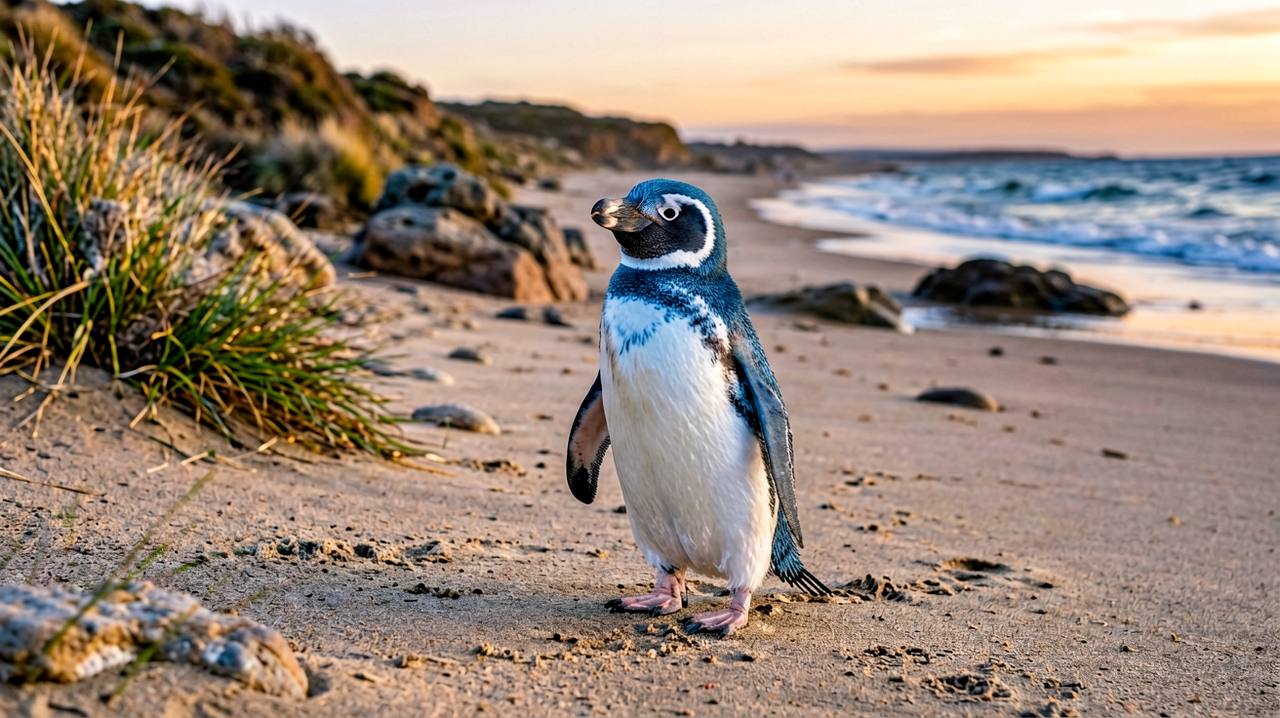
Eudyptula minor | Little Penguin
Species Profile · Spheniscidae
Little Penguin
The smallest penguin on Earth, barely knee-high, blue-backed, and at home on beaches that people also use.
IUCN: Least Concern
Range
Size
Weight
Life
Status
A bird like no other
The smallest penguin of all
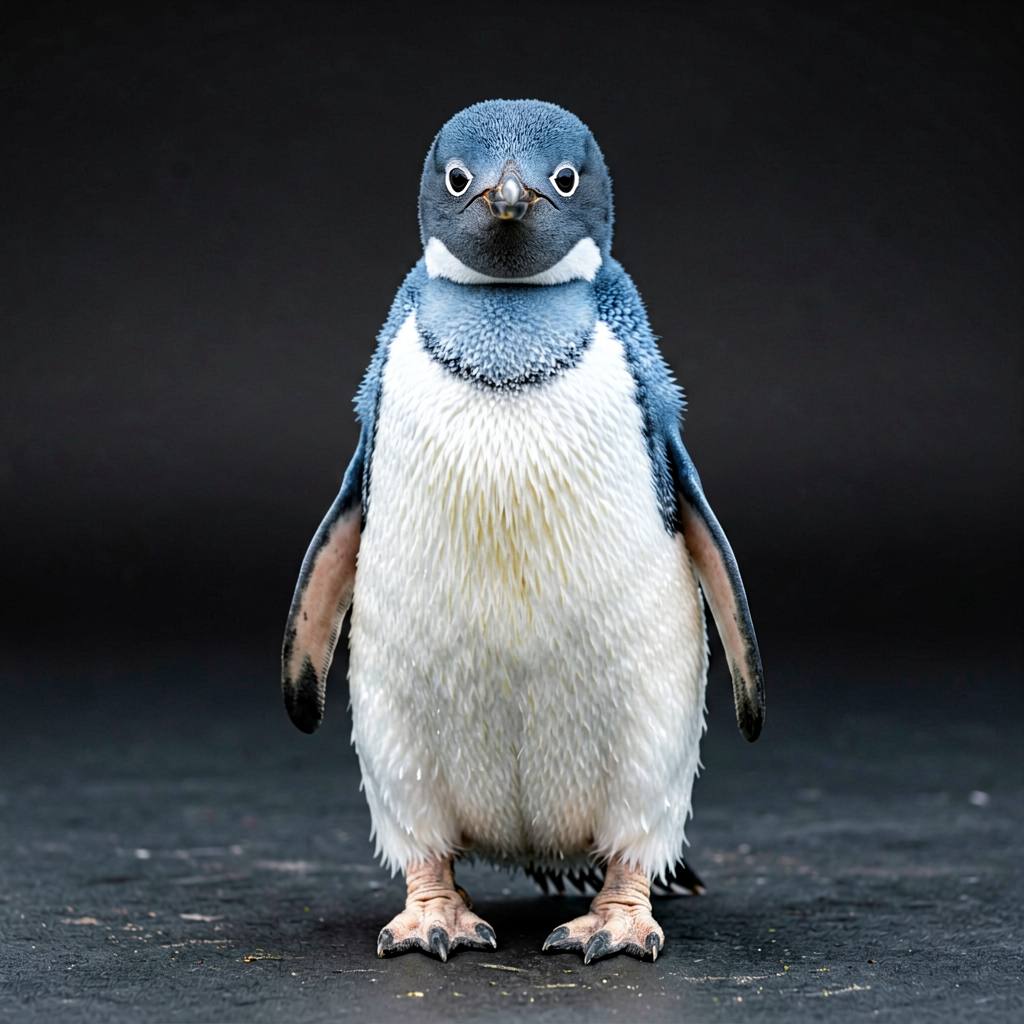
The little penguin is the smallest penguin on Earth. A full-grown bird stands about 33 centimetres tall. It weighs roughly one kilogram. That makes it about the size of a small cat. Its back is a soft slate blue, not black. Its belly is white.
That blue sheen gives it another common name, the little blue penguin. In New Zealand the Maori call it korora. In Australia many people still say fairy penguin. It lives only in the Southern Hemisphere. Its range takes in southern Australia, Tasmania, New Zealand, and the Chatham Islands. Unlike most penguins, it does not live on ice.
It nests on sandy shores, in burrows, and in rocky crevices. It spends its days at sea, hunting small fish and squid. At dusk it comes ashore in small groups. This quiet arrival often happens on beaches that people also use. That overlap between penguin and human life shapes its whole story.
Family tree
Cousin of the great penguins
The little penguin belongs to the genus Eudyptula. The name means good little diver. It sits in the family Spheniscidae, the penguin family. That family also holds the much larger Emperor Penguin. The two birds share the same basic plan. Both have flippers instead of wings and dense feathers for warmth.
But they live in very different places. The little penguin keeps to cool temperate seas, not polar ice. Scientists once treated all little penguins as one species. Recent work suggests there may be two. Birds in Australia and New Zealand differ in size and in their genes. Some researchers now split them into the little penguin and the Australian little penguin.
Others keep them together. The debate is still open. Either way, they form a small group of closely related birds. They are also the only penguins that nest on mainland Australia.
Built low and compact
A blue back and a white belly
The little penguin is built low and compact. Its head sits close to its body. Its beak is short and dark. That stubby bill looks very different from the long bill of an emperor. Its eyes are small but sharp in dim light. The back and head carry a blue-grey sheen. The belly is bright white. Young birds show a paler, more washed-out blue.
Adults moult once a year, usually after breeding. During the moult they cannot swim. The old feathers drop out and new ones push through. That takes about two to three weeks. The birds fast the whole time. By the end they look thin and tired. Their bones are dense and heavy for their size. That extra weight helps them dive.
A thick layer of fat and air-trapping feathers keeps them warm in cold water. Their flippers are stiff and flat, made for underwater flight. On land they waddle and hop. Their feet are set far back on the body. That gives them a clumsy walk but powerful swimming. They have no outer ear flaps, only small openings.
1
2
3
Life by the shore
Burrows above the tide
This penguin lives along cool southern coasts. Its range runs from Western Australia around the south coast to New South Wales. It also breeds right across Tasmania. In New Zealand it is found on both main islands and on Stewart Island. Smaller groups live on the Chatham Islands.
The birds nest close to the sea. They dig burrows in sandy soil. They also use gaps under rocks and piles of driftwood. Some nest under buildings or in man-made boxes. At sea they stay near the coast.
They feed over the continental shelf, usually within a few kilometres of land. Water temperature matters to them. They favour seas between about 10 and 20 degrees Celsius. Some colonies sit on busy tourist beaches. Others sit on remote islands with no people at all.
What it eats
Small fish, taken at speed
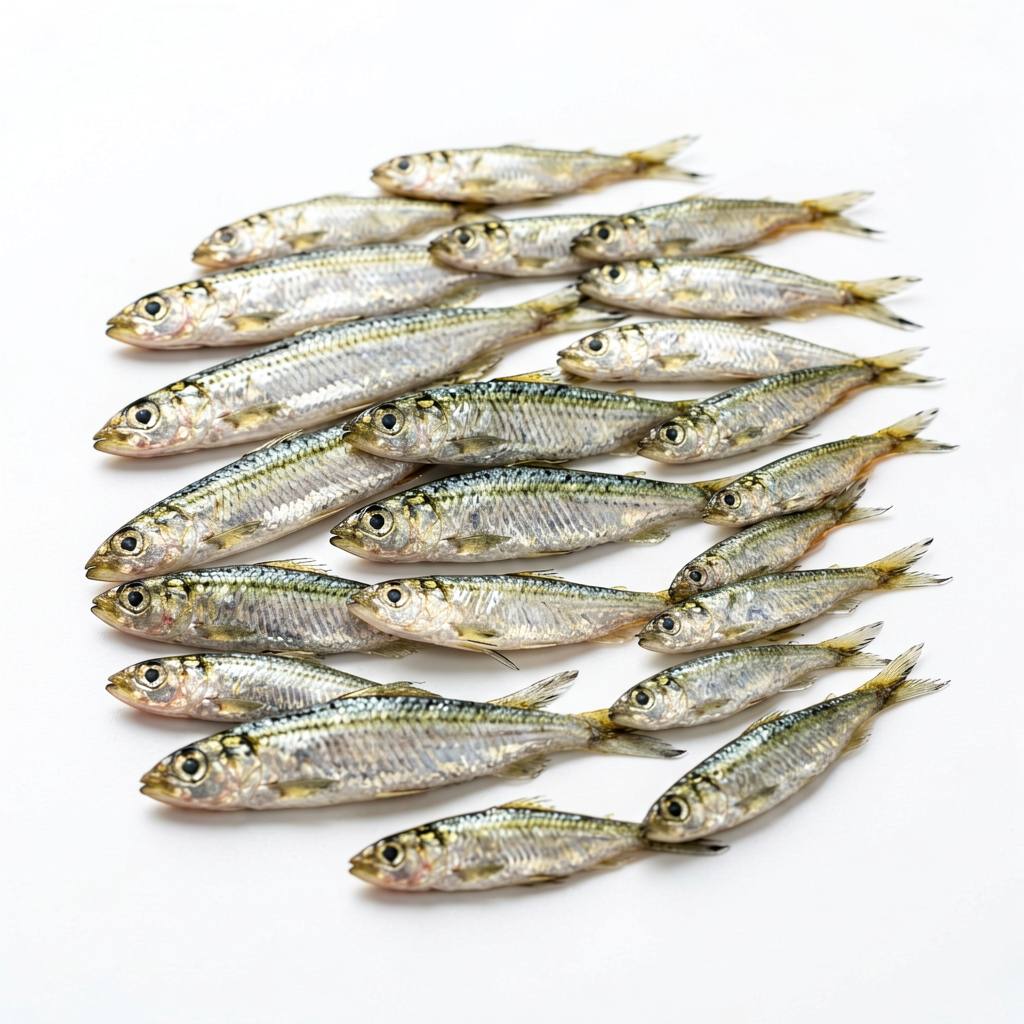
The little penguin is a small, fast hunter. Its main food is small fish. Pilchards, anchovies, sprats, and juvenile fish make up much of the catch. It also eats squid and small crustaceans. Krill and tiny prawns appear in the diet too. Most of its prey is short-lived and gathers in schools.
The birds often hunt in loose groups. They drive fish upward toward the surface. Then they snap at them from below. Dives are usually shallow. Most last under a minute, at 5 to 20 metres. A few dives reach deeper water.
The birds hunt mostly by day. At dawn they leave the colony and head out to sea. They may travel tens of kilometres before returning. They swallow prey head-first and whole. Their daily catch is surprisingly large for their size.
The family burrow
Long partners, two eggs
Little penguins form long-lasting pairs. Many stay together for several seasons. Some keep the same mate for life. A pair returns to the same burrow year after year. The breeding season varies with latitude. In Australia it often runs from winter into summer. Birds in New Zealand may nest at a different time.
The female usually lays two eggs. She lays them a few days apart. Both parents take turns on the nest. An incubation shift can last several days. The eggs hatch after about 35 to 37 days. Because the eggs are laid apart, the chicks hatch at different times. The older chick often grows faster.
Parents feed the chicks by regurgitating food. The chicks fledge at about eight weeks old. They then head out to sea on their own. Some pairs raise two broods in a good year. Breeding success depends on how much food is nearby.
Under pressure
Dogs, cars, and oil spills
The little penguin is listed as Least Concern worldwide. Yet many local populations are falling. On land, introduced predators do most of the damage. Foxes, dogs, cats, ferrets, and stoats all take penguins. Rats and weasels raid nests for eggs and chicks. A single dog can kill many birds in one night. Cars are another serious danger. Roads near colonies kill birds as they cross to the sea. Oil spills coat feathers and destroy their insulation.
Plastic and fishing line can entangle them. At sea, some birds drown in set nets. Loss of nesting habitat is a growing problem. Coastal building removes the soft soil they dig in. Climate change may also shift the fish they depend on. Volunteers now build nest boxes and fence off colonies. Maremma dogs guard some Australian colonies from foxes. These efforts show that local action can help. The species as a whole is not in danger yet.
But some colonies could vanish without steady care. On Phillip Island in Australia, rangers count every bird that crosses the beach at dusk. In New Zealand, local groups trap predators around korora burrows. Both projects depend on volunteers who give up their evenings. Their records show that steady work can hold a colony steady. Some sites have even seen numbers rise again. The lesson is simple. Where people watch the birds closely, the birds do better. Where nobody looks, the losses go unnoticed until it is too late.
Quick hits
Five things to remember
- It is the smallest of all penguin species, standing only about 33 centimetres tall.
- Its back is blue rather than black, which is why Australians call it the fairy penguin.
- During its yearly moult it cannot swim, so it fasts for two to three weeks.
- It comes ashore at dusk in small groups, a habit that helps it avoid predators.
- A pair often keeps the same mate and the same burrow for many years.