 By st20113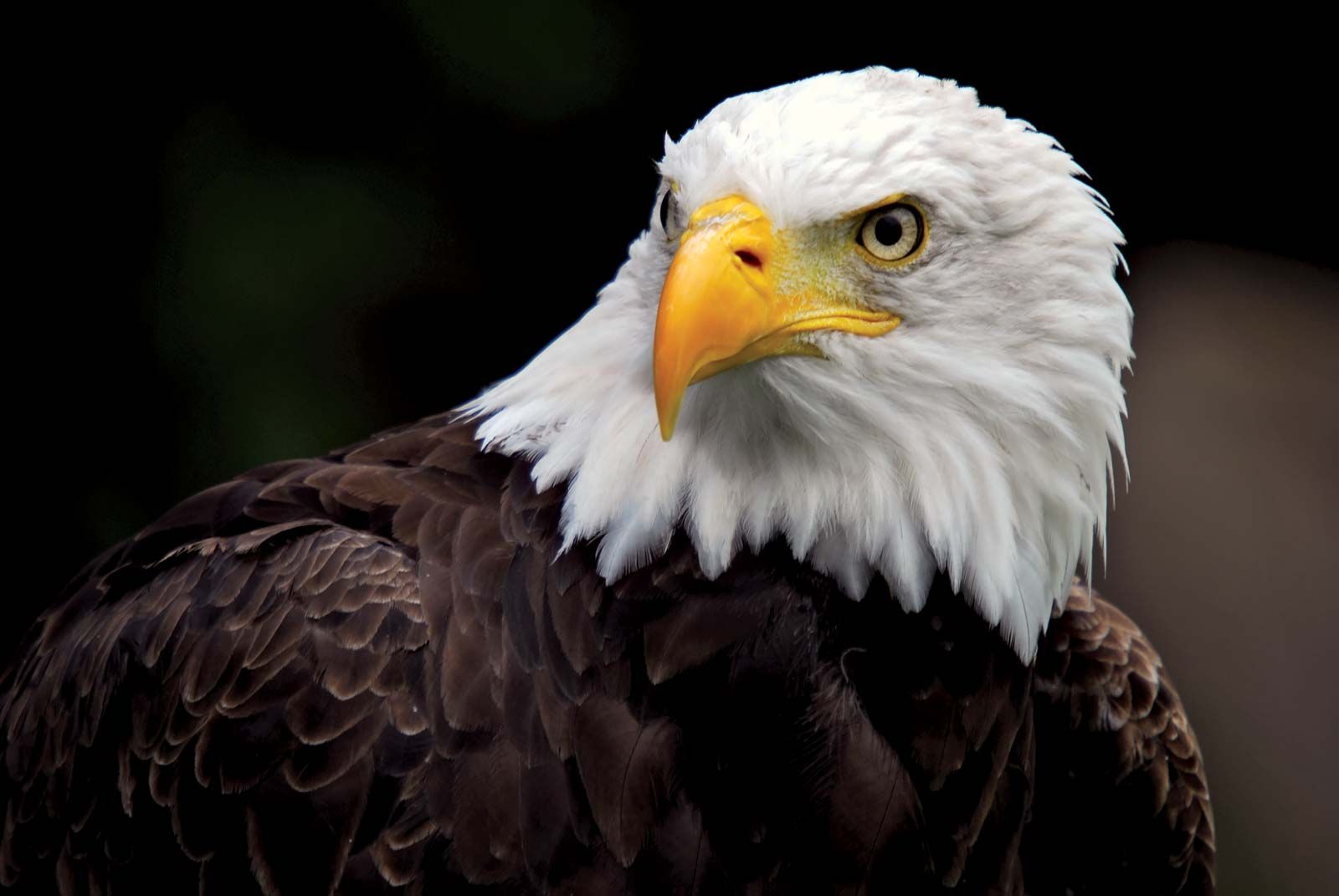
The bald eagle is a large bird of prey and the national bird of the United States, a symbol of strength and freedom chosen at the nation’s founding. Its scientific name, Haliaeetus leucocephalus, means sea eagle with a white head, a fitting description of its most striking feature. Despite the name bald, the bird is not hairless; the word comes from an older meaning of white-headed. Adults are unmistakable, with a snow-white head and tail contrasting sharply against a deep brown body and wings, and a large hooked beak of bright yellow.
Bald eagles are among the largest raptors in North America. Females are larger than males, as is typical for eagles, and a full-grown bird may stand about 70 to 100 centimeters tall with a wingspan reaching 2.4 meters, though some individuals spread even wider. In flight the adult shows long, broad wings held flat and the white head and tail gleaming against the dark body. Immature birds lack the white markings and are mottled brown for the first four or five years, only gaining the adult plumage as they reach breeding age. Their keen eyesight and powerful talons make them formidable hunters and scavengers alike.
The bald eagle is primarily a fish-eater, and its life is closely tied to water. It hunts along coasts, rivers, lakes, and marshes, swooping low to snatch fish from the surface with its talons. Where fish are scarce it will take birds, small mammals, or carrion, and it often pirouettes food from other birds such as ospreys. Because it depends on abundant, clean waterways, the eagle serves as a visible indicator of the health of freshwater and coastal systems. A thriving population signals a productive ecosystem, while its disappearance warns of polluted or depleted waters.
Bald eagles build some of the largest nests of any bird, called eyries, usually in tall trees near water but sometimes on cliffs. A pair returns to the same nest year after year, adding new sticks each season until the structure can weigh more than a ton and measure several meters across. The female lays one to three eggs, which both parents incubate and feed. Young eagles learn to fly at about three months but remain dependent on their parents for some weeks afterward. Established pairs are often territorial and may mate for life, reinforcing the bond with spectacular swooping courtship flights.
Like the peregrine falcon, the bald eagle suffered a severe decline in the twentieth century because of the pesticide DDT, which entered rivers and the fish the eagles ate, causing their eggshells to thin and break. By the early 1960s the species had vanished from much of its range, and its future looked bleak. The banning of DDT, together with legal protection and the ending of hunting, allowed populations to rebound. Eagles were removed from the list of endangered species in 2007, and today they are a common sight again across much of North America. Their recovery is counted among the great successes of modern conservation and shows how protecting a single apex predator can reflect the renewal of entire river and coastal communities.