 By st20113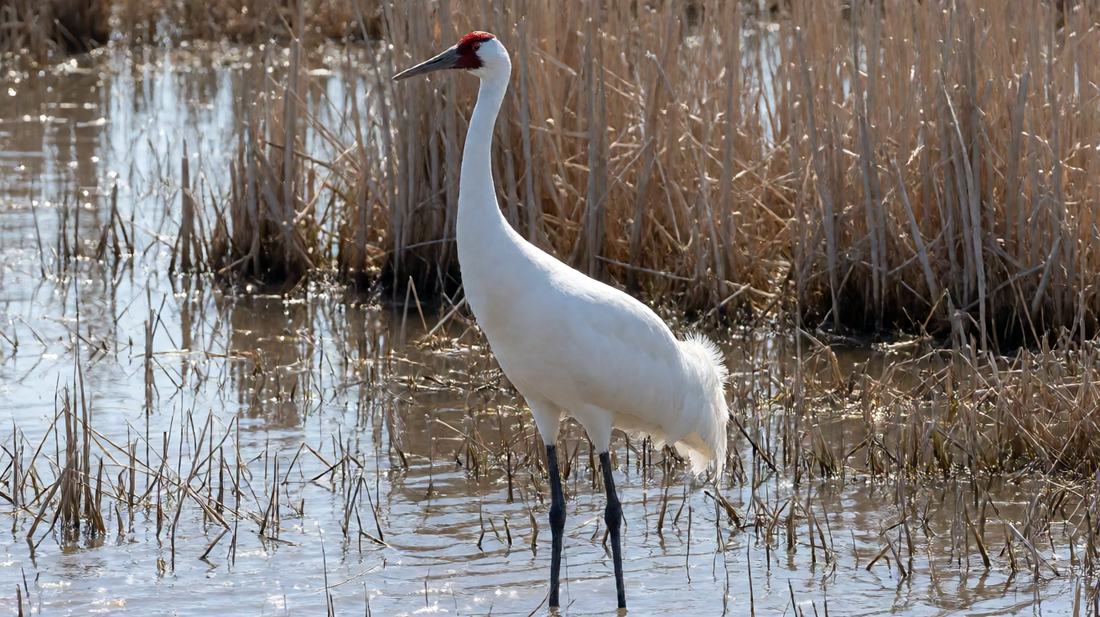
Grus americana | Whooping Crane
Species Profile · Gruidae
Whooping Crane
The tallest bird in North America, a white crane that fell to fifteen wild birds and is now climbing slowly back.
Endangered (2020) 2020 assessment
Height
Wingspan
Weight
Eggs
Low point
Rating
The Whooping Crane
The tallest bird in North America
This crane is the tallest bird in North America. Males stand about 1.5 metres high. Their wings span 2.2 metres. A patch of bare red skin tops the head.
Black tips edge the white wings. Because the birds nest in scattered marshes, their numbers fell to 15 by 1941. Bans on hunting and a new breeding plan have since lifted the wild total above 600. However, the species still leans on human help.
Costumed keepers even teach young birds a route south. That dependence makes this crane one of the most closely watched birds on Earth, with each flock tracked by radio and counted from the air every winter.
Family tree
Gruidae, the cranes
The bird sits in the crane family, Gruidae. Linnaeus named it in 1758. He first put it with the herons, in the genus Ardea. Later workers moved it to Grus.
DNA work backs that change. Grus americana carries no known subspecies. The Common Crane is its closest living relative. Although the two birds share a body plan, the American one is bigger and far rarer.
Ice sheets likely split the two lines apart, and each group therefore survived on its own. Fossil finds show that the crane once nested far south of its present range, back when the climate was milder.
1.5 m of white
How to tell one
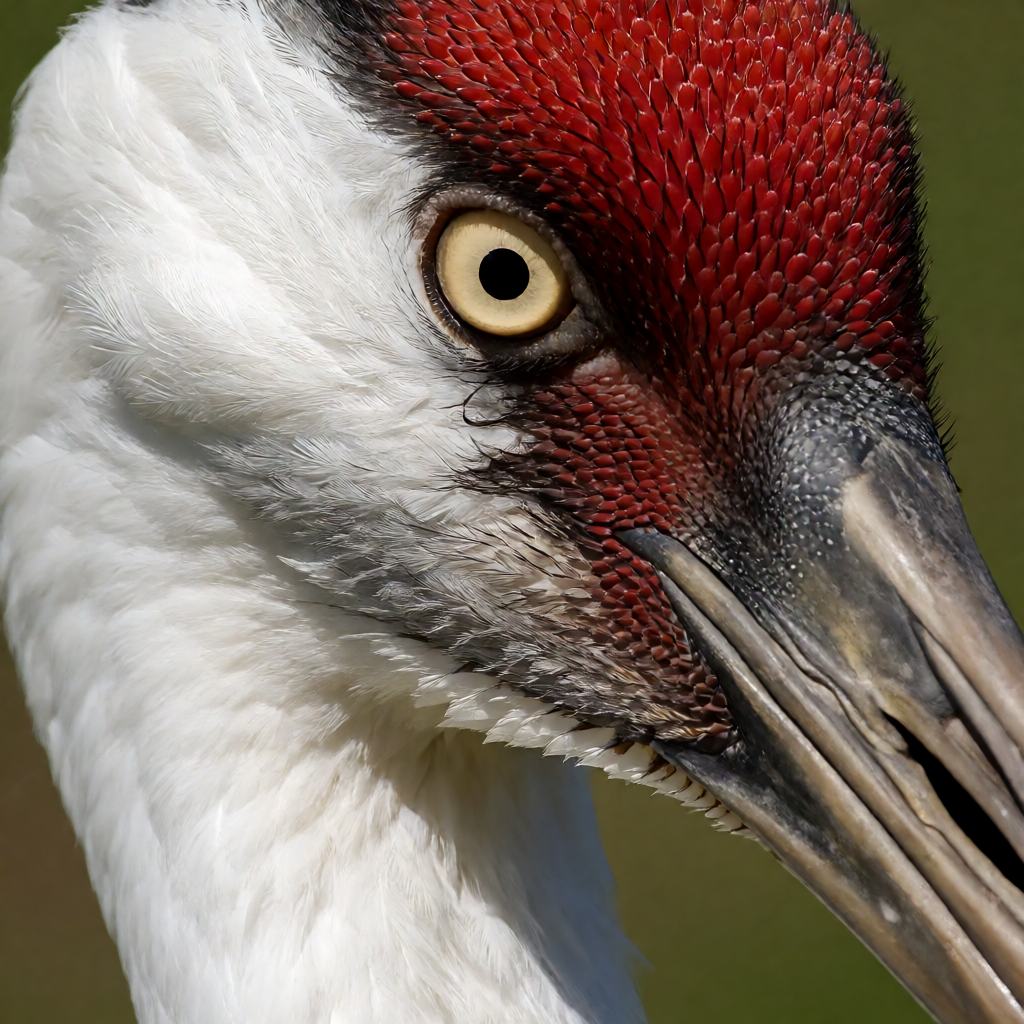
Adults carry pure white feathers. Only the wingtips stay black. The bare crown flushes a deeper red when the bird is alert.
Long legs and a long neck give the crane its height. Males grow bigger than females, often by 1 kg or more. A windpipe coils inside the chest like a twisted tube.
That odd shape lets the bird send a loud call 3 km across open marsh. Feathers moult once a year, yet flight weakens during the change. Because the body is so large, taking off needs a long run of heavy wing beats that lifts the bird clear of the reeds.
1
2
3
Marsh and prairie
Where it lives
Cranes breed in remote freshwater marshes. The main flock nests only inside Wood Buffalo National Park in Canada. Bulrush and sedge beds hide the nests from foxes.
Winter brings a long move south. Nearly every bird flies 4,000 km to the Texas coast. There they gather in coastal marsh and salt flats.
A second group lives in Louisiana and never leaves. Wetlands have shrunk across the continent; consequently, good sites are scarce. Although this bird once nested over a wide belt of prairie, it now uses a handful of places, most of them guarded by wardens all year round.
Crabs, clams and fish
What it eats
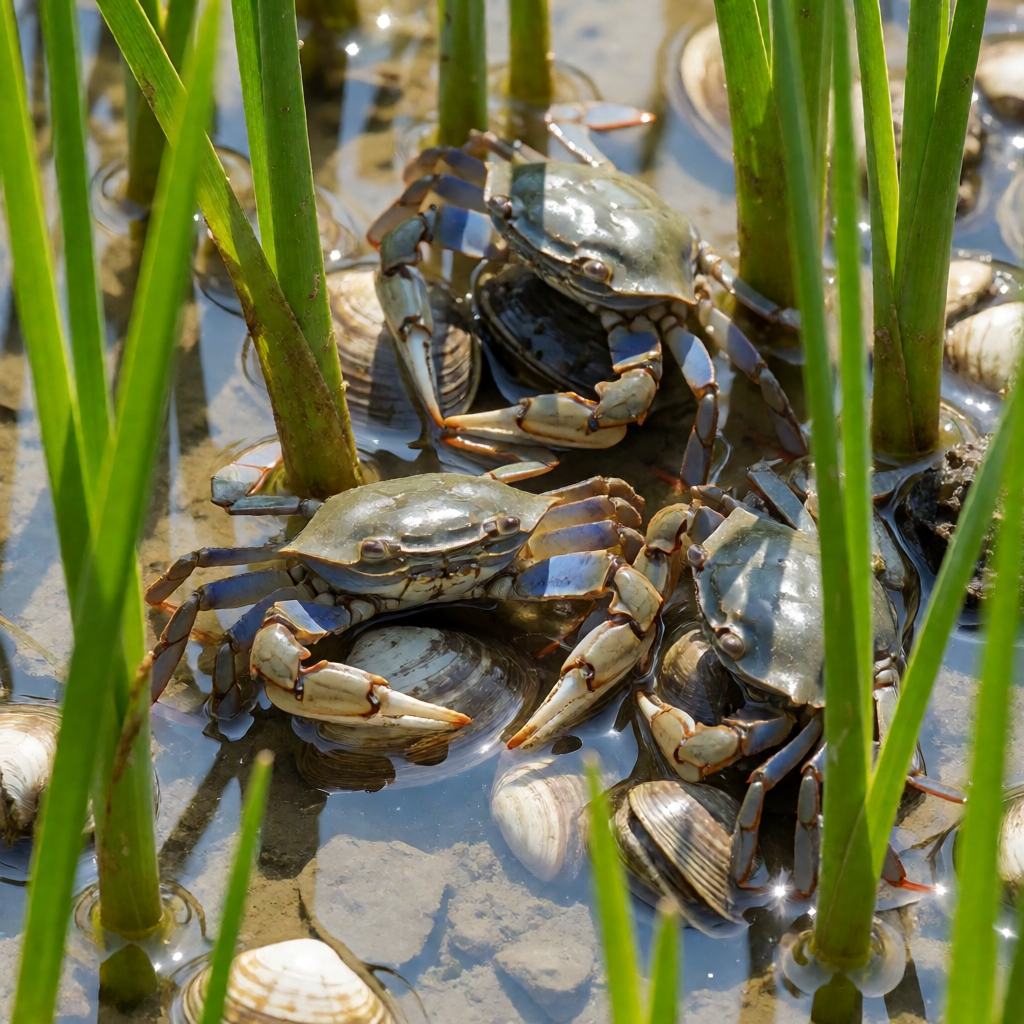
Cranes eat almost anything they can catch. Blue crabs form the bulk of the winter diet. The birds also take clams, snails, crayfish and small fish.
In summer, though, they switch to insects, frogs and berries. During migration they stop in fields to eat grain. A long bill probes the mud for buried prey.
Chicks need a steady supply of insects. Because the parents feed a chick for months, they must find rich feeding grounds. Diet shifts with the season, so the flock follows its food across the plains rather than sticking to one fixed route from year to year.
One chick a year
The breeding cycle
Pairs bond for life. Both birds build a flat nest of grass and sedge on the water. A clutch holds 1 or 2 eggs.
Eggs need about 29 days of warmth. Parents share the duty. Usually only one chick survives to fly.
Young cranes stay with their parents for nearly a year. They learn the route south on that first journey. Although the birds can live 25 years in the wild, most pairs raise very few young.
Endangered, slowly rising
Conservation
The IUCN lists the species as Endangered. Numbers fell to 15 birds in 1941. Captive breeding began in 1967.
Wild totals have climbed since; in fact, the trend points upward. However, the population stays tiny and fragile. Power lines, storms and disease still kill birds each year.
A narrow gene pool leaves the flock open to new germs. Egg collecting and hunting caused the original crash. Because the whole flock winters in one bay, a single oil spill could undo decades of slow work and set the recovery back by years.
Side by side
How It Compares
| Trait | Whooping Crane | Sandhill Crane |
|---|---|---|
| Height | 1.5 m | 1.1 m |
| Wingspan | 2.2 m | 1.7 m |
| Plumage | white with black tips | grey |
| Wild numbers | about 600 | about 800,000 |
| IUCN status | Endangered | Least Concern |
| Migration | Canada to Texas, 4,000 km | shorter, and varied |
Common misreadings
What People Get Wrong
- Extinction in the wild is a myth. About 600 still live free.
- The red crown is a crest of feathers. It is bare skin.
- Every bird migrates each year. One group stays in Louisiana.
Going further
Sources and Further Reading
- IUCN Red List, Grus americana
- BirdLife International. 2020. Grus americana. The IUCN Red List of Threatened Species.
- Canadian Wildlife Service. Whooping Crane. Government of Canada species profile.
- United States Fish and Wildlife Service. Whooping Crane recovery reports.
Quick hits
Five things to remember
- Its windpipe loops inside the chest like a trumpet.
- A single call carries 3 km.
- The whole wild flock winters in one Texas bay.
- Chicks follow a light aircraft to learn the route.
- Adults live 25 years in the wild.