 By Iris
Uca pugnax | Atlantic Fiddler Crab
Species Profile · Ocypodidae
Atlantic Fiddler Crab
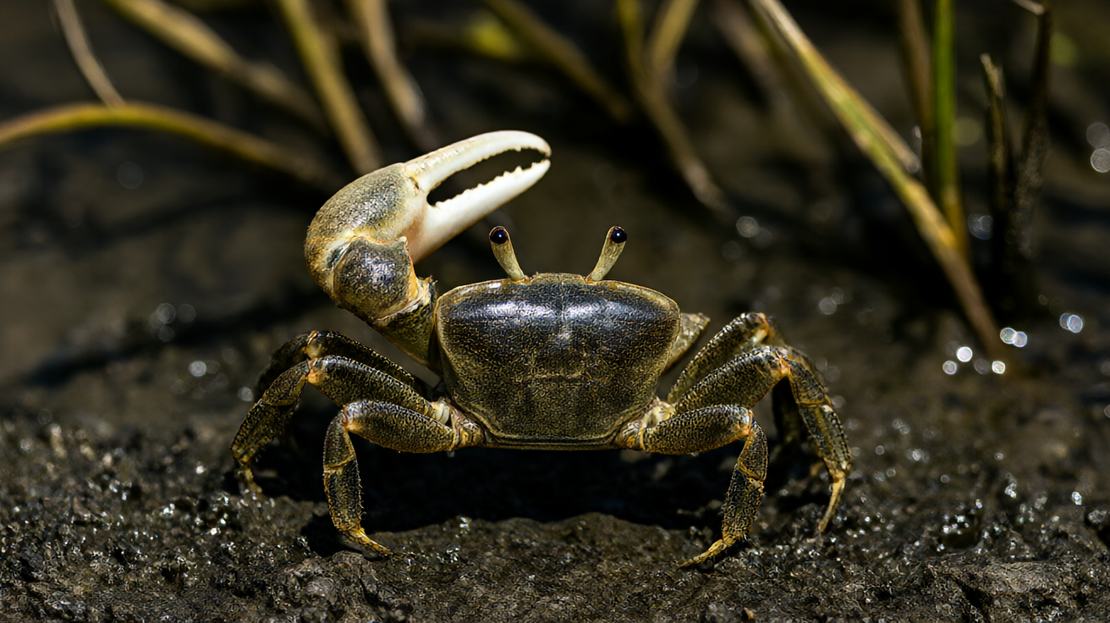
A small crab stands beside its burrow with one huge claw raised.
Least Concern
Carapace
Weight
Claw
Eggs
Range
Rating
The Atlantic Fiddler Crab
One claw, far too big
A small crab stands beside its burrow with one huge claw raised. A single claw can weigh as much as the rest of the body, which makes walking a slow and awkward business. Males carry it, and females never do.
This crab fills the salt marshes of eastern North America. Because the marsh floods twice a day, the crab lives on a schedule set by the tide rather than by the sun. Watch a mudflat at low water and thousands of them appear.
Family tree
Ocypodidae, the fiddler crabs
Its proper name is Uca pugnax, and it belongs to the fiddler crab group. Ocypodidae holds the fiddler crabs, and the group has been split into several genera recently. Some authors now place this species in the genus Minuca.
A Common Hermit Crab also carries a heavy load, though it protects the body rather than advertising it. Both crabs are decapods, so the shared plan runs deep. The name pugnax means fighting, which suits the species.
One claw, no use for food
How to tell one
Carapace width runs about 2 to 3 cm. Weight stays under 10 g. Males carry one giant claw and one small feeding claw.
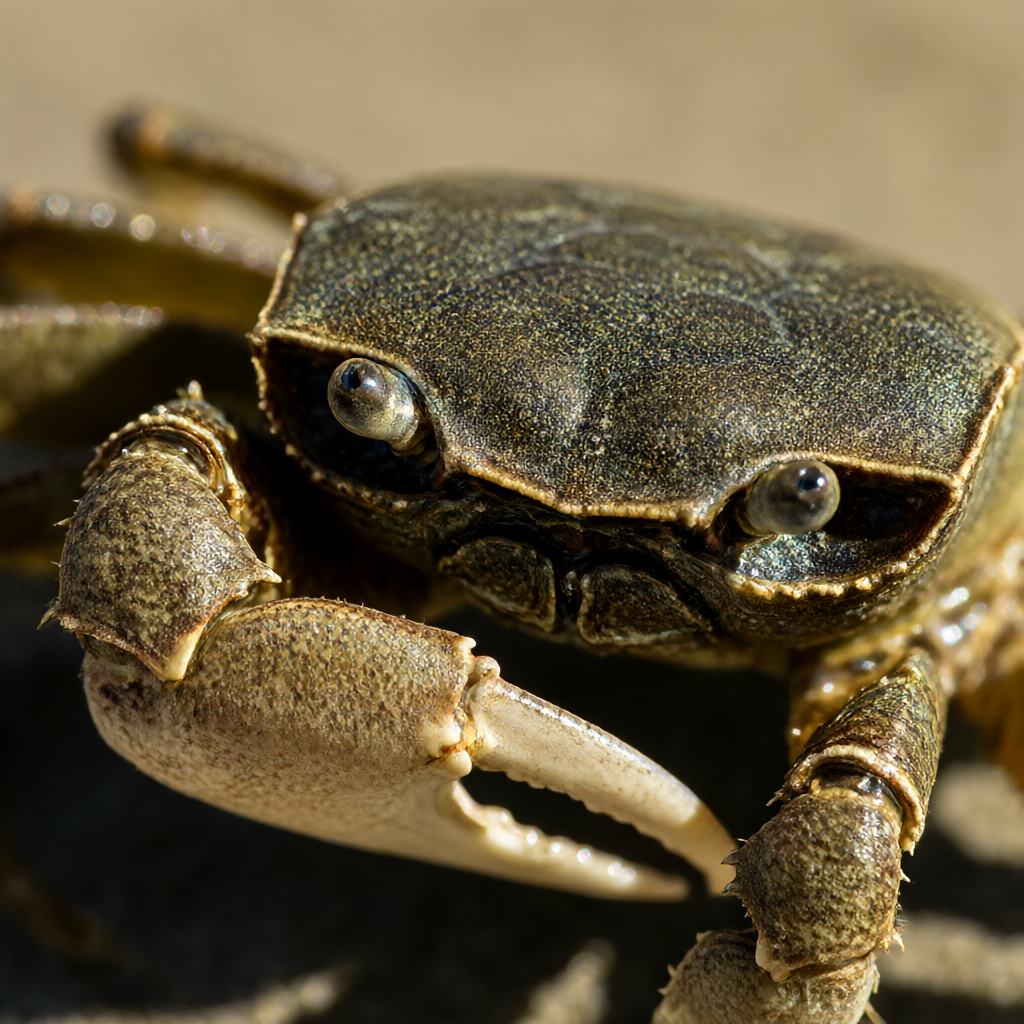
Because the big claw cannot be used for eating, the male feeds with the small one alone. Its carapace is brownish and mottled, which hides the animal against mud. Its eyes sit on long stalks, and they turn independently.
Females carry two small claws, one on each side. Its legs are hairy, and the hairs trap mud.
1
2
3
Soft marsh mud
Where it lives
Salt marsh mud and tidal creeks hold the species. Its range runs from New England down to Florida and the Gulf coast. Soft mud with a high water table matters most. Because the crab breathes through gills that must stay wet, it retreats to the burrow when the surface dries.
Burrows go down 30 cm or more and reach water. Where the marsh is ditched, the water table drops and the crabs disappear. The species stays within a few metres of its burrow.
Algae off the mud
What it eats
It scrapes mud and eats what sticks to the particles. Algae, bacteria and tiny crabs make up the food. Because the food is so small, the animal must process a great deal of mud. It sorts the particles with hairs around the mouth.
Clean sand goes back out as small pellets. Feeding happens mostly at low tide. Nothing large is taken, and nothing is hunted.
Larvae drift with the tide
The breeding cycle
Males wave the giant claw to attract females. Because the wave differs between species, a female can pick her own kind by sight. A female approaches, inspects the burrow, and then stays or leaves. Mating happens underground.
A female carries fertilised eggs under her body for about two weeks. She then releases the larvae into the tide. Because the larvae drift for weeks, populations stay connected along the coast.
Least Concern
Conservation
Red List status is Least Concern. Its range stays long and the population appears large. Because the crab needs soft marsh mud, coastal development removes the habitat.
Dredging and bulkheads cut off the upper marsh. Sea level rise threatens the low ground it uses. Because the larvae drift, a local loss can be refilled from elsewhere.
Raccoons and birds take many crabs each summer. Yet numbers appear stable in the large marshes.
Side by side
How It Compares
| Trait | Atlantic Fiddler Crab | Common Hermit Crab |
|---|---|---|
| Family | Ocypodidae | Paguridae |
| Shell | 2-3 cm | up to 4 cm |
| Load | one giant claw | a borrowed shell |
| Feeding | scrapes mud | scavenges and filters |
| Range | eastern North America | European coasts |
| Rating | Least Concern | Not Evaluated |
Common misreadings
What People Get Wrong
- Not a crab with two useful claws. One cannot feed. The giant claw is too large to carry food, so the male eats with the small one while the big one stays free for display.
- Not a permanent resident of one burrow. The tide resets it. Water returns twice a day, and the animal rebuilds and reopens its burrow each time the mudflat drains.
- Not a species that regrows at once. A small claw comes first. After autotomy the replacement starts small, and only several moults later does the full display claw return.
Going further
Sources and Further Reading
Quick hits
Five things to remember
- A giant claw can be half the total body weight, and males use it for display rather than for eating.
- If a male loses the big claw, a small one grows back first and the large form returns only after several moults.
- Each species waves differently, so females read the pattern as a signal rather than a threat.
- Crabs plug the burrow entrance to hold water during low tide.
- A mudflat at low water can hold more than 50 crabs in a single square metre.