 By Iris
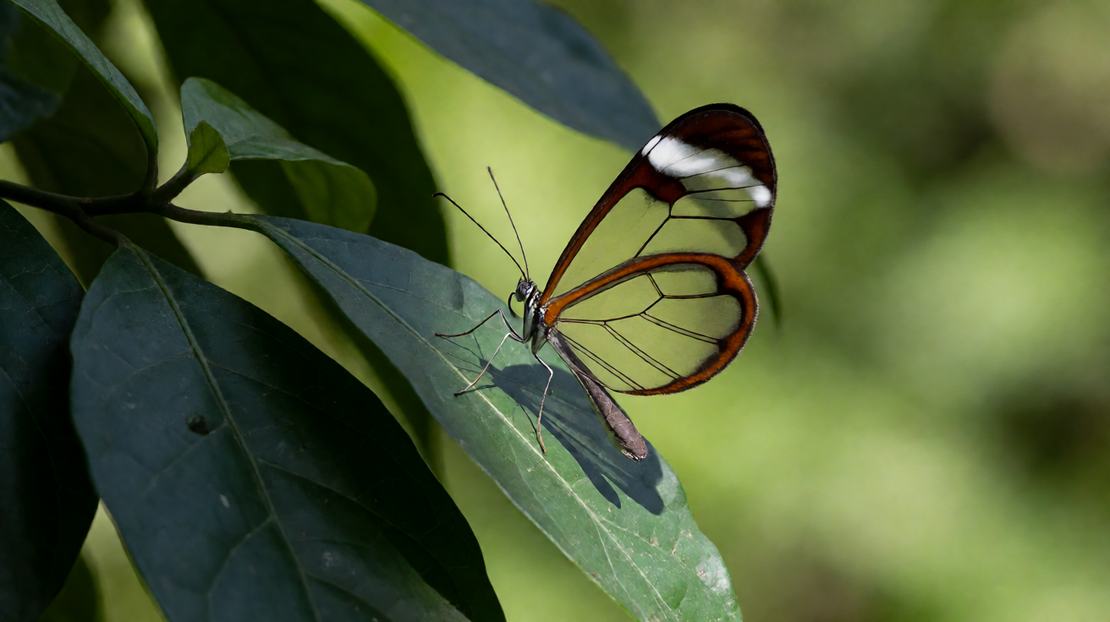
Greta oto | Glasswing Butterfly
Species Profile · Nymphalidae
Glasswing Butterfly
A butterfly that flies on clear wings rimmed with dark brown.
Not Evaluated
Wingspan
Wing
Range
Host
Poison
Rating
Six centimetres of clear panel
Wings you can see through
Glasswing wings are mostly clear, as if cut from thin plastic. Only the edges carry colour, and that colour is dark brown with a hint of red along the rim. Wingspan reaches about 6 cm, and the body behind it stays small. A hunter looking at a leaf sees a small dark rim and nothing else at all.
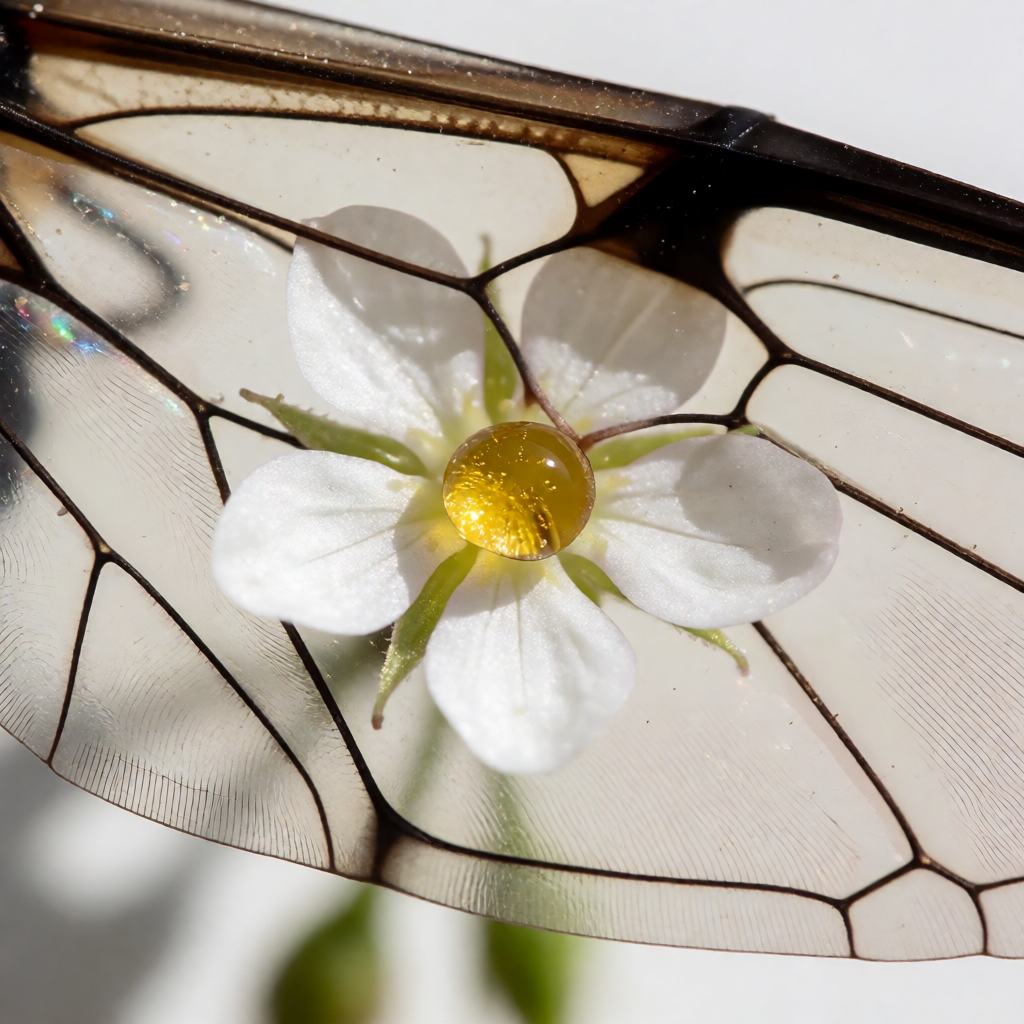
That trick works because the wing skin carries almost no scales, and light passes through. Most butterflies cover their wings in powder, since scales give colour and a pattern to read. This species leaves the middle bare. The insect flies from Mexico south to Panama, and it stays in humid forest.
Nothing about it is rare, and yet few people notice one at rest. A clear wing on a green leaf is nearly invisible, since the outline breaks up.
Family tree
Nymphalidae, the brush footed butterflies
Workers place the butterfly in Greta, a genus of clear winged relatives. Family is Nymphalidae, and the subfamily is Danainae. Its closest kin here is the Monarch Butterfly, a famous migrant of the same subfamily. Both carry plant poisons, and both advertise them with colour.
Yet one shouts with orange and the other hides with glass. Workers described the species in 1854 from Central American material. This genus holds about thirty species, all of them in the warm tropics. Gene work confirms the group, and it places these insects among the clearwing relatives.
Names have changed, since workers moved the species more than once. That name has held for several decades, although older books use another.
Nymphalidae, clearwing relatives
How to tell one
Wingspan runs from 5.5 cm to 6 cm. Skin between the veins is clear, so green shows through from the leaf. Scales cover only the veins and the outer border. That border looks dark brown from above, and a dull red from beneath, so the two sides differ.
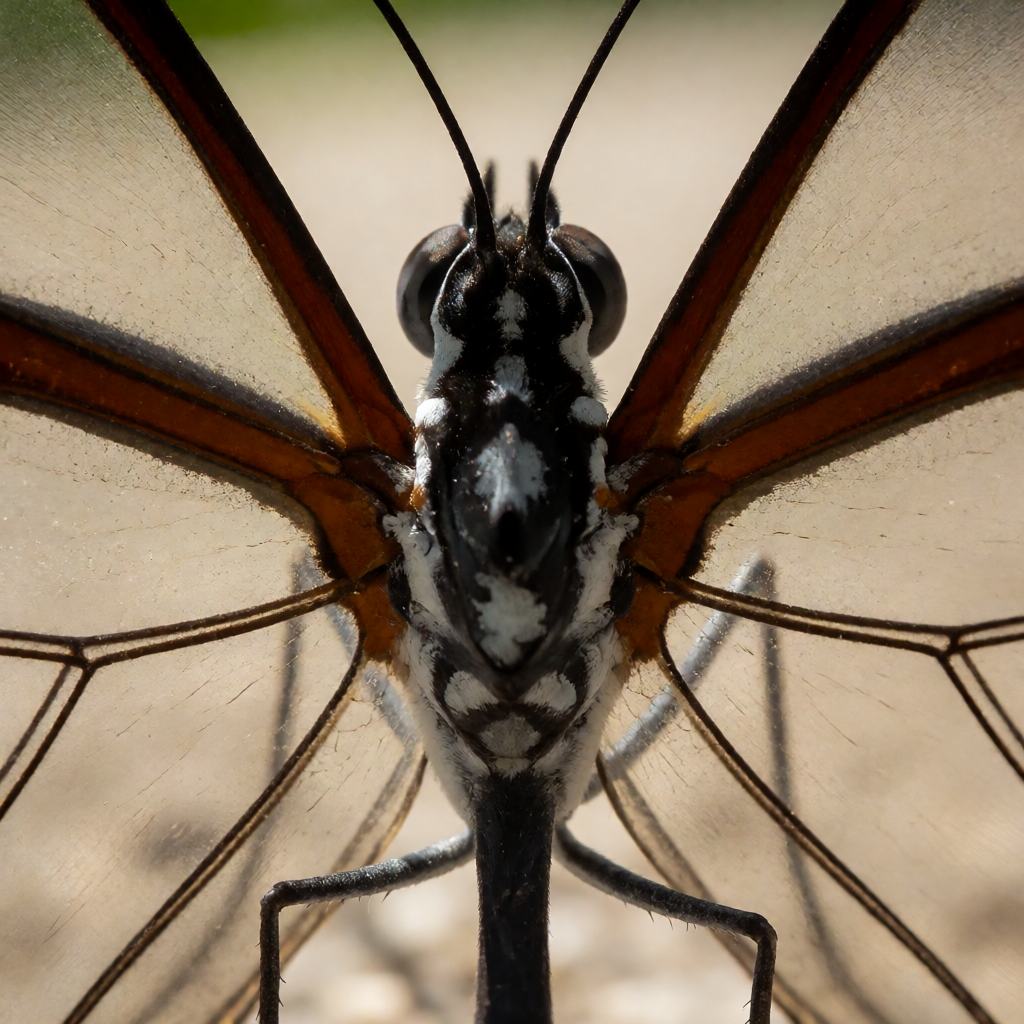
White spots sit near the tip of the forewing, and a dark band runs behind them. Body is slender. Legs are long and thin. Antennae end in a small club, as in most butterflies.
The clear panel lets light through, so the insect casts almost no shadow on the leaf below. Nothing in the wing reflects colour, since no pigment layer exists there. A damaged wing shows as a torn sheet, and the insect still flies on the other three.
1
2
3
A wing without scales
Where it lives
Humid forest and coffee shade hold the species. Its range runs from Mexico to Panama, and it reaches western Colombia. Cloud forest suits it, since the air stays wet. Adults fly low.
They follow streams and tracks. Caterpillars need Cestrum shrubs, so the female searches for those. Forest without Cestrum holds no glasswings at all, since the larvae would starve. Clearing removes the host.
The butterfly then disappears. Secondary growth helps for a while, since Cestrum likes disturbance. Pesticide spray on coffee also kills the larvae. Shade grown coffee keeps more of the habitat than open fields, and the butterflies stay on those farms.
Humid forest and coffee shade
What it eats
Caterpillars eat leaves of Cestrum, a shrub full of bitter poisons. Those poisons stay in the body, and they pass to the adult. Adults drink nectar from small flowers, and they never touch a leaf. They also take poison from withered plants, since those add to the store.
Males gather at such plants, and they pass the poison on with the sperm. That gift protects the eggs, so the female gains from the trade as well. No meat is eaten. Feeding happens in light, and the butterfly rarely sits long.
One meal lasts seconds, and the insect moves on to the next flower. Water comes from dew and from wet leaves.
Poison taken from a shrub
The breeding cycle
Males patrol a patch and chase anything that moves. Females lay eggs one at a time on a host leaf. One egg is tiny and pale green, and it sits alone on the leaf. The caterpillar hatches within a few days, and it eats the leaf it was laid on, skin and all.
It grows through five stages, and each one moults and eats more. Body carries thin hairs, and the colour is a dull green. A pupa hangs from a stem, and it looks like a dead leaf curled at the edge. The adult emerges after about two weeks, and it lives for a month.
Several broods follow in a year, since the tropics stay warm. Migration happens at the end of the wet season, when the host plants dry out and the adults move uphill.
Not Evaluated, and unnoticed
Conservation
No Red List entry covers the species. Habitat loss is the main risk, since the forest belt is shrinking. Coffee farms replace forest across the range. Shade plantations soften the loss, though they hold fewer plants.
Pesticides kill larvae on the leaves. Collectors take a few adults, and that trade does little harm. Protected reserves cover part of the range, mainly in Costa Rica. Nobody counts the animals.
The trend stays unknown. This insect is common where the host plant grows. Even a common species needs forest, and the forest is going fast.
Side by side
How It Compares
| Trait | Glasswing Butterfly | Monarch Butterfly |
|---|---|---|
| Length | wing span reaches 6 cm, and the body stays small | wing span reaches 10 cm, and the body carries more weight |
| Colour | clear in the middle, with a dark rim and two white spots | orange with black veins, and white spots along the edge |
| Food | caterpillars eat Cestrum leaves, and adults drink nectar | caterpillars eat milkweed, and adults drink nectar |
| Young | five caterpillar stages, then a pale green pupa | five stages, then a jade pupa with gold dots |
| Build | almost no scales on the wing, so light passes through | dense scales on the wing, and the colour comes from them |
| Defence | poison from the host plant, and a clear wing that hides | poison from milkweed, and bright colour that warns |
Common misreadings
What People Get Wrong
- Many people think the wing is glass, yet it is a thin skin with almost no scales. Nothing in that skin reflects colour, so green shows through from the leaf below.
- A common tale says the species lives in Europe, although it never leaves the American tropics. The range runs from Mexico south to Panama, and it stops at the forest edge.
- Guides claim the butterfly is rare, yet it stays common where the host shrub grows. Collectors take a few adults, and that trade does little harm to the total.
Going further
Sources and Further Reading
Quick hits
Five things to remember
- Wings are clear in the middle.
- Only the edges carry scales.
- Caterpillars eat a poisonous shrub.
- Adults keep the poison.
- Wingspan reaches about 6 cm.