 By Iris
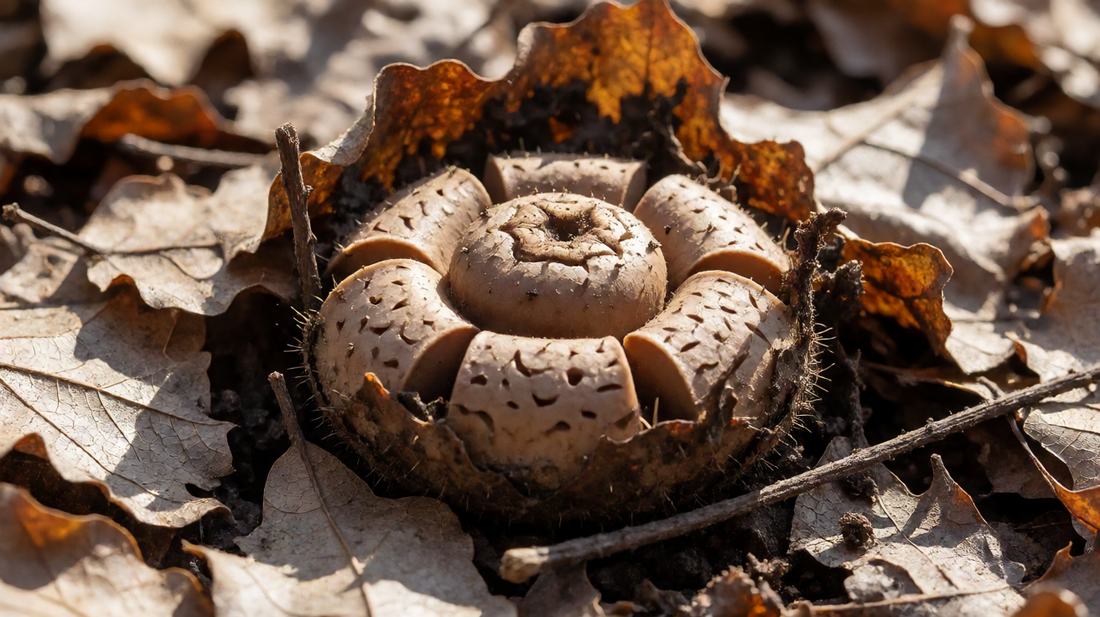
Geastrum triplex | Collared Earthstar
Species Profile · Geastraceae
Collared Earthstar
A woodland fungus that splits its outer skin into a star of pointed rays, lifting a round spore sac clear of the leaf litter.
No IUCN rating
Spread
Rays
Spore sac
Season
Habitat
Rating
The Collared Earthstar
A star that lifts its spores
This fungus looks like a small star lying on the ground. Its outer skin splits into 4 to 8 pointed rays. Those rays bend back and lift the fruit body up.
A round spore sac sits in the middle. A pale collar rings the base of that sac. The whole thing grows on woodland leaf litter.
It appears in autumn in small groups. It is not edible and has little food value.
Family tree
Geastraceae, the earthstars
Geastrum triplex is its Latin name. The fungus sits in the family Geastraceae. That group holds the earthstars. It was first described in the 19th century.
The name triplex refers to its 3 layers. Its nearest kin are the other earthstars. The group belongs among the gasteroid fungi. Those fungi hold their spores inside a closed body.
A Stinkhorn uses the same closed-body plan to spread spores. Both grow on rotting plant matter.
8 cm across when open
How to tell one
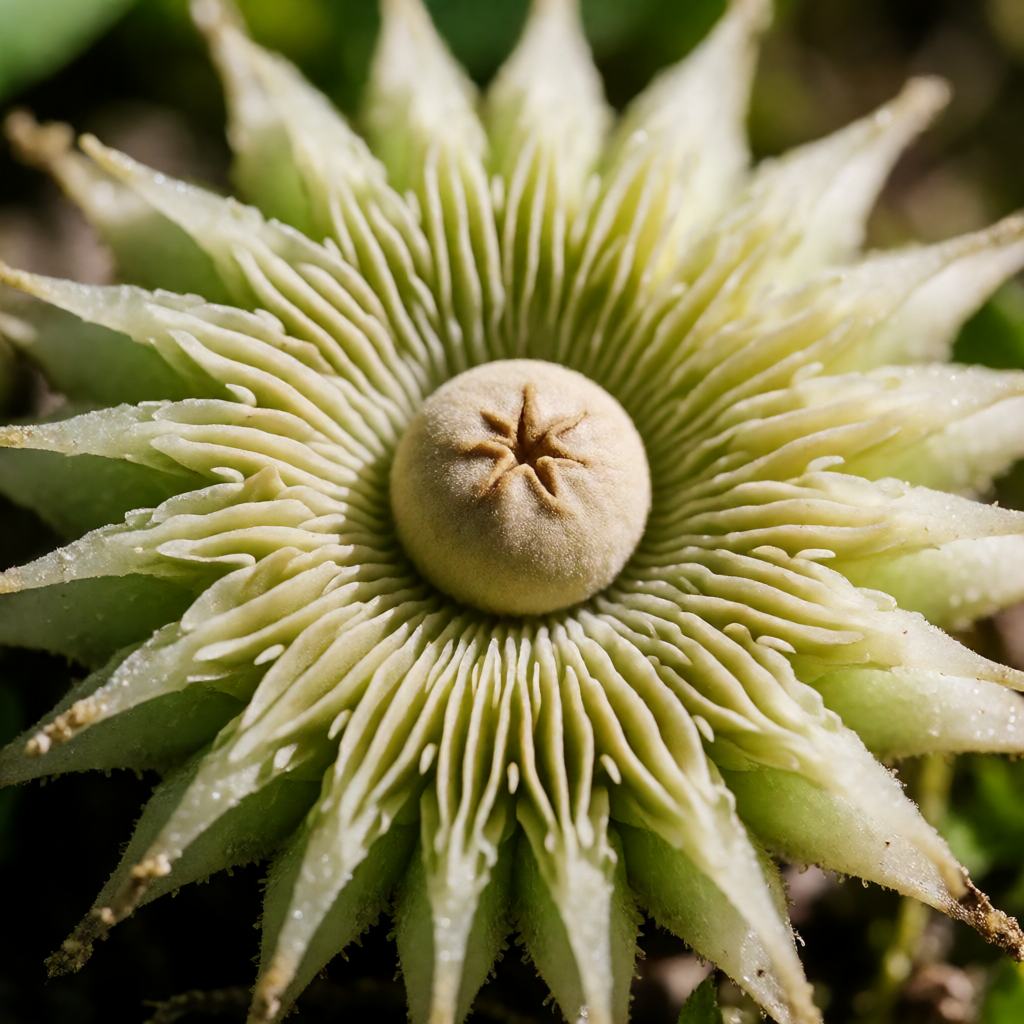
The fruit body starts as a round ball. That ball sits half buried in the litter. It is 3 to 8 cm across when open. The outer skin tears into pointed rays.
The rays are thick and leathery. They lift the spore sac clear of the ground. The sac is round and 1.5 to 3 cm wide. A ring of raised tissue sits below the sac.
That ring gives the species its common name. The surface of the young ball is rough and grey-brown. Spores are dark brown and round.
1
2
3
Woodland leaf litter
Where it lives
This fungus grows in woodland across the world. It prefers beech, oak and other broadleaf trees. It also turns up under conifers.
It lives on deep leaf litter and on rotting wood. It likes chalky or sandy soil best. The fungus favours dry ground rather than wet ground.
It often grows near paths and on banks. Fruiting happens from late summer into winter.
Fallen leaves and old wood
What it eats
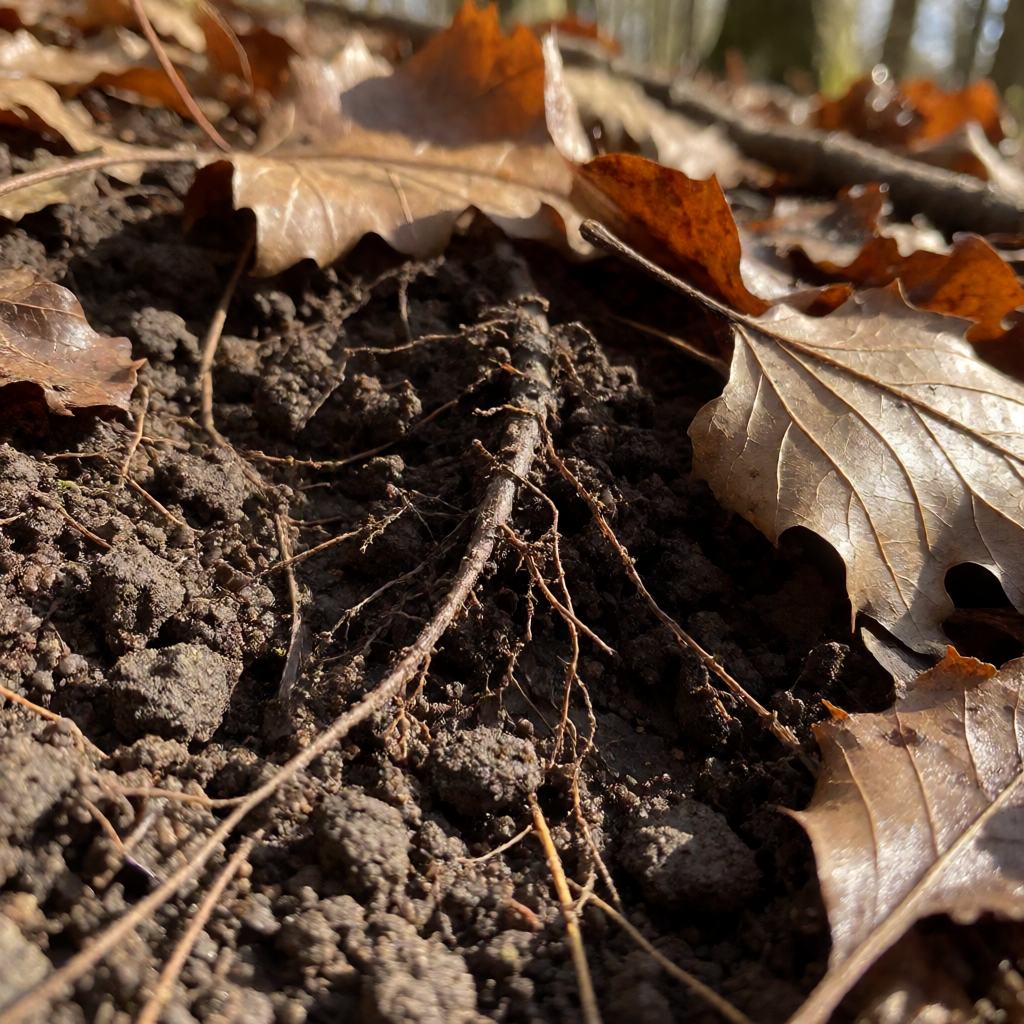
The fungus feeds on dead plant material. It breaks down fallen leaves and old wood. Threads spread through the litter and the top soil. Enzymes released by those threads digest the material.
Nutrients are then taken back into the fungus. It never feeds on living trees. It is a saprobe and a recycler of forest waste.
Rain drops that puff spores out
The breeding cycle
Reproduction happens through spores. Those spores form inside the round sac. When the sac is ripe it splits at the top.
A small hole opens on the upper surface. Rain drops hitting the sac push spores out. Wind then carries the dust away.
Each spore can grow into a new fungus. A new body appears only when the soil is right. Fruiting depends on warm, damp weather.
No IUCN rating
Conservation
No IUCN rating exists for this fungus. It has not been checked against the global rules. It appears to be common in suitable woodland.
Loss of old broadleaf forest is the main risk. Clearing leaf litter removes its food. Heavy use of woodland by people can damage it.
No rescue plan is in place for it. It is not a protected species anywhere.
Quick hits
Five things to remember
- Its outer skin splits into 4 to 8 rays.
- In dry weather the rays curl back over the spore sac.
- Rain revives the fungus and it opens again.
- Its name triplex refers to 3 layers of tissue.
- It is found on every continent except Antarctica.