 By Iris
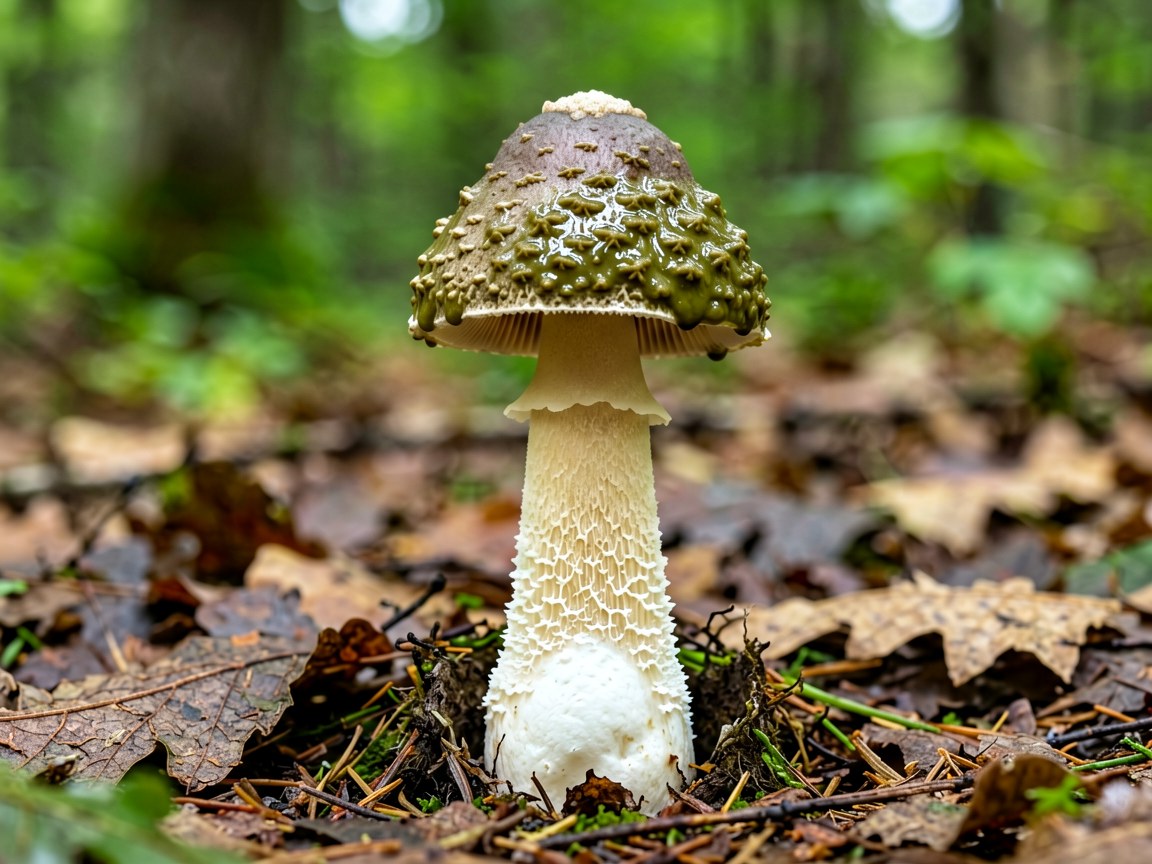
Phallus impudicus | Stinkhorn
Introduction
The stinkhorn (Phallus impudicus) is unmistakable: a pale, spongy, phallic fungus that pushes up through leaf litter and then advertises itself with a smell of rotting meat. Emerging from a whitish “egg” and growing with startling speed, it produces a honeycombed cap smeared with olive-brown slime packed with spores. Flies do the rest. It is common in woods, gardens, and hedgerows across Europe and is one of the most notorious—and useful—fungi of the woodland floor.
Taxonomy
Phallus impudicus is a basidiomycete fungus in the family Phallaceae, the stinkhorns, a group famous for foul-smelling, insect-dispersed spore masses. It is only distantly related to the gilled mushrooms people usually picture, and it sits in a different lineage from well-known woodland fungi such as Amanita muscaria, the fly agaric, though both form the same kind of underground network and produce their spores on a specialised fruit body rather than as a mould or crust.
Physical Characteristics
The fungus begins as a smooth, whitish, egg-shaped body, three to six centimetres across, partly buried in soil or litter and attached by thick white cords. From this the mature fruit body erupts, often within hours: a creamy-white, hollow, spongy stalk ten to twenty-five centimetres tall with a pitted, honeycombed surface. At the top sits a bell-shaped, olive-brown cap coated in a foul-smelling, slimy spore mass called the gleba. A white net-like skirt, the indusium, sometimes hangs below the cap.
Habitat
Stinkhorns appear in deciduous and mixed woodland, on wood chips, in hedgerows, gardens, parks, and sometimes in lawns or shrubberies where mulch has been laid. They fruit from summer into late autumn, singly or in small groups, often in the same place year after year. The species is common across Europe and parts of North America and has been spread further by the movement of wood chips and ornamental bark.
Diet
The stinkhorn is a saprotroph: it does not photosynthesise or hunt, but lives on dead organic matter. Its underground mycelium spreads through soil, leaf litter, and rotting wood, releasing enzymes that break down complex material and absorbing the released nutrients. It helps recycle fallen wood and leaf matter, and although it can also form associations with tree roots in some settings, most of its feeding is on decay.
Reproduction
The strategy is entirely built around flies. The ripe gleba smells like carrion and is sweet and sticky; blowflies and flesh flies land, feed, and fly off with spores stuck to their feet and mouthparts, later wiping them onto fresh ground. Once the gleba has been eaten or washed away, the bleached, honeycombed stalk remains for days before collapsing. The slime, not the air, carries the spores, which is why the fungus invests in scent rather than in a mechanism to launch them.
Conservation
Phallus impudicus is common, widespread, and not threatened. It adapts well to human-altered ground and often increases where wood-chip mulch is spread in gardens and parks. Because its fruit body appears above ground only briefly and unpredictably, it is probably under-recorded: the buried mycelium can persist for years without showing anything at all. It needs no special protection.
Fun Facts
- It can burst out of its “egg” and reach full height in a few hours, one of the fastest growths in the fungal world.
- The spore slime smells of rotting meat, and flies disperse the spores rather than wind.
- The white honeycombed stalk left after the slime is gone is often what people find first.
- Young “eggs” are edible and were once eaten in parts of Europe, though the mature fungus is not worth trying.
- Its Latin name means “shameless phallus”, given for its unmistakable shape.