 By st20113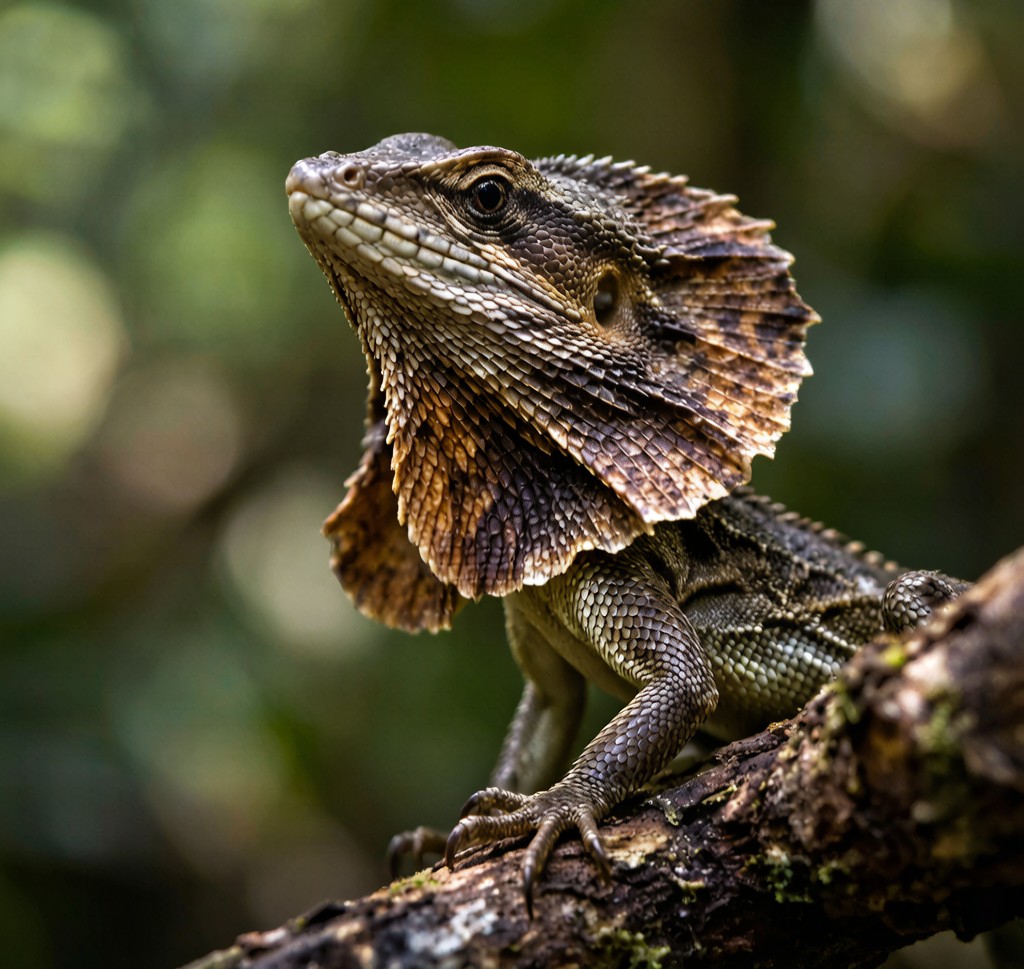
Overview
The Frilled Dragon (Chlamydosaurus kingii) is one of the most theatrically spectacular of all reptiles – an Australian agamid lizard that has become an icon of the continent’s unique biodiversity through its extraordinary defensive display. When threatened, the frilled dragon erects an enormous, membranous frill – a dramatic erectile collar of skin and cartilage that springs open from around the animal’s neck like an umbrella, revealing a vivid orange to red interior lined with numerous branching blood vessels that create a striking pattern. Combined with a dramatic gaping display of the mouth – which is often bright pink or yellow inside – and a sudden rise onto the hind legs, this display transforms a modest-sized arboreal lizard into one of the most intimidating vertebrates in the Australian bush. The frill is supported by specialized bones called the hyoid apparatus, which can be lowered and raised at will.
The frilled dragon is found throughout the tropical savannas and open forests of northern Australia – from Western Australia through the Northern Territory and into Queensland – and also in southern New Guinea. Adults typically measure 60 to 90 centimeters in total length, with the body accounting for approximately 25 centimeters and the long, tapering tail for the remainder. The body is slender and laterally compressed, the head is large and triangular, and the legs are long and powerful, with long digits equipped with curved claws for climbing. The base coloration is typically brown or grey, with darker stripes across the back and tail that help to camouflage the lizard against the bark of trees.
Habitat and Behavior
The frilled dragon is primarily an arboreal species, spending the majority of its time in trees where it hunts insects and other small prey, basks in the morning sun to warm its body, and rests during the heat of the midday. The lizard descends to the ground primarily to move between trees when the distance is too great to jump, to access ground-level prey, or to flee from terrestrial predators. In areas of open savanna where trees are scarce, frilled dragons spend more time on the ground and are frequently observed moving between widely spaced trees or crossing roads and open tracks. The species is most active during the wet season (October to March in Australia) when insect prey is abundant, and becomes relatively inactive during the dry season when food is scarce.
The frilled dragon’s most famous behavior – the dramatic frill display – is used both in territorial disputes with other males and in defense against predators. When two male frilled dragons meet, they typically begin with ritualized displays – head-bobbing, lateral displays, and frill erections – before escalating to physical combat if neither individual retreats. When confronted by a predator such as a goanna, snake, dingo, or bird of prey, the frilled dragon runs toward the threat, erects its frill, opens its mouth wide, and may even rush at the attacker before suddenly turning and fleeing at high speed – a behavior that Startles and confuses predators and has given rise to local names including “bicycle lizard” for the speed with which the species moves on its hind legs when fleeing.
Diet and Thermoregulation
The frilled dragon is a specialized insectivore that feeds primarily on insects and other small invertebrates, including ants, beetles, termites, caterpillars, spiders, and occasionally small vertebrates including other lizards and nestling birds. Like all reptiles, the frilled dragon is ectothermic – it cannot generate its own body heat metabolically – and must regulate its temperature by basking in the sun or retreating to shade. The species is most active in the morning and late afternoon, when it can be seen basking on tree trunks and branches, and retreats to the canopy or to shaded areas during the heat of the midday. This pattern of activity – which allows the lizard to maximize its body temperature and foraging time while minimizing exposure to overheating – is characteristic of many desert and savanna reptiles.
The frilled dragon’s diet varies seasonally with the availability of prey: during the wet season, when insect abundance is high, the lizard feeds frequently and can gain significant body mass; during the dry season, food intake decreases dramatically and the lizard may survive for weeks or months on stored fat reserves. The species drinks water by lapping from puddles and dew droplets, and obtains additional moisture from its prey. The frilled dragon’s hunting strategy combines active pursuit of mobile prey with sit-and-wait foraging, with individuals often stationed at predictable locations – such as tree trunks, termite mounds, or ant trails – where insect prey is concentrated.
Conservation
The Frilled Dragon is listed as Least Concern on the IUCN Red List, reflecting its broad distribution across northern Australia and southern New Guinea and its apparent ability to tolerate some degree of habitat modification. However, the species faces localized threats in parts of its range, including habitat loss due to agricultural development (particularly cattle grazing, which reduces tree cover and alters fire regimes), the introduction of invasive species including feral cats and cane toads, and deliberate killing by humans who encounter the lizard and perceive it as threatening. In some parts of its range, particularly in Queensland, the frilled dragon is considered a pest under state wildlife legislation and landowners are permitted to kill individuals that are found on their property.
Despite these localized threats, the frilled dragon remains one of the most recognizable and popular animals of the Australian tropics, featuring prominently in tourism marketing, educational programs, and conservation campaigns. The species’ spectacular appearance and dramatic behavior make it a powerful ambassador for the conservation of the Australian savanna ecosystem and its associated biodiversity. Conservation efforts for the frilled dragon focus on protecting remaining habitat in the face of expanding agricultural and urban development, reducing the impacts of invasive species, and promoting responsible attitudes toward wildlife among rural and regional communities.
Adults reach 20 to 28 centimetres in total length. The body is stout and somewhat flattened, with short limbs better suited to rocky terrain than to climbing, and the skin is covered in small granular scales scattered with larger tubercles. The base colour is yellow to pale orange, overlaid with bold dark spots and bands that camouflage the gecko among desert gravel. Its large amber eyes give excellent night vision, and its thick, tapering tail stores fat for lean times; like many lizards, it can shed the tail when seized by a predator and later regrow it, a defence also used by the Frilled Dragon.