 By Iris
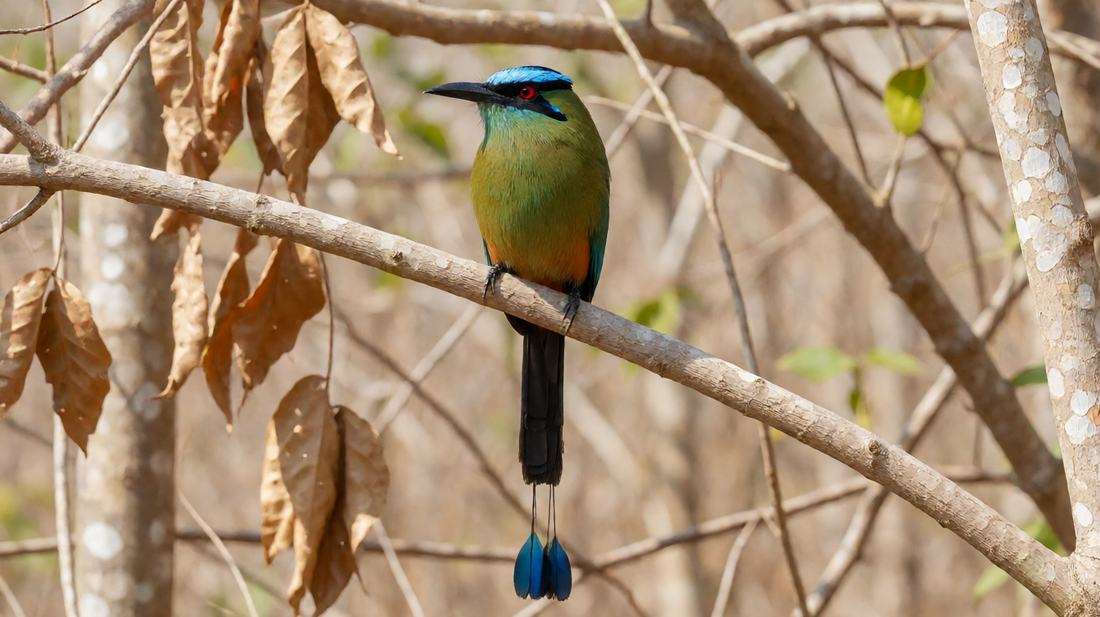
Eumomota superciliosa | Turquoise-browed Motmot
Species Profile · Momotidae
Turquoise-browed Motmot
A Central American hunter with a bright blue brow and a long tail ending in two flat rackets that both sexes carry.
Least Concern (2019) 2019 assessment
Length
Weight
Eggs
Hatch
Tunnel
Mature birds
The Turquoise-browed Motmot
A tail built for signals
This bird is a small, brightly coloured hunter of Central America. It sits on open perches such as wires and fences. From there it watches for insects and small lizards.
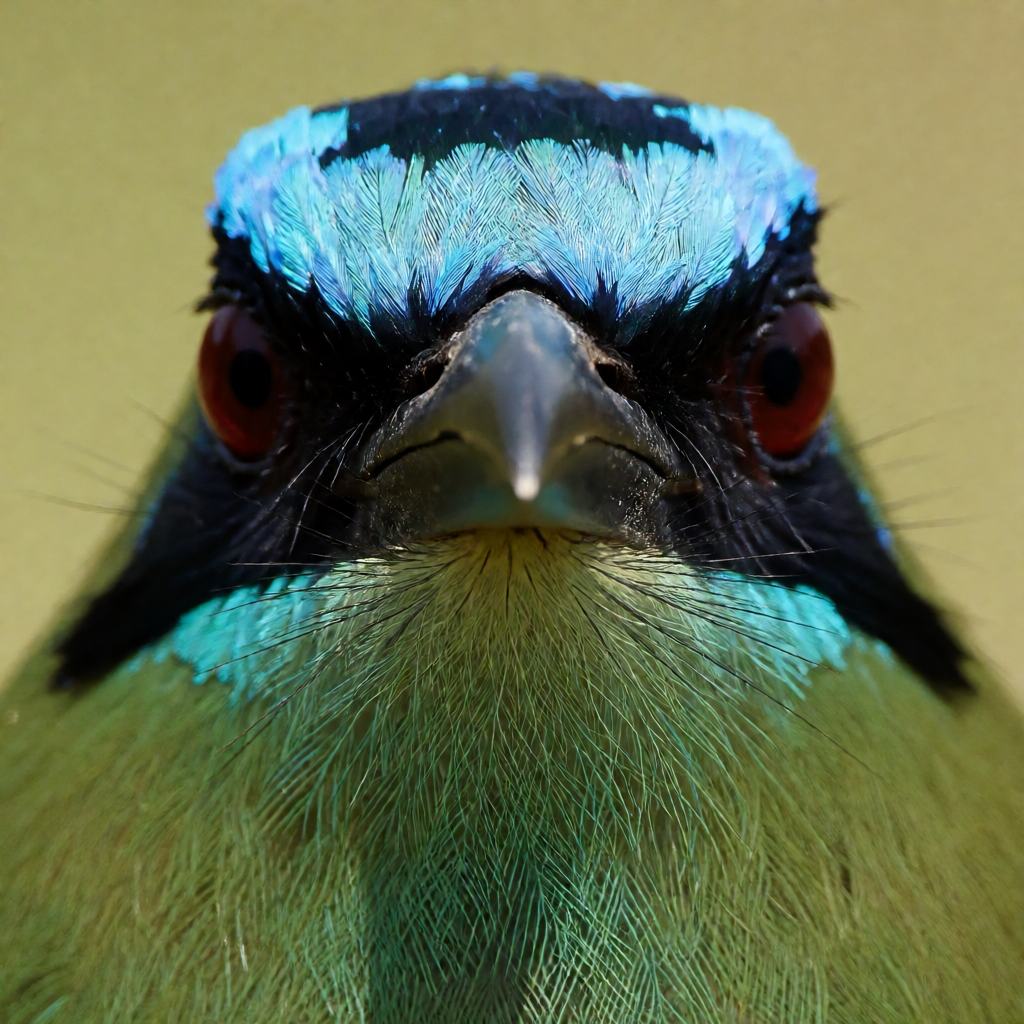
Its body is mostly grey-blue with a rufous back. A bright blue stripe sits above each eye. The throat carries a blue-edged black patch.
Its long tail ends in 2 flat rackets. Both males and females carry that odd tail.
Family tree
Momotidae, the motmots
Eumomota superciliosa is its Latin name. The bird sits in the family Momotidae. That group holds the motmots of the warm Americas.
It is the only member of its genus. A British naturalist described it in 1837. Seven forms are known today.
Its nearest kin are the larger motmots of the forest. A Common Kingfisher shares the same order and the same perch-and-wait style. Both birds take prey with a quick lunge forward.
34 cm of blue and rufous
How to tell one
An adult is about 34 cm long. Body weight sits near 65 g. The bill is long, wide and slightly curved down. Its edges carry small saw-like teeth.
The bird has blue flight feathers. The upper side of the tail is blue as well. Two central tail feathers grow very long. Their bare shafts end in blue-black rackets.
People once thought the bird trimmed them by beak. In fact the barbs simply wear away. The front toes are joined at the base.
1
2
3
Dry forest and open scrub
Where it lives
This bird lives from south-east Mexico to Costa Rica. It is common inside that range. It prefers open ground and the edge of forest.
Dry woodland and scrub suit it best. It likes a tall, broken canopy and a dense understory. It also uses gardens and farmland.
The bird often perches on fences and poles. It is easy to see because it sits in the open.
Insects and small lizards
What it eats
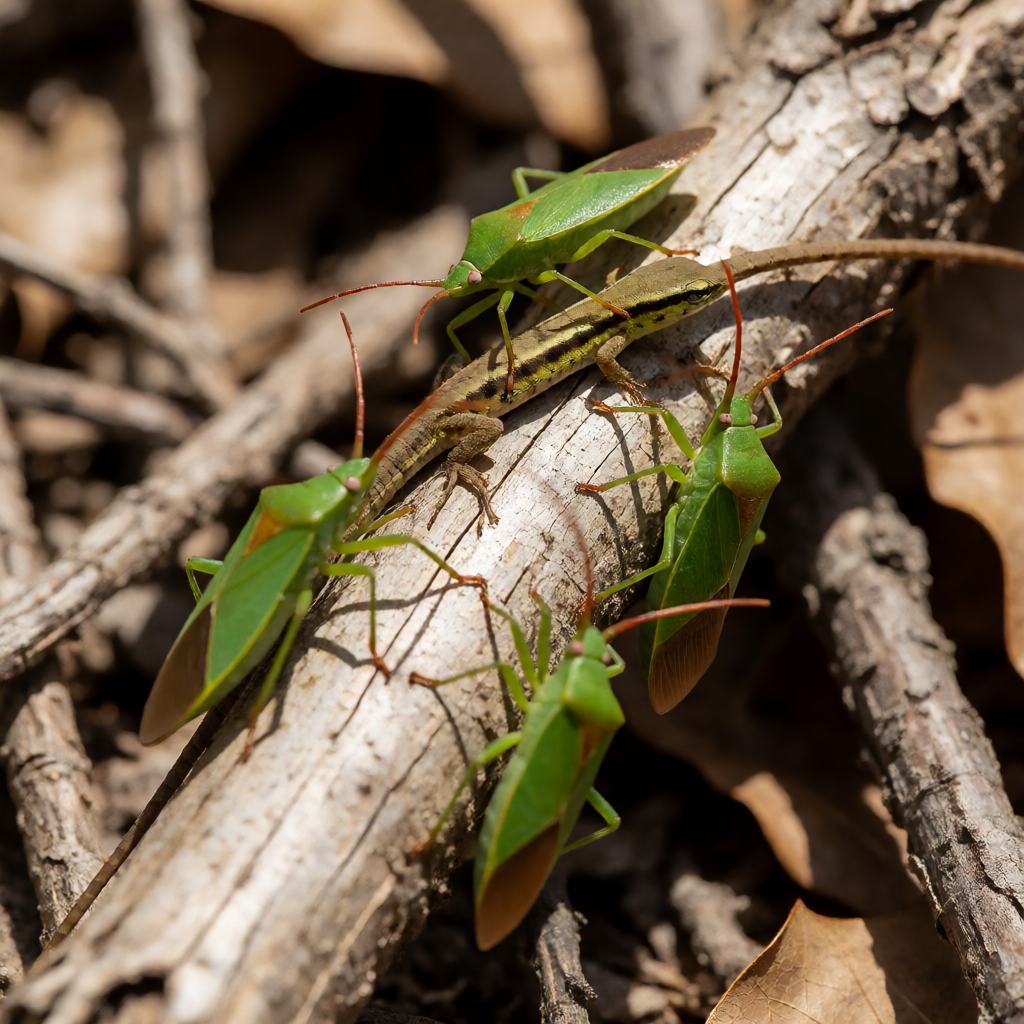
Insects form the largest part of the diet. Beetles, grasshoppers and winged ants are all taken. The bird also catches small reptiles.
Lizards and small snakes are eaten. It may take a few small fruits. Its hunting method is to sit and wait.
Then it darts out and grabs the prey. The wide, serrated bill holds slippery food.
A tunnel in an earth bank
The breeding cycle
Pairs dig a long tunnel in an earth bank. Sometimes they use a quarry wall or a well shaft. In dry country they nest in limestone cracks. The tunnel is dug during March.
That timing avoids the worst heat. The female lays 3 to 6 plain white eggs. The eggs are laid 2 days apart. They need 16 to 20 days of warmth.
Both parents feed the young birds. In busy areas the eggs hatch sooner.
Least Concern
Conservation
The IUCN lists this bird as Least Concern. Its numbers are thought to be falling slightly. Between 500,000 and 4,999,999 mature birds remain.
It has a very large range. Loss of dry forest is the main risk. Heavy pesticide use may cut the insect supply.
The bird is the national bird of El Salvador. It also holds that honour in Nicaragua. It adapts well to farmland and to towns.
Quick hits
Five things to remember
- Its tail rackets work as a signal to other birds.
- Both sexes wag the tail when a predator is near.
- The wag tells the hunter that it has been seen.
- The bird is a useful marker of dry forest health.
- Its local name in El Salvador is torogoz.