 By Iris
Daucus carota | Wild Carrot
Species Profile · Apiaceae
Wild Carrot
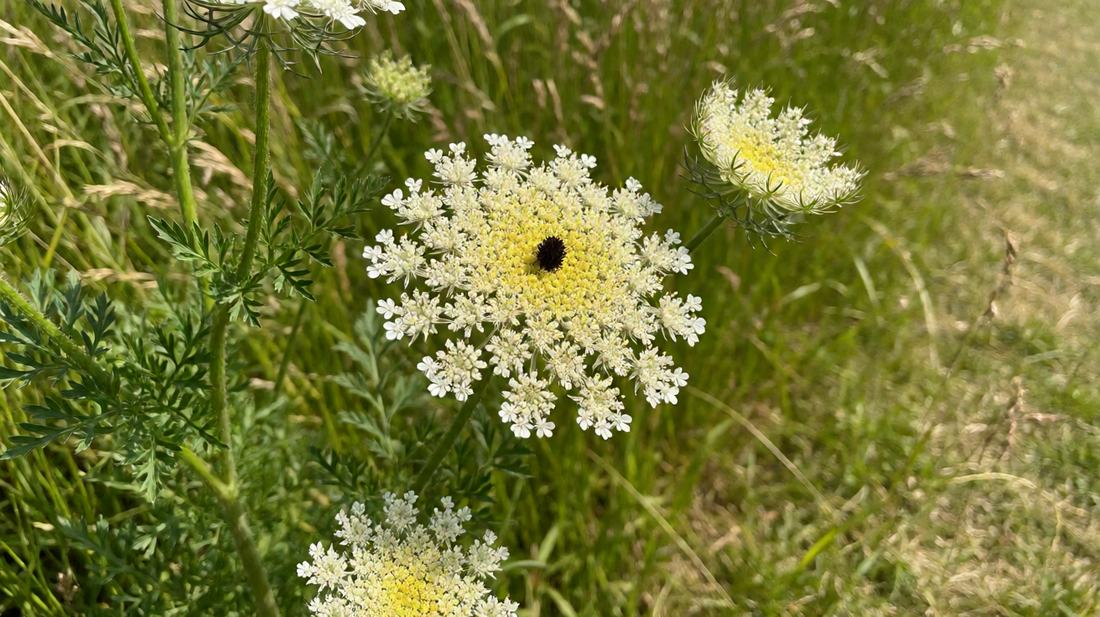
The tall, finely-leaved plant of the field margin — the wild ancestor of the garden carrot, easy to know by its flat white flower head and its white tapering root.
IUCN: Least Concern
Range
Height
Flower
Root
Stays
The wild ancestor of the carrot
Easy to know by its white umbrella
The wild carrot is a tall, finely-leaved plant. It grows on the field margin, the rough grass and the hedge bank of the temperate north. It is the wild ancestor of the carrot that is grown in the garden for the orange root. It is a plant of the open, sunny ground.
It will come up in the field, in the hedge and on the bank where the soil has been turned. The plant is easy to know. Its most obvious feature is the flat, umbrella-shaped head of the tiny white flowers. The species lives across the whole of Europe and across most of Asia.
It was carried across the Atlantic with the early farms. It is now one of the commonest of the plants of the rough field in the north.
Family tree
Apiaceae, the carrots and parsnips
The wild carrot is in the family Apiaceae. That is the family of the carrots and the parsnips. It sits in the genus Daucus. The Swedish naturalist Linnaeus described it in 1758. It has stayed in the family ever since. The family Apiaceae is one of the large families of the temperate plants. It carries the carrot, the parsnip, the celery and the celeri of the garden.
It is defined by the way the flower is carried. The flower is a flat, umbrella-shaped head that the wind and the insects carry in the summer. The species sits among the rough, field-dwelling plants of the north. Its close relatives are the garden carrot. They are also the other members of the genus that live in the open ground of the world. Its close relatives in the other seas are the many species of the same family. Those live in the open, rough ground of the temperate world.
The wild carrot shares the family with the cherry blossom. That is a very different family and a very different kind of plant. The two live in the same place. They meet in the hedgerow and the rough field. The cherry is one of the plants that is grown for the blossom and the fruit. The wild carrot gives the root and the seed.
White head, one dark flower
How to tell one
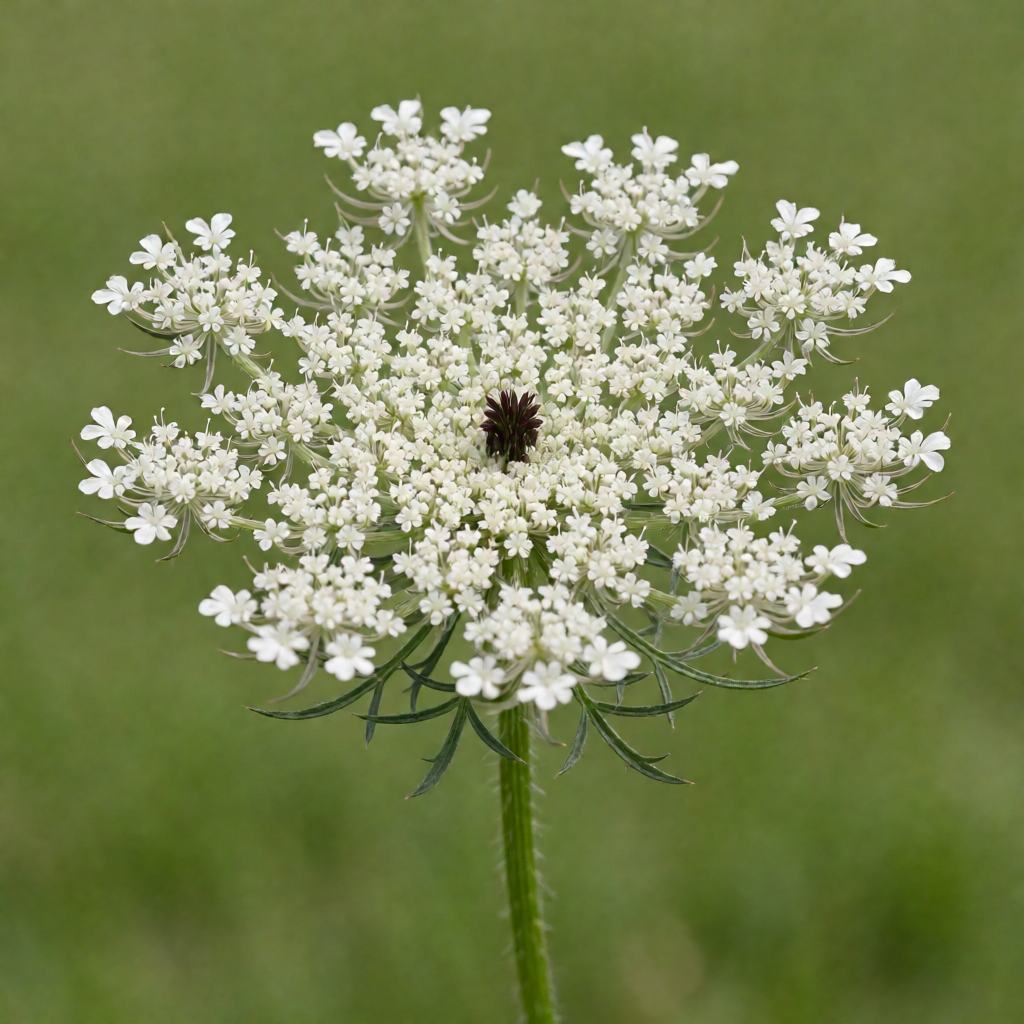
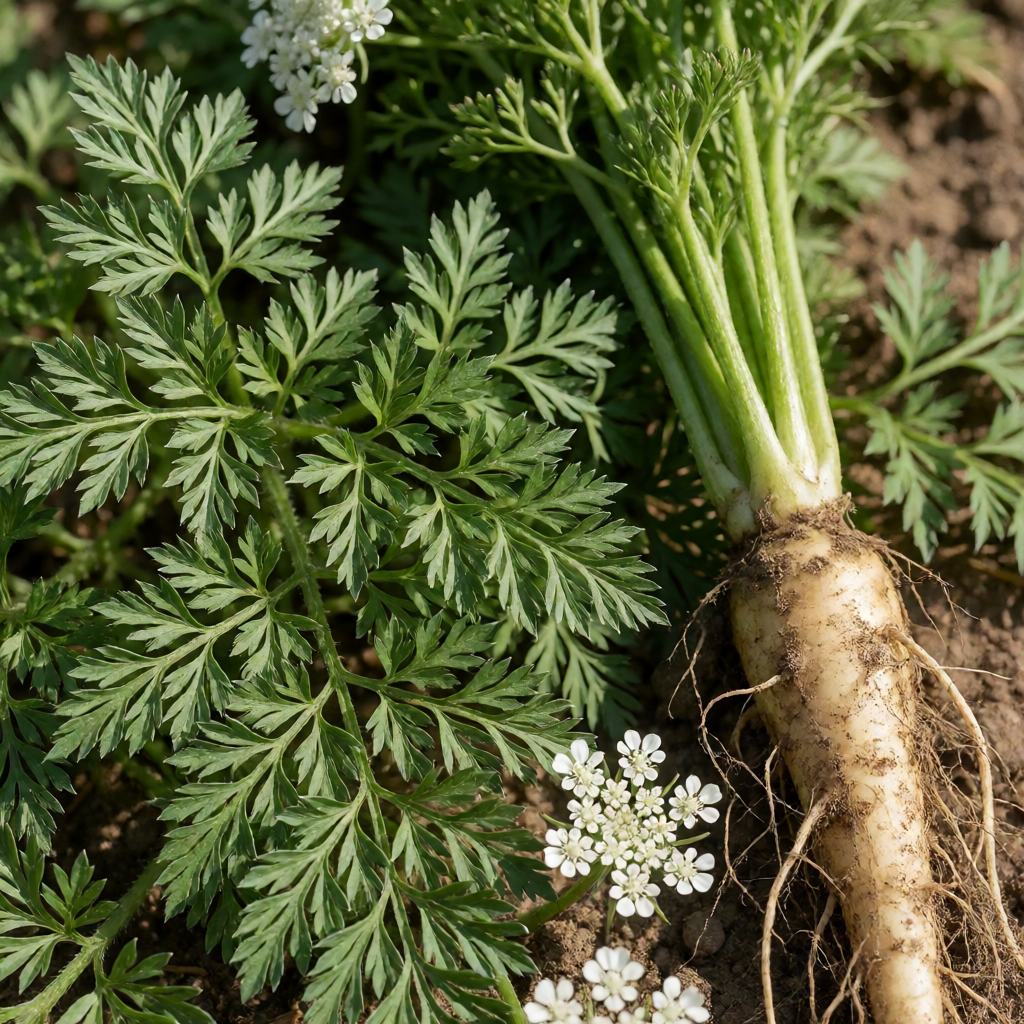
The wild carrot is a tall, rough, weedy plant. It will grow to a height of 1 to 2 m. Its whole plant is covered in a fine, soft, grey-green hair. Its leaves are so finely cut that they look like the fern of the field. They sit on a long, thin, hollow stem.
Its flower head is a flat, round, white umbrella. Its most obvious feature is the single, dark, central flower. That flower sits in the middle of the head. Its root is a white, tapering tap root. The plant carries it up out of the soil in the spring.
Its fruit is a small, brown, oval seed. The wind carries it in the autumn. The whole plant is easy to tell by the leaf, the flower and the root.
1
2
3
The open rough field
Where it lives
The wild carrot lives in the open, rough, sunny ground of the temperate north. It is a plant of the field margin, the rough grass and the hedge bank. It will grow from the light, open field up into the rough, stony ground of the upland. The species is one of the commonest of the plants of the rough field.
It was one of the first plants to come up in the ground that had been turned for the farm. The plant is a strong, hardy one. It will stand the cold of the winter and the dry of the summer. The wild carrot is a plant of the open ground.
It will not grow in the deep shade of the forest. It is one of the plants that is most at home in the light of the open field.
Its own food, and the bees
What it eats
The plant makes its own food. It takes the light of the sun and the water of the soil. It will grow in the open, rough field that is too poor for the crop. The leaves are the structure that the plant uses to take the light.
The roots take the water and the mineral from the soil. The plant is fed by the insects and the birds that come to it. The flower head is the food of the small insects. Those insects take the sugar from the tiny white flowers in the summer.
The wild carrot is one of the plants that the bees come to in the warm months. The flower head is the food that the insects take from the plant in the early season.
Wind and insects carry the seed
The breeding cycle
The wild carrot flowers in the warm months of the summer. Its small, white flower heads carry the male and the female flower on the same plant. The wind and the insects carry the pollen from one head to the other.
Its fruit is a small, brown seed. The wind scatters it in the autumn. A single plant will carry a great many of the seeds.
The few that will find the open ground and take root are the ones that will grow into the next plant. The wild carrot is one of the plants that will come up in the ground that has been turned. It will not stay for more than a year or two in the same spot.
No danger, moved to the garden
Conservation
The wild carrot is not a plant that is in danger. It is one of the commonest of the plants of the rough field. It does not appear on the list of the threatened plants.
Its range is still as wide as it has been. The one real concern is that the plant has been taken over by the garden. There it is grown for the orange root of the crop.
The wild form is now one that is studied by the people who care for the old plants of the field. The species is one that is grown in the rough field for the seed and for the root. It is one of the plants that is kept by the people who care for the old farm.
Quick hits
Five things to remember
- The wild carrot is the wild ancestor of the carrot that is grown in the garden for the orange root.
- The flower head has a single, dark flower at its centre. It sits in the middle of the flat, round, white umbrella.
- The leaves look like the fern of the field. They ride on a long, thin, hollow stem.
- The plant will not stay in the same spot for more than a year or two. It comes up in the ground that has been turned.
- The garden carrot is grown for the orange root of the crop. The wild form is now studied by the people who care for the old plants of the field.