 By st20113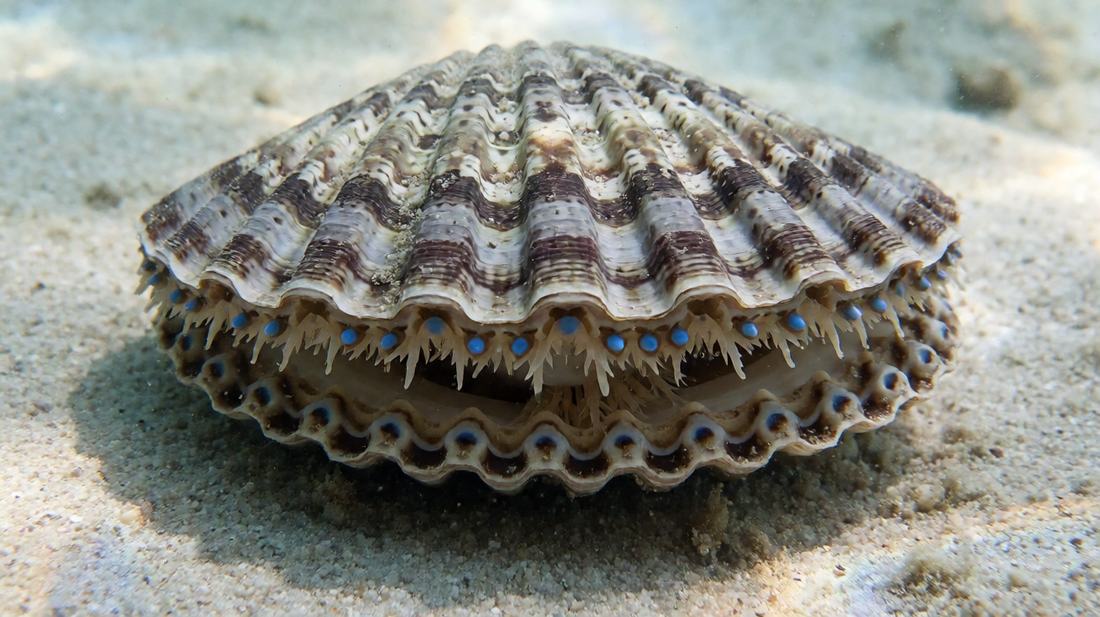
Argopecten irradians | Bay Scallop
Species Profile · Pectinidae
Bay Scallop
A small ribbed scallop of shallow sea grass beds that swims in short bursts by clapping its two shells and carries about 30 tiny blue eyes along its edge.
A small fan shaped scallop that swims by clapping its shells
Shell
Ribs
Eyes
Muscles
Larva
Life
The bay scallop
A small shellfish of shallow bays
The Bay Scallop is a small shellfish of shallow bays. It is 1 of the few shellfish that can swim. It claps its 2 shells and pushes out water.
That move lifts it off the seabed. It lives in beds of eel grass. It filters tiny plants from the water.
It grows fast and dies young. It is a favourite food of the starfish.
Family tree
Bivalvia, Pectinidae
The Bay Scallop sits in the phylum Mollusca. Its class is the Bivalvia. Its order is the Pectinida. Its family is the Pectinidae, the scallops.
Our animal shares the family with the Great Scallop. That animal grows much larger. It lives in deeper water on clean sand. Our animal stays in shallow bays.
It also lives for a much shorter time. The 2 species both swim by clapping the shells. Both also carry a row of small eyes.
7 cm and 30 blue eyes
How to tell one
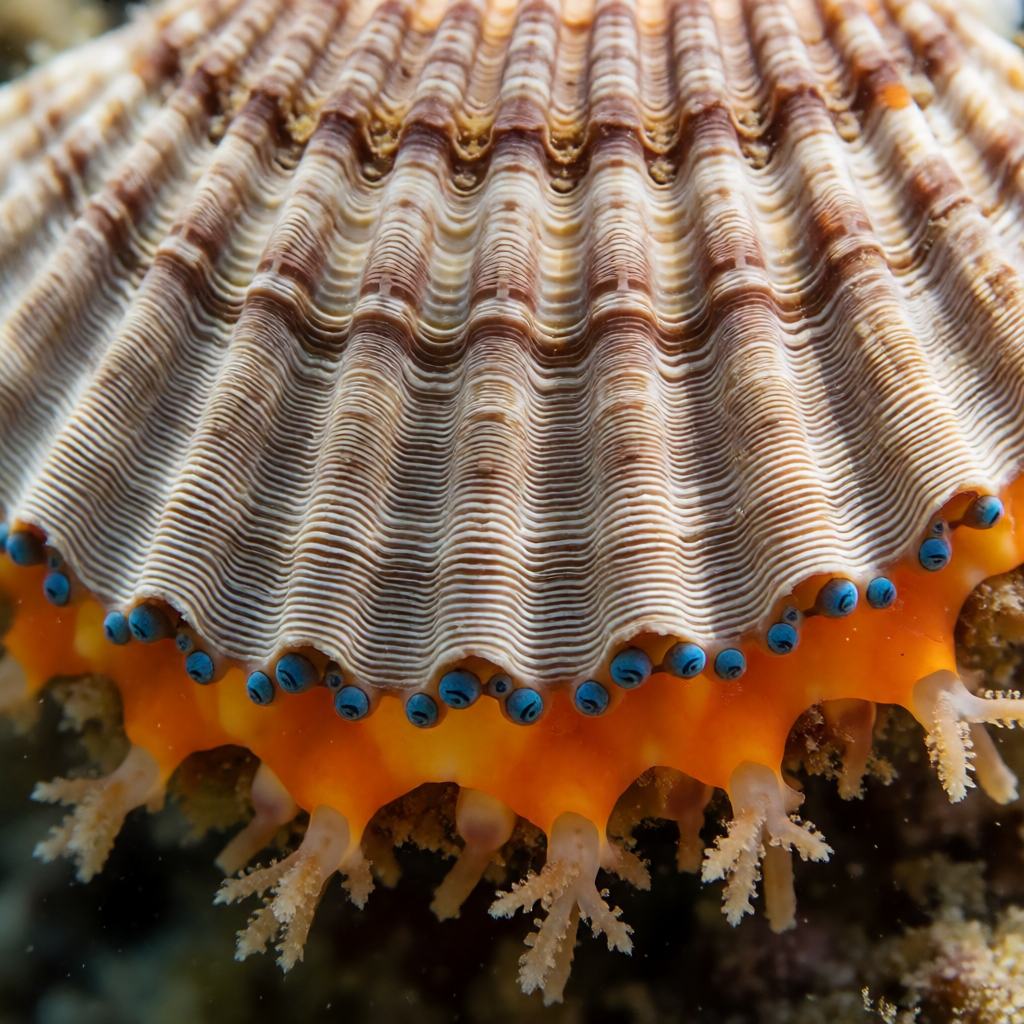
The shell grows to about 7 cm across. It takes the shape of a fan. About 17 ribs run out from the hinge. The colour varies a great deal.
Some shells are grey or brown. Others are orange or yellow. The two shells are unlike in shape. The lower one is deep and cup like.
The upper one is flat. A single large muscle holds the shells shut. That muscle is the part that people eat. A row of about 30 small blue eyes lines the edge.
1
2
3
Sheltered bays with sea grass
Where it lives
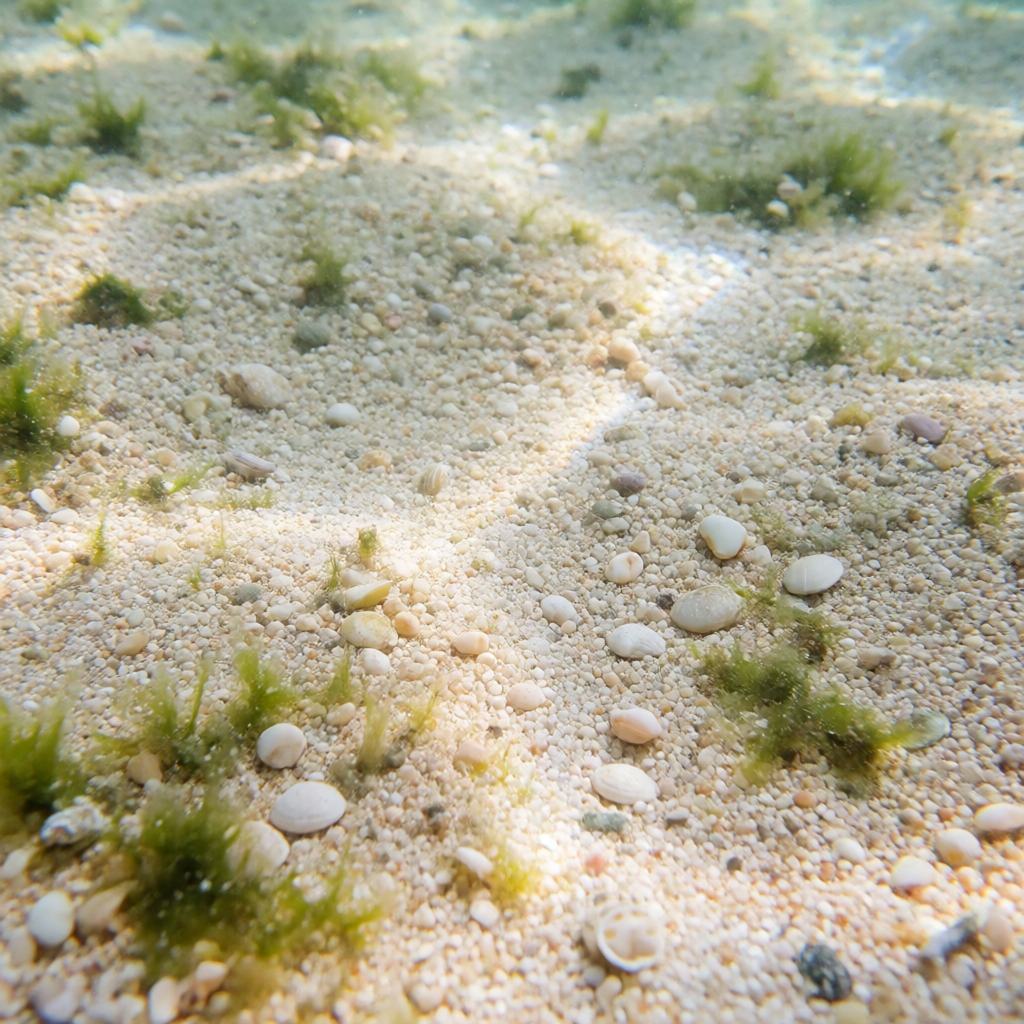
The species lives in sheltered bays and river mouths. It favours a bed of eel grass. It also lives on clean sand and gravel. It lives from the low tide line down to about 20 m.
It needs clear water with plenty of food. It also needs a steady flow of water. It dislikes heavy mud and dirty water. The young fixes itself to a blade of grass.
It then drops to the seabed as it grows. A quiet bay with sea grass suits it best.
Tiny drifting plants
What it eats
The Bay Scallop is a filter feeder. It takes tiny plants from the water. Those plants are called plankton. The animal pulls water in at the front.
Fine hairs on the gills trap the food. The food then travels to the mouth. The water leaves at the back. The animal feeds all day and night.
It needs a rich supply of plankton. A poor bay gives it little food. It may then grow very slowly.
A larva that settles on sea grass
The breeding cycle
The species lives for only a short time. Most animals breed in their 2nd summer. The male and the female release their cells into the water. The egg is fertilised in the open sea.
The young larva swims for about 2 weeks. It then settles on a blade of sea grass. Small threads hold it in place. It grows fast through the summer.
It drops to the seabed in the autumn. Most adults die after they breed. Few live beyond 2 years.
Dirty water and lost sea grass
Conservation
The Bay Scallop is not listed as endangered. Its numbers have fallen in many bays. It has no legal protection of its own. Dirty water kills the young.
Loss of sea grass removes its home. A warm summer may also harm it. Fishing takes a large number each year. The animal breeds only once in its short life.
That habit makes it slow to recover. A clean bay with sea grass gives it the best chance.
Quick hits
Five things to remember
- It swims by clapping its 2 shells together.
- It has about 30 small blue eyes on its edge.
- It can swim several metres in one short burst.
- It breeds once and then dies.
- Its single large muscle is the part people eat.