 By st20113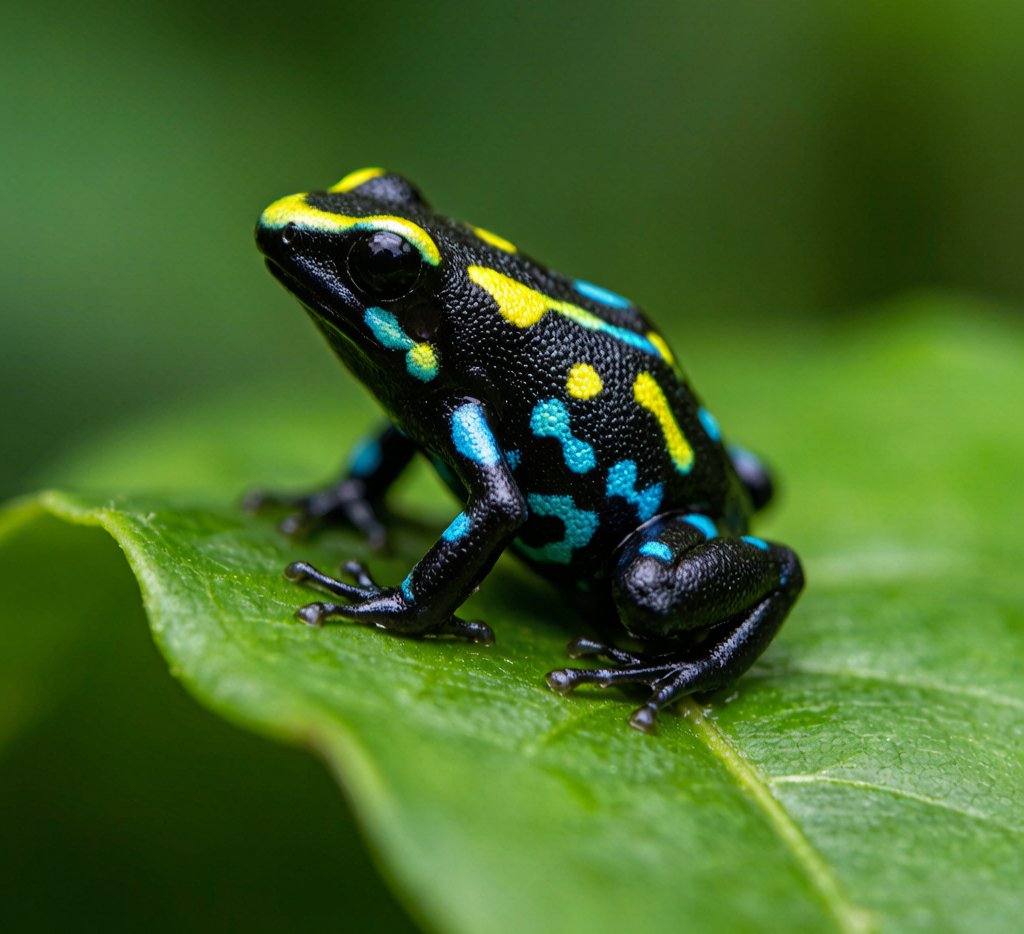
Introduction
The dyeing poison dart frog (Dendrobates tinctorius) is a vividly colored frog native to the humid forests of the Guiana Shield in northeastern South America. Famous for its bold black body adorned with sky-blue and yellow spots, it is one of the most visually striking amphibians alive and a favorite among enthusiasts who keep the red-eyed tree frog and related species. Its common name comes from historical accounts that indigenous people used its skin secretions to dye the feathers of captive parrots a deeper blue.
Taxonomy
This species belongs to the family Dendrobatidae, within the genus Dendrobates. The name “tinctorius” refers to that feather-dyeing tradition. It is a diurnal, terrestrial frog, unlike the many secretive amphibians that hide by day. Several color morphs exist across its range, each locally distinct, and they can differ so dramatically that early naturalists described them as separate species. Genetic studies now confirm they belong to a single variable species with strong regional patterning driven by both genetics and local selection.
Physical Characteristics
Adults reach about 5 to 7 centimeters in length, with females generally larger than males. The skin is smooth and glossy, bearing aposematic coloration that warns predators of its toxicity. The bright patterns are not random but signal the presence of alkaloid toxins acquired from a diet of ants, mites, and other small arthropods. Unlike toads, poison dart frogs lack warty skin and a parotoid gland, instead delivering their chemicals through the skin itself, which must be kept moist to function.
Habitat
Dyeing poison dart frogs live on the forest floor of tropical rainforests, among leaf litter, fallen logs, and the bases of trees. They favor areas with high humidity and steady temperatures, often near streams or seepages. During dry spells they may shelter in bromeliads or burrow into moist substrate to avoid desiccation. Because their skin breathes through water, they are highly sensitive to changes in humidity and to pollutants, making them useful indicators of forest health when monitored over time.
Diet
In the wild they eat small invertebrates, especially ants, termites, and tiny beetles, from which they sequester defensive chemicals. In captivity, where such prey is absent, they are harmless because their toxins come from the diet rather than being produced internally, so captive-bred frogs lose their toxicity within a generation. Their warning colors contrast sharply with the drab browns of the common toad, which relies more on nocturnal habits than on bright advertisement for protection.
Reproduction
Males call to attract females and guard suitable egg sites on land. After the female lays eggs on a leaf or in a moist crevice, the male fertilizes them and keeps them moist by urinating on them until they hatch. Once tadpoles hatch, a parent, usually the male, transports them on its back to small pools of water held in bromeliads or tree holes, where they complete their development. This terrestrial start followed by an aquatic larval stage is typical of many dart frogs and protects eggs from flooding.
Conservation
The species is currently listed as Least Concern, with stable wild populations, though habitat loss and collection for the pet trade create local pressures. Captive breeding has reduced dependence on wild specimens and supplies most animals in the hobby. Like the monarch butterfly, it relies on warning coloration to deter predators, an example of convergent aposematism in distantly related animal groups that both advertise their unpalatability.
Fun Facts
The toxicity of these frogs is diet-derived, so captive-bred individuals are safe to handle. Their color morphs can differ so much that they were once thought separate species. Tadpoles are carnivorous and may even eat unhatched siblings if food is scarce, a harsh but effective strategy that improves the odds for the survivors in small nursery pools. Their skin chemicals have attracted medical interest because some alkaloids show painkilling power many times stronger than morphine without the same risk of addiction. In the wild a single frog may carry enough toxin to sicken a dog, which is why native predators learn to avoid the bright pattern quickly.