 By st20113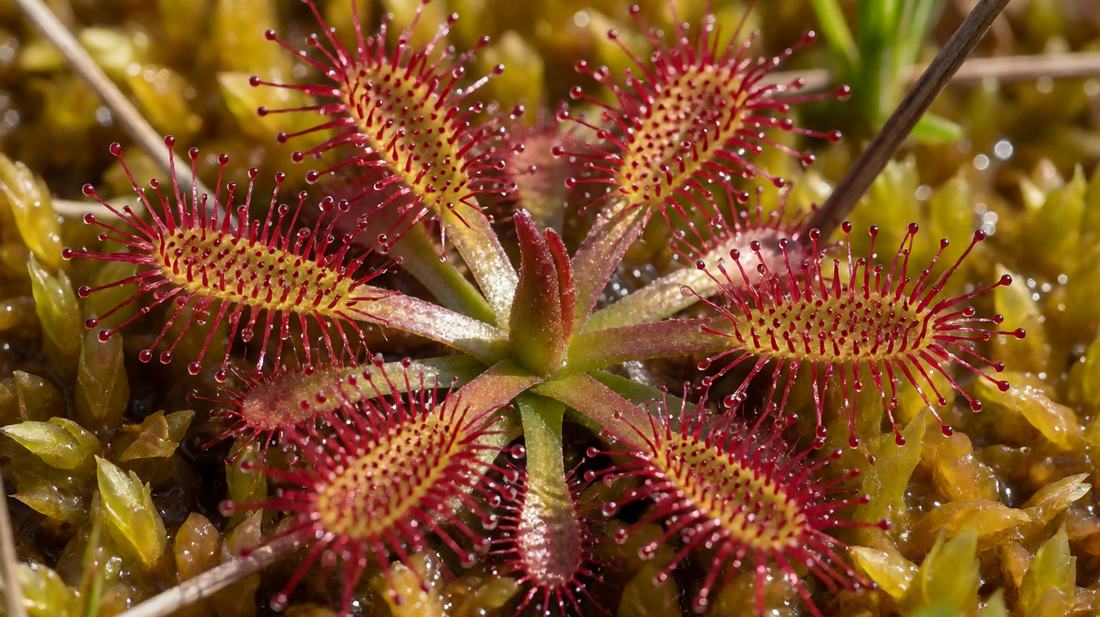
Drosera intermedia | Oblong-leaved Sundew
Species Profile · Droseraceae
Oblong-leaved Sundew
A small plant of wet acid ground that traps small flies on the sticky red hairs of its narrow leaves.
A tiny bog plant that catches insects with sticky red hairs
Height
Leaf blade
Leaf stalk
Flowers
Family
Trap
The Oblong-leaved Sundew
A small hunter of wet acid ground
The Oblong-leaved Sundew is a small meat eating plant of wet ground. It is 1 of the few sundews found on open bog. The plant catches insects with sticky red hairs.
Its narrow leaves form a flat rosette near the moss. It looks harmless but traps small flies with ease.
Family tree
Caryophyllales, Droseraceae
The Oblong-leaved Sundew belongs to the phylum Tracheophyta. Its class is the Magnoliopsida, the flowering plants. Its order is the Caryophyllales. Its family is the Droseraceae, the sundews.
Our plant shares the family with the Cape Sundew. That family holds about 200 species. All of them catch small animals with sticky hairs.
10 cm and sticky red hairs
How to tell one
The plant stands under 10 cm tall. The leaf blade measures about 4 to 8 mm long. Its stalk adds a further 2 to 4 cm.
Long red hairs cover the upper surface. Each hair carries a clear drop of sticky fluid. The drops shine like tiny beads of glass.
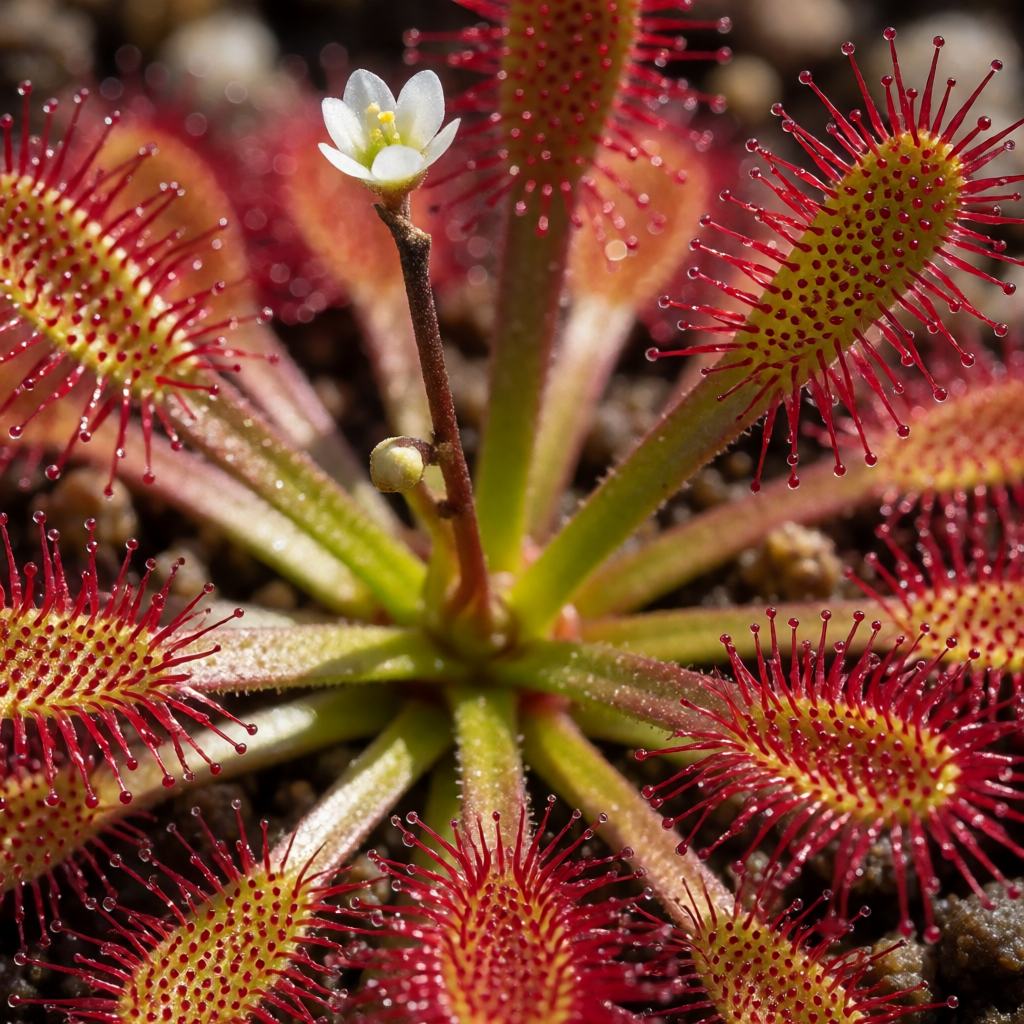
The flowers are white and small. Each flower carries 5 petals.
1
2
3
Bogs, wet heath and bare peat
Where it lives
The species needs wet acid ground. It grows on bogs, wet heath and fen edges. It also grows on bare peat beside pools. It needs full light and little shade.
It can sit in shallow water for weeks. It copes with poor soil better than most plants. Clean rain water suits it best.
Sunlight and trapped insects
What it eats
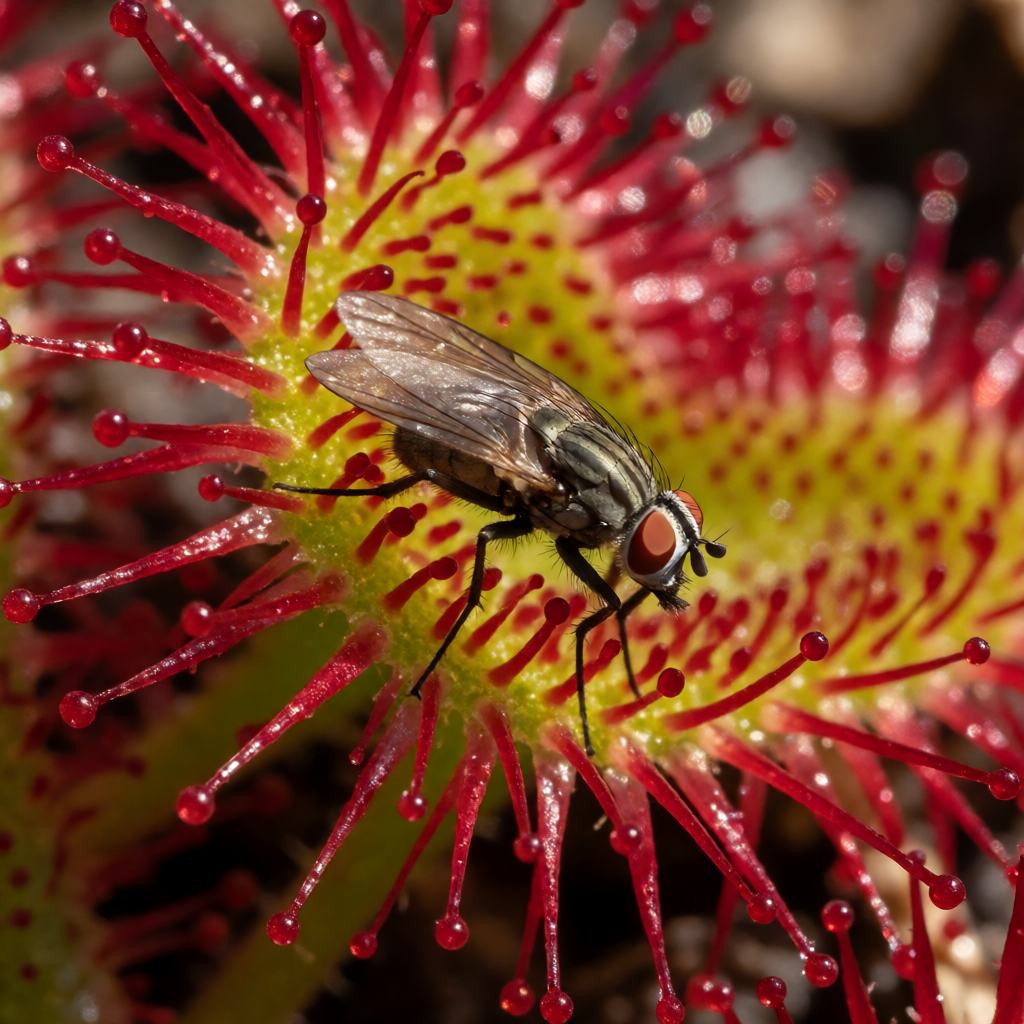
The plant makes sugar from sunlight. It also takes insects for extra food. An insect sticks to a drop of fluid. The nearby hairs bend toward the prey.
The leaf curls over the trapped animal. The plant then dissolves the soft parts. Only the hard shell is left behind.
White flowers and winter buds
The breeding cycle
The plant flowers in high summer. Small white flowers open on a bare stem. Insects visit them and carry the pollen. The flowers set tiny seed later in the season.
The seed falls into the wet ground nearby. The plant also makes tight winter buds. Those buds rest on the moss until spring.
Drained bogs and peat cutting
Conservation
The plant has not been assessed by the IUCN worldwide. It is listed as Near Threatened on the European list. It has become rare in many countries. Draining of bogs removes its ground.
Peat cutting destroys whole sites. Fertiliser from nearby fields causes damage. Careful protection of bogs helps the plant survive.
Quick hits
Five things to remember
- Each leaf hair works like a tiny drop of glue.
- The leaf curls slowly around a trapped insect.
- It catches small flies, midges and beetles.
- The white flowers sit on a bare stem above the leaves.
- It forms tight winter buds to survive the cold.