 By Iris
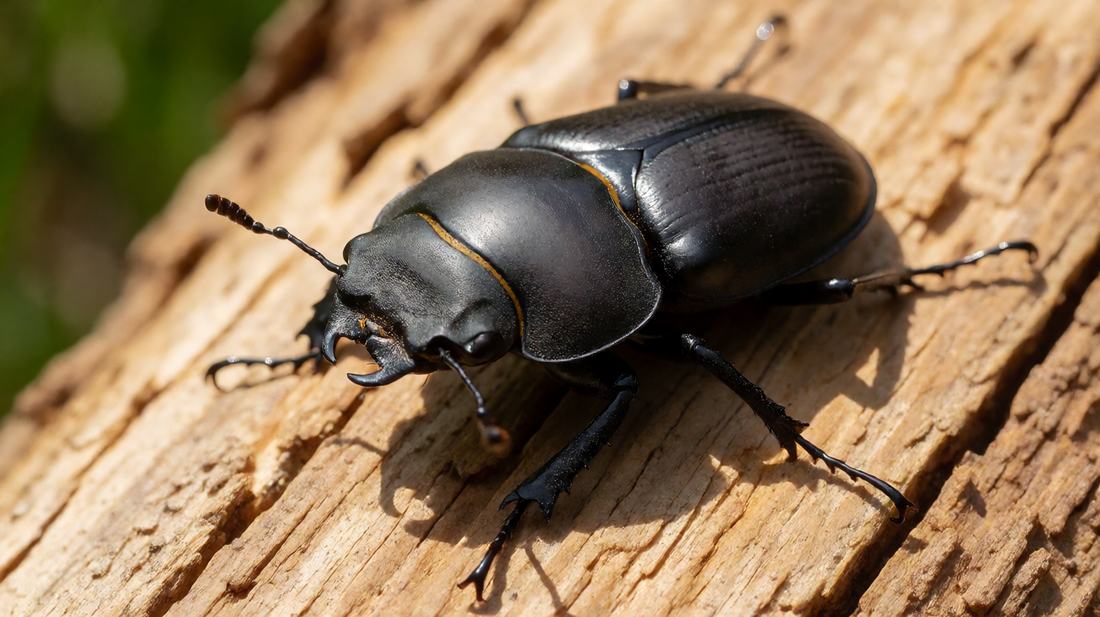
Dorcus parallelipipedus | Lesser Stag Beetle
Species Profile · Lucanidae
Lesser Stag Beetle
The quiet cousin of the famous Stag Beetle — a broad, flat, all-black beetle with modest jaws that spends two or three years inside rotting wood.
Common in southern Britain
Range
Length
Jaws
Larval life
Flight
The quiet stag beetle
Small jaws, a wide range
The Lesser Stag Beetle is a close relative of the famous Stag Beetle. It is smaller, and in most of Europe it is seen far more often. The adult is a broad, flat beetle with a dull black shell. Its jaws are small and curved, so the males look much like the females.
A full-grown beetle is 20 to 32 mm long. The body is flat, so the insect can slip into cracks in old wood. The antennae are short and end in a small comb of plates. The beetle fans the plates out to test the air.
This species lives in southern and central Europe, in north Africa and in western Asia. In Britain it is common in the south of England and rare in the north. It likes old woods, parkland and hedgerow trees. Where dead wood is left in place, the beetle is usually found.
Family tree
Lucanidae, the stag beetles
The Lesser Stag Beetle sits in the family Lucanidae, the stag beetles. Its genus is Dorcus. Linnaeus named it in 1758, in the same book that named the larger Stag Beetle. The family holds about 1200 species. They live in warm and temperate parts of the world. All of them share a set of features. The antennae are short and end in flat plates.
The body is stout and rather flat. The jaws of the males are large, and the males use them to push and to wrestle. They do not use them to eat. The family sits among the scarab-like beetles, and its members feed on sap and on rotting wood. The genus Dorcus holds several broad black species. The Lesser Stag Beetle is the only one that is common in Europe. Its genus name is an old Greek word for a beetle.
The species name refers to the parallel sides of its body. The Lesser Stag Beetle shares its family with the Stag Beetle. That species is far larger, and its males carry great antlers. Here the jaws are modest, and the 2 sexes look alike. Both insects spend their young years inside rotting wood.
Black, flat, with small jaws
How to tell one
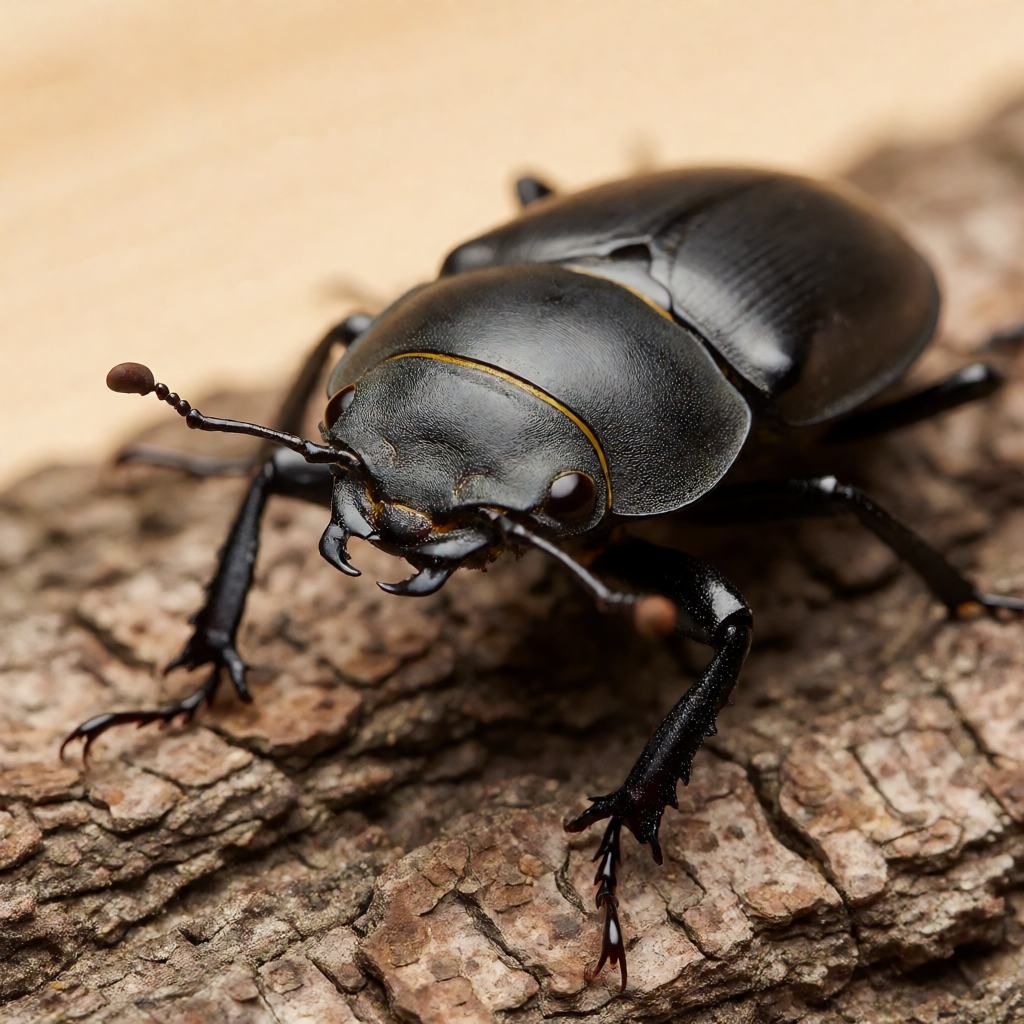
The adult is a broad, flat, black beetle 20 to 32 mm long. The head is large and carries 2 short antennae. Each antenna ends in a comb of 3 or 4 plates. The plates fold together or open out. The shell on the back is deep black with a faint sheen, and it is covered with fine pits and shallow grooves.
The wing cases carry fine parallel lines. The male has short curved jaws with 1 or 2 small teeth, and he cannot bite with them. The female has smaller and sharper jaws. She uses them to work at the wood where she lays her eggs. The legs are strong and carry small claws.
They let the beetle grip bark and squeeze into tight spaces. When it is held, the beetle can rub parts of its body together and make a soft creak. The young are large white grubs shaped like a letter C. A grub has a pale brown head, strong jaws and 3 pairs of short legs. A full-grown grub is longer and fatter than the adult.
1
2
3
Old trees and standing dead wood
Where it lives
The Lesser Stag Beetle lives in dead wood, and its whole life depends on old trees. The young grow inside rotting timber. They are found in the heartwood of oak, beech, ash, willow and apple. They also use stumps, fallen trunks, thick branches and old fence posts. They can even survive in wood that lies just below the soil.
The adults rest under loose bark, in cracks in trunks, in old tree holes and among dead leaves. They sometimes turn up in old buildings where timber has rotted. The species likes warm, sunny places with plenty of old trees. Wood pasture, old hedgerows, parkland and the edges of woods all suit it. It is less tied to deep forest than the larger Stag Beetle.
It does well where a few old trees stand in open ground. In Britain it is common in the south and the Midlands, and much rarer in the north. Gardeners and householders report it most often in late summer. The adults are active from May to September, and they fly at dusk.
Sap, not solid food
What it eats
The adult feeds on the juices of dead and rotting wood. It cannot chew, because its jaws are too small. So it laps up sap and the sweet liquid that seeps from damaged bark. It also takes liquid from fallen fruit and from the surface of rotting timber. It is often found on old trunks where sap has run.
Other beetles and flies often gather there too. Adults take a little liquid from overripe fruit in gardens. The young do the real feeding. They chew through rotting wood and take in the soft material of the heartwood. Most of their food comes from the fungi and the microbes already in the wood.
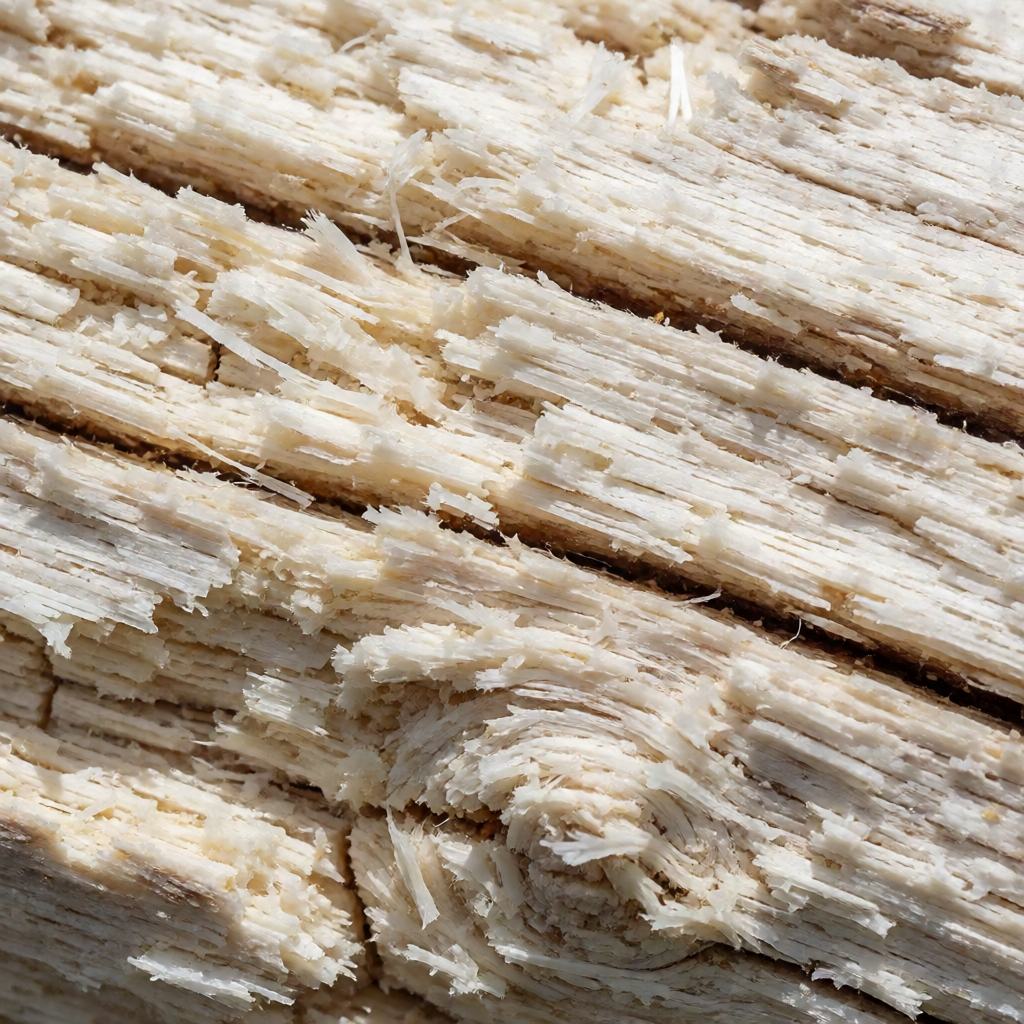
Microbes in the gut of the grub help break down the tough plant material. That is why the grub needs wood that has started to rot. Fresh dry timber holds little food for it. A stump that has been ground out or burned offers nothing at all. The species depends on wood that is left to decay slowly in place.
2 or 3 years in the wood
The breeding cycle
The breeding season runs through the summer months. The male finds the female by scent and by sight. He uses his small jaws to push other males away. His contests are brief, and far less dramatic than those of the larger Stag Beetle. After mating, the female looks for soft or half-rotted wood. She works a small tunnel into it with her jaws.
She lays her eggs in the wood, or in the soil at the base of a rotting stump. The eggs hatch into grubs that feed inside the wood for 2 or 3 years. A grub moves deeper into the timber as it grows. In its last year it makes a chamber near the surface, or in the soil below. There it changes into a pupa. The pupa is soft and pale at first, and it slowly darkens.
The new adult comes out in late summer or autumn. It stays in the wood or in the soil through the winter, and it comes out the next spring to mate. The female sometimes stays near her eggs and young grubs. That is unusual among beetles. The adult itself lives for only 1 season.
Widespread, but losing its wood
Conservation
The Lesser Stag Beetle has not been assessed on the global Red List. Its habitat is shrinking across much of Europe, though. The species needs standing dead timber, and centuries of woodland management have removed almost all of it. Dead trees and fallen logs were cleared from woods as a matter of tidiness. Old trees were felled for safety, and hedgerow trees were lost as farming changed.
The removal of stumps is a direct loss of the places where the young grow. Disease and tree pests have taken more old trees. The species does well where dead wood is left standing. The most useful step is simple. Old trees, thick dead branches and stumps should be left in place, unless they are a danger to people.
Woodland managers now leave standing dead trees in many reserves, and the beetle has responded well. Gardens help too. A rotting apple tree or a pile of old logs will often raise a brood. In Britain the species is widespread and is not regarded as threatened. Its numbers fall wherever dead wood is cleared away.
Quick hits
Five things to remember
- The males carry only small jaws, so they cannot be told from the females by their weapons alone.
- A grub spends 2 or 3 years inside rotting wood, and it feeds mostly on the fungi and microbes that are already breaking the wood down.
- When it is held, the beetle rubs parts of its body together and makes a soft creaking sound.
- On warm summer evenings in southern England it is drawn to lights and often turns up at windows.
- The female sometimes stays close to her eggs and young grubs, which is rare among beetles.