 By st20113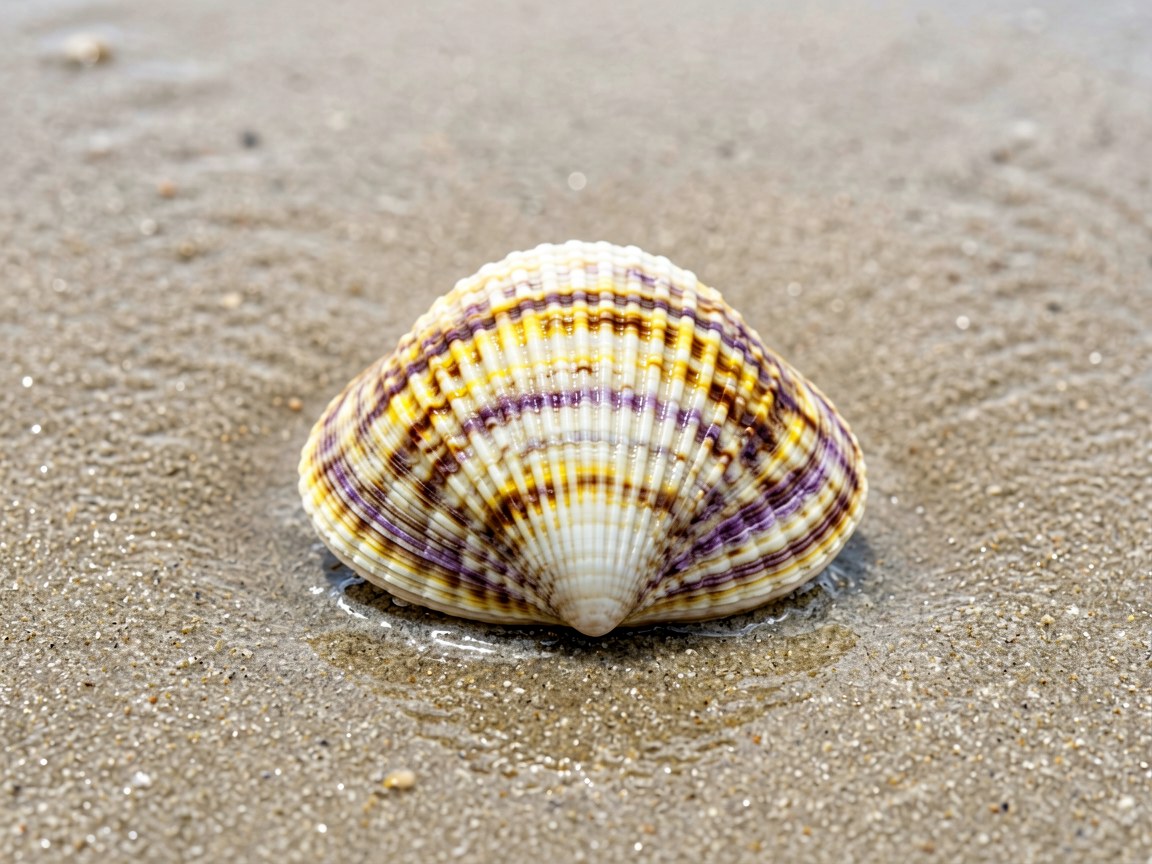
Donax vittatus | Banded Carpet Shell
Introduction
Donax vittatus, the banded carpet shell, is a small, neatly sculptured clamshell of the sandy shores of the north-eastern Atlantic, a creature built for life in the restless zone where waves toss the seabed. It is a bivalve mollusc, two shells hinged at a hinge, with a smooth, glossy, almost triangular outline marked by fine radiating ribs and by bands of colour that range from cream and yellow to rich brown and purple. It lives in clean, well-sorted sand from the low shore down into shallow water, often in enormous numbers, and it is a fast, agile burrower that can dart down into the sand in a fraction of a second when disturbed. Though small, it is a key part of the sandy-shore ecosystem, a favoured food of many shorebirds and flatfish, and a familiar find for anyone who digs or sieves a beach at low tide. It is a mollusc of the surf zone, and like the better-known Mytilus edulis, the common mussel, it is a filter-feeding bivalve, though it lives buried in sand rather than attached to rock.
Taxonomy
The banded carpet shell is a bivalve in the family Donacidae, the bean clams or wedge clams, a group of small, usually triangular, sand-dwelling bivalves that are adapted to wave-swept coasts. The genus Donax is widespread in warm and temperate seas and contains many species of similar shape, several of them important as food in warmer parts of the world. The specific epithet vittatus means “banded,” referring to the coloured bands that cross the shell. In the north-east Atlantic the banded carpet shell is the common representative of its genus, and it is distinguished from the related Donax semistriatus of southern waters by its full set of radiating ribs and by its range. The family is part of the great clade of heterodont bivalves, which includes many burrowing and some attached forms, and it is characterised by a hinge with well-developed, sculptured teeth. The banded carpet shell’s smooth, glossy, triangular shell and its habit of living in the surf zone place it among the most specialised of the sand-dwelling bivalves, built to resist being washed away by the very waves that feed it.
Physical Characteristics
The shell is small, typically two to three centimetres long, solid, glossy and roughly triangular to wedge-shaped, with the hinge at the blunt end and the shell tapering to a rounded point at the other. The surface is marked by numerous fine, evenly spaced radiating ribs and by irregular bands of colour in cream, yellow, brown, reddish or purple, often with a darker margin, so that no two shells look quite the same. The two valves are similar, and the hinge bears strong, interlocking teeth and two small, narrow cardinal muscle scars. Inside, the shell is smooth and pearly towards the hinge, and the pallial line, which marks the attachment of the siphon muscles, is distinct. The animal itself has a strong, muscular foot, used for leaping and burrowing, and a pair of short siphons through which it draws and expels water while buried. The mantle edges are sensitive, and the whole organism is built for a life of rapid, repeated burial in shifting sand. The shell is thicker and heavier than its size suggests, an adaptation that stops it being tumbled helplessly by the surf.
Habitat
The banded carpet shell lives in clean, medium to coarse sand on open, wave-exposed beaches and in shallow sandy bays, from the low shore down to perhaps twenty or thirty metres, and it is rare on sheltered mud or in estuaries with fine, silty sediment. It favours the mobile, well-oxygenated sand of the surf zone, where the constant movement of the bed renews the food supply and prevents the buildup of foul bottom water. It is often abundant, sometimes in dense beds of thousands of individuals per square metre, and it migrates up and down the beach with the tides and the seasons, following the zone of best food and safest burial. Across its range, from the Canary Islands and the Mediterranean north to Norway and Iceland, it is a characteristic shell of Atlantic sandy shores, and it is one of the species most easily collected by digging or by sieving the sand at low tide. It avoids places with strong freshwater influence or with heavy organic pollution, so its presence is a rough sign of clean, well-washed sand, and it is a standard component of the sandy-shore community studied by ecologists and by shell collectors alike.
Diet
The banded carpet shell is a suspension feeder, drawing in seawater through its inhalant siphon and filtering out the plankton, diatoms and organic particles with its gills, which act as both breathing organs and a sieving surface. The captured food is moved to the mouth on a stream of mucus and sorted, and the cleaned water is expelled through the exhalant siphon; this filter feeding is the same basic habit as that of the common mussel, though the carpet shell does it while buried and mobile rather than fixed in place. Because it lives in the wave zone, it enjoys a constant supply of fresh, plankton-rich water, and it can shut its siphons and cease feeding when the sand is stirred and the water is full of grit. It is itself a major food source for shorebirds such as sanderling, knot and oystercatcher, which follow the tide to probe for it, and for flatfish, crabs and rays that take it from just below the surface. In this way it forms a critical link between the plankton of the water column and the birds and fish of the shore, turning microscopic food into biomass that supports the next level of the food web.
Reproduction
The banded carpet shell has separate sexes, and in spring and summer the females release eggs and the males release sperm into the water, where fertilisation takes place. The fertilised eggs develop into free-swimming larvae that drift in the plankton for a week or two, feeding and growing, before they settle to the bottom and metamorphose into tiny clams that begin to burrow. This planktonic stage lets the species colonise new stretches of beach and replenish beds that have been depleted by storms or by heavy predation. The adults grow through the warmer months and can live for a few years, spawning more than once in a season when conditions are good. Because the larvae and the adults are both vulnerable, to waves, to predators and to changes in temperature and salinity, the success of a year class depends on a run of favourable conditions. The shell grows by adding material at the margin, so the bands of colour laid down during growth can record something of the animal’s history, and the hinge teeth wear with age, giving the collector clues to a shell’s life.
Conservation
The banded carpet shell is abundant and widespread across its north-east Atlantic range and is not considered threatened; it is a common and resilient member of the sandy-shore fauna, capable of withstanding the physical stress of the surf zone that would destroy less specialised bivalves. Its main pressures are local: heavy trampling and digging by people in popular bathing beaches, the physical disturbance of the seabed by trawling in shallow water, and the loss of clean sand to coastal construction and to the input of sewage or silt. Because it is small and numerous it is not the target of a fishery in most of its range, though in some warmer regions related Donax species are intensively harvested, and the lessons from those fisheries show how easily a carpet-shell bed can be over-exploited. It is not legally protected, and there is no specific conservation action for it, but it benefits from the protection of sandy shores and from controls on pollution and on destructive towed-gear in shallow water. As an indicator of clean, well-washed sand it is a quiet marker of a healthy beach.
Fun Facts
- It can leap and bury itself in the sand in a fraction of a second, using a powerful, forked foot.
- No two shells share the same pattern of coloured bands, making each one unique.
- It lives in the surf zone, where waves both feed it with plankton and threaten to wash it away.
- Shorebirds such as sanderling follow the tide to dig it up, so it links plankton to birds.
- Though it looks unlike a mussel, it filters its food from the water in much the same way.