 By st20113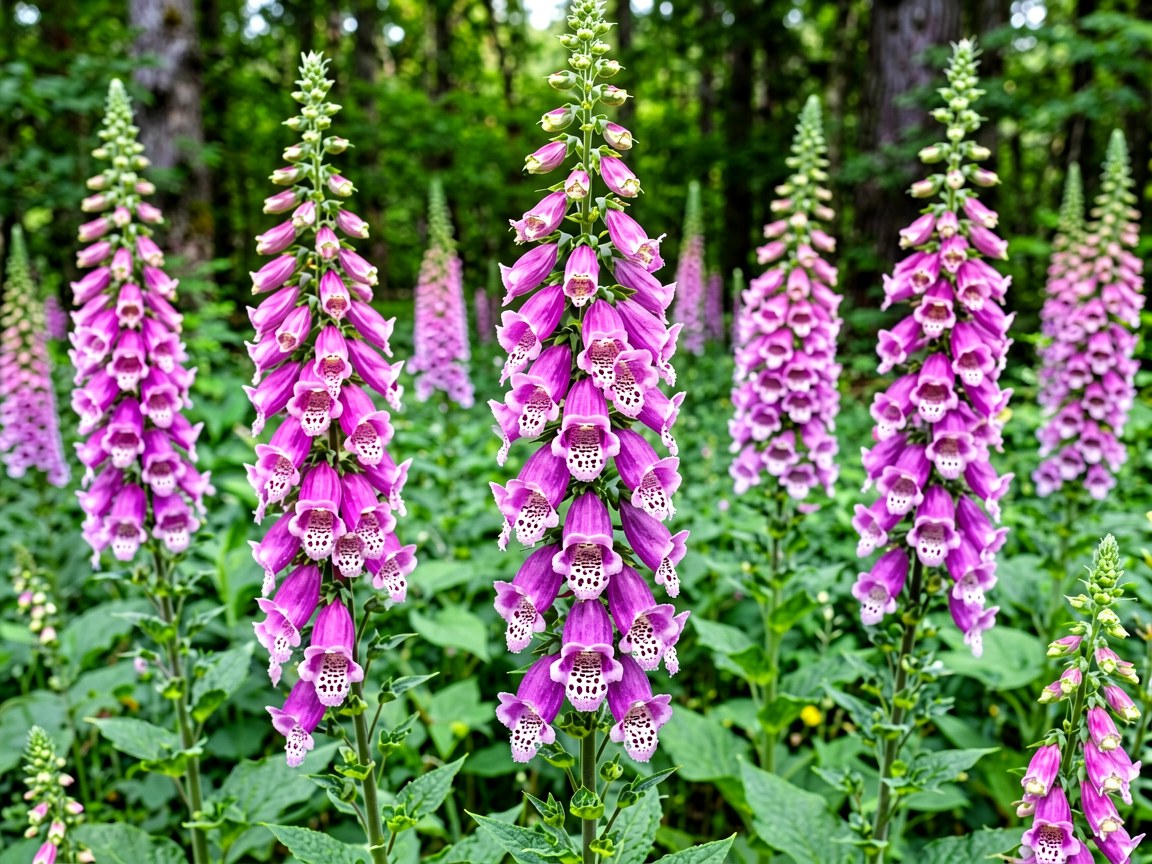
Digitalis purpurea | Foxglove
Introduction
The foxglove (Digitalis purpurea) is a tall, statuesque wildflower whose spike of dangling purple-pink, thimble-shaped blooms is one of the most striking sights of the European summer. It colonises woodland clearings, hedgerows, and disturbed ground on acidic soils, often appearing in spectacular numbers after coppicing or clear-felling. Beautiful as it is, the plant is powerfully toxic, and the same compounds that make it dangerous are the origin of one of the most important heart medicines ever discovered.
Taxonomy
Digitalis purpurea belongs to the family Plantaginaceae—the plantain family—within the order Lamiales, having previously been placed in the figwort family, Scrophulariaceae. The genus name Digitalis comes from the Latin for “finger,” a reference to the finger-like flower shape that also gives the plant its English name. As with all green plants, its growth is powered by Photosynthesis in the large, softly hairy leaves of its first-year rosette.
Physical Characteristics
In its first year the foxglove is a low rosette of large, oval, wrinkled, softly hairy leaves with toothed margins. In the second year it sends up a single, unbranched flowering spike 1–2 meters tall. The flowers hang in a long, one-sided column, each a tubular bell 4–5 cm long, purple-pink on the outside and white inside with distinctive dark spots ringed in white on the lower lip. Flowering runs from June to September, and a single plant can produce well over a million tiny seeds.
Habitat
Foxgloves favour open or recently disturbed ground on light, acidic, well-drained soils: woodland clearings, rides and edges, hedgebanks, heathland, moorland fringes, and roadside verges. They are classic colonisers after disturbance such as coppicing, burning, or clear-felling, appearing in dense stands from a buried seed bank before fading as the canopy closes. Though native to western Europe, they are widely naturalised elsewhere.
Diet
The foxglove is a photosynthetic plant, manufacturing its own sugars from sunlight, water, and carbon dioxide and absorbing minerals from the soil. It needs nothing from other organisms. In the other direction, its tall flower spikes are a major nectar source for long-tongued bumblebees, which are among the few insects able to reach the nectar at the base of the deep, tubular flowers.
Reproduction
Foxgloves are usually biennial: the seed germinates to form a leafy rosette in the first year, overwinters, flowers spectacularly in the second, sets seed, and then dies. The flowers are protandrous, shedding pollen before the stigma becomes receptive, which encourages cross-pollination by bumblebees. The spotted markings on the lower lip are believed to act as nectar guides, steering bees toward the flower’s throat.
Conservation
The foxglove is common and not threatened, and in places it benefits from the woodland disturbance that creates the open ground it needs. Its main human concern is toxicity: all parts of the plant contain cardiac glycosides and are poisonous to people, livestock, and pets if eaten, which is why it is often removed from grazing land. It should never be foraged or used medicinally outside controlled pharmaceutical preparations.
Fun Facts
- The heart drug digoxin, still used to treat heart failure and irregular heartbeat, was originally derived from foxglove.
- Every part of the plant is poisonous, and even the water in a vase of foxgloves can become toxic.
- Its spotted lower lip is thought to act as a “nectar guide,” directing bumblebees into the flower.
- A single plant can produce more than a million seeds, which can lie dormant in the soil for years.
- The name “foxglove” may come from “folks’ glove,” referring to the little folk or fairies of folklore.