 By st20113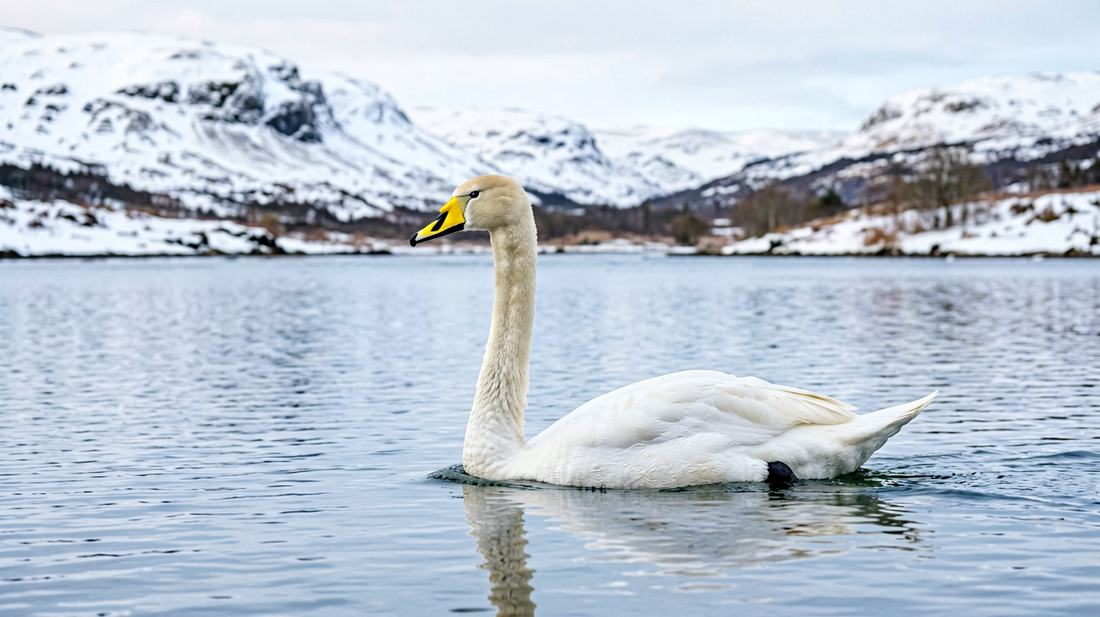
Cygnus cygnus | Whooper Swan
Species Profile · Anatidae
Whooper Swan
A trumpeting swan of the northern forests, with a yellow-based bill and an upright neck that set it apart from the mute swan of the parks.
IUCN: Least Concern
Range
Length
Wingspan
Weight
First breeding
The trumpeting swan
The whooper swan
The whooper swan is a large white swan of the northern forests and tundra. It is far noisier than the mute swan of parks and rivers. Its trumpeting call gave the bird its English name. It breeds in Iceland, Scandinavia and northern Russia.
In winter it flies south and west in family parties. Then it gathers on lakes, flooded fields, estuaries and coastal grassland. There it can be watched at close range. The yellow and black pattern on its bill is different in every bird.
So each swan can be told apart from year to year. It is a long-distance migrant and a long-lived bird. Because it is big and easy to count, it is one of the best-studied waterbirds in Europe. Ringing and tracking show both its routes and its strong return to the same wintering sites.
Family tree
A northern swan with a yellow bill
The whooper swan is in the family Anatidae and the genus Cygnus. It belongs to a small group of northern swans. These swans stand upright and carry a long straight neck. Their bills have a yellow base. They also breed on freshwater lakes. The tundra-nesting swans use coastal sites instead. Its closest relatives are the tundra swan of the Eurasian Arctic and the trumpeter swan of North America.
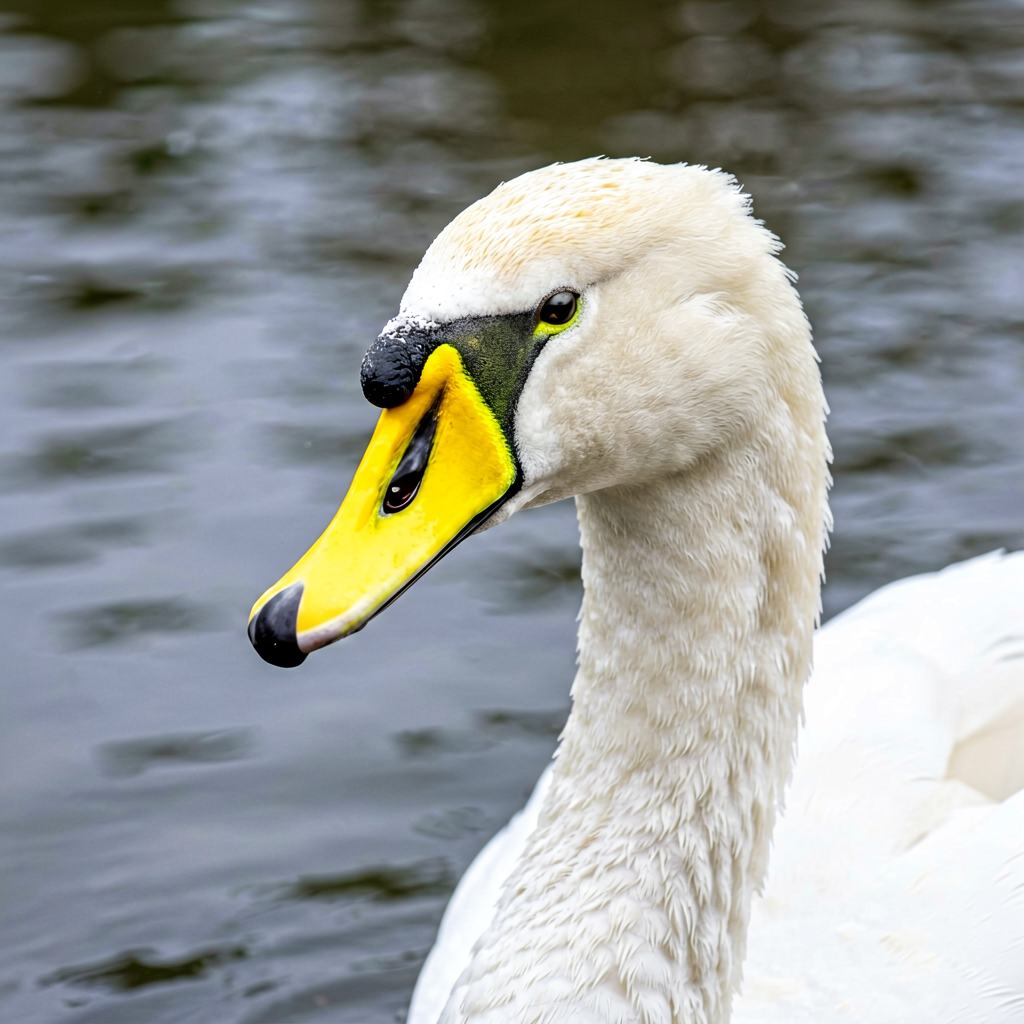
The three look alike in shape. The bill pattern is the only reliable way to tell them apart. The whooper shows a yellow wedge. The point of the wedge runs well past the nostril. The tundra swan shows a smaller, rounder yellow patch and more black. A Swedish naturalist described the species in 1758. It was never close to extinction.
But it was hunted heavily in the past. A duck of the same family shares its winter lakes. That is the Mallard. The mallard is much smaller. It feeds by upending in shallow water. The swan grubs for roots and tubers.
Bill, neck and weight
How to identify one
An adult whooper swan is 140 to 165 cm long. Its wingspan is about 205 to 235 cm. It weighs 8 to 12 kilograms. That makes it one of the heaviest flying birds. Males are larger and heavier than females. The heaviest males can reach 12 kilograms in late winter. Adults are pure white. The bill is the key feature. It is long and slightly hollow along the top.
It has a black tip. The yellow base runs forward in a wedge. The shape of that wedge is unique to each bird. Researchers use it to name individuals. The neck is long and held straight up. It is not curved like a mute swan’s. The head looks wedge-shaped, not round. The legs and feet are dull yellow-grey. They often look orange-brown from iron-rich water.
Young birds are greyish-brown. Their bills are pale greyish-pink and darken with age. They stay with their parents through the first winter. So family parties of two adults and three or four grey young are a common sight. Its wings are long and powerful. Its wingbeats are slow and deep. At close range they make a throbbing sound. It takes off by running across the water with wings half open.
1
2
3
Northern lakes and pools
Where it breeds
The whooper swan breeds in the far north. That means Iceland, northern Scandinavia, Finland, the Baltic states and northern Russia. It nests beside shallow lakes, pools, slow rivers and marshes. It likes open sites. The nest often sits on a small island or a hummock. It needs water that stays open long enough for the cygnets to grow. It also needs shallow water with plenty of underwater plants.
It avoids the deepest lakes and the fastest rivers. In winter it moves south and west. European birds winter in Britain, Ireland, the Netherlands, Germany and Denmark. They also winter around the Baltic and the Black Sea. A smaller number reaches France, Spain and the Mediterranean. They gather on lakes, reservoirs and flooded meadows. Coastal marshes, estuaries and stubble fields are used too.
They often flock with tundra swans and other waterbirds. Icelandic birds cross more than 800 km of ocean to reach Britain and Ireland. They often travel in family parties. Tracking shows they return to the same field each year. The species grazes as well as swims. In winter it feeds on grassland and farm land.
What it eats
Almost entirely plants
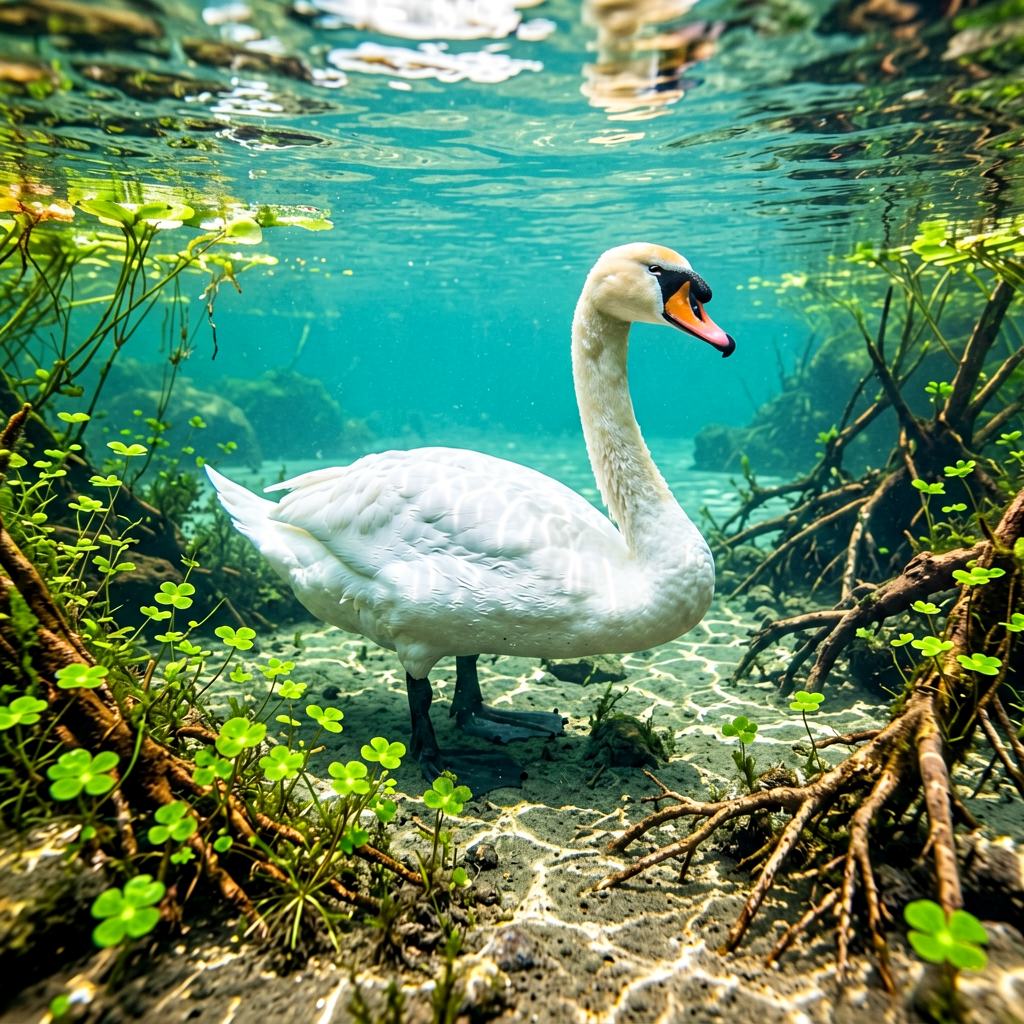
The whooper swan eats plants almost exclusively. It feeds by putting its head and neck under water. It grubs with its bill for roots, tubers, stems and leaves. Its main foods are pondweeds, water crowfoot and stoneworts. It also takes the roots of grasses in wet ground. It will upend to reach plants in slightly deeper water. In winter fresh water plants are scarce.
The water may also be frozen. So the birds switch to grazing on grass. They also feed on farm land. There they take grass, winter cereals and stubble. They eat potatoes, sugar beet tops and other crop leftovers. They often share fields with wigeon and greylag geese. The bill works like a spade as well as a grasper.
Strong neck muscles let the bird pull up roots. It can also tear off tough underground stems. Few other waterbirds can do this. A 12 kilogram bird needs a great deal of food. Studies show wintering swans spend many hours a day feeding or resting. They now depend heavily on farmland. That has brought them into conflict with farmers in some areas.
Territories kept for life
Cygnets on a northern lake
Whooper swans first breed at about 4 or 5 years old. Once paired, the birds usually stay together for life. In the breeding season the pair defends a large territory. Both adults take part in the display. They raise and lower the head. They hold the wings up and partly spread. They often call loudly. A pair usually returns to the same territory each year. The female builds a large mound of grasses, sedges and stems.
It sits at the water’s edge or on a small island. The nest is often re-used and added to each season. So it grows bigger every year. She lays 4 or 5 eggs. She does almost all the incubation. It lasts about 35 to 42 days. The male stays nearby and defends the territory. Eggs are laid a day or two apart. Incubation starts before the clutch is complete.
So the cygnets hatch over several days. The downy young leave the nest within a day or two. They swim, feed and follow their parents almost at once. They stay with the family for 4 to 5 months. They fledge at about 85 to 90 days. Family parties stay together through the first winter. The young disperse the following spring.
Lead, power lines and lost wetlands
A swan under pressure
The whooper swan is Least Concern worldwide. Its world population is large. Numbers build back only slowly after a poor year. Bad breeding summers in the north show up three or four years later in the numbers reaching the winter sites. The European and Icelandic populations have grown a lot in the last 50 years. Legal protection ended the shooting that had cut numbers in the 1800s and early 1900s. The main threats now are different. Lead poisoning is one of the biggest causes of death.
Swans grub in sediment where lead shot and lead weights settle. They swallow the metal with grit and food. Some countries have banned lead shot from wetlands. But lead already in the mud still kills birds. Power lines and vehicles also kill many swans. Winter flocks fly between lakes and fields in poor light. New overhead lines across wintering areas are a continuing worry. Shallow wetlands are still drained and built on.
Disturbance affects both breeding and wintering sites. Farm food supplies change with cropping patterns. In the far north the climate is warming. That is shifting the breeding season and the pattern of snowmelt. It may affect breeding success. The bird is protected across Europe. International agreements cover it as a migrant. Work now focuses on marking dangerous power lines, cutting lead contamination and keeping wetlands and farmland that supply winter food.
Quick hits
Five things to remember
- The yellow pattern on a whooper swan’s bill is different in every bird and works like a fingerprint.
- Icelandic whooper swans cross more than 800 kilometres of open ocean to reach their British and Irish wintering grounds.
- It is one of the heaviest flying birds, with large males weighing as much as 12 kilograms.
- Its wingbeats are loud and rhythmical and can be heard from a distance, unlike the near-silent flight of the mute swan.
- Cygnets stay with their parents through the whole of their first winter and do not separate until the next spring.