 By st20113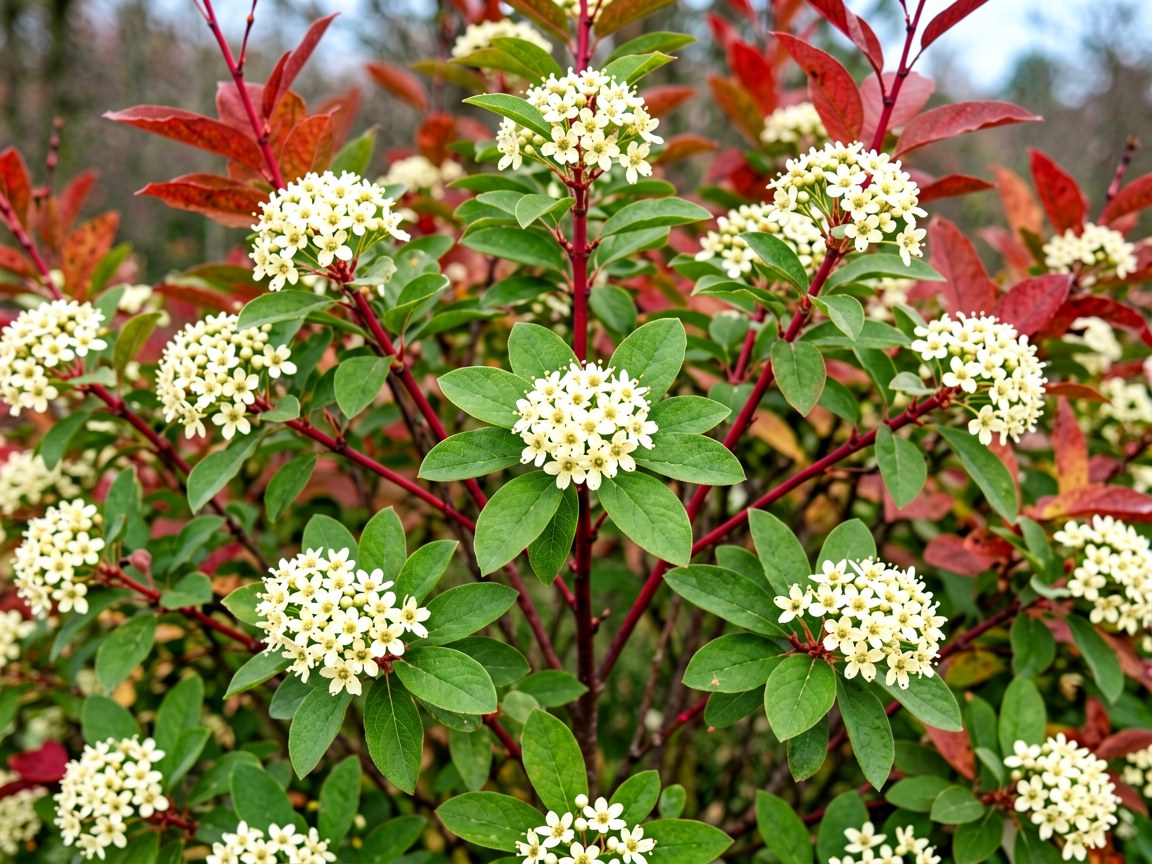
Cornus sanguinea | Dogwood
Introduction
Cornus sanguinea, the common dogwood, is a deciduous shrub of the dogwood family (Cornaceae) native to most of Europe and western Asia, found in hedgerows, woodland edges, scrub and on calcareous soils where it can form dense thickets. It is a familiar sight in the countryside from spring to winter, first as a froth of flat, creamy-white flower heads in early summer, later as a heavy crop of small black berries, and finally, in the cold months, as a blaze of crimson and purple leaves on striking blood-red twigs that give the plant both its Latin and many of its English names. It typically grows one to four metres tall, suckering to form clumps, with arching branches and smooth, distinctly red winter shoots that are among the most colourful sights in a leafless hedgerow. The shrub is valuable to wildlife, feeding dozens of insect species and a wide range of birds, and its wood was once put to practical use for everything from arrows to walking sticks. Across the seasons it is a plant of the undisturbeded margins, and like other woody shrubs it depends on Photosynthesis to lay down the sugars that colour its twigs and ripen its fruit.
Taxonomy
Dogwood is the type species of the genus Cornus, a widespread group of about thirty to forty species of shrubs, small trees and a few perennials scattered across the temperate and boreal Northern Hemisphere and into the mountains of South America and Southeast Asia. The genus is divided by botanists into several subgenera, one of which, the “true” dogwoods like C. sanguinea, bears its small flowers in open, flat clusters rather than in the showy, petal-like bracts that surround the flowers of the flowering dogwood of North America. The specific epithet sanguinea means “blood-red,” a reference to the colour of the twigs and of the autumn leaves. Closely related European species include the dwarf Cornus suecica and the creeping Cornus canadensis of the north, while the garden favourite Cornus alba is an Asian relative with similarly red shoots. In older literature the plant is sometimes placed in its own genus as Thelycrania sanguinea, a name still encountered in some field guides. Cultivars selected for the brightest winter stems, such as ‘Midwinter Fire’ with orange and red shoots, are common in amenity planting and demonstrate how the wild plant’s signature trait has been exaggerated by breeding.
Physical Characteristics
Common dogwood is a many-stemmed, deciduous shrub with smooth, hairless, green twigs that turn vivid red or red-purple in their first winter, a feature that makes the plant easy to name even when leafless. The leaves are opposite, oval to elliptic, four to eight centimetres long, with entire or slightly wavy margins, a pointed tip, five to seven pairs of curved side veins, and a short stalk; they are dull medium green and softly hairy above, grey-felted beneath, and turn rich crimson, purple or sometimes orange in autumn. The flowers open in early summer in flat, open, terminal clusters, or cymes, four to eight centimetres across, each flower small, about five to eight millimetres, with four creamy-white petals, four stamens and a single style. The fruit is a small, rounded, slightly oval drupe, about five to eight millimetres across, turning from green to glossy black when ripe, each containing a single hard stone. The bark on older stems is grey and slightly fissured, and the whole plant has a faint, rather unpleasant smell when bruised, a trait noted by foragers who learn to tell it from the edible guelder rose it sometimes resembles in fruit.
Habitat
Dogwood favours well-drained, base-rich soils and is characteristic of hedgerows, scrub, coppice margins, open woodland and the scrubby edges of chalk and limestone downland, though it also grows on neutral clays and loams. It tolerates a good deal of shade and is common at the woodland edge and in tall, neglected hedgerows where it can form a dense, layered thicket, but it fruits and colours best in full sun or light shade. Across lowland and upland Europe it ranges from sea level to moderate elevations, avoiding the wettest, most acid peats and the driest, most exposed sites. It suckers freely from the base, so a single plant soon becomes a clump, and it responds strongly to coppicing and hedge laying, producing the bright young red shoots that are its chief ornamental feature. It is widely planted in conservation and amenity hedging for its winter colour, its wildlife value and its tolerance of pruning, and it has been introduced well beyond its native range as an ornamental, naturalising in places.
Diet
Dogwood is autotrophic, making its own food from light, air and soil minerals and taking nothing from other organisms. Its flowers, however, are an important resource for insects: they produce both nectar and pollen and are visited by a wide variety of generalist pollinators including bees, hoverflies, beetles and butterflies during the early summer flowering peak, which helps to feed the next generation of many woodland-edge insects. The leaves are eaten by the caterpillars of several moth species, notably the case-bearing dogwood moth and various macrolepidoptera, and by leaf beetles and other herbivores. The fruit is taken freely by birds, especially blackbirds, thrushes, robins, finches and warblers, and by small mammals such as mice and voles; it is mildly astringent and not highly favoured by people, though it is not poisonous. Because the berries persist into late autumn and winter, they form a useful part of the diet of resident birds when other food is scarce, and the dense thickets also provide nesting cover and overwintering sites for many small creatures.
Reproduction
Dogwood reproduces by seed and by suckering. The white flower heads are insect-pollinated and, after fertilisation, each fertilised flower develops into the small black drupe. The fruit ripens from late summer into autumn and is eaten and dispersed by birds, which carry the hard stone some distance before dropping or passing it. The seed has a hard coat and germinates best after a period of cold, so seedlings appear in spring, often well away from the parent. Vegetative spread by basal suckers is the more reliable means of increase in hedgerows and scrub, where the plant builds a clump that can persist and expand for many years. In cultivation the coloured-stem forms are increased by hardwood cuttings or by layering, since these come true to the parent’s winter colour, while seedlings vary. The shrub is tolerant of heavy cutting and regrows vigorously from the base, which is why it is a dependable component of managed hedges and coppice; a well-laid hedge of dogwood is both a wildlife corridor and a winter garden feature.
Conservation
Across its native European range dogwood is common and secure, with no continental conservation status of concern, and it remains abundant in the managed and semi-natural countryside, particularly in hedgerows and scrub. Its main pressures are the loss and neglect of hedgerows, the clearance of scrub in “tidied” farmland, and the loss of coppice and downland scrub to agriculture and development. Because it is so widely planted in conservation and amenity hedging for its wildlife and winter value, it continues to be common in the working landscape. It is not legally protected over most of its range, though agri-environment payments for hedgerow management indirectly benefit it. It is one of the native shrubs most often recommended for new hedges and woodland-edge planting, both for its ecological role and for the year-round interest it provides, and in this respect it is a quiet workhorse of countryside restoration rather than a plant in need of rescue.
Fun Facts
- The twigs turn vivid blood-red in their first winter, which is why the plant is called sanguinea, “blood-red,” and is a favourite for winter garden colour.
- The black berries are eaten by dozens of bird species, but they are not poisonous yet are too astringent for people to enjoy.
- The hard, fine wood was traditionally used to make skewers, arrows, spinning implements and the tips of butchers’ skewers.
- Dogwood is a classic indicator of ancient hedgerows, because it spreads slowly by suckers and rarely colonises new ground from seed alone.
- In autumn the leaves can turn as red as the twigs, so the whole shrub glows in crimson before the leaves fall.