 By st20113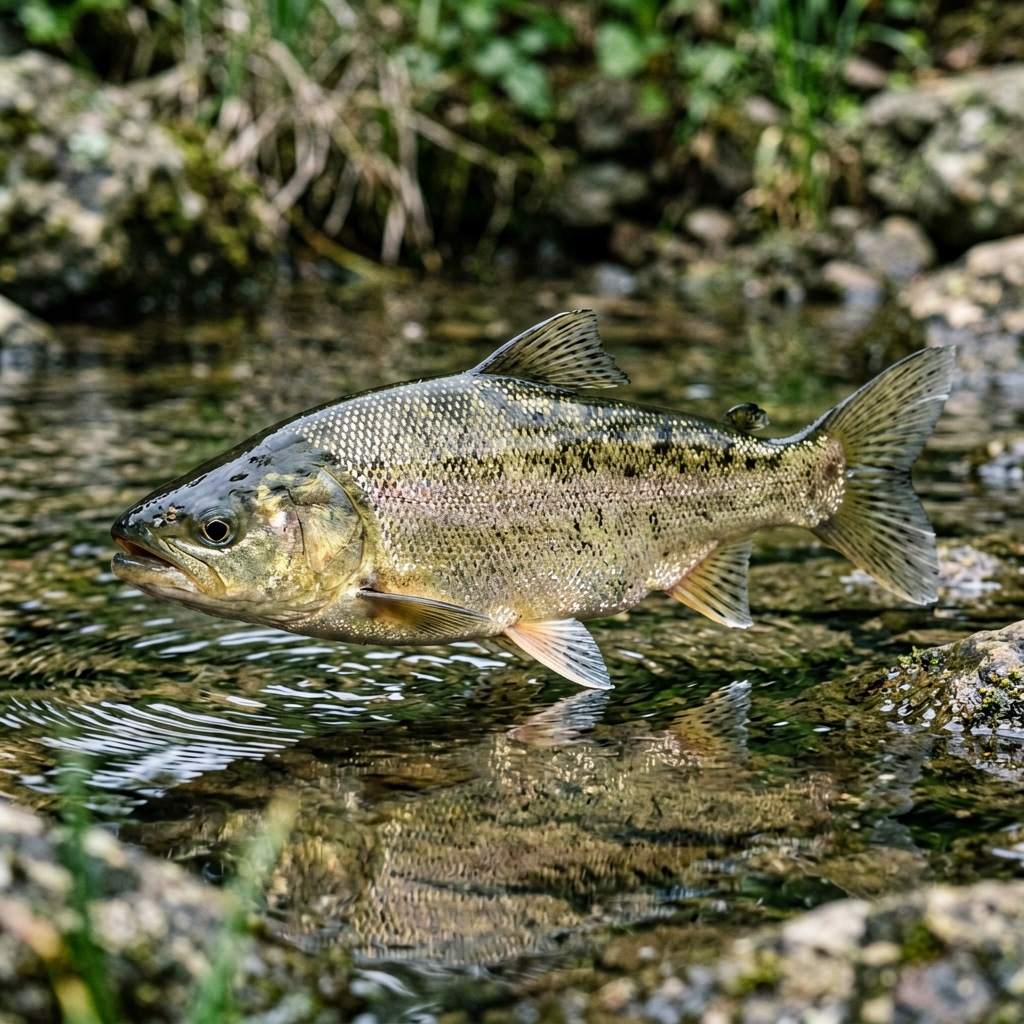
Salvelinus alpinus | Arctic Char
Introduction
The Arctic Char (Salvelinus alpinus) is a cold-water salmonid fish found across the northern reaches of the Atlantic and Pacific Oceans. This remarkable species thrives in some of the most frigid and remote aquatic environments on Earth, ranging from coastal marine waters to isolated alpine lakes. Its wide distribution spans North America, Greenland, Iceland, Scandinavia, and northern Russia, making it one of the most geographically extensive fish species in the Northern Hemisphere.
Arctic Char has long been an important food source for Indigenous peoples and northern communities. Beyond its subsistence value, the species holds significant ecological importance as both predator and prey in fragile Arctic and subarctic ecosystems. Its ability to adapt to diverse environments has led to the evolution of distinct landlocked and anadromous forms, showcasing one of the most striking examples of ecological plasticity among fish species.
Taxonomy
The Arctic Char belongs to the family Salmonidae and the genus Salvelinus, which also includes the brook trout and Dolly Varden. First formally described by Carl Linnaeus in 1758, the species has undergone considerable taxonomic revision over the centuries. Several subspecies and morphological variants have been proposed, though modern genetic studies have helped clarify many of these classifications.
Molecular research has revealed that Arctic Char populations exhibit remarkable genetic diversity despite their morphological similarities. Populations isolated in different lake systems have diverged significantly, leading some researchers to propose that certain forms may warrant recognition as distinct species or subspecies. Ongoing genetic investigations continue to refine our understanding of the evolutionary relationships within this complex group. For more information on Arctic wildlife, see the arctic-fox-vulpes-alopecu.
Physical Description
Arctic Char displays considerable variation in coloration and body shape depending on its habitat and life history form. Anadromous individuals, which migrate between freshwater and saltwater, tend to be larger and more streamlined, while landlocked populations are generally smaller and more robust. The fish typically exhibits a dark olive or brownish back that fades to silvery sides and a white or pale belly.
During the spawning season, both males and females develop striking nuptial coloration. The belly often turns a vivid orange or red, while the back becomes darker. Males may develop a distinctive hump on their shoulders and their fins can become edged with white or pale orange. The body is typically covered with small light spots on a dark background, a characteristic feature shared with other members of the Salvelinus genus.
Adult Arctic Char typically reach lengths between 40 and 60 centimeters, though some individuals in optimal marine environments can exceed one meter. Weight varies considerably, with anadromous forms commonly reaching five to ten kilograms. The species has a relatively long lifespan, with some individuals living beyond twenty years in favorable conditions.
Habitat
Arctic Char inhabits cold, well-oxygenated waters across the circumpolar North. Anadromous populations migrate between freshwater rivers and lakes and the ocean, while landlocked forms remain entirely within freshwater systems. The species is particularly associated with deep, clear lakes and cold coastal waters where temperatures rarely exceed ten degrees Celsius.
These fish prefer habitats with rocky or gravelly substrates and are often found in waters influenced by glacial melt or groundwater sources. In marine environments, they can be found from the intertidal zone to depths exceeding two hundred meters. The species demonstrates remarkable adaptability, colonizing isolated lakes that were cut off from the sea following the last Ice Age.
Arctic Char plays a vital role in the food webs of northern ecosystems, serving as prey for larger fish, birds, and mammals. Its presence often indicates healthy, cold-water environments that are increasingly rare due to climate change. The species shares its habitat with numerous other cold-water fish and wildlife, including the grey-wolf-canis-lupus, which hunts along shorelines where char may be accessible.
Diet
Arctic Char is an opportunistic predator with a diet that varies significantly depending on age, habitat, and availability of prey. Young fish feed primarily on zooplankton and aquatic insects, gradually transitioning to larger prey as they grow. In freshwater environments, their diet commonly includes crustaceans, insect larvae, small mollusks, and other aquatic invertebrates.
Marine and anadromous Arctic Char consume a diet dominated by fish, including smaller char, capelin, sand lance, and other schooling fish. They are also known to prey on crustaceans such as shrimp and crabs when available. The species is an active hunter, often pursuing prey in open water or ambushing from structure along lake and ocean bottoms.
In landlocked populations, Arctic Char often exhibits trophic polymorphism, with different morphs specializing in different feeding strategies. Some individuals may become planktivorous, filtering zooplankton from the water column, while others become benthic feeders or piscivorous predators. This dietary flexibility contributes to the species’ success across diverse environments.
Reproduction
Arctic Char typically reach sexual maturity between three and seven years of age, depending on environmental conditions and population characteristics. Spawning usually occurs in autumn, with fish migrating to shallow gravelly areas in rivers or lake tributaries. Males arrive at spawning grounds first and establish territories, preparing redd (nest) sites in clean gravel substrates.
Females dig shallow depressions in the gravel with their tails and deposit eggs, which are then fertilized by males. A single female can produce between two thousand and ten thousand eggs depending on her size. After spawning, the eggs incubate through the winter months, hatching in spring when water temperatures begin to rise.
Parental care is minimal, though males may guard the redd briefly after spawning. Juvenile fish remain in shallow nursery areas for their first year before dispersing into deeper waters. The timing and location of spawning are closely tied to water temperature and flow conditions, making the species vulnerable to changes in climate patterns.
Conservation
Arctic Char faces growing threats from climate change, habitat degradation, and overfishing in various parts of its range. Rising water temperatures can make previously suitable habitats uninhabitable, particularly for landlocked populations in shallow lakes that lack deep refuges. Warmer conditions also affect the timing of spawning migrations and the availability of prey species.
Some populations have experienced significant declines due to dam construction, pollution, and introduction of non-native fish species that compete with or prey upon char. In certain regions, overharvesting has reduced population sizes to concerning levels. Conservation efforts include habitat protection, fish passage restoration, and sustainable fishing regulations.
The International Union for Conservation of Nature lists Arctic Char as a species of Least Concern overall, but several individual populations are classified as threatened or endangered. Conservation organizations and governments continue to monitor populations and implement management strategies to protect this ecologically and culturally important species for future generations.
Fun Facts
- Arctic Char can live in water temperatures as low as just above freezing and can survive in oxygen levels that would suffocate most other fish species.
- Some landlocked Arctic Char populations have evolved into multiple distinct forms within a single lake, each adapted to different ecological niches.
- The fish was historically known as “salmone” by early naturalists due to its resemblance to salmon in both appearance and culinary qualities.
- Indigenous peoples of the Arctic have relied on Arctic Char for thousands of years, using every part of the fish for food, tools, and clothing.
- Arctic Char can hybridize with Dolly Varden in regions where their ranges overlap, producing fertile offspring in the wild.