 By st20113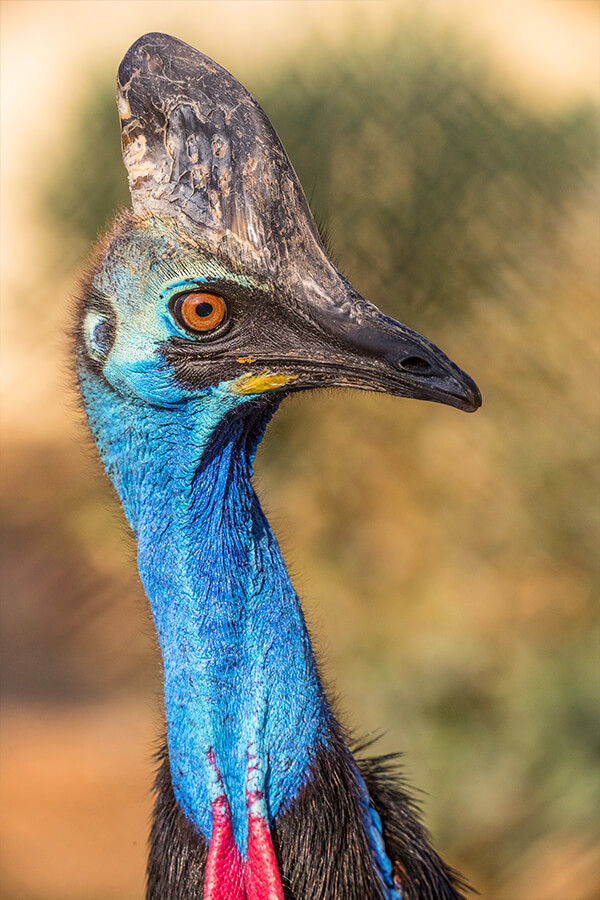
Introduction
The southern cassowary (Casuarius casuarius) is one of the most extraordinary birds on the planet. Found in the tropical rainforests of northeastern Australia and New Guinea, this large flightless bird is instantly recognizable by its jet-black plumage, brilliant blue face and neck, and the remarkable helmet-like structure called a casque atop its head. Standing up to 1.8 meters tall and weighing as much as 60 kilograms, the southern cassowary is the second-largest living bird after the ostrich. A secretive and powerful creature, it plays a critical ecological role as a seed disperser in the rainforests it calls home.
Taxonomy
The southern cassowary is classified within the order Casuariiformes and the family Casuariidae, a distinct lineage of large flightless birds that diverged from other ratites over 60 million years ago. Two subspecies are recognized: C. c. casuarius, found in southern New Guinea and northeastern Australia, and C. c. johnsonii in northern New Guinea. Its closest relatives include the ostrich and the emu, with which it shares the ratite group — birds that lack a keel on their breastbone, rendering them incapable of flight.
Physical Characteristics
The southern cassowary is visually arresting. Its plumage is dense, jet-black, and hair-like, providing insulation in the humid rainforest. The skin of its face and throat is a vivid cobalt blue, contrasting sharply with two long, fleshy red wattles hanging from the neck. The most distinctive feature is the tall, laterally compressed greyish-brown casque atop its head — a keratin-covered bony structure possibly used as a battering ram through dense vegetation or as a display structure. Cassowaries have powerful legs equipped with dagger-like claws; the inner toe bears a claw up to 120 millimeters long, used with devastating effect in self-defense. Females are larger and more vibrantly colored than males.
Habitat
The southern cassowary inhabits dense, lowland tropical rainforests of northeastern Queensland and the island of New Guinea. It requires areas of undisturbed primary rainforest with abundant fruit-bearing trees and permanent water. Cassowaries are strong swimmers and are comfortable in flooded forest areas. They maintain large home ranges of 0.5 to 1.5 square kilometers and move through the forest using established pathways called tunnels, created by walking the same routes repeatedly. The bird’s rainforest habitat is one of the most biodiverse on Earth, shared with many species of frogs and insects.
Diet
The southern cassowary is a highly specialized frugivore, consuming over 150 species of rainforest fruit. Its diet is dominated by large, fleshy fruits that drop to the forest floor, including figs and palm fruits. By swallowing fruit whole and passing seeds intact through its digestive system, the cassowary disperses seeds across the rainforest floor, often hundreds of meters from the parent tree. This role makes it one of the most important seed dispersers in its habitat. When fruit is scarce, cassowaries supplement their diet with insects, small vertebrates, fungi, and carrion.
Reproduction
Cassowaries are generally solitary except during breeding, which typically peaks in the dry season. Males prepare a simple ground nest lined with leaves, into which the female lays between three and six large, bright green eggs. The male alone takes responsibility for incubation, which lasts approximately 49 to 56 days, and for caring for the chicks afterward. Chicks are striped brown and cream for camouflage. The male guards them for about nine months, teaching them to forage and avoid predators. Young birds remain with their father for up to 16 months before dispersing to establish their own territories.
Conservation
The southern cassowary is classified as Endangered in Australia and globally listed as Vulnerable by the IUCN, with fewer than 10,000 mature individuals and declining populations. The primary threats are vehicle strikes on roads bisecting cassowary habitat, predation by introduced dogs, and habitat destruction from agricultural expansion. Fragmented rainforest patches isolate populations, preventing genetic exchange. Conservation programs in Queensland focus on creating wildlife corridors, installing underpasses beneath roads, and community education to reduce dog attacks.
Fun Facts
The cassowary’s dagger-like claw has been compared to a medieval dagger — up to 120 millimeters long and capable of slicing through flesh with a single kick, making this bird one of the most dangerous in the world. Cassowaries can jump up to 1.5 meters high from a standing position and are excellent swimmers, capable of crossing wide rivers. The bright blue and red coloration of the cassowary’s head is produced by the precise arrangement of collagen fibers in the skin — a structural color rather than a pigment. Cassowaries produce the deepest bird call recorded, a low-frequency boom audible from several hundred meters away.