 By Iris
Caprimulgus longipennis | Standard-winged Nightjar
Species Profile · Caprimulgidae
Standard-winged Nightjar
A nightjar whose males fly with a banner on each wing.
Least Concern
Length
Wingspan
Eggs
Incubation
Flag
Rating
A bird that looks like earth
A flag on each wing
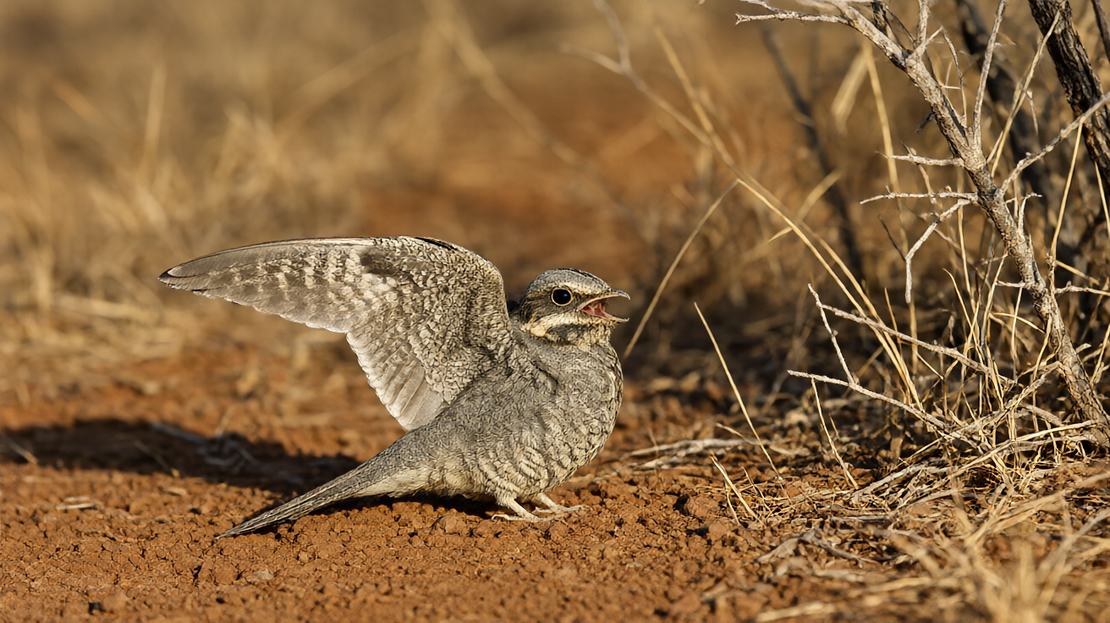
A brown bird sits on bare ground and looks exactly like a lump of earth. It is a nightjar, and it spends the day hiding in plain sight. Males of this species grow two extraordinary wing feathers in the breeding season. Each one stretches out like a flag on a pole.
The name standard comes from that shape, since an old standard was a banner. Bodies run 21 to 23 cm long, and the wingspan reaches about 60 cm. Plumage stays mottled grey and brown, so the bird vanishes against the soil. The bill looks tiny, yet the gape opens very wide.
Bristles line the mouth and help scoop insects out of the air. Standard-winged nightjars live in the savanna belt south of the Sahara. They move south when the dry season arrives, and they return with the rains. Most people never see one, although the bird may live close to a village.
Family tree
Caprimulgidae, the nightjars
Caprimulgidae covers the nightjars, and the family sits close to the owls and the swifts. A European Nightjar belongs to the same genus and shares the flat, wide face. Both hunt insects on the wing after dark, yet only the African bird grows a flag. Caprimulgus holds about forty species, and the group spread across the warm parts of the world.
Two forms of this species have been named, although most workers treat them as one. The elongated feather belongs to the second primary, and only males carry it. That feather grows every year and drops after the breeding season, so the ornament costs the bird little in the long run. Females keep ordinary wings, which makes them much harder to identify.
Voice separates the species better than plumage does, since each one calls in its own rhythm. Recordings now settle questions that skins could not. Names changed twice in the twentieth century. Field guides still disagree about the exact range in the east.
A nightjar with a banner
How to tell one
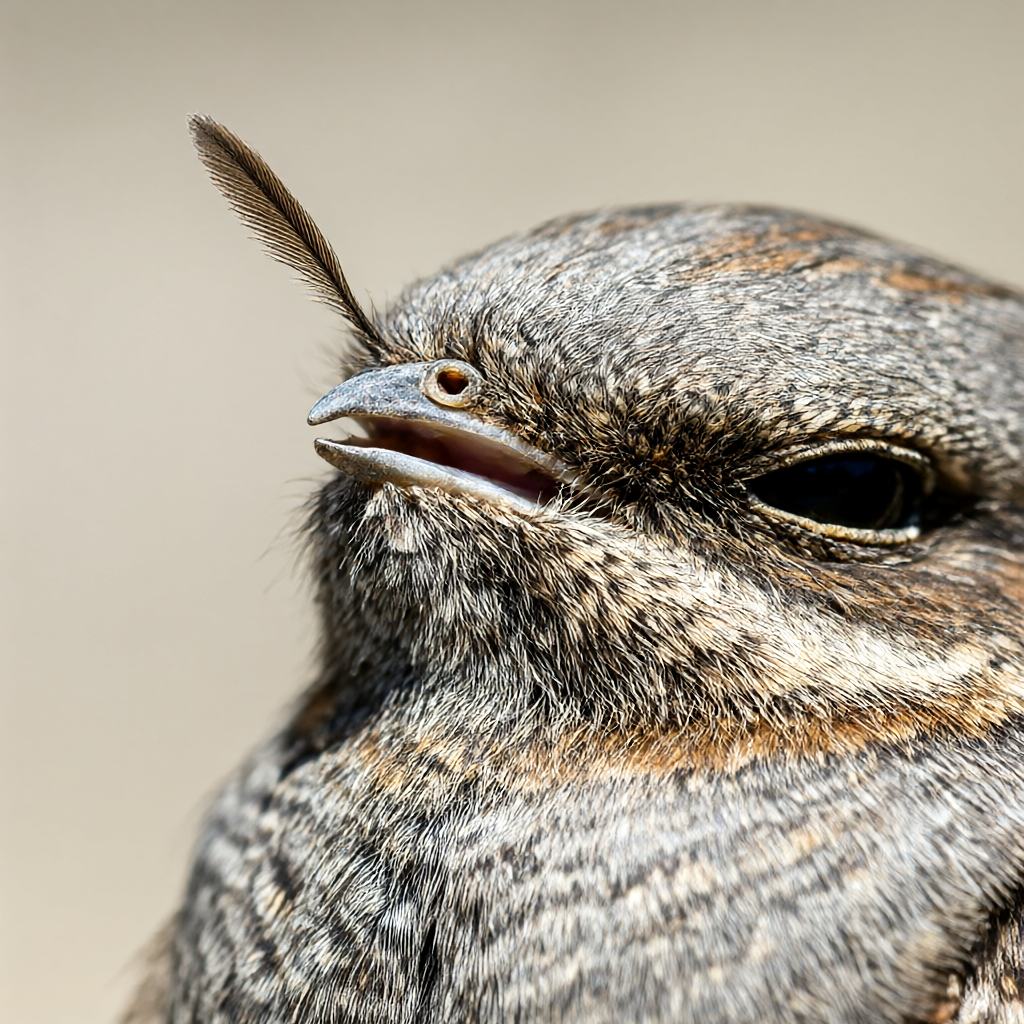
Plumage carries fine bars of grey, brown and buff, and no two birds look quite alike. The pattern copies dry grass and stone. Head shape stays flat and wide, which suits a mouth that opens like a net. Eyes sit large and dark, and they gather light after sunset. A reflective layer behind the eye lifts what little light remains.
Bill stays short, yet the gape reaches almost to the ears. Stiff bristles line the gape. They stop insects from escaping. Feet stay small and weak, and the bird rarely walks far. Claws grip bare earth well enough for a bird that nests on the ground.
Males grow the flag feather in a few weeks, and it doubles the apparent size of the wing. Body weight stays low. That helps a bird that flies for hours. Oil glands stay small, since dust bathing does most of the cleaning.
1
2
3
Mottled plumage and a wide gape
Where it lives
Open savanna woodland covers the belt where the bird lives. Dry grass and bare patches matter, since the bird nests on open ground. Scattered trees give song posts at dusk. Burned ground suits them, and fresh ash shows up the mottled plumage less well than grass does. Rain changes the picture, since the bird moves away when the ground hardens.
Termite mounds dot the savanna. They give shade through the heat. Cattle graze the same ground, and they keep the grass short enough for nesting. Fires set by farmers sweep the area each dry season. The bird returns after the first rains, when insects hatch in numbers.
Wetlands at the edge of the savanna hold extra birds. Settlement clears the woodland, although the bird tolerates some disturbance. A patch of bare ground matters more than a large forest, which makes the species harder to protect than it looks.
Open African savanna
What it eats
Moths and beetles form most of the diet. Flies, termites and flying ants fill the rest. Hunting happens on the wing, and the bird rarely lands to feed. A wide gape works like a net, since the mouth opens across the whole face, which is why the bristles matter.
Bristles guide prey into the throat. Flight stays slow and buoyant, which lets the bird turn in tight circles. Feeding peaks at dusk and again before dawn, although the bird also hunts by day when the sky stays grey. Moonlight helps, although the bird also hunts on dark nights.
Birds may fly for hours without a break. Insects swarm after rain, and the bird then feeds in one place. Water comes from prey, and the bird drinks on the wing, since it never lands to drink. Chicks get fed insects softened in the parent’s throat.
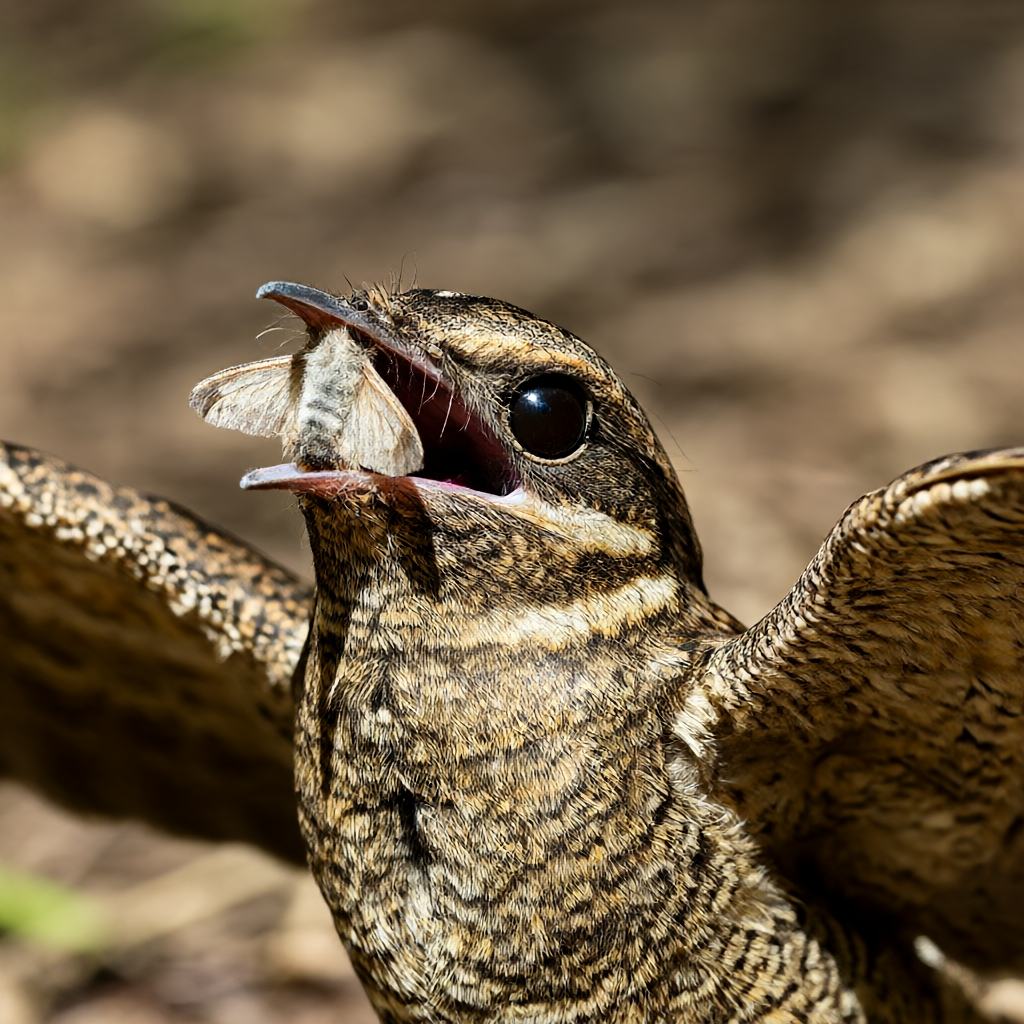
Moths taken on the wing
The breeding cycle
Males display at dusk by flying with the flags held out, and the feathers flutter above the wings. A female lands nearby and watches. No nest gets built, which is usual for the family. One or two eggs go straight onto bare ground.
The eggs look like mottled stones, and they blend into the soil. Incubation runs about eighteen days, and the female does most of it. Both parents feed the chicks after dark. Chicks can shuffle away from the nest site within hours of hatching.
Fledging takes about three weeks, and the young then follow the adults. Predation stays high, since ground nests offer no cover at all, and eggs vanish within days. Pairs may raise two broods in a good season. The male loses his flags once breeding ends, and he looks like a female until next year.
Least Concern, and ground nesting
Conservation
IUCN lists the species as Least Concern. The range stays wide, and the population appears stable. Agricultural change removes the bare ground, so the bird loses its nest sites. Heavy grazing and early burning can help in small doses, although both hurt when they grow too intense.
Pesticides reduce insects across much of the range. Roads kill birds at night, since nightjars sit on warm surfaces. Collisions with vehicles matter most where a road crosses open ground. Protected areas cover part of the range, yet much of the savanna sits outside them.
Local taboos protect some colonies, and those sites keep birds, although nobody counts them. Long term survival depends on open woodland and on insects, since both must stay in place. Climate change may shift the rains, which would move the whole range. Counting birds remains hard, since they hide by day and call only at night.
Side by side
How It Compares
| Trait | Standard-winged Nightjar | European Nightjar |
|---|---|---|
| Length | 21 to 23 cm, wingspan near 60 cm | 24 to 28 cm |
| Wing | banner on each wing, longer than the body | plain barred wing |
| Home | savanna from Senegal to Uganda | heath and open wood across Europe |
| Diet | moths and beetles taken in flight | moths and beetles taken at dusk |
| Habit | hunts from the ground or a low perch | hawks insects over open ground |
| Rating | Least Concern | Least Concern |
Common misreadings
What People Get Wrong
- Most people take the bird for a hawk at dusk, although the wings carry no talons.
- Popular accounts describe one standard, yet the male grows a banner on each wing.
- Field guides often place nightjars with owls, though the two groups are not close.
Going further
Sources and Further Reading
Quick hits
Five things to remember
- Males grow a flag feather on each wing during the breeding season.
- A wide gape works like a net.
- Mottled plumage hides the bird on bare ground.
- No nest gets built at all.
- Chicks can move within hours of hatching.