 By Iris
Cacajao calvus | Bald Uakari
Species Profile · Pitheciidae
Bald Uakari
A monkey with a bare scarlet face and the shortest tail in the Americas.
Vulnerable
Body
Weight
Tail
Group
Range
Rating
Three kilos of shaggy chestnut
A red face above flooded forest
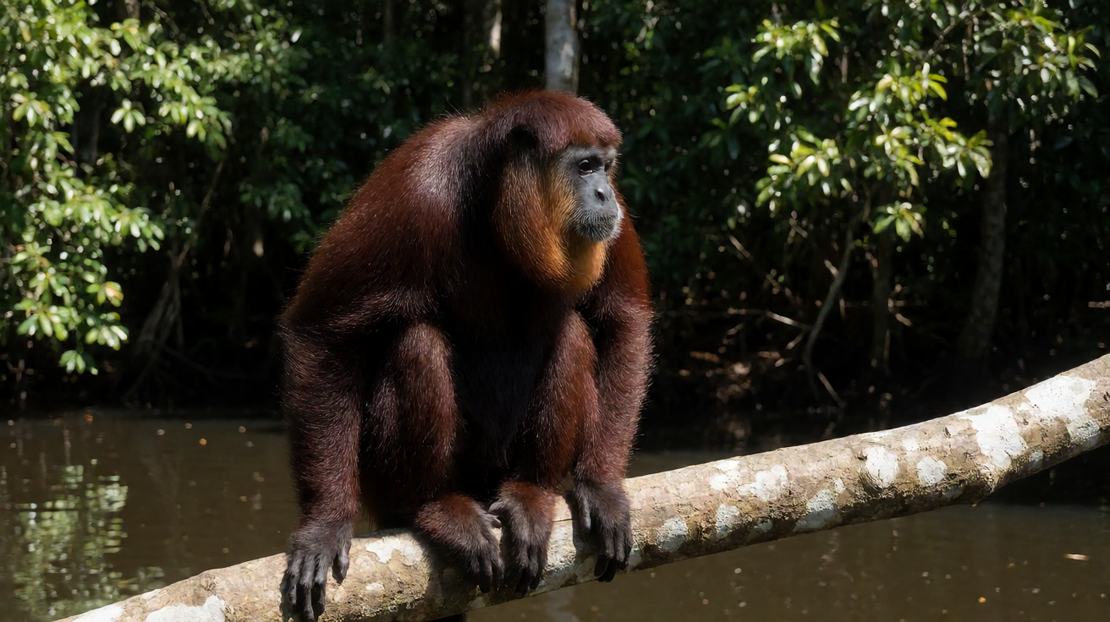
A scarlet face sits on a body of shaggy chestnut hair. No fur covers the head, and the skin shows through. That bare face marks the species. Bald uakaris live in flooded forest along white water rivers.
Water rises ten metres a year, and the monkeys follow the fruit. Groups move through flooded trees and swim between them. Such a life is odd for a monkey of this size. Few primates hold a range this small.
Seeing one means a long trip up a remote river, since no road reaches the forest. That trip rewards the visitor with a sight few people share, because the animal stays deep inside the flood plain.
Family tree
Pitheciidae, the sakis and uakaris
Cacajao calvus sits in Pitheciidae, the group that holds sakis and titi monkeys. Lesson named the species in 1842 from a Brazilian specimen. Four forms are described, and some workers treat them as separate species. Borneo holds the Proboscis Monkey, while this animal lives in Amazonia.
Both eat leaves and hard seeds, and both depend on river edge forest. Their faces differ, though, since one is long and pale and the other is round and red. A short tail separates the genus from every other monkey in the Americas. Genetic work puts the split from the sakis deep in the past.
No worldwide count exists. True numbers stay unknown, because the forest is hard to reach and the groups move with the flood.
Four forms, one red face
How to tell one
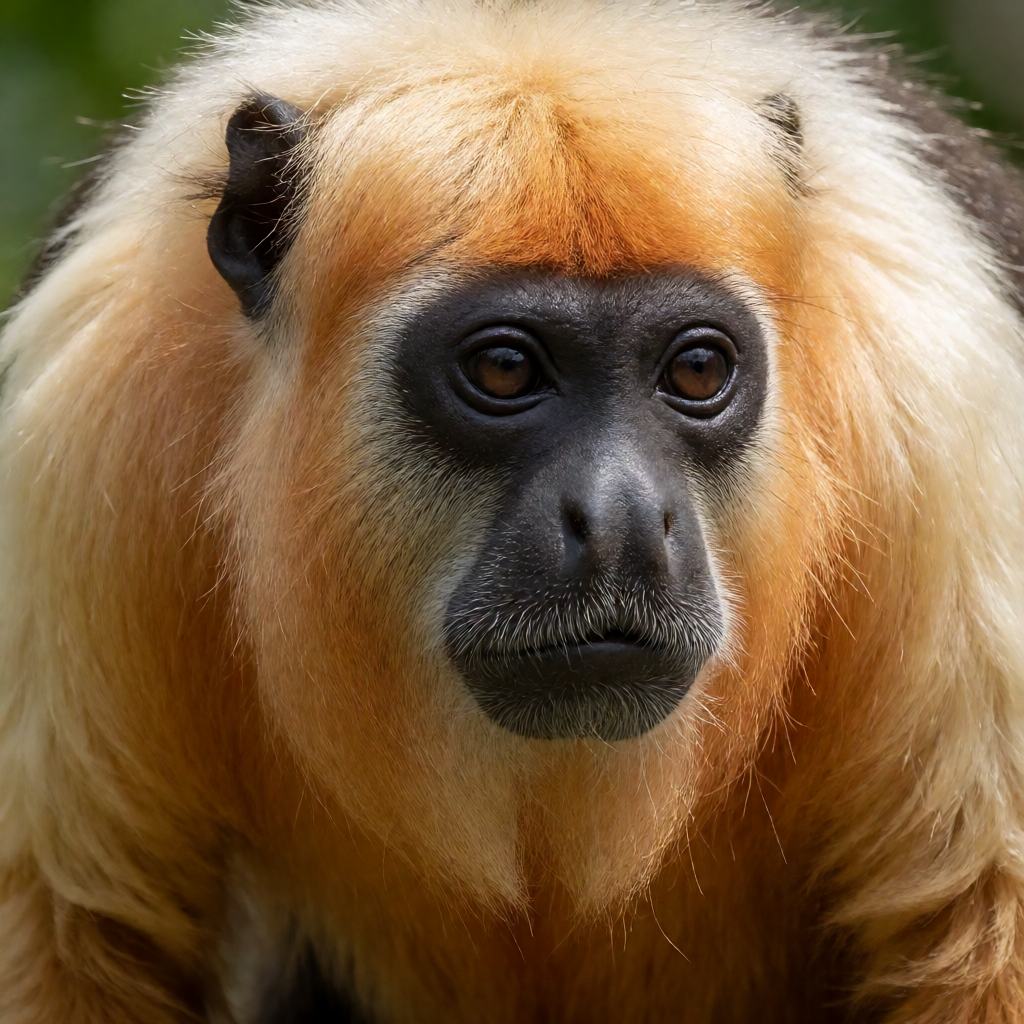
Head and body measure 40 to 45 cm. Weight runs 2.75 to 3.5 kg. Its tail adds only 15 cm, the shortest of any monkey in the Americas. Long coarse hair covers the shoulders and the back.
Skin on the face is bare and bright red. Teeth include long canines and strong front incisors, which crack hard nuts. Jaw muscles are heavy, since the diet needs shells broken open. Skin colour fades when an animal falls sick.
Healthy males show the deepest red, and females pick that shade. Bodies are stocky, with short limbs and a broad chest, and the animal moves well in water.
1
2
3
Heavy jaw, short tail
Where it lives
Varzea forest grows along rivers that carry pale muddy water. Those rivers rise each year and flood the forest floor. Fruit ripens in the flooded trees, and the monkeys swim to it. High ground holds the animals in the wet months, and low ground holds them in the dry.
Palm stands matter, because the fruit lasts through the flood. Range covers western Brazil and eastern Peru, though the exact line stays unclear. Small groups also occur in parts of Colombia. Forest loss along the rivers cuts the habitat into strips.
Hunting removes animals from stretches near settlements. One river can hold several forms, and each stays on its own bank for most of the year.
Forest that floods each year
What it eats
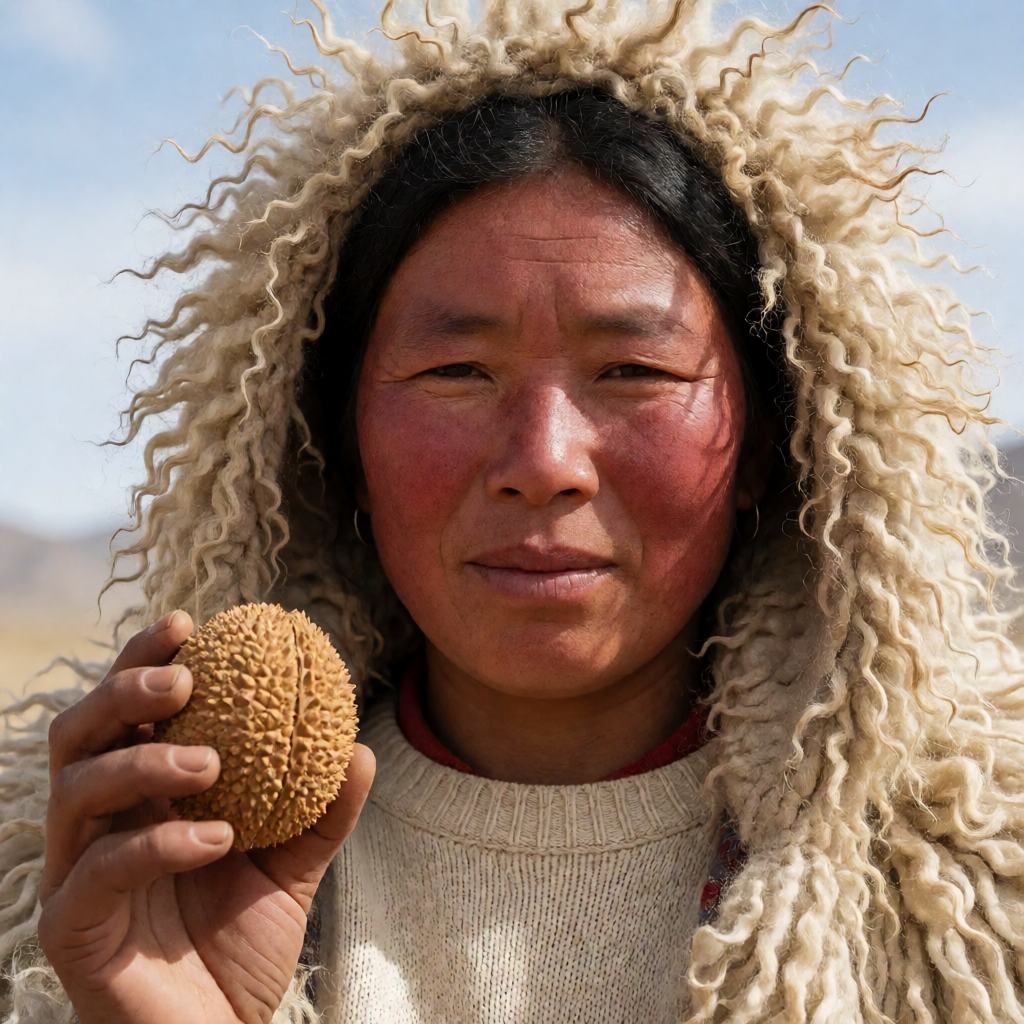
Hard fruit and seeds form the base of the diet. Palm nuts are opened with the front teeth and a heavy jaw. Unripe fruit is eaten as well, which few monkeys can manage. Leaves and buds fill the gaps between fruiting seasons.
Insects add protein, mostly in the dry months. A group walks several kilometres a day looking for ripe palm crowns, and it crosses open water to reach them. Seeds spread as the animals travel, since much of the fruit passes whole. Fruit falls into the water, and fish take a share.
Feeding slows in the middle of the day, since the heat rises. Night brings rest in high branches, where the water below offers some safety from cats.
Hard nuts and palm fruit
The breeding cycle
Breeding happens in the dry months across most of the range. A female shows readiness through swelling and scent. One infant is born after about six months. Birth happens in a high fork, away from the water.
Mothers carry the young on the belly at first, and the infant grips the fur with both hands. Later the infant rides on her back. Weaning comes at around one year, although the young stay close for longer. Females breed every two years at best.
Males take no part in raising the young, although they stay in the group. A slow birth rate makes the species hard to rebuild, since one lost female costs years. Recovery after a crash can take decades, and hunting pressure rarely stops long enough to allow it.
Vulnerable, and slow to breed
Conservation
IUCN lists the animal as Vulnerable. CITES places the species in Appendix I, so trade is banned. Hunting is the main threat, since a large monkey makes a large meal. Forest along the rivers is cleared for farms and pasture.
Dams and canals change the flood, and the fruit then fails. Mining pollutes the water in parts of the range. Protected areas cover a share of the habitat, although patrols stay thin. Indigenous lands keep forest whole and hold healthy groups.
Work at Mamiraua has tracked the species for decades, and the numbers there look steady. Keeping the flood plain whole is the surest way to keep the animal, because a monkey that swims between trees cannot cross a cleared bank.
Side by side
How It Compares
| Trait | Bald Uakari | Proboscis Monkey |
|---|---|---|
| Length | 40 to 45 cm body, with a 15 cm tail | 66 to 76 cm body, with a long tail |
| Weight | 2.75 to 3.5 kg | 10 kg in the female, and 20 kg in the male |
| Home | varzea forest along white water rivers | river edge forest and mangrove in Borneo |
| Face | bare scarlet skin on a round head | a long fleshy nose that hangs past the mouth |
| Food | hard palm nuts, unripe fruit and seeds | leaves, seeds and unripe fruit |
| Group | 30 to 50 animals, and up to 100 | a harem of a few females with one male |
Common misreadings
What People Get Wrong
- Many people believe the red face comes from blood flow, yet the colour rests in the skin itself.
- Some accounts call the species a howler monkey, although it belongs with the sakis and uakaris.
- Guides often say the animal lives on dry ground, yet it spends the wet season in flooded forest.
Going further
Sources and Further Reading
Quick hits
Five things to remember
- The face is scarlet and bare.
- The tail is the shortest in the Americas.
- Heavy jaws crack palm nuts.
- Groups swim between flooded trees.
- Colour fades when the animal is ill.