 By st20113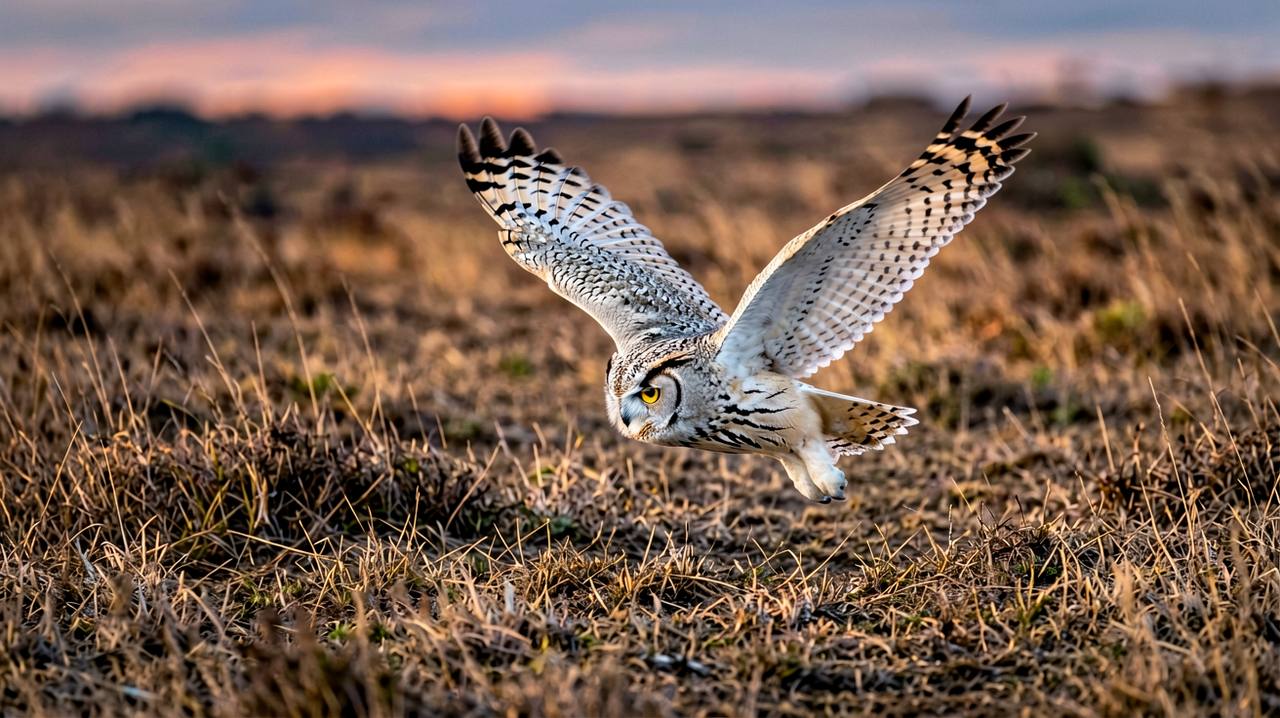
Asio flammeus | Short-eared Owl
Species Profile · Strigidae
Short-eared Owl
The owl that hunts in daylight, gliding like a moth over open fields.
IUCN: Least Concern
Range
Size
Wingspan
Clutch
Status
An owl of open country
Hunting in daylight
The short-eared owl is a bird of open country. It hunts over fields, marshes, and moorland. It is unusual among owls because it often flies by day. Its pale, moth-like flight makes it easy to spot from a distance. The bird is about the size of a wood pigeon. It measures roughly 34 to 43 centimetres long.
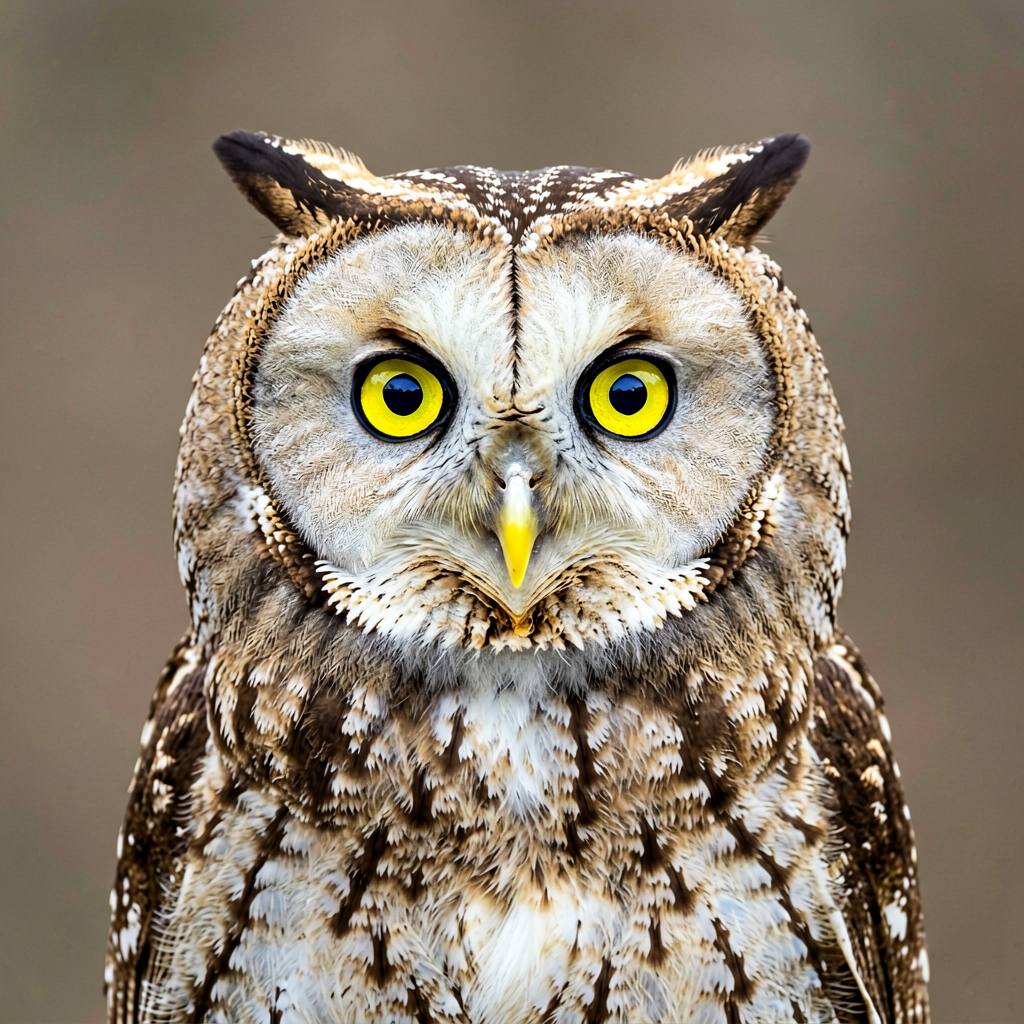
Its wingspan reaches about 85 to 110 centimetres. Females are larger and heavier than males. Its feathers are mottled brown above and pale buff below. Dark streaks cover its chest. Two black patches frame its yellow eyes. Those patches give it a startled, panda-like look.
Small tufts sit on its head, but they are usually hidden. That is where its name comes from. Despite the name, those tufts are not ears. The real ears sit on the sides of the skull. They are hidden under soft feathers.
Family tree
The eared owls
The short-eared owl sits in the genus Asio. It belongs to the family Strigidae, the typical owls. The genus Asio contains the eared owls. These birds share a slim build and long wings. A close relative is the Long-eared Owl. That species lives in the same parts of Europe.
The two are often found in the same areas. But they behave differently. The long-eared owl hides in trees by day. It hunts at night and slips away if disturbed. The short-eared owl hunts openly in daylight. It often flies in wide, slow circles over fields.
The long-eared owl has much bigger ear tufts. They stand up when the bird is alarmed. Both species rely on hearing to find prey. Both have soft fringed feathers for silent flight. The short-eared owl is also found far beyond Europe. It lives on every continent except Antarctica and Australia.
Mottled brown, pale below
A light and silent flier
The short-eared owl has a round head and a short beak. Its facial disc is pale and outlined in dark brown. That dish-shaped face gathers sound like a radar dish. Its eyes are bright yellow with black rims. The upper parts are mottled with brown and buff. The underparts are paler, with heavy dark streaks.
A black patch marks the bend of each wing. The wingtips are dark as well. Those dark marks help distinguish it from the long-eared owl. Its flight is light and buoyant. The wings beat slowly and deeply, like a moth’s. It can hover briefly while searching the ground.
Its feathers are soft and fringed. That makes its flight almost silent. Silent flight helps it surprise small mammals below. Its legs are feathered, and its talons are sharp. The bird weighs between about 200 and 475 grams. Females are the heavier sex.
1
2
3
Fields, marsh, and moor
Wide views, low cover
This owl prefers open landscapes with low cover. Grassland, marsh, and tundra are all suitable. It also nests on moorland, dunes, and rough farmland. Airfields and coastal grazing marsh often hold birds. It needs wide views and plenty of ground prey. It avoids dense forest almost entirely.
Its range is very wide. It breeds across North America, Europe, and northern Asia. It also lives in parts of South America and on several islands. In Hawaii a dark subspecies survives. It is known there as the pueo. Northern populations often move south in winter.
Others wander in search of food. The species is nomadic rather than truly migratory. It settles wherever small mammals are plentiful. In poor vole years it may not breed at all. Then it drifts to new areas. Some birds cross long stretches of sea during these movements.
What it eats
Voles heard under the grass
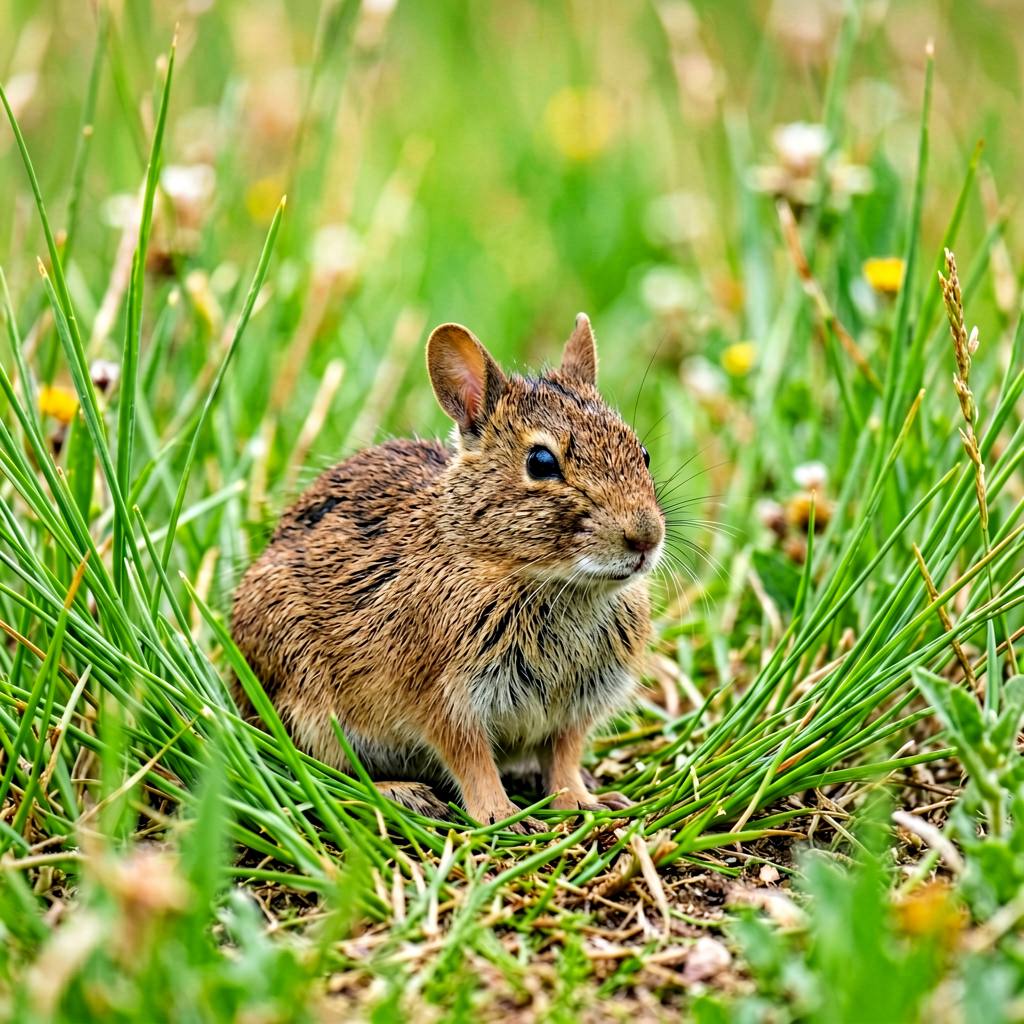
The short-eared owl eats mostly small mammals. Voles are its most important food. Mice, shrews, and young rats are also taken. It catches birds as well, especially in winter. Small birds are hunted when mammal numbers fall. Insects, frogs, and even fish appear in its diet occasionally.
It hunts by flying low over the ground. It listens for the rustle of prey under grass. Its hearing is keen enough to detect a vole under snow. That lets it hunt in winter when the ground is hidden. When it spots prey, it drops quickly. It strikes with its talons and swallows the catch whole.
Small prey is eaten on the ground. Larger prey is carried to a perch first. It often swallows mice head-first. Later it coughs up a pellet of fur and bone. Its diet changes with whatever is abundant.
Nests on the ground
Big clutches in good years
Short-eared owls nest on the ground. The female scrapes a shallow hollow in the grass. She lines it with a little dry vegetation and some feathers. She lays a clutch of four to eight eggs. In good vole years she may lay as many as fourteen. That is unusually large for an owl.
The eggs are laid one or two days apart. Incubation starts with the first egg. It lasts about 24 to 27 days. The female does all the sitting. The male brings her food during that time. The chicks hatch at different sizes.
The oldest chicks may be twice the size of the youngest. The female feeds them on food the male delivers. Young birds leave the nest after about four weeks. They can fly a little before that. They then learn to hunt on their own. Breeding depends heavily on how many voles are around.
Nomads in trouble
Grassland that keeps vanishing
The short-eared owl is rated Least Concern worldwide. Its numbers rise and fall with prey cycles. Even so, several populations are shrinking. The main problem is loss of open habitat. Grassland is ploughed, drained, or built on. Marshland is drained for farming. Those changes remove the voles the owls need. Intensive farming also reduces insect numbers. Pesticides can poison the birds directly. Collisions are another risk.
Birds strike power lines, fences, and vehicles. Airports sometimes attract them and then remove them as a safety risk. Climate change may shift their northern breeding grounds. In parts of Europe the species is now scarce. Conservationists protect remaining wet grassland. They also plant hedges and leave rough field margins. These strips support the small mammals the owl depends on. Its wide-ranging habits make it hard to protect. Winter is a dangerous time for the species. Birds drift south and gather in lowland fields.
There they often roost together on the ground. A single field may hold a dozen birds. That habit makes them vulnerable to disturbance. Walkers and loose dogs can flush a whole roost. The birds then burn energy they cannot easily replace. Volunteers now map these roosts and ask people to keep away. Simple signs and fenced paths make a real difference. So does leaving stubble on the fields through the winter.
Quick hits
Five things to remember
- It often hunts in daylight, which is unusual among owls.
- Its ear tufts are not ears at all, and they are usually hidden from view.
- It can find a vole under snow using hearing alone.
- A single nest may hold fourteen eggs when voles are plentiful.
- Its flocks wander from year to year, following the fortunes of its prey.