 By st20113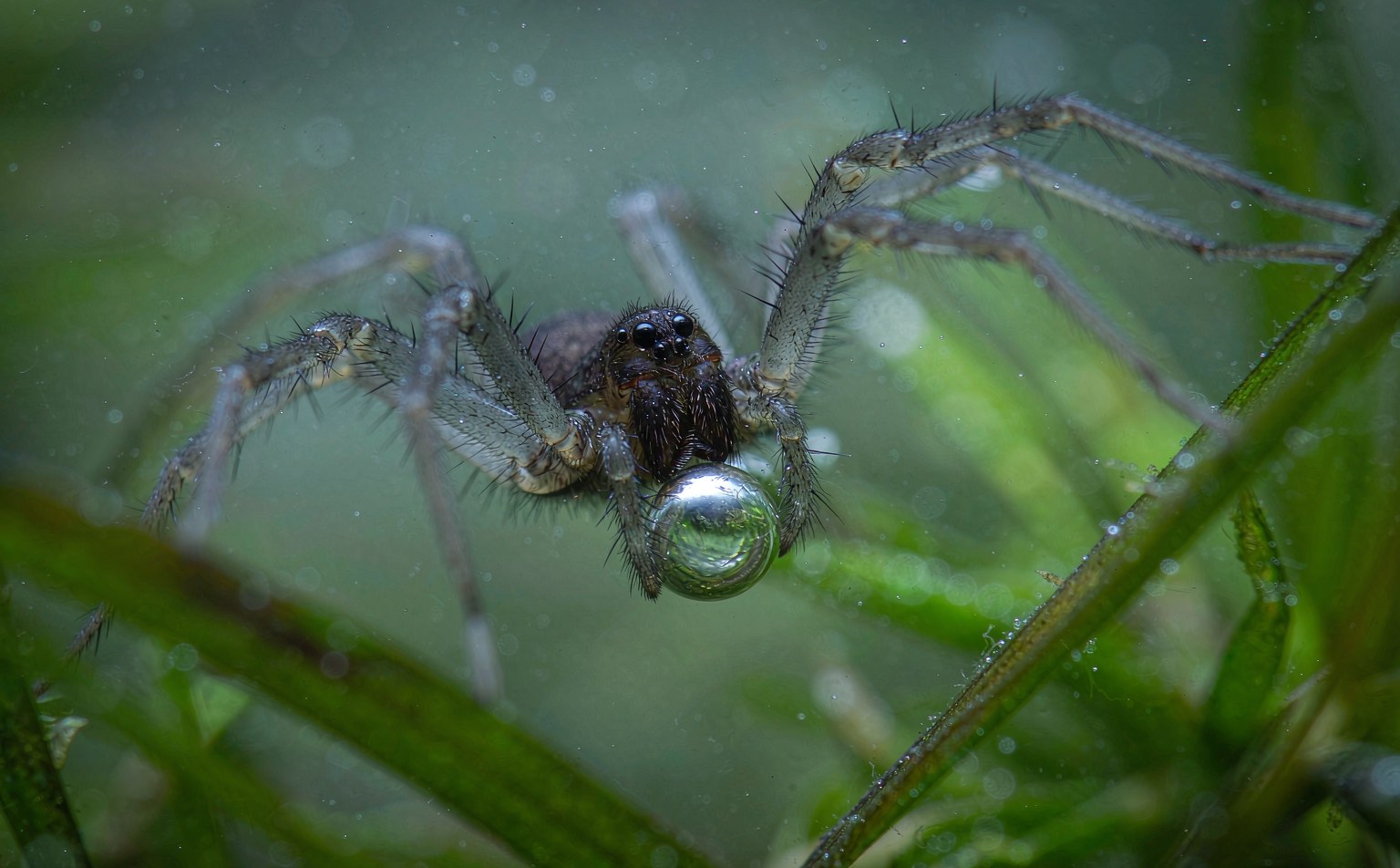
Argyroneta aquatica | Water Spider
Introduction
The Water Spider (Argyroneta aquatica) is one of the most extraordinary animals of the European pond: the only spider that lives almost entirely underwater. It breathes from a shimmering bell of air it builds and anchors among water plants, diving, hunting and even mating beneath the surface. To watch the silvery dome glint among the weeds is to see a small piece of the atmosphere carried down into the water itself.
Found across Europe in weedy, unpolluted ponds and canals, the Water Spider is a true marvel of adaptation. Its air bell acts like a primitive gill, and the spider’s whole life, from ambush to egg-guarding, plays out in a submerged world few other arachnids can enter.
Taxonomy
The Water Spider was described by Carl Linnaeus’ contemporary Carl Alexander Clerck in 1757 and placed in the genus Argyroneta, meaning “silver swimmer,” within the family Cybaeidae. It is the sole fully aquatic spider in Europe, though some tropical species share the habit. Its closest terrestrial relatives are the nursery-web spiders.
It lives among the same weeds as the larvae of the Smooth Newt and the Common Frog, and it is one of the few spiders that regularly crosses paths with the Grass Snake in the submerged margin, though the snake rarely reaches it in open water.
Physical Characteristics
The Water Spider is 8 to 15 millimetres long, the female larger than the male, with a rounded, velvety brown body covered in water-repellent hairs. These hairs are the secret of its lifestyle: when the spider dives, a silvery film of air clings to its body, making it look plated in mercury. It uses this air to spin a domed web beneath a plant, trapping a larger bubble that it visits to breathe.
The legs are strong and slightly flattened for swimming, and the fangs are robust for seizing prey underwater. The male is slimmer and darker than the female. The air bell, anchored to vegetation and kept replenished from the surface, can be larger than the spider itself, a portable pocket of breathable atmosphere.
Habitat
Water Spiders need still or very slow, clean fresh water rich in submerged vegetation: ponds, lakes, canals and fens. The plants give anchor points for the air bell and cover for hunting, and good water quality is essential, as the species is sensitive to pollution and oxygen loss. They are absent from fast or dirty water.
They stay submerged for much of their lives, climbing to the surface only to refill their air supply or to disperse. In winter they may leave the water to shelter in bankside litter, returning in spring to rebuild their bells among the new growth.
Diet
The Water Spider is an ambush predator that waits in or near its air bell for small aquatic animals to pass: water fleas, insect larvae, tiny crustaceans, worms and even small fish fry and tadpoles. It darts out, seizes the prey with its fangs and injects venom, then retreats to its bell to feed in safety, the catch held in the air.
It can also leave the bell to prowl the weeds, returning with a fresh film of air. As both predator and prey, it sits in the pond food web alongside newts and frogs, helping to check populations of small invertebrates while itself being taken by larger hunters.
Reproduction
Mating is a careful underwater affair. The male builds a small sperm web, transfers sperm to his palps, and enters the female’s bell, where the pair mate within the shared air. The female then enlarges the bell into a nursery, laying her eggs inside and guarding them until they hatch.
The spiderlings emerge in the bell and later leave to build their own tiny diving bells. The species’ entire breeding cycle depends on the air bell, making clean, vegetated water with stable conditions essential for the next generation to survive.
Conservation
The Water Spider is classified as Least Concern overall but has declined locally where ponds have been lost, polluted or shaded out. It is a sensitive indicator of unpolluted, plant-rich water, and its disappearance often signals a degraded pond. In some regions it is among the species monitored as a marker of wetland health.
Protecting and creating vegetated ponds, reducing runoff of chemicals and nutrients, and keeping margins shady but not smothered all help. Because the spider needs connected, good-quality waters to disperse, landscape-scale pond care matters more than any single site for its long-term survival.
Fun Facts
- The Water Spider is the only spider in Europe that lives almost entirely underwater.
- It carries its own air supply, looking silvered in mercury when it dives.
- It builds a breathing bell of silk and air anchored among pond weeds, like a tiny submarine.
- Mating, egg-laying and rearing the young all happen inside the underwater air bell.
- Its body hairs are so water-repellent that the silver film stays put even in strong current.