 By st20113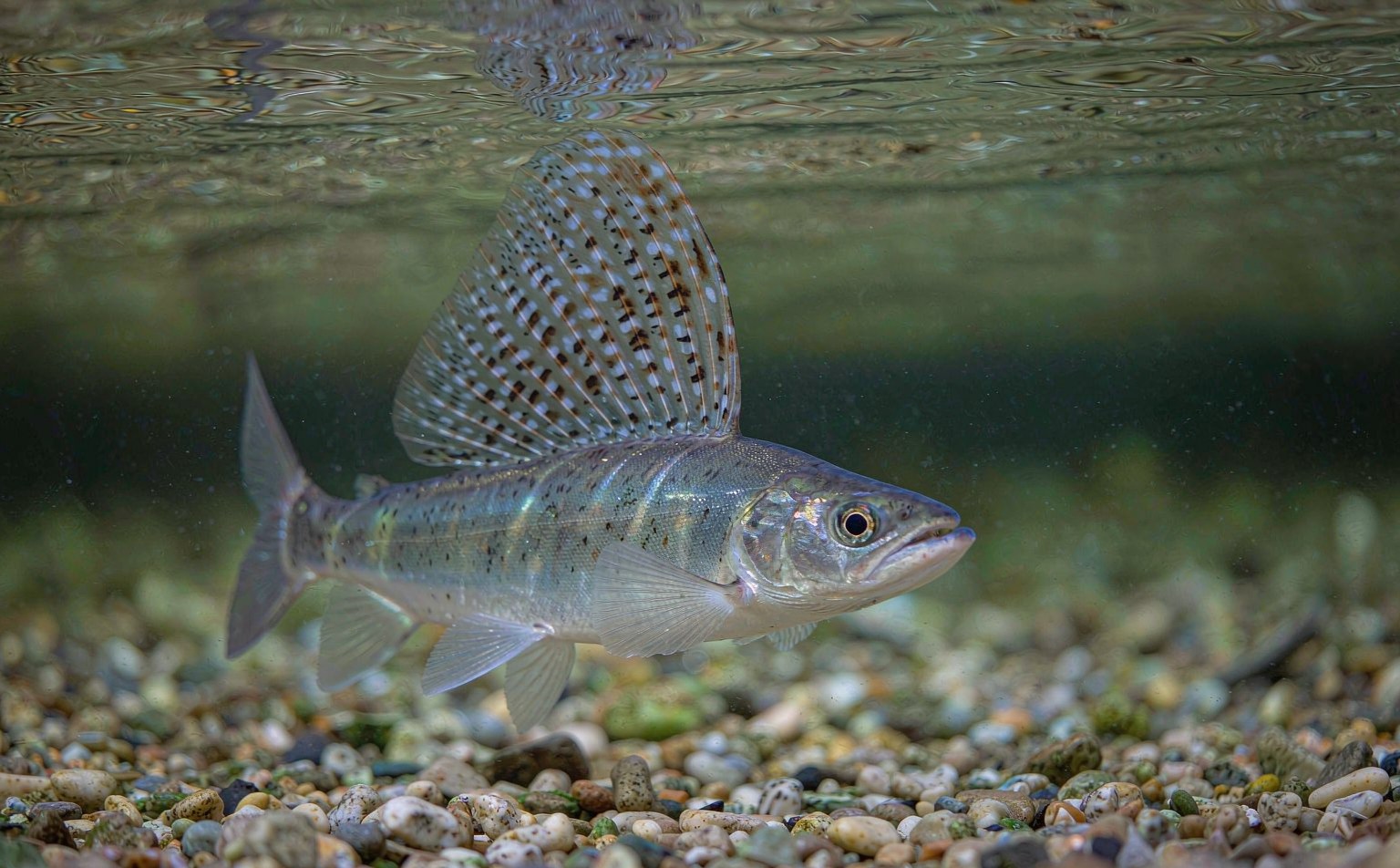
Thymallus thymallus | Grayling
Introduction
The Grayling (Thymallus thymallus) is a slender, silvery salmonid of clear European rivers, instantly recognised by its large, sail-like dorsal fin banded with rows of spots. Named for the faint smell of thyme said to come from its flesh, it is a prized fish for fly anglers and a sensitive marker of unpolluted, well-oxygenated water. Gregarious and restless, grayling dart in loose shoals over clean gravel, rising to surface insects with a quiet, sucking take. They are among the few salmonids that thrive in faster, brighter stretches where many trout hesitate.
Taxonomy
Thymallus thymallus was described by Linnaeus in 1758 as the type species of the genus Thymallus, a salmonid genus separate from the trouts and charrs. The genus is most closely allied to Salmo and Salvelinus, and the grayling’s large fin and gentle habits set it apart from the predatory Wels Catfish and other coarse fish of European rivers. Several related Thymallus species occur across Siberia and North America. Within Europe the familiar grayling is the widespread form, with regional variants in the Danube and other basins.
Physical Characteristics
Grayling are elongate, moderately deep-bodied fish usually 25 to 45 centimetres long, occasionally larger. The body is silvery with a faint violet sheen and a row of small dark spots along the lateral line. The defining feature is the high, long dorsal fin, marked with 5 to 10 rows of dark spots and often edged in purple or red. The mouth is small and toothless, suited to sifting fine food rather than seizing big prey. The scales are small, the eye large, and the adipose fin present as in other salmonids. Breeding males develop a thicker body and roughened scales along the flank.
Habitat
Grayling favour cool, well-oxygenated rivers and streams with clean gravel or stone substrates and a moderate to swift current. They also use deep, slow pools and, in the north, some lakes. They avoid muddy, warm or polluted water and are absent from lowland canals and stagnant ditches. Ideal habitat combines riffles for spawning and deeper runs or pool margins for resting and feeding. They are surprisingly tolerant of slight acidity and are often found with Brown Trout in the same reaches, using different micro-habitats.
Diet
The diet is dominated by invertebrates, especially aquatic insects: mayfly, stonefly and caddisfly larvae and adults, midges and small crustaceans. Because the mouth is small, grayling take tiny prey efficiently and rise readily to hatching flies at the surface. Terrestrial insects blown onto the water are also eaten, and very large individuals may occasionally take small fish. Feeding is often in mid-water or just above the bed, and the fish roam in shoals that move with the available food and light.
Reproduction
Spawning runs from March to May, earlier than most salmonids, as water temperatures rise. Fish move onto clean gravel shallows where females broadcast adhesive eggs that sink into the interstices and are lightly covered. There is no nest-building or parental care. The eggs hatch in two to four weeks and the fry drift to margins and backwaters to feed. Grayling grow steadily and mature in two to four years; wild fish commonly live six to eight years, occasionally longer in large rivers.
Conservation
The grayling is of Least Concern overall but has declined locally through river regulation, pollution, gravel extraction and barriers that block spawning migration. It is valued in catch-and-release angling and benefits from river restoration that rebuilds natural flow and gravel. Because it is sensitive to low oxygen and silt, recovering grayling populations are a good sign that a river’s health is improving.
Fun Facts
- Its curious thyme-like scent comes from the skin and is strongest in fresh-caught fish.
- The huge spotted dorsal fin is used in shoal displays and may help stabilise the fish in fast current.
- It often feeds with brown trout in the same pool but takes smaller, softer prey.
- Early spring spawning means its young are well grown before summer crowds the river.
- In parts of Europe it is called “umber” or “lady of the stream” by anglers.
[…] fish shares the family with the Grayling. Many experts treat it as a group of close relatives. The picture is still not […]