 By st20113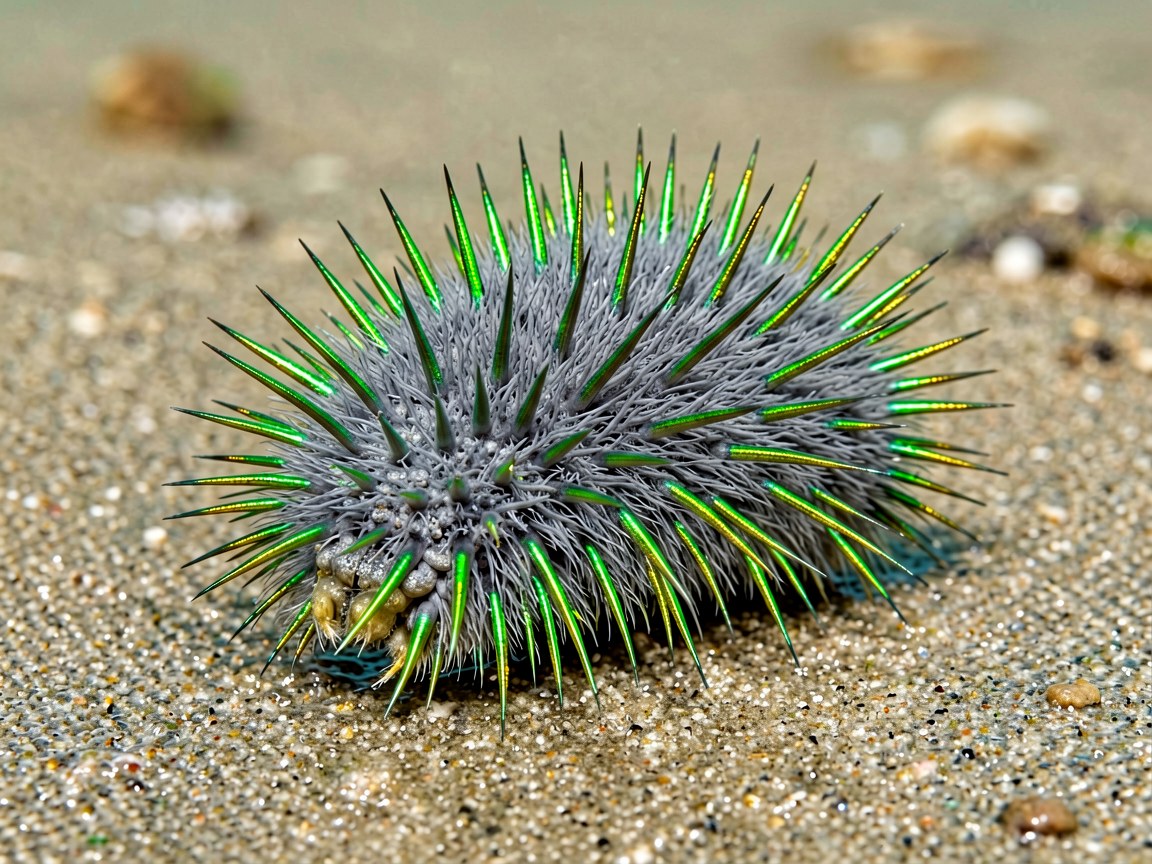
Aphrodite aculeata | Sea Mouse
Introduction
The sea mouse (Aphrodite aculeata) is one of the strangest animals of the seabed—a marine worm so fuzzy and iridescent that it looks like a drowned mouse rather than a relative of the earthworm. Hidden among its velvety bristles are spines and a shimmer of green and gold that flashes in the light. Common on sandy and muddy bottoms around the coasts of Britain and Europe, it is a small, startling encounter for anyone who turns one up.
Taxonomy
Aphrodite aculeata is an animal in the phylum Annelida—the segmented worms—within the class Polychaeta, the bristle worms. It is a marine cousin of Lumbricus terrestris, the earthworm; both are segmented worms, but the sea mouse bears fleshy, hair-like bristles and lives in the sea rather than the soil.
Physical Characteristics
The sea mouse is an oval, flattened worm 10–20 cm long, covered by a dense felt of short, greyish bristles—the “fur”—through which project longer, stout, glassy spines. Along its back run rows of larger bristles that catch the light with a shifting green-and-gold iridescence, like oil on water. Underneath, the segments bear fleshy legs and the true bristles used for burrowing. The head is small and hidden at the front, with no eyes to speak of.
Habitat
Sea mice live on sandy and muddy seabeds from the low shore down into deeper water, burrowing just beneath the surface and prowling at night. They are found around the north-east Atlantic and the Mediterranean and are often brought up by fishing gear or washed ashore after storms. They favour soft bottoms where they can hunt and hide, and they tolerate a wide range of depths.
Diet
The sea mouse is a predator and scavenger. It lies partly buried and seizes small animals—other worms, crustaceans, and molluscs—with its extendable, tooth-lined pharynx, swallowing them whole, and it will also take dead flesh. It is a roving hunter of the seabed, using its bristly body to feel and ambush prey in the dark, and it helps recycle the carcasses that sink to the mud.
Reproduction
Sea mice have separate sexes. They spawn by releasing eggs and sperm into the water, where fertilisation takes place; the larvae swim briefly as plankton before settling to the bottom and growing into bristly adults. In some related worms the adults swarm at the surface to spawn, but the sea mouse generally breeds on the seabed, and the young take several years to mature.
Conservation
The sea mouse is common and not considered threatened. It is a natural part of healthy seabeds and a prey item for flatfish and crabs. Because it lives overlooked in the sediment, it is little affected by people beyond the disturbance of bottom trawling, which can churn its habitat. Leaving soft seabeds undisturbed helps keep it—and the life it hunts—in place.
Fun Facts
- Its “fur” is really thousands of fine bristles, and its spines flash green and gold in light.
- It is a marine worm, not a mammal—a surprising cousin of the earthworm.
- It hunts with a reversible, toothed pharynx that shoots out to grab prey.
- The name “sea mouse” comes from its furry, drowned-rodent look on the shore.
- That shifting iridescence is caused by the structure of its bristles, like a soap film.