 By Iris
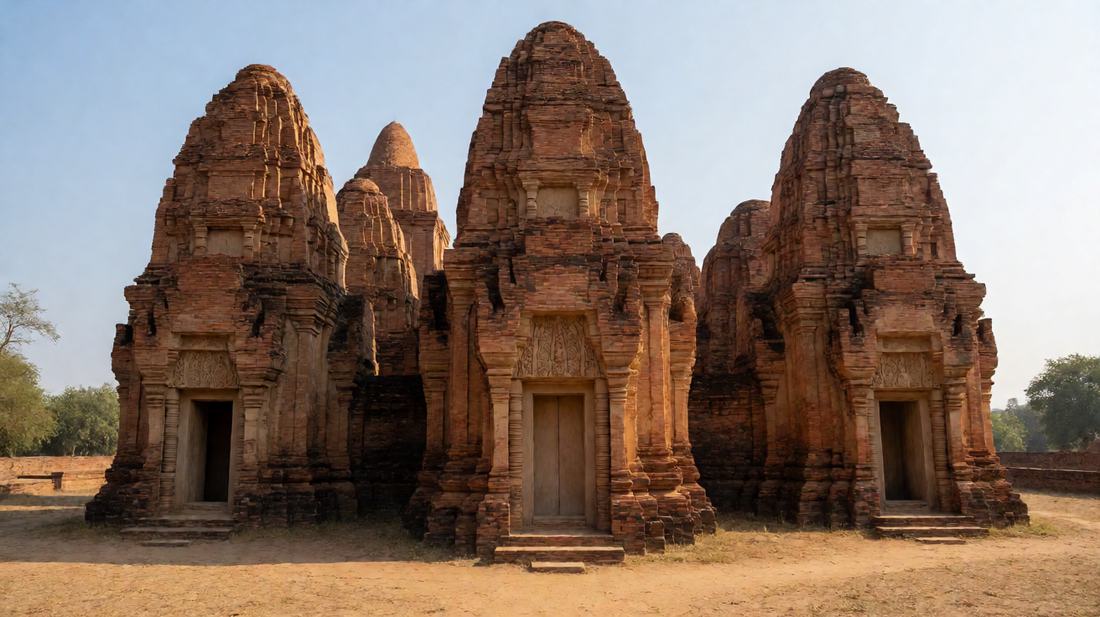
Chenla | The Kingdom Before Angkor
Historical Profile · Cambodia
Chenla | The Kingdom Before Angkor
Before Angkor there was Chenla, a group of river principalities that took over the delta trade and left the brick shrine, the reservoir and the god king behind.
AD 550-802
Founded
Capital
Faith
Craft
End
The big picture
Introduction
For three hundred years the Mekong delta held a rich trading state that the Chinese called Funan. Then a smaller power upstream took its place. The Chinese called that one Zhenla, and modern books call it Chenla. It was never a single kingdom. It was a group of small states that shared a script, a religion and a river. Its courts wrote in Sanskrit and in Khmer, and its temples were built of brick.
In 802 a prince from Java or from the coast founded a new capital downstream. This date marks the end of Chenla and the start of Angkor. What Chenla left behind was a model, not a state. Silt did the work. The river rose every August, and it left the fields richer than before. Two harvests a year were possible, and some years brought three.
Nobody needed to fight for land here. Land was cheap, but people were not. Yet silt alone builds nothing. Water did the rest.
Setting
Historical Context
Every year the lower Mekong floods, and the flood deposits silt that grows rice without much work. River silt fed a population long before any kingdom appeared. Funan grew rich on the sea route between India and China, and its ports handled goods that never travelled far inland. Chenla sat further up the river, where the land rises and the flood is shallower. Its people farmed, worked iron and sold forest goods downstream. Chinese officials recorded missions from both states, and their notes are the only written account from outside. Carved texts in Sanskrit appear from the sixth century, and they record kings, gifts and family lines.
Those carvings copy Indian forms, and the forms came with traders and with priests. The Gupta Empire had set the style of script and court ritual that much of Southeast Asia then adopted. Funan’s ports grew rich, while the inland states stayed poor. Priests came from India, and they brought the script with them. Kings copied Indian titles because the titles carried weight. Traders paid in goods, not in coin. Rice fed the towns, so the river was the real treasury.
A king who held the flood plain could feed an army, and an army could take the flood plain from a weaker king. Even so the river ruled. Goods moved with priests. Trade paid for the temples, though no king admits it. Indeed the river set the terms.
Turning points
Key Events
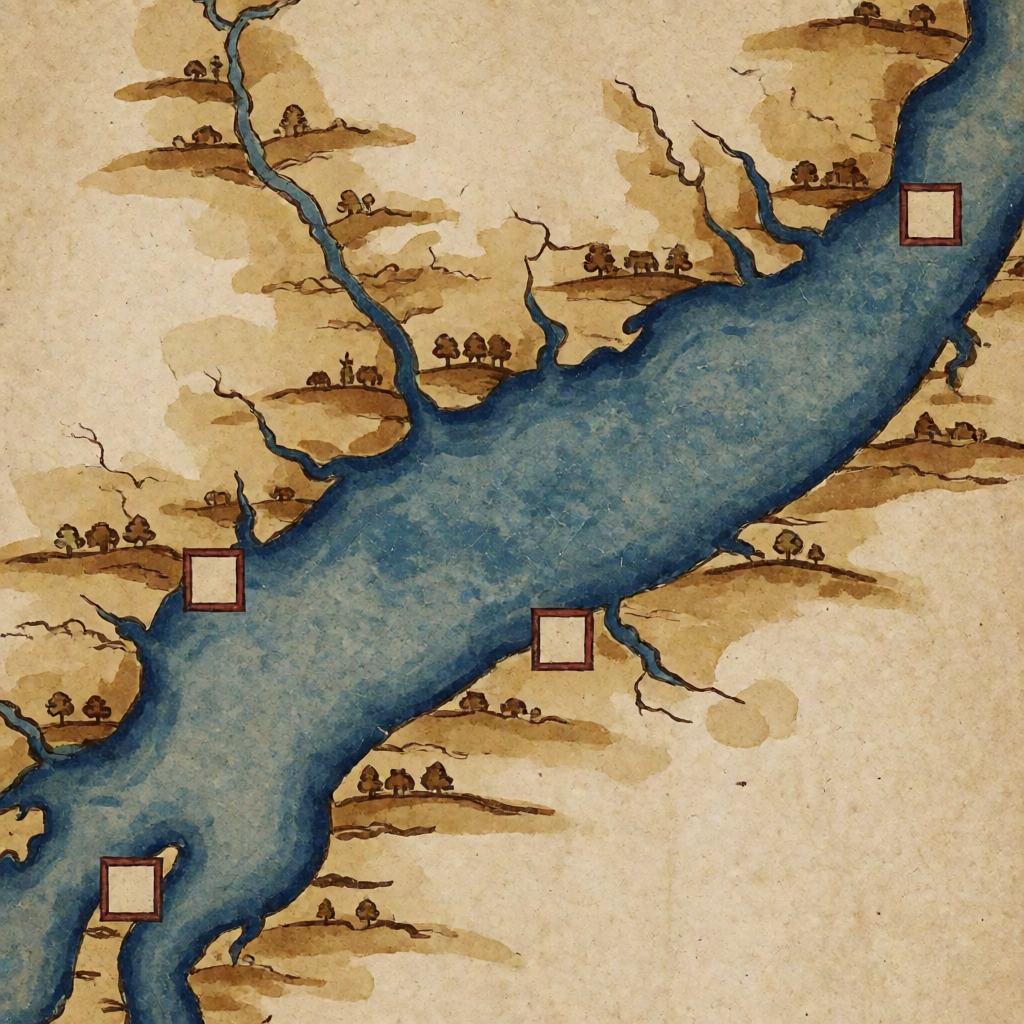
Around 550 a ruler named Bhavavarman took the title of king and pushed south. His brother followed and left inscriptions that claim conquests up the river. In 616 a new ruler moved the court north to a site now called Sambor Prei Kuk. His capital had a wall, a reservoir and a hundred brick shrines. His heirs ruled for two generations and issued their own coin. By 700 the state had split into two halves, one inland and one on the delta. Chinese writers called them land Chenla and water Chenla, and the names stuck. During the eighth century the pieces fought each other and the carved texts stop.
Java intervened at some point, though the evidence is thin and much argued over. In 802 a prince returned and founded a capital near the great lake. That capital became Angkor. The Majapahit Empire came from the same island world four centuries later, and it faced the same problem of holding distant ports. Siam solved that problem at Ayutthaya, and it solved it with a river. Bhavavarman pushed south and held the delta for a while. His heirs lost it again, though the family kept its standing. Sambor Prei Kuk was a capital for two kings, and then it was abandoned.
Nobody knows why. War and water both took a share, since neither could be controlled. Then a rival struck. No code survived. Water decided the war, and water decided the peace. Still the river kept its own calendar.
1
2
3
Who held power
People and Powers
A king ruled with priests beside him, and the priests kept the records. The title devaraja, or god king, is often attached to this period, though the evidence is thinner than the phrase suggests. Local chiefs kept their land and their people, and they paid tribute rather than tax. A king who lost a battle lost the tribute, and losing tribute meant losing the chiefs. Nobody here ruled through salaried officials. Power ran through marriage, through gifts and through the threat of a raid.
Sanskrit gave the court a shared language with India, while Khmer remained the speech of everyone else. Such a division lasted a thousand years. Priests held land, and they held it free of tax. A chief who married a king’s daughter gained rank, yet he also gained a rival. Ranks were graded, and each grade had its own title. Below the chiefs sat the farmers, who paid in rice and in work.
Slaves stood at the bottom, though most could be freed. Kin ties did the rest. Rank came from rice, since rice fed soldiers. Priests kept the records, and records kept the priests. Rank mattered, and blood mattered more.
Everyday world
Daily Life and Society
Rice fed everyone, and rice also paid the dues. Houses stood on posts above the flood line, with a ladder pulled up at night. Water came from the river and from ponds dug behind the village. River water filled the gaps in a bad year. Families worked plots that belonged to a temple or a chief, and they kept a share. Women sold in the markets and ran the household stores.
Boys entered the temple as students, and a few stayed as priests. Villages kept a shrine, a drum and a set of rules that nobody wrote down. Wealth showed in bronze and in cloth, and cloth was bought from abroad. Plague and fever came with the wet season, and medicine was a matter of prayer and of experience. Rice grew in the flood plain, and it grew without much ploughing. Tools and jars sat under the house.
Children swam before they walked, and the river was the playground. Salt came from the coast, and it came upriver by boat. Debt was common, and debt could cost a man his freedom. Rice rarely failed. Salt came by boat, and nobody counted it. Catch from the water fed the household, and salt kept it.
Craft and ideas
Trade, Technology and Ideas
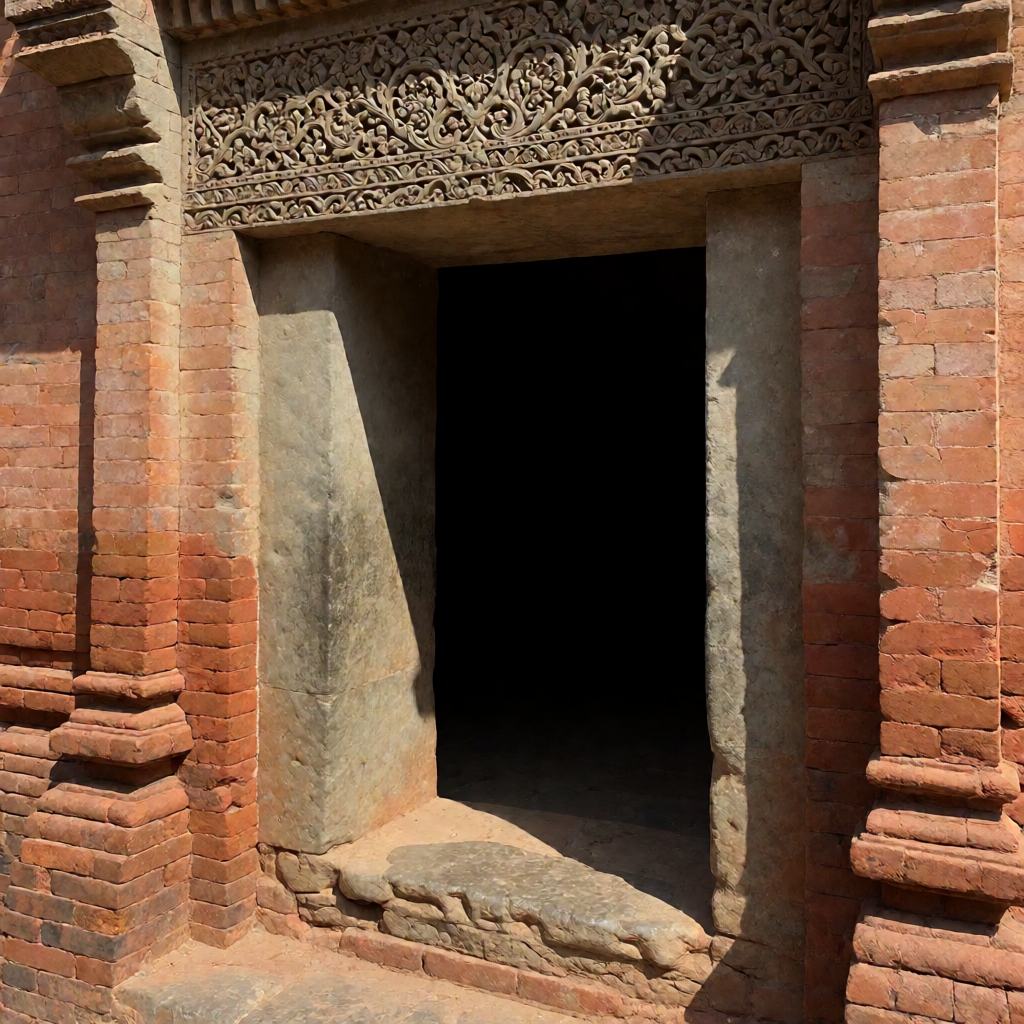
Brick was the great technical choice here, and brick required a workshop. Kilns made the bricks, and masons laid them without mortar in thin courses. Reservoirs were dug to hold the flood, and the digging took a great deal of labour. Labour was the real technology here, and it required a state. Iron came from the hills, and iron tools cut the laterite that made roads. Sanskrit learning travelled with the priests, and so did the epics and the rules of kingship. Astronomy set the calendar, and the calendar set the planting.
River boats carried rice downstream and salt upstream. Sea traffic went through the delta, and the delta was the reason the coast mattered. A state upstream could tax the river, and the river was cheaper to tax than the sea. Brick kilns burned wood, so the forest went first. Iron tools cut the laterite, and laterite made the roads. Boats carried rice down and salt up, and the boatmen took a share. Sea trade passed the delta, and the delta taxed what it could reach.
Writers used palm leaf, though paper came later from China. Brick lasted longer than wood, yet brick cost a fortune in labour, and the labour had to be fed all year. Brick made the state real. Iron paid for brick, thus both spread. Kilns ate the forest, and the forest never came back. Kilns needed wood, and wood was the first thing to go.
What lasted
Legacy
Angkor inherited the temple, the reservoir and the god king, and it inherited them from Chenla. The Khmer script descends from the writing used in these inscriptions. Sambor Prei Kuk still stands in the dry forest, and its brick towers show what the style looked like before Angkor. Recent diggers read the period as a set of competing states rather than a kingdom, and that reading fits the evidence better. Chinese records remain the spine of the story, and they were written by people who never went there. What survives is a phase rather than a dynasty.
This is enough to explain how a river valley became an empire. Angkor copied the brick shrine and the water tank. That script still carries the old carved texts, though few can read them quickly. Sambor Prei Kuk stands in dry forest, and its towers still hold their shape. Chinese notes remain the spine, and they were written far away. What survives is a phase, not a dynasty.
So the model travelled. Stone outlasted wood, so stone tells the story. Even so the temples still stand. Thus the model outlived the dynasty.
Side by side
How It Compares
| Point | Chenla | Funan |
|---|---|---|
| Dates | AD 550-802 | AD 100-550 |
| Base | Middle Mekong | Lower delta |
| Wealth | Rice, iron, forest goods | Sea trade and ports |
| Buildings | Brick shrines | Timber and earthworks |
| Writing | Sanskrit and Khmer | Sanskrit |
| End | Angkor, 802 | Taken over upstream |
Common misreadings
What People Get Wrong
- Chronicles describe Chenla as a kingdom with a single capital and a single king. It was a set of small states, and the Chinese name covered all of them.
- Scribes often say Angkor began from nothing in 802, on a fresh site. The reservoir, the brick shrine and the god king all came earlier, and Angkor inherited them.
- Maps of the delta still show empty forest through most of this period, which is wrong. Carved texts list kings, gifts and land, thus the country was settled and taxed.
Going further
Sources and Further Reading
- Wikipedia, Chenla
- Encyclopaedia Britannica, Chenla. Encyclopaedia Britannica, Inc.
- Vickery, M. 1998. Society, Economics and Politics in Pre-Angkor Cambodia. Centre for East Asian Cultural Studies.
- Higham, C. 2001. The Civilization of Angkor. Weidenfeld and Nicolson.
Quick hits
Five Things to Remember
- Chinese records note Chenla from the sixth century.
- Growth came upstream of Funan, and with it the river trade.
- Brick built its capital at Sambor Prei Kuk.
- By 700 the state had split into a land half and a water half.
- Angkor rose in 802 out of what was left behind.