 By Iris
The Kingdom of Bohemia | Crown, Silver and Heresy
Historical Profile · Central Europe
The Kingdom of Bohemia | Crown, Silver and Heresy
A kingdom built on silver, a crown held by election and a church reform that turned into a war the crown never won.
AD 1198-1526
Crown
Wealth
Reform
War
End
The big picture
Introduction
Bohemia was a kingdom inside an empire, and it spent five centuries arguing about that. Its dukes took a royal crown in 1198. Its kings later wore the imperial one as well. Prague grew into a capital of stone, with a school, a church and a new town. Silver from the hills paid for it all.
Then a preacher was burned at Constance, and the country went to war with itself. Wars ran for fifteen years. They ended in a compromise, and the compromise held. In 1526 a Habsburg took the throne. Bohemia then joined a crown that lasted until 1918.
Small kingdoms on a trade road can grow rich, yet it can never choose its neighbours. The land decided most of its history before any king did. Kings bought crowns with silver, and silver bought them enemies, and both arrived at the same time. Its story is a lesson in the value of law, and in its limits.
Setting
Historical Context
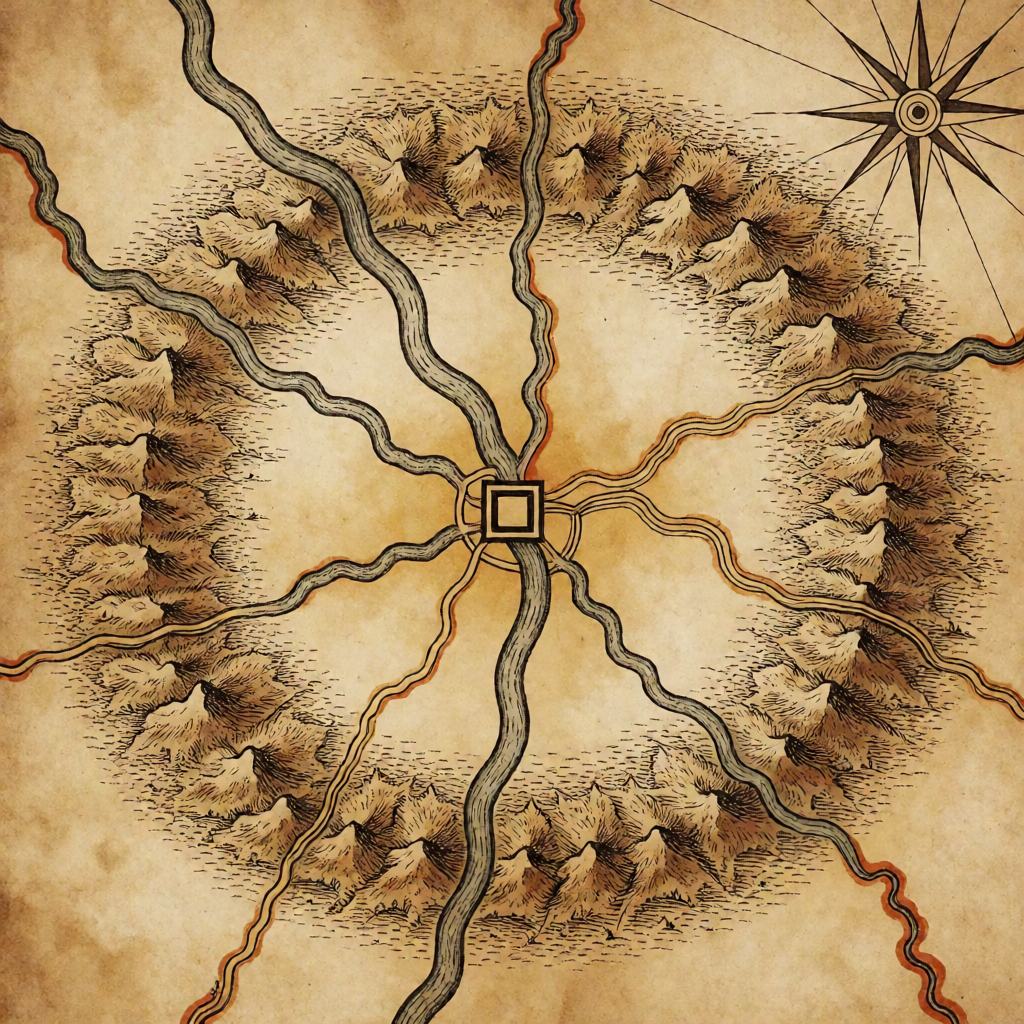
Land here is a basin ringed by hills. The Elbe runs through it toward the north. Germanic and Slavic settlement mixed along the border. Dukes of the Premyslid house ruled from Prague castle after 900. They paid tribute to German kings, and they gained bishoprics in return. Charlemagne had drawn a frontier through these hills two centuries before.
Memory of that line shaped every later claim. Ottokar I secured a crown in 1198. Documents of 1212 confirmed it, and that gold bull became the base of the realm’s law. His grandson Ottokar II built a state that reached the sea. He died in battle in 1278, and thus the crown passed to foreign houses. Each new house brought connections, but each took revenue as well.
Votes were common, while a strong king could still lose one. Crowns that can be bought are sold twice, and the nobles knew it better than anyone. Mountains on three sides gave the country a wall, and the Elbe gave it a road. Bohemia sat between two worlds, and it traded with both while it prayed with one.
Turning points
Key Events
Silver changed the scale. Silver made the kingdom strong, but it also made it worth taking, and every neighbour knew the size of the seam. Gold from Kutna Hora paid for an emperor’s court, but it also paid for the churches that later condemned it. Rich seams were found at Kutna Hora around 1300. Bohemia became a creditor to Europe. Wenceslaus II used the income to buy a claim on Poland and Hungary. Charles IV was crowned emperor in 1355, and he made Prague his capital.
He founded a school in 1348 and rebuilt the castle. He also began a cathedral that was finished only in the twentieth century. Then came the rupture. Jan Hus preached against clerical wealth. He was burned at Constance in 1415, though he had been promised safe conduct. His death set off the Hussite wars. Crusades were called against Bohemia, and all of them failed.
Moderates won, and a deal was signed in 1436. That deal allowed both bread and wine to the laity, which was the point of the quarrel. Peace lasted until 1618, and then the argument started again. Those wars produced a field army that no neighbour could match for a generation. Wars that begin with a window and end with a scaffold are wars about who rules.
1
2
3
Who held power
People and Powers
Power rested on land, silver and the crown. Great families held estates and commanded castle garrisons. Kings ruled through a court and a diet. Diets voted taxes, and a vote could be refused. Towns held rights, and Prague ran its own affairs under a charter. Church lands covered perhaps a third of the country.
That was the grievance Hus turned into a movement. Hussite victory gave nobles a share of church land that they never returned. Magnates could hold a personal tie to the emperor, so two loyalties sat in one man. Elections were not formal. Weak candidates could lose a vote in the diet. Cities and nobles bargained, while the crown played one side against the other.
Royal towns paid tax directly, and that made them useful to a king who needed cash. A charter that lists rights will be read aloud for centuries, and each reading adds a claim the first author never wrote. Kings without silver had to ask, and asking cost them power. Diets that met often became schools of politics, and noble sons learned there.
Everyday world
Daily Life and Society
Most people farmed, though the towns grew faster after 1300. Grain grew well in the basin, and it grew in quantity. Beer was drunk at every table, and it was safer than water, since the wells were shallow. Villages held fields in strips, and a court settled disputes about boundaries. Prague was different. It had a German merchant elite and a Czech artisan quarter.
Jews kept a town inside its own walls and its own law. Building work paid well while the court was raising a tower. Sickness and fire were the standing risks. A country that keeps its own court and its own coin can survive a bad king, yet it cannot survive a bad harvest and a bad king at once. Houses were timber and clay, and a spark could take a street. Winter closed the roads, and a bad harvest could empty a market town, and thus prices rose.
Bread prices were fixed, and a fixed price was enforced by the town guard. Most people never travelled further than the next market, since roads were bad and carts were few. Weddings joined two families and two sets of fields. Town law was written, and a written law could be argued. A town that keeps its own court can argue with its lord, and argument is the first form of politics. Life was short, yet a family that lost its head lost its claim to land.
Craft and ideas
Trade, Technology and Ideas
Bohemia exported silver, tin and cloth. It imported salt and wine, because the hills had silver but no salt. Elbe barges carried grain north to Hamburg. Vltava rafts carried timber down to Prague. Mining was advanced for its age, and deep shafts needed pumps, yet the pumps worked. Shafts went deep, and pumps lifted water out.
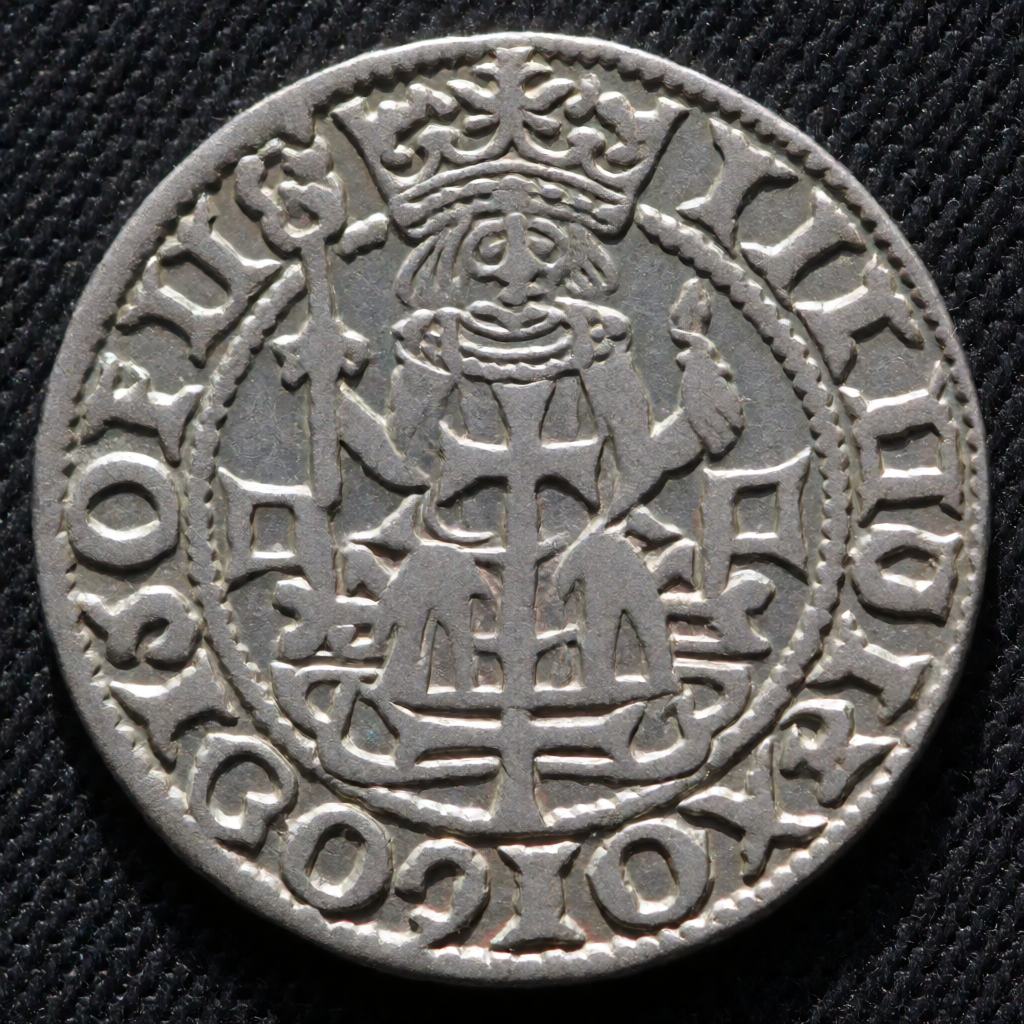
Mints at Kutna Hora struck the groat that circulated across central Europe. Charles IV kept a chancery that wrote in Czech, Latin and German. Its school trained clerks for all three. Hussite preaching produced something rarer: a public quarrel about faith in a common tongue. Taborite armies used war wagons as mobile forts. That device entered the military handbook of Europe.
Printing reached Prague in 1468, and it spread fast among towns that already read. Printing turned a quarrel into a public event, and a public event is harder to put back inside a church once it has been printed. A press turns an argument into a public event, and public argument is harder to put back inside a church. Presses need paper, and paper needs a mill, so the two arrived together. Silver bought ideas as well as soldiers, and the court spent on both. Ideas travelled along the same roads as salt, and they moved faster.
What lasted
Legacy
That compact lasted until 1620. It was revoked after a battle outside Prague. Bohemia was then brought back to the Roman church by force. Still, the memory of reform survived in songs and tales. An Ottoman advance in the south shaped the choice of 1526. Estates elected a Habsburg that year.
Prague’s buildings are the visible legacy. Charles Bridge and the New Town square belong to the fourteenth century. St Vitus took six hundred years, and it is still the mark of the city. Its political legacy is subtler. Bohemia kept a diet and a legal order that later kings had to negotiate with. Those bodies reappeared in 1918, in a state that every Czech child learns about.
Countries can lose a dynasty and keep their law, and that is what happened here. Old borders were drawn long before the nation, and they still hold. Even so, the mines kept paying. Land was the only sure thing, and thus families bought it.
Side by side
How It Compares
| Point | Crown lands | Hussite state |
|---|---|---|
| Dates | AD 1198-1419 | AD 1419-1526 |
| Seat | Prague | Prague |
| Church | Latin rite with a reform party | A national church with its own rites |
| Army | Noble cavalry and hired bands | Wagon forts and hand guns |
| Money | Silver from the Kutna mines | Confiscated church land |
| End | Reform leader burned in 1415 | Habsburg claim in 1526 |
Common misreadings
What People Get Wrong
- Bohemia is often filed under Germany. It was a kingdom in its own right, with its own crown and its own vote in the Empire.
- The reformers are usually remembered as peasants. Their armies were run by nobles and townsmen with hired gunners.
- The silver mines are usually credited to the crown. Most of the profit went to the towns that leased the shafts.
Going further
Sources and Further Reading
- Wikipedia, Kingdom of Bohemia
- Encyclopaedia Britannica, Bohemia. Encyclopaedia Britannica, Inc.
- Fudge, T.A. 1998. The Magnificent Ride. University of Toronto Press.
- Agnew, H.L. 2004. The Czechs and the Lands of the Bohemian Crown. Hoover Institution Press.
Quick hits
Five Things to Remember
- Ottokar I secured a royal crown for Bohemia in 1198.
- Charles IV founded a university in Prague in 1348.
- Jan Hus was burned at Constance in 1415.
- Silver from Kutna Hora made the kingdom a creditor.
- In 1526 the Habsburgs took the Bohemian throne.