 By Iris
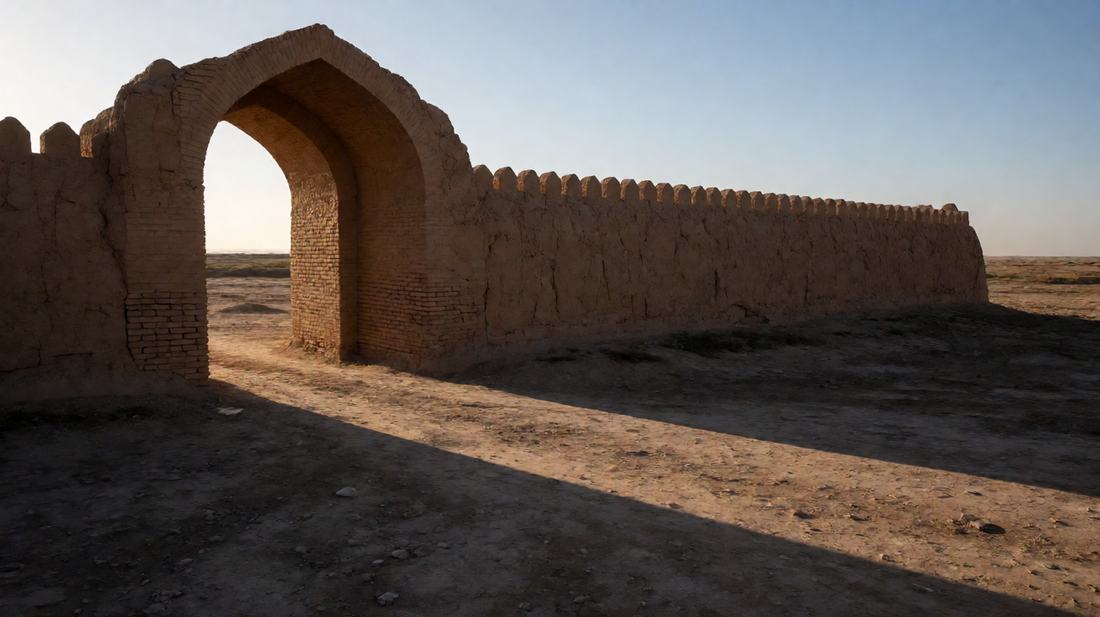
The Sogdian Merchants | Traders of the Silk Road
Historical Profile · Central Asia
The Sogdian Merchants | Traders of the Silk Road
They owned no empire and fought few wars, and for eight hundred years almost every luxury that crossed Asia passed through their hands and their account books.
300 BC-AD 800
Cities
Reach
Craft
Record
End
The big picture
Introduction
These traders had no empire, yet their mark outlasted most of them. Their home lay between two rivers, the Oxus and the Jaxartes. Its cities, Samarkand among them, were old before the Silk Road had a name. Trading houses ran convoys from the Caspian to the Yellow River. Four centuries of that traffic made them the middlemen of Asia.
Silk went west, and silver came east. Trade made the cities rich, but wealth also made them a target, and each passing army wanted a share. Religions, tunes and scripts travelled in the same packs. No lasting state ever grew from these cities. Arab armies ended their freedom in the eighth century.
Yet the Sogdian trader stayed a stock figure in Chinese and Persian writing. He survives in stories long after the cities changed hands. Peoples can vanish and still leave a shape behind, and this one did.
Setting
Historical Context
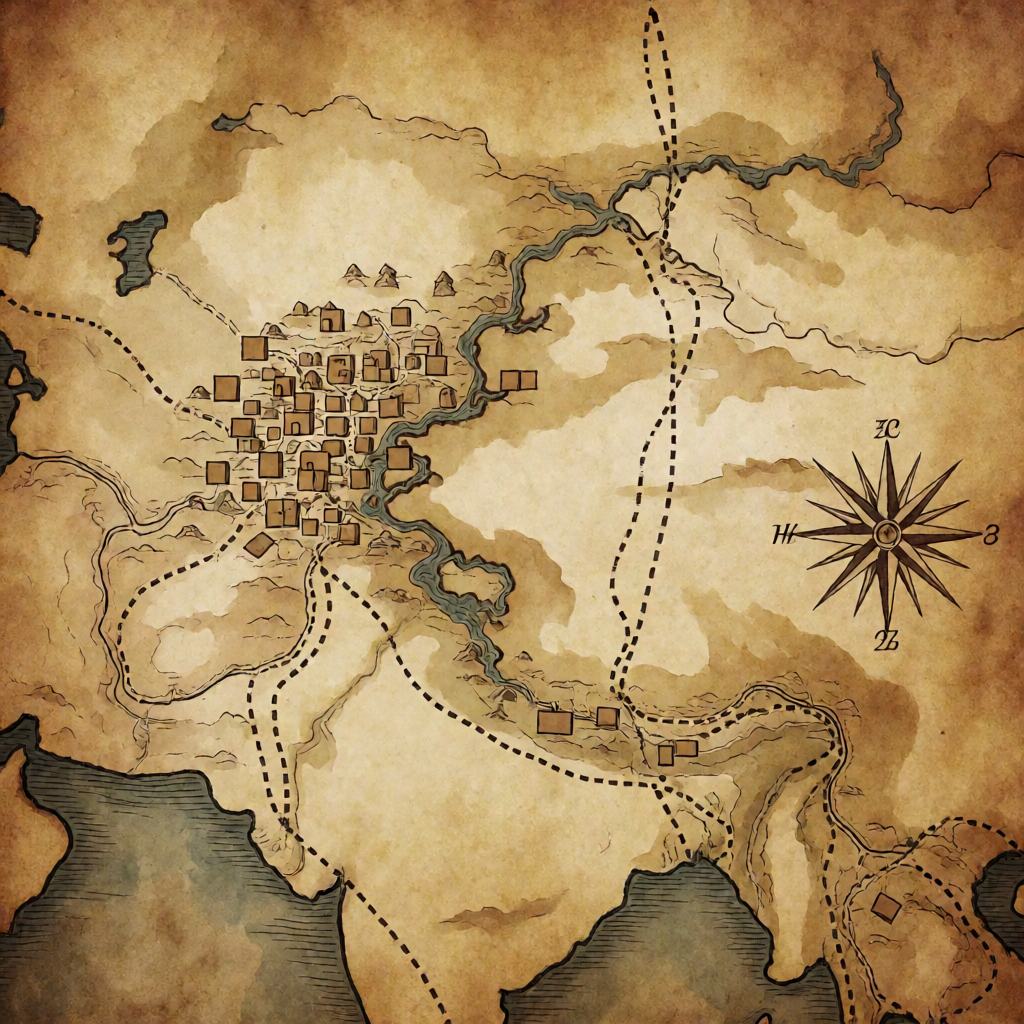
Sogdiana sat north of Bactria, on the road the Greeks had marched. Its cities were old before the Silk Road had a name. Persian rule came first, then Greek, then Kushan. Local princes used titles borrowed from many courts at once. Trade grew after the Han opened the corridor west. Colonies appeared at Dunhuang and Turpan, and later at the Tang capital.
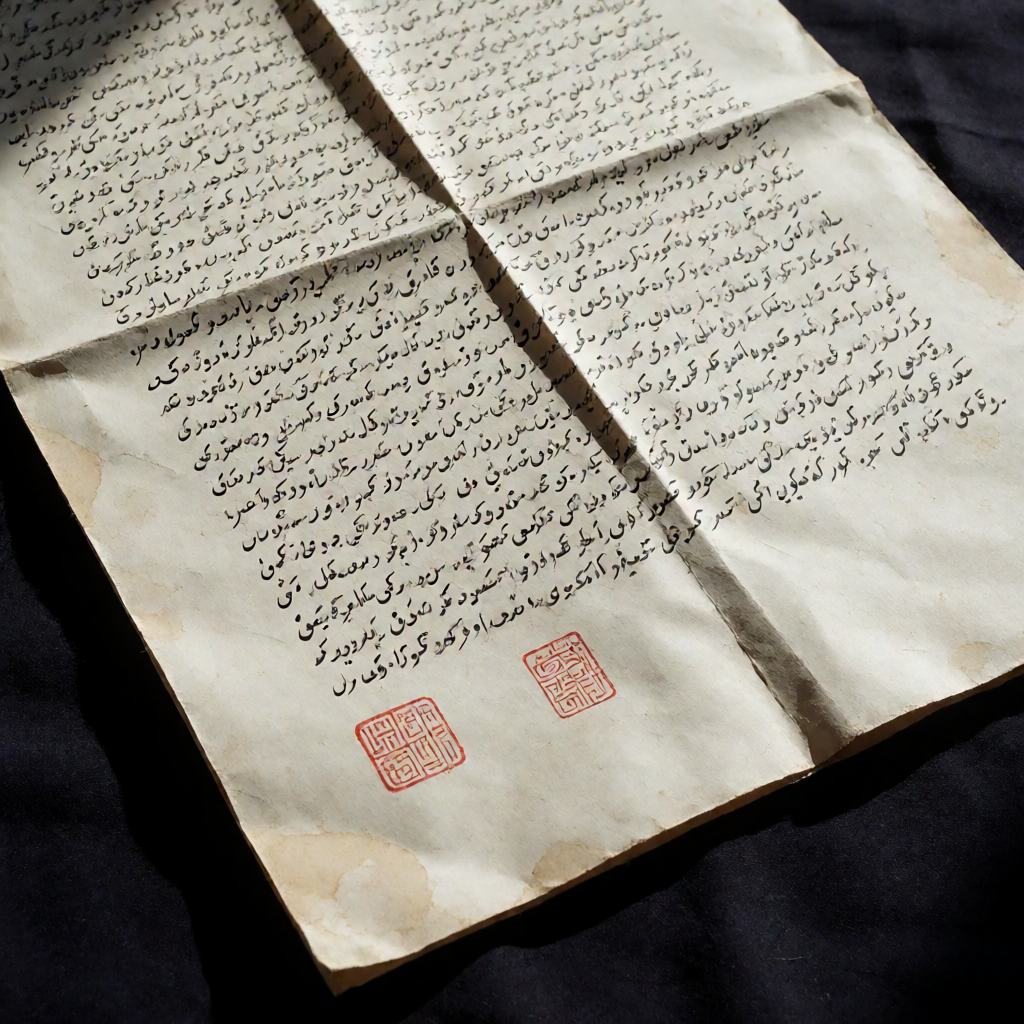
A route that crosses four frontiers needs agents at each one, and those agents need a law they can trust. One letter found at Dunhuang, written in 313, lists goods, prices and a ruined route. That document is the earliest clear voice of a trading house. It reads like a complaint, and indeed it is one about a bad season. Traders wrote to partners in Samarkand and asked for help. Drought and war had closed the road, while the stock sat unsold.
Such letters were kept, because a firm needed a record of debts. Paper made that record cheap, and the habit spread along the route. A trader’s son learned the road as a boy, and the road was the real legacy. Trade runs on trust, and trust runs on writing.
Turning points
Key Events
A first boom ran from the fourth century to the sixth. Convoys moved together, and family firms kept agents in distant towns. Then the Tang opened the frontier, and their quarters became permanent. They ran the music, the wine trade and much of the money changing in the capital. Politics broke the system twice. The Persian state tried to control silk sales, but it failed.
Arab armies then pushed north across the Oxus. An Arab army took Samarkand in 712. Fighting held in the mountains for a decade, yet the end was never in doubt. A local king, Divashtich, fought on until 722. He was caught and killed, and his archive was buried in a castle. Digging in the last century found it intact.
After the battle at Talas in 751 the region settled under Abbasid governors. Trade did not stop, though traders now travelled as subjects. Baghdad became the new market, and their firms moved agents there. New rule brought one currency and one army, and trade grew again under that wider peace, though the traders no longer set terms. They lost the freedom to bargain between empires, and that freedom had been the business. A middleman with one master is simply a subject who carries goods, and the margin shrinks with each border.
1
2
3
Who held power
People and Powers
Society there was a world of towns and trade. Trading houses could be rich enough to lend to a king. Local rulers, called ikhshids, held small districts and married into neighbouring houses. Women appear in papers as property holders and as traders. Contracts were written and witnessed.
Debts could pass to an heir, and a widow could collect them. Faiths were plural. Fire temples stood in the towns. Buddhist temples drew donors, while Manichaean groups kept their own books. Traders might fund all three, since each served a different network.
The Chinese court employed local clerks. Soldiers from these towns served in frontier forts far from home. A firm with agents in six cities could set a price that a lone trader could never match, and that advantage was the whole business. Loyalty was to a firm and to a town, and only then to a ruler, and that order of things survived each conquest.
Everyday world
Daily Life and Society
Life centred on the caravan and the household. Family firms trained their sons in languages and in accounts. Boys learned to judge weight and to read a deal. Girls married into partner houses, and a marriage could open a new route. Houses there were of mud brick, two storeys high.
Painted rooms faced a courtyard, and guests sat on raised benches. Wall paintings show banquets and legends. Guests wear silk in many cut styles. Water came from channels, and gardens lay inside the walls. Towns of this kind needed grain from outside, so traders also bought farms.
Wealth showed in silver plate and in the size of a hall. Children played at buying and selling, and the game taught weight and price. Winter closed the passes, while the household lived on stored food. Spring brought the caravans back, and the town filled with strangers again.
Craft and ideas
Trade, Technology and Ideas
Credit was the method. Traders could draw on a partner in another city and settle months later. Silver and silk served as the unit of account. One tongue served the corridor for ages. Its script became the model for many later scripts. The faith went east with them, and another went west.
They translated texts as they travelled. Music moved as well. Local troupes were famous at the Tang court. Their tunes entered Chinese music, and they stayed there. Craft skills followed, from glass to the design of a silver plate. Cloth from the Gupta Empire reached their Samarkand stores by 500.
The Silk Road was less a road than a set of deals. They wrote most of them, and they enforced them in their own courts abroad. Their deals held in towns where no local judge sat, because a name for payment was worth more than any guard. Paper deals were honoured in towns where no Sogdian law ran. Routes that run on paper are stronger than ones that run on a ruler’s word.
What lasted
Legacy
Cities survived, but the language did not. The old tongue faded, and Persian and Turkic took its place. What remained was a habit of trade and a set of oasis towns. Modern Central Asia still trades along the same lines, though the goods have changed and the languages have not stayed. Their art shaped later building in the region. Their script shaped writing from Mongolia to the Caspian.
Chinese sources describe them as born traders. That phrase stuck, and it is still used. Digging at Panjikent recovered their houses, their ledgers and their gods. Murals are now the main record of a people who wrote little about themselves. That is an irony worth noting. The brokers of Asia are known through what they carried for others.
A trader leaves less than a king, and yet the trader changed more. Modern Central Asia still trades along those lines, though the goods have changed. Towns sit on the same routes, but the bazaars still open at dawn. Even so, the network outlived each empire that taxed it.
Side by side
How It Compares
| Point | Sogdian network | Arab network |
|---|---|---|
| Dates | 300 BC-AD 800 | AD 700-1200 |
| Base | Samarkand and Bukhara | Baghdad and Basra |
| Script | Sogdian | Arabic |
| Cargo | Silver, glass, paper and silk | Sugar, paper and silver |
| Route | Oases and mountain passes | Sea lanes and caravan roads |
| End | Absorbed after 750 | Broken by the Mongols |
Common misreadings
What People Get Wrong
- The Sogdians are usually treated as a people. They were a set of city-states that shared a script, a tongue and a route.
- Silk is usually called the main cargo. Silver, glass and paper paid better, and contracts mattered more than any single good.
- Their language is often said to have died with them. Sogdian survived as a written tongue in a few towns for another two centuries.
Going further
Sources and Further Reading
- Wikipedia, Sogdia
- Encyclopaedia Britannica, Sogdiana. Encyclopaedia Britannica, Inc.
- de la Vaissiere, E. 2005. Sogdian Traders: A History. Brill.
- Hansen, V. 2012. The Silk Road: A New History. Oxford University Press.
Quick hits
Five Things to Remember
- Sogdiana lay between the Oxus and the Jaxartes rivers.
- Trading colonies stood at Dunhuang, Turpan and the Tang capital.
- Arab forces took Samarkand in 712.
- Their script became the model for many alphabets.
- Persian and Turkic replaced the old tongue.