 By Iris
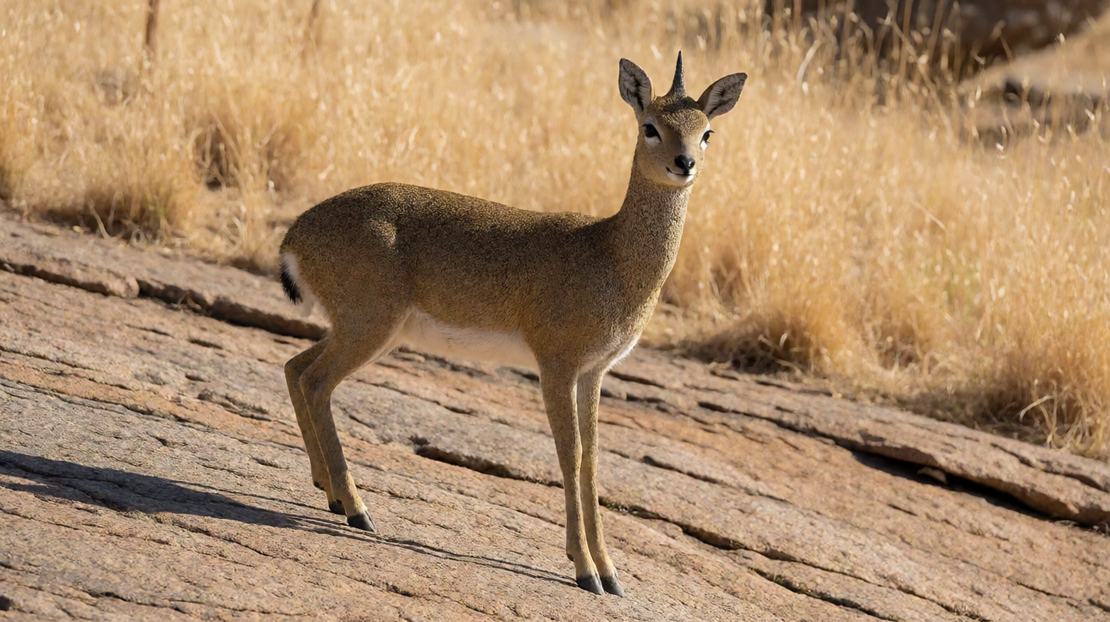
Oreotragus oreotragus | Klipspringer
Species Profile · Bovidae
Klipspringer
A small antelope that stands on the point of a boulder.
Least Concern
Height
Weight
Hooves
Horns
Young
Rating
Fifty five centimetres at the shoulder
Four feet on one rock
Klipspringers stand on the tip of a boulder as if the rock were flat ground, and the pose looks impossible. All four feet meet at one point, and the animal balances there. That pose works because each hoof grips like a rubber stopper.
Rocky outcrops across eastern and southern Africa hold the species. Coat colour blends with stone, so a still animal disappears at close range. Afrikaans gives the name, and it means rock jumper.
Pairs stay together for years, and both animals mark the same twigs. Few predators can follow them onto steep ground. Numbers are healthy where rock is common, although such places keep shrinking.
Family tree
Bovidae, the cattle family
Oreotragus oreotragus is the only member of its genus. Its nearest relative on this site is the Gerenuk, a long necked antelope of the Horn of Africa. Both sit in Bovidae, and both live in dry country.
Yet one climbs rock and the other reaches up into thorn trees. Eleven subspecies have been named, and the count has shifted with each review. Two Greek words for mountain and goat make up the genus name.
Scientists described the species in 1812, and live animals reached Europe soon after. Gene work places it among the dwarf antelopes, close to the dik diks. No subspecies is secure, since the visible differences are slight.
A genus of one
How to tell one
Shoulder height runs 43 cm to 60 cm, and weight stays between 8 kg and 18 kg. Females grow slightly larger than males. Coat colour is grizzled yellow grey, with a paler belly.
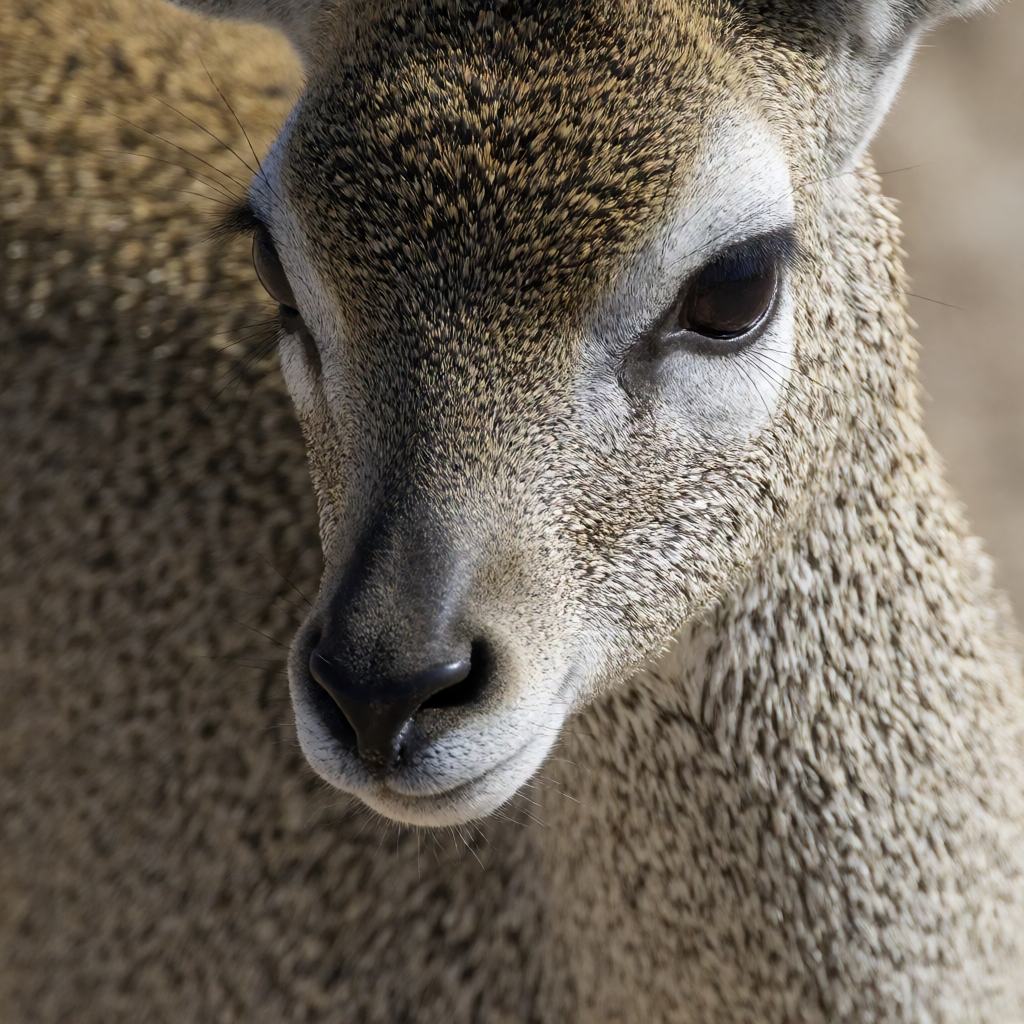
Each hair is hollow and brittle, which cushions a fall. Hooves are small and cylindrical, and the soles carry a rubbery pad. That pad grips smooth rock, and a narrow ledge becomes a safe path.
Males carry short straight horns, 8 cm to 12 cm long. Females have no horns, so the sexes are easy to tell apart. Ears are large and rounded, and the eyes sit wide on the head, while the nose works all night.
1
2
3
Hollow hair and rubber soles
Where it lives
Rocky ground from sea level to 4000 m holds the species. Kopjes, gorges and old lava flows all suit it. Cover matters, since the animal needs a place to hide.
Dry grassland around the rocks supplies most of the food. Each pair holds a small territory, and both animals mark the border with scent from a gland under the eye. One rock may carry three or four animals, and they keep their distance.
Rain falls in short storms, and the rock drains at once. Water collects in small pools after rain, yet the animal seldom drinks from them. Steep ground stays cooler, so the animal moves into shade at midday.
Kopjes and dry grass
What it eats
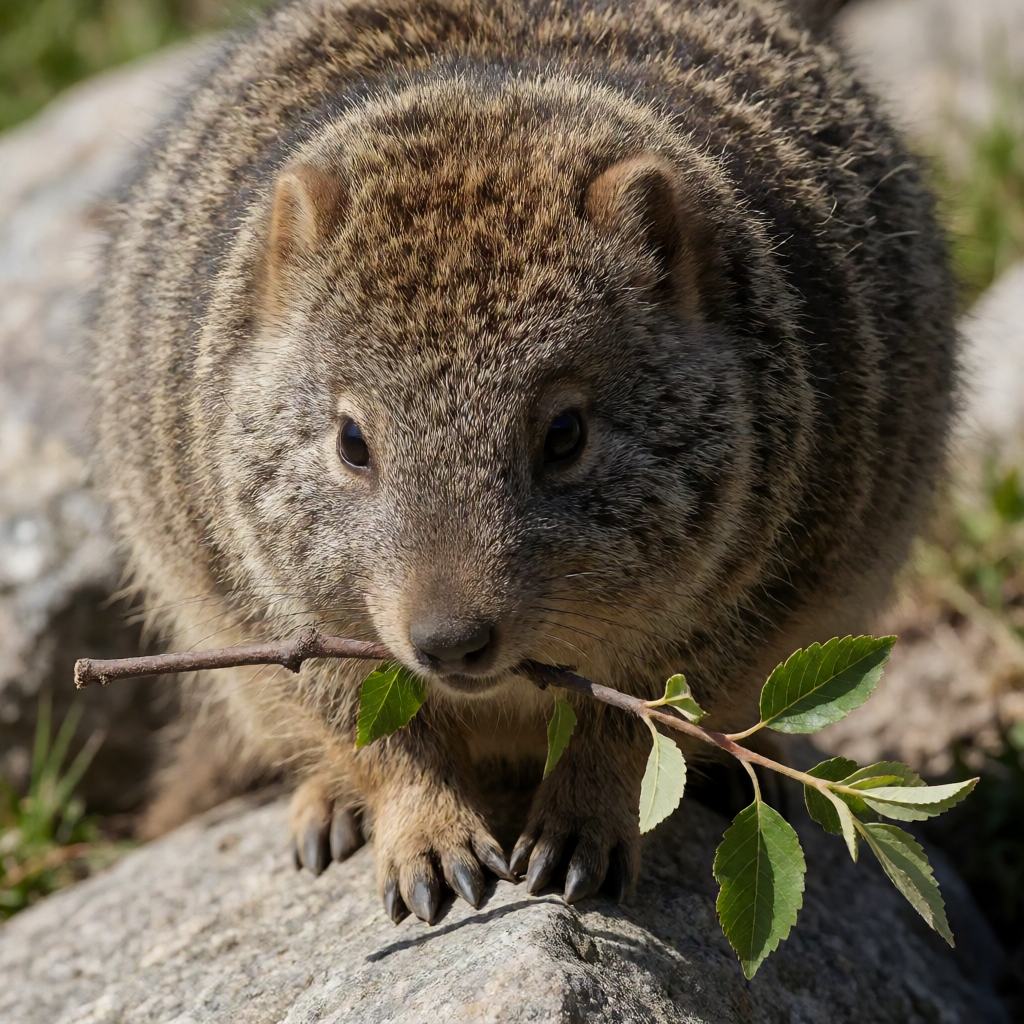
Klipspringers browse rather than graze. Leaves, shoots, fruit and flowers form the bulk of the diet. Succulents supply water, and the animal can go without drinking for weeks.
Pairs feed apart, yet each animal watches for danger. Feeding animals stand on the hind legs to reach a branch. Feeding comes in short bursts, and it stops often to look around.
That habit costs time, but it suits a species that lives in the open where cover is a long walk away. Browsing pressure stays low, because the population is thinly spread. In dry months the animal takes bark and seed pods.
Browsing without drinking
The breeding cycle
Pairs mate for life, and both animals defend the territory. Females give birth to one calf after a gestation near six months, and the birth happens among rocks. Birth happens among rocks, where cover is close.
Calves lie hidden for the first weeks, and the mother visits to suckle. Weaning takes three to four months, and the young stays longer. One calf a year is normal for a healthy female, and twins are rare.
Young females leave first, while young males are driven off later. That pattern keeps the pair in place and avoids inbreeding. Breeding peaks when the rains arrive.
Least Concern, and locally snared
Conservation
Klipspringers are listed as Least Concern. Range is wide, and the numbers are large across eastern and southern Africa, from Ethiopia to the Cape. Rocky ground resists farming, so the habitat holds better than grassland.
Some local numbers decline, since snares catch the animals. Quarrying removes kopjes. That loss is permanent.
Guarded areas hold strong groups, and the species breeds well inside them. Sport hunting is managed in several countries, and quotas stay low, though checks are thin. For now the animal is secure, although the trend is patchy.
Side by side
How It Compares
| Trait | Klipspringer | Gerenuk |
|---|---|---|
| Height | 43 cm to 60 cm at the shoulder | about 1 m at the shoulder |
| Hooves | small and rubbery, made for rock | pointed hooves that grip dry ground |
| Neck | short and thick, with the head held level | long and thin, reaching the highest branches |
| Food | leaves, fruit and succulents from shrubs | thorn tree leaves, taken while standing upright |
| Water | almost none, since the plants supply it | very little, and it drinks only when pools appear |
| Young | one calf, hidden among rocks | one calf, standing within minutes |
Common misreadings
What People Get Wrong
- Many people think the klipspringer leaps between boulders, yet it walks on the tips of small hooves. The rubbery pad grips bare stone, and the animal rarely jumps more than a metre.
- A common tale says the species needs open grassland, although it keeps to rocky ground with cover nearby. Grass supplies little food, and the animal browses shrubs instead.
- Some guides claim the pair splits after a season, yet the two animals stay together for years. Both mark the same twigs, and both drive off intruders.
Going further
Sources and Further Reading
Quick hits
Five things to remember
- Each hoof has a rubbery pad for grip.
- Pairs mate for life.
- A calf lies hidden for weeks.
- The name is Afrikaans for rock jumper.
- It can go without drinking.