 By st20113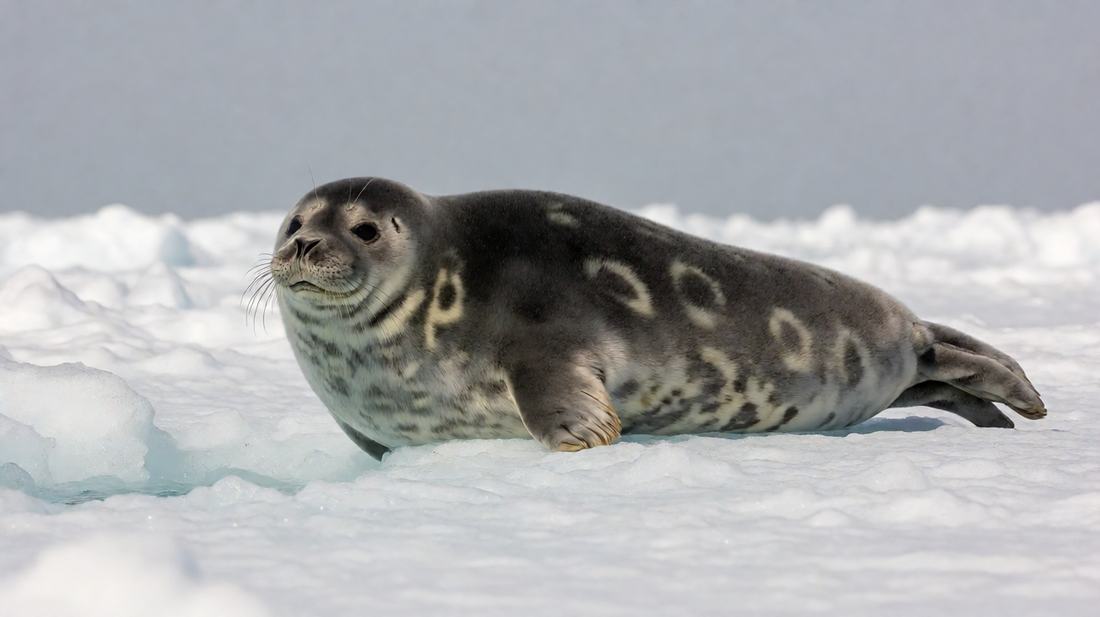
Pusa hispida | Ringed Seal
Species Profile · Phocidae
Ringed Seal
The smallest Arctic seal, scraping breathing holes open all winter with strong claws and raising its pups inside snow caves on the sea ice.
Least Concern
Length
Weight
Dive depth
Pups
Nursing
Rating
The Ringed Seal
The seal that lives on frozen sea
A small seal rests beside a hole in the Arctic sea ice. Its coat is grey with pale rings. Strong claws keep that hole open.
Ice is the whole world here, of course. Under it swim fish and shrimp. Polar bears patrol the surface above.
Pups are born inside snow caves. Those caves hide them from bears and foxes. Because the whole life cycle hangs on frozen sea, this seal is one of the clearest signals of what Arctic warming will cost.
Family tree
Phocidae, the true seals
The species belongs to the family Phocidae. Johann Christian Schreber named it in 1775. Three living species now sit in the genus Pusa. All live in cold northern water or in lakes.
The polar bear is a mammal of the same region but a very different order. Both depend on sea ice for hunting. One hunts on the ice, and the other hunts under it, yet the loss of that ice hurts them both at once.
Small, plump and ringed
How to tell one
Adults measure 1.3 to 1.65 m. Weight falls between 50 and 110 kg. The body is small and plump.
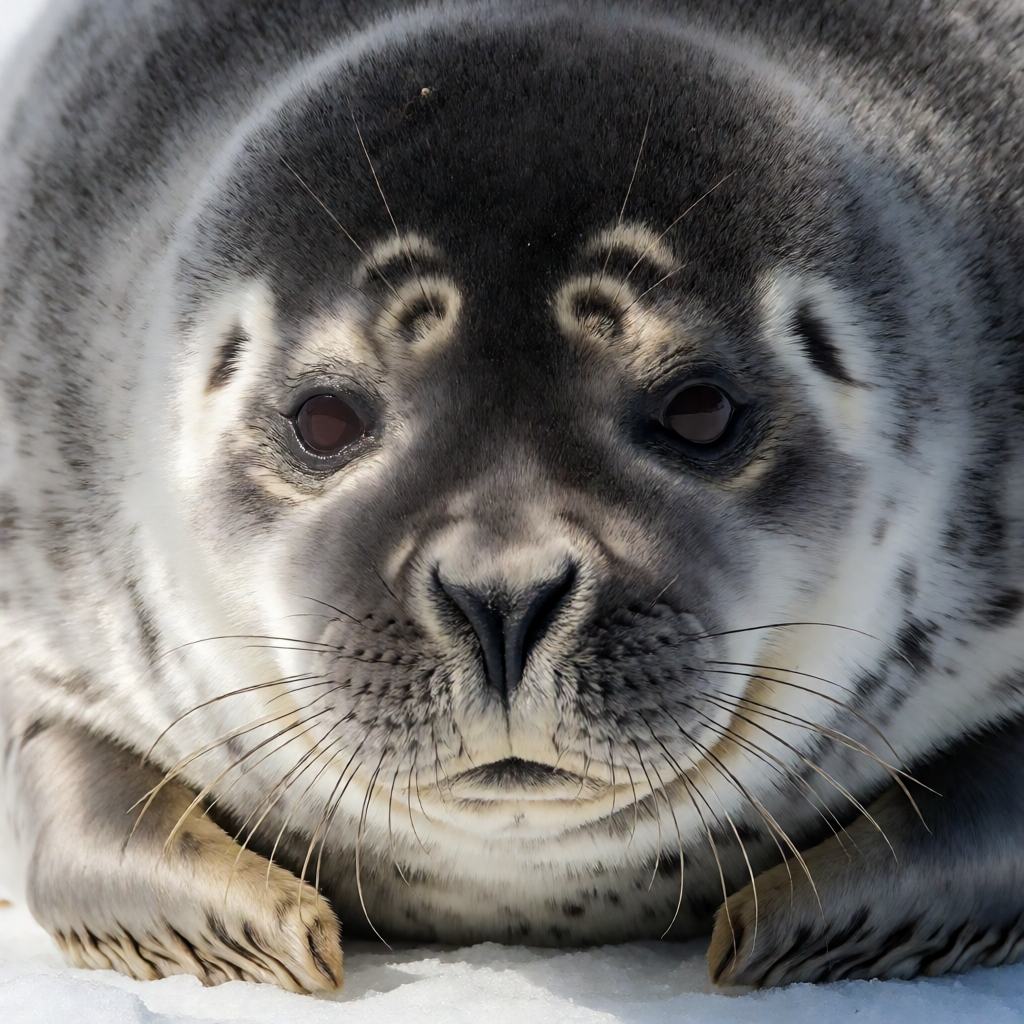
Dark grey fur covers the back. Pale rings mark the sides and belly. A blunt head holds wide whiskers.
In addition, foreclaws are thick and strong. Those claws scrape ice all winter. Nothing about the coat is thick enough alone, and the seal depends on a layer of blubber beneath the skin to hold in heat.
1
2
3
Pack ice and shore fast ice
Where it lives
Pack ice is the main home. Fast ice near shore matters for breeding. The range circles the whole Arctic Ocean.
Baltic Sea, Okhotsk Sea and Lake Ladoga hold races, in turn. Snow depth is the key detail. Deep snow over a hole makes a safe lair.
Open water is used in summer, however. Because the seal needs snow deep enough to dig a lair, a winter with little snow leaves pups out in the open where bears can find them.
Polar cod and shrimp
What it eats
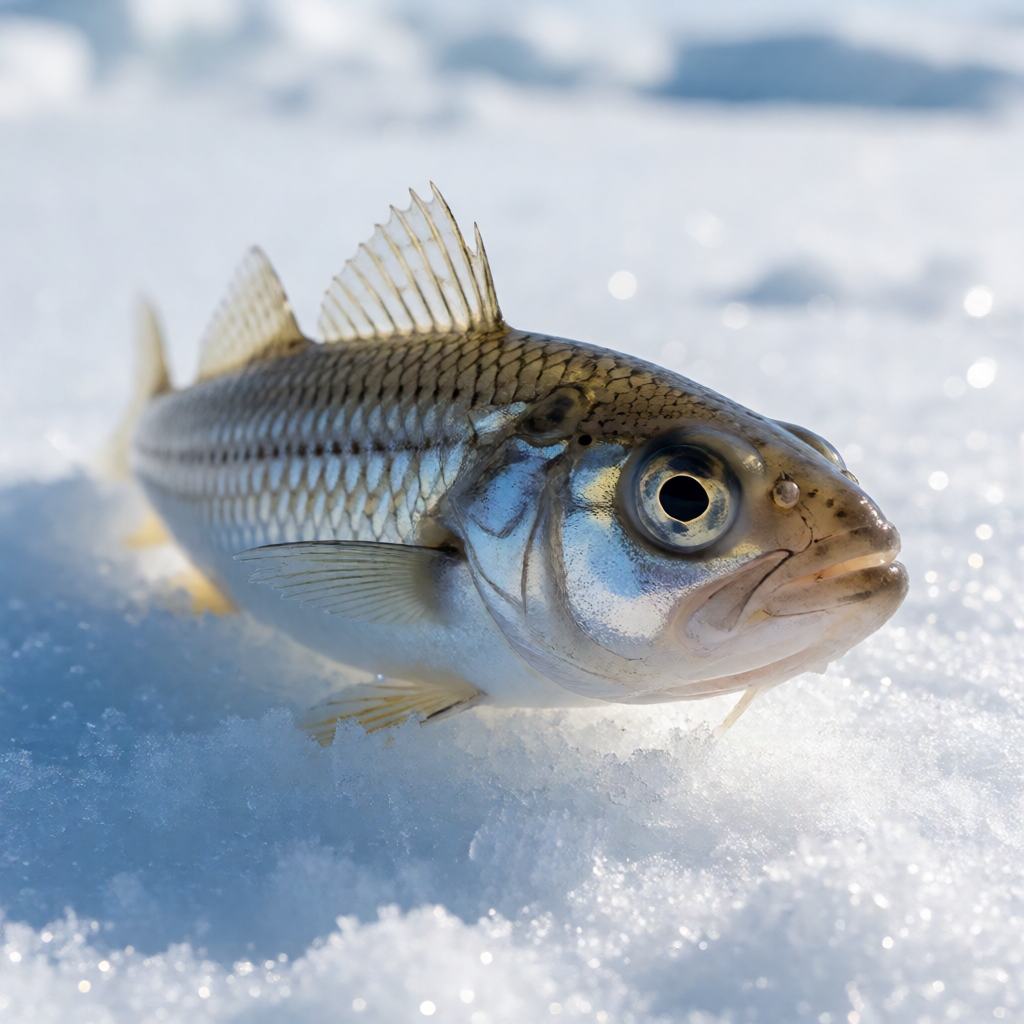
Polar cod is the main fish. Arctic cod is taken as well. Shrimp and other crustaceans follow.
Amphipods and mysids are eaten. Even so, young eat small shrimp at first. Dives reach 90 to 300 m.
Foraging happens under the ice itself. Because prey moves with the season, the seal feeds hard in autumn and then lives off its blubber through the dark winter months.
Pups born in snow lairs
The breeding cycle
Mating happens in spring, soon after weaning. Implantation of the egg is delayed. The wait runs about 3 months, though.
Pups are born from February to April. Each lair holds one pup. Birth weight sits near 4 to 5 kg.
White lanugo covers the newborn. Nursing lasts 5 to 7 weeks, in fact. Because the pup must grow fast before the ice breaks up, the milk is very rich and the mother feeds it almost without pause.
Least Concern
Conservation
The IUCN lists the species as Least Concern. About 3 million animals remain. That number is stable for now.
Sea ice is shrinking fast, however. Less ice means fewer lairs and more open water. Pups are easier for bears to reach.
Oil work and shipping add more noise. Unlike the narwhal, which can move north with the ice, this seal is tied to snow on stable winter ice. That tie makes the whole species vulnerable, since a run of warm winters could cut pup survival across the entire Arctic at once.
Side by side
How It Compares
| Trait | Ringed Seal | Harbour Seal |
|---|---|---|
| Home | Arctic pack ice | temperate coasts |
| Claws | thick, scrape breathing holes | thinner, less digging |
| Pups | born in snow lairs | born on shore or sandbanks |
| Size | 1.3 to 1.65 m, smallest Arctic seal | 1.6 to 1.9 m |
| Predator | polar bear’s main prey | killer whales and sharks |
| IUCN status | Least Concern | Least Concern |
Common misreadings
What People Get Wrong
- Seals give birth in the open. Ringed seal pups are born in snow caves.
- The rings mark old age. They are just the coat pattern.
- Sea ice loss affects only bears. This seal depends on it entirely.
Going further
Sources and Further Reading
- Wikipedia, Ringed seal
- IUCN Red List, Pusa hispida. The IUCN Red List of Threatened Species.
- Animal Diversity Web, University of Michigan. Pusa hispida.
- Kelly, B. P., J. L. Bengtson, P. L. Boveng, M. F. Cameron, S. P. Dahle et al. 2010. Status review of the ringed seal. NOAA.
Quick hits
Five things to remember
- Strong claws keep breathing holes open all winter.
- Pups are born in snow caves above the ice.
- Newborns wear a white coat called lanugo.
- The seal is the main prey of the polar bear.
- Some landlocked races live in fresh water lakes.