 By st20113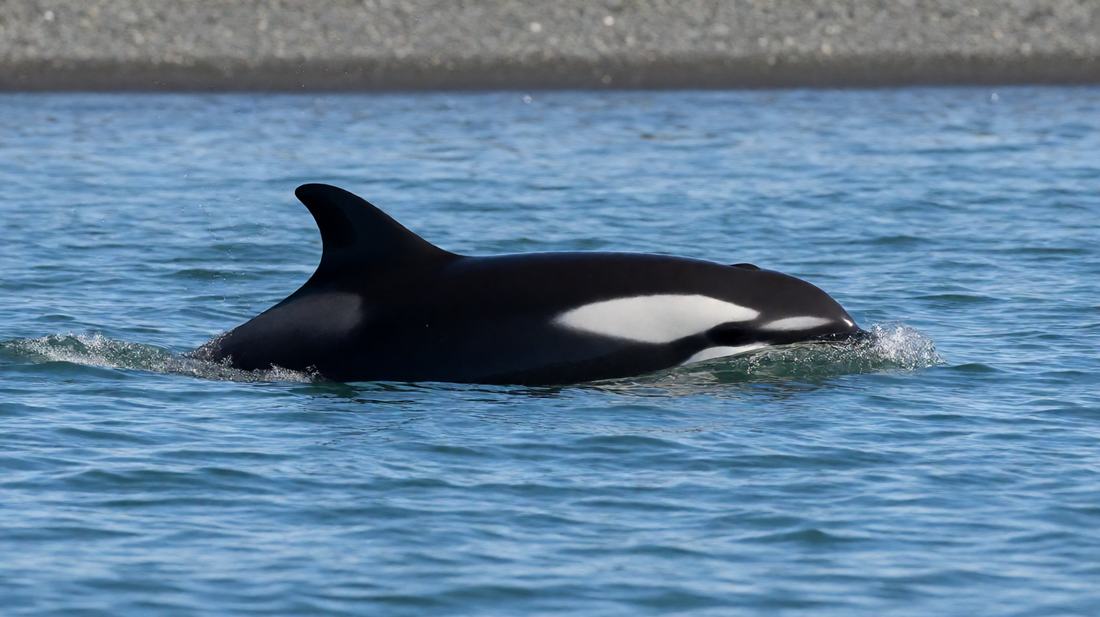
Phocoenoides dalli | Dall’s Porpoise
Species Profile · Phocoenidae
Dall’s Porpoise
A black-and-white porpoise of the cold North Pacific, one of the fastest cetaceans alive, throwing a rooster-tail spray as it races after fish.
Least Concern
Body length
Weight
Top speed
Gestation
Newborns
Rating
The Dall’s Porpoise
The fastest small cetacean
A black-and-white porpoise races across the cold North Pacific. Its wake fans out like a rooster tail. White patches flash along the flanks.
The dorsal fin is small and hooked. Speed is the whole point here. Few cetaceans swim faster, of course.
Small fish and squid are the prey. Groups travel together and bow-ride boats. Because the animal moves so fast, it can chase prey at depths and speeds that most of its rivals cannot match at all.
Family tree
Phocoenidae, the porpoises
The species belongs to the family Phocoenidae. Frederick True named it in 1885. Only one species now sits in the genus Phocoenoides.
The name honours the naturalist W. H. Dall, in short.
The humpback whale belongs to the baleen whales, not to this family. Both animals live in the North Pacific, yet one filters tiny prey and the other chases fast fish by echolocation.
Black body, white flanks
How to tell one
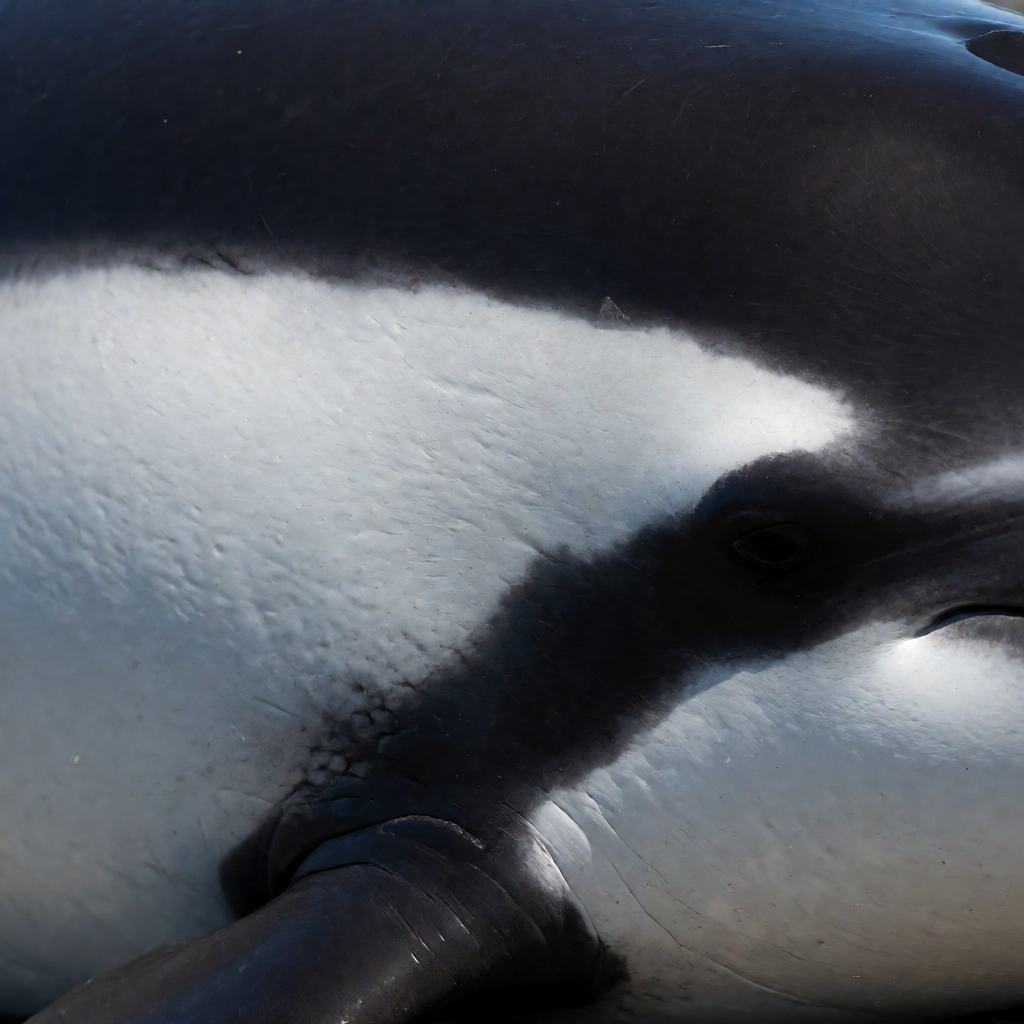
Body length runs 1.8 to 2.4 m. Weight falls between 80 and 220 kg. Its body is thick and blunt-nosed.
Black skin covers most of it. A white patch runs up each flank. That tail stock is deep and muscular.
A small dorsal fin sits mid-back. In addition, teeth are small and spade-shaped. Nothing about the shape is slow, and the whole animal is built for one short burst of speed after another.
1
2
3
Cold North Pacific shelf edge
Where it lives
Cold North Pacific water is the only home. The Bering Sea holds many animals. Coastal waters off Alaska are prime ground.
Sightings run from Japan to Baja California. Deep water near the shelf edge is favoured. Shallow bays are used at times.
Ice edge water is avoided, however. Because the porpoise hunts at 200 to 300 m, it needs deep water close to shore and never strays into shallow warm seas.
Schooling fish and squid
What it eats
Small schooling fish are the staple. Pacific herring is a favourite. Saury and lanternfish follow.
Squid are taken as well. Even so, deep-water prey dominates the list. Dives last a few minutes at a time.
Echolocation finds prey in dark water. Because the porpoise burns energy so fast, it must feed often, and a day without fish shows up quickly in its body condition.
One calf after 11 months
The breeding cycle
Groups hold 2 to 12 animals. Bigger groups form where prey is thick, though. Mating seems to peak in late summer.
Calves are born after about 11 months. A single calf is the rule. Newborns measure about 1 m.
Calves stay at the mother’s side. Milk is rich and fat, in fact. Because the calf must keep up with a fast group from the start, it grows quickly and stays close to its mother for more than a year.
Least Concern
Conservation
The IUCN rates the species as Least Concern. Its population is large and wide. No range-wide decline has been shown.
Drift nets killed huge numbers in the past, however. Japanese hunts still take some animals each year. Ship strikes are a growing risk.
Unlike the narwhal, which lives only in Arctic ice, this porpoise ranges over a huge stretch of open ocean. That wide range helps, since losses in one small fishing area do not threaten the whole species at once.
Side by side
How It Compares
| Trait | Dall’s Porpoise | Harbour Porpoise |
|---|---|---|
| Speed | over 55 km/h, one of the fastest | slow, rarely breaches |
| Body | black with white flank patches | plain grey-brown |
| Range | North Pacific | North Atlantic and North Pacific coasts |
| Group | 2 to 12 | small, often 1 to 5 |
| Bow-riding | often | rarely |
| IUCN status | Least Concern | Least Concern |
Common misreadings
What People Get Wrong
- Porpoises are all slow. Dall’s is among the fastest cetaceans.
- The white patches are always the same. Two colour forms differ.
- The rooster tail is spray from the blow. It comes from the fast wake.
Going further
Sources and Further Reading
- Wikipedia, Dall’s porpoise
- IUCN Red List, Phocoenoides dalli. The IUCN Red List of Threatened Species.
- Animal Diversity Web, University of Michigan. Phocoenoides dalli.
- Jefferson, T. A. 2015. Dall’s Porpoise. Encyclopedia of Marine Mammals.
Quick hits
Five things to remember
- Top speed can pass 55 km per hour.
- The spray it throws is called a rooster tail.
- Bow-riding boats is a common habit.
- White flank patches differ between two colour forms.
- Wild animals usually live 16 to 22 years.