 By st20113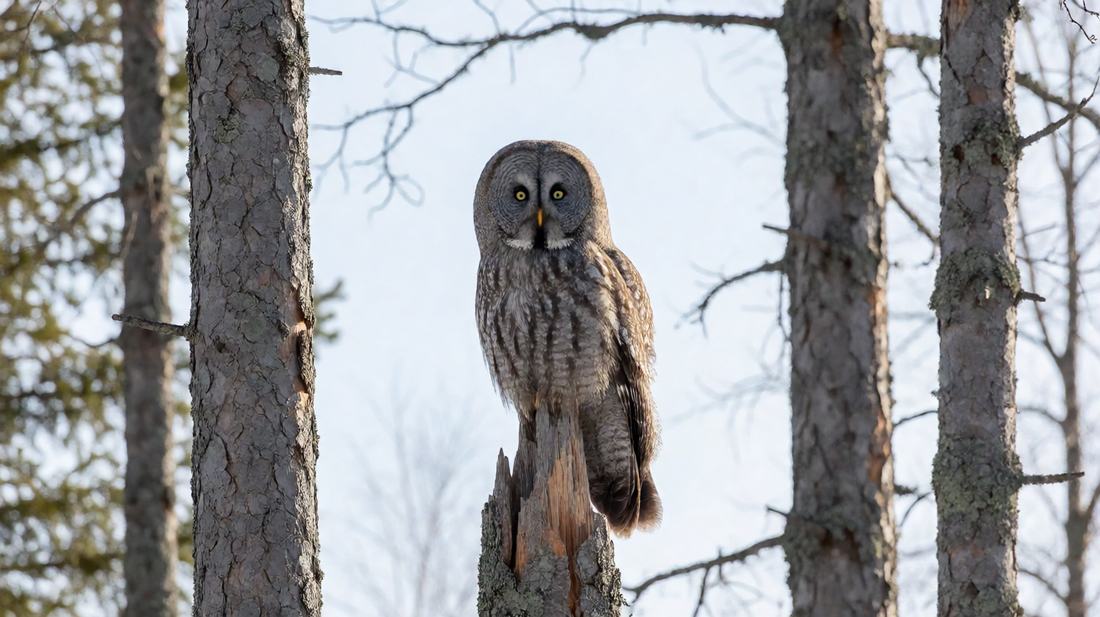
Strix nebulosa | Great Grey Owl
Species Profile · Strigidae
Great Grey Owl
The tallest owl in North America, hunting boreal forest edges by sound alone and dropping onto voles hidden deep under the snow.
Least Concern
Height
Wingspan
Weight
Eggs
Snow depth
Rating
The Great Grey Owl
An owl that hunts by ear under snow
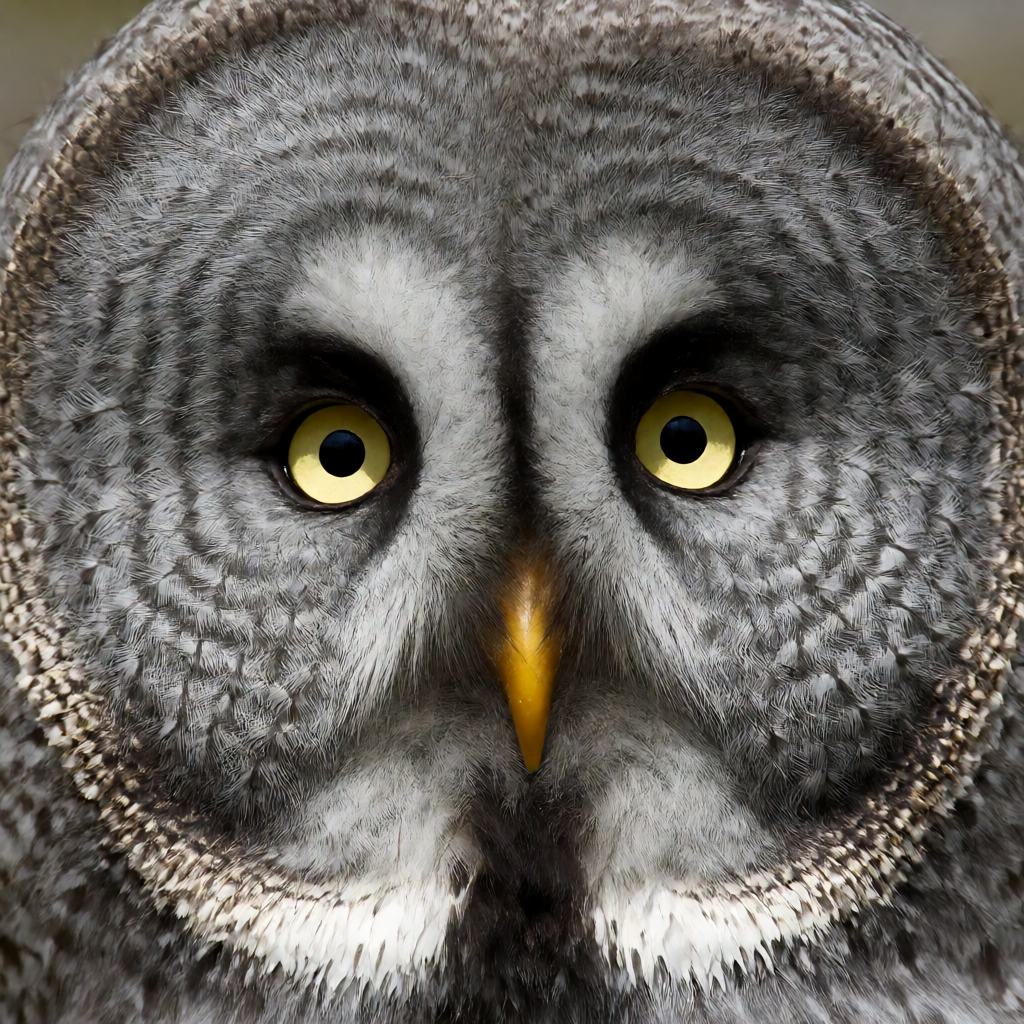
A tall grey owl hunts the dark edges of northern boreal forest. Its face is a wide disc of fine feathers, in fact. No ear tufts break the outline. Yellow eyes sit under a dark chin mark.
The bird looks huge, yet it weighs less than a goose. Most of that bulk is loose feather. Snow muffles sound across much of its range. So the owl hunts by ear alone.
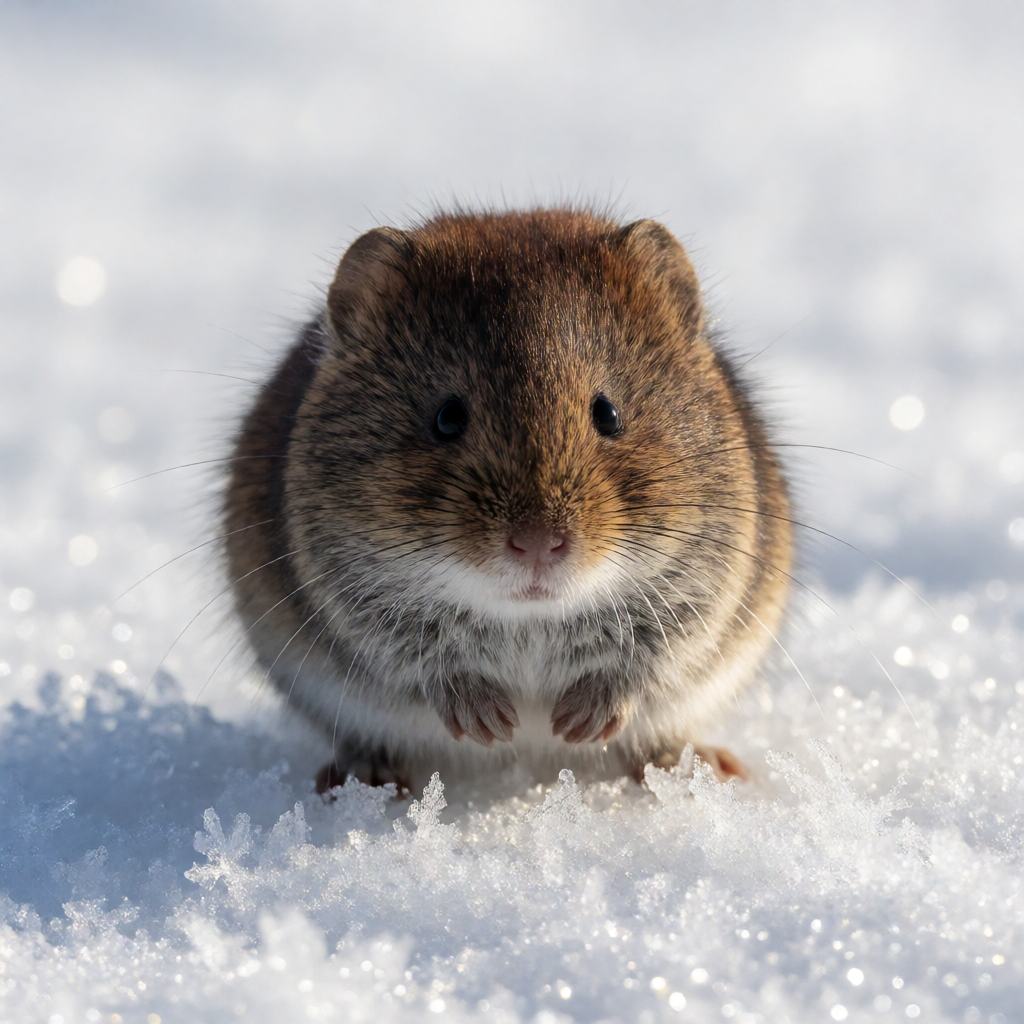
It drops onto prey hidden far below. Because the disc funnels sound to the ears, a vole under 30 cm of snow can still be heard and caught.
Family tree
Strigidae, the typical owls
The species belongs to the family Strigidae, the typical owls. Johann Reinhold Forster named it in 1772. About 20 species now sit in the genus Strix.
They share a round head and no ear tufts. The barn owl belongs to a separate family, Tytonidae. Its face is heart-shaped, not round.
Both birds hunt small mammals at night. Yet the two families split long ago, and their ear openings sit in different places on the skull.
Tall, grey and feather-light
How to tell one
Adults stand 61 to 84 cm tall. Wingspan runs 137 to 152 cm. Weight falls between 700 and 1700 g.
Females outweigh males by a little. Grey and brown bars cover the body, as well. Faint bands cross the long tail.
A ruff of fine feathers rings the face. Yellow eyes are small, while the skull is wide. Nothing on the bird is heavy, for all that loose plumage hides a body no bigger than a small hawk.
1
2
3
Boreal forest and meadow edge
Where it lives
Boreal forest is the stronghold. Spruce, fir and larch all suit it. Meadow edges matter most for hunting.
Open bog gives access to voles. Northern Europe and Asia hold birds too. Its range circles the whole northern hemisphere, of course.
Tall, broken-topped trees are needed for nesting. Clear-cut blocks hold no voles and no nests. Because the owl hunts by sound, thick young plantation is almost as useless to it as bare clear-cut land.
Voles above all else
What it eats
Voles are the main prey. Mice and shrews follow close behind, in addition. Pocket gophers are taken in the west.
Squirrels, hares and weasels appear at times. Birds are caught too, grouse among them. It sits on a low perch and listens.
Then it drops, feet first. Prey is swallowed whole or torn apart. In winter the same perch is used night after night, since prey is thin and the bird cannot waste energy on long searching flights.
No nest of its own
The breeding cycle
Courtship begins in late winter. Males bring food to the female. No nest is built by either bird. Instead, an old stick nest is used.
Broken-top trees work well. Even so, cliff ledges serve in some areas. Two to 5 eggs are laid. The female sits, and the male feeds her.
Young leave the nest before they can fly. After that they stay near the nest for weeks, while both parents keep bringing food until the young can hunt alone.
Least Concern
Conservation
The IUCN rates the species as Least Concern. Its range is vast. Numbers hold up well.
Logging of old forest is the main worry, however. Nest trees take a century to appear. In addition, rodent numbers rise and fall with the year.
Thin snow years and thick snow years both cut hunting success. Unlike the osprey, which can nest on almost any tall platform, this owl needs old trees in quiet forest. That narrow nest need makes every large clear-cut a real loss, since a replacement tree will not be ready for another hundred years.
Side by side
How It Compares
| Trait | Great Grey Owl | Barn Owl |
|---|---|---|
| Facial disc | round and grey | heart-shaped and pale |
| Ears | uneven, hunt by sound | also uneven |
| Nest | no nest, uses old stick nests | cavities and ledges |
| Height | 61 to 84 cm, tallest in North America | about 33 to 39 cm |
| Family | Strigidae | Tytonidae |
| IUCN status | Least Concern | Least Concern |
Common misreadings
What People Get Wrong
- The huge size means a heavy bird. Loose feathers hide a light body.
- Owls see their prey. This one hunts mainly by ear under the snow.
- Every owl builds a nest. This species borrows one or uses a broken-topped tree.
Going further
Sources and Further Reading
- Wikipedia, Great grey owl
- IUCN Red List, Strix nebulosa. The IUCN Red List of Threatened Species.
- Animal Diversity Web, University of Michigan. Strix nebulosa.
- Mikkola, H. 2012. Owls of the World. Christopher Helm.
Quick hits
Five things to remember
- The bird is the tallest owl in North America.
- One owl can hear a vole under 30 cm of snow.
- It builds no nest of its own at all.
- Sight matters far less than hearing when it hunts.
- Loose feathers make the bird look twice its real weight.