 By Iris
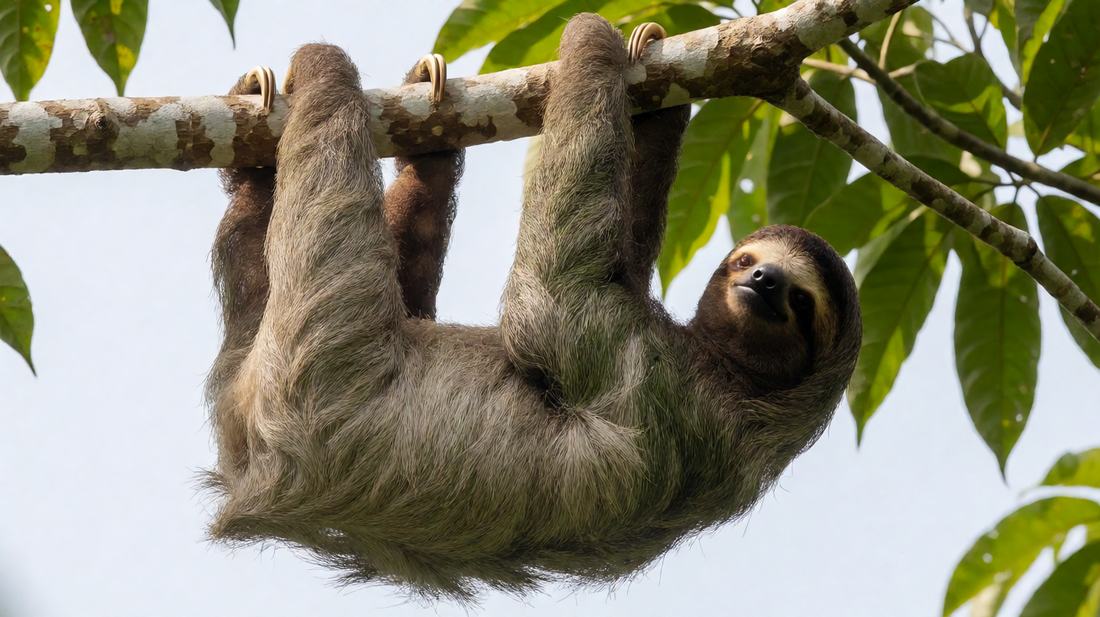
Choloepus hoffmanni | Hoffmann’s Two-toed Sloth
Species Profile · Choloepodidae
Hoffmann’s Two-toed Sloth
A slow leaf-eater that hangs upside down under the Central American canopy, sleeps most of the day, and climbs down to the ground about once a week.
Least Concern
Length
Weight
Front claws
Sleep
First breeding
Rating
The Hoffmann’s Two-toed Sloth
A mammal that lives at half speed
A slow mammal hangs under the canopy of Central American forest. This sloth sleeps through daylight and feeds after dark. Two long claws hook each branch. Grip costs almost nothing.
Leaves make up most meals. Fruit matters in the dry season. Algae grow in the fur. The coat turns faintly green.
That tint hides the animal from hawks above. Every week it climbs down to the ground. Nobody agrees why it takes that risky trip. Because the animal moves so little, its whole life runs at a slower pace than any other mammal of its size.
Family tree
Choloepodidae, the two-toed sloths
Karl Illiger named the genus Choloepus in 1811. The family now holds only this one genus. Old books put these animals with the ground sloths. Those giants are long gone.
Gene work splits them from the three-toed forms. The three-toed sloth belongs to a different family. In fact, the two groups look much alike. Yet they parted some 30 million years ago.
Sloths grind leaves in a slow gut. Fossils show that the two lineages came to hanging life at different times, and neither one ever walked far on the ground again.
Two claws, not three
How to tell one
Adults measure 54 to 70 cm from nose to rump. Weight runs 4 to 8 kg. Females grow a bit larger than males. Two curved claws sit on each front foot.
Hind feet carry 3 claws. So the name misleads. Long fur hangs downward. That suits an upside-down animal, of course.
Neck bones number just 5 to 7. Most mammals carry more. A wet nose and small ears finish the picture. Since the coat parts along the belly, rain runs off the animal instead of soaking into the fur.

1
2
3
Canopy up to 3300 m
Where it lives
Lowland rainforest is the core range. Cloud forest works too, up to 3300 m. Its range runs from Nicaragua to Peru. Western Brazil marks the eastern edge.
One unbroken canopy matters most. No single tree species does. River edges, in turn, hold the best feeding trees. Second growth is used where tall trees remain.
Open farmland, by contrast, holds nothing at all. Where a road cuts the canopy, one feeding group can be sealed off from the next for good.
Leaves and dry-season fruit
What it eats
Leaves from many trees are taken. Young shoots beat tough old growth. Fruit, flowers and soft twigs add variety. The gut has several chambers.
Germs there break the fibre down. The work is slow, in fact. One meal may sit for a month. Grass eaters such as the capybara clear food in hours, not weeks.
This animal runs on a slow fire. Because energy is so scarce, the animal lets its body heat drift with the air instead of holding one fixed temperature day and night.
One young after 11 months
The breeding cycle
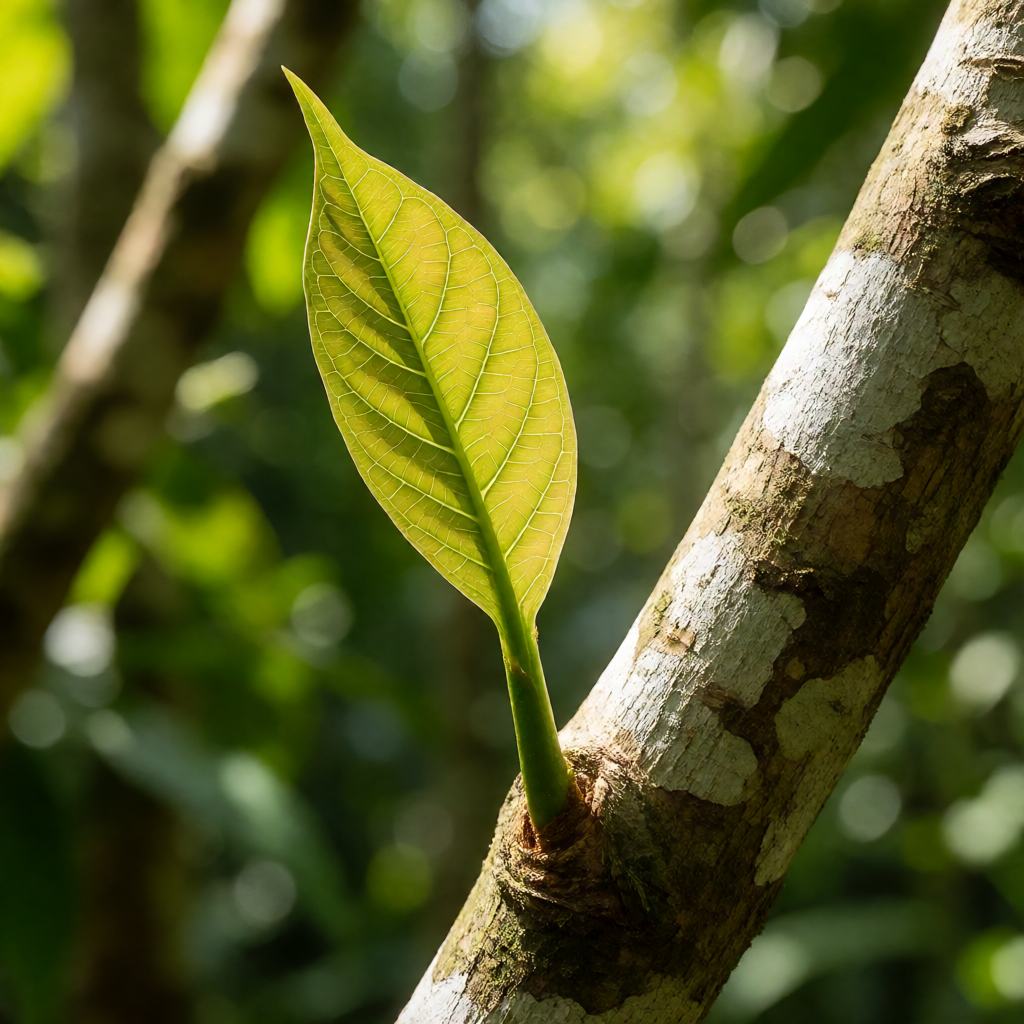
Mating happens in spring. Birth comes about 11 months later. One young is the rule. It clings to the mother’s belly at first.
There it learns which leaves to pick. Weaning comes near 6 months. Even so, some young stay close much longer. Females first breed at about 3 years.
Males mature a little later. In effect, one female may raise only a handful of young across a long, slow life in the same patch of forest.
Least Concern
Conservation
The IUCN lists the species as Least Concern. A wide range supports that rating. Numbers are large. Local losses follow forest clearing.
In addition, roads, power lines and hunters take a toll. Some animals are caught for the pet trade. Recovery takes decades after a local crash. The species also spreads slowly into new ground.
Protected forest remains the best safeguard. None of these fixes cost much money, yet every one of them depends on keeping the tall trees standing where they are.
Side by side
How It Compares
| Trait | Hoffmann’s Two-toed Sloth | Three-toed Sloth |
|---|---|---|
| Front claws | 2 on each front foot | 3 on each front foot |
| Neck bones | 5 to 7 | 8 to 9 |
| Family | Choloepodidae | Bradypodidae |
| Activity | nocturnal, sleeps 15 to 20 hours | also slow, but a little more active |
| Ground trips | about once a week | about once a week |
| IUCN status | Least Concern | Least Concern |
Common misreadings
What People Get Wrong
- The name suggests the claws are the whole difference. Neck bones and family split them too.
- Sloths are said to be lazy. They simply run on very little food.
- People think the green coat is fur colour. It is algae growing in the fur.
Going further
Sources and Further Reading
- Wikipedia, Hoffmann’s two-toed sloth
- IUCN Red List, Choloepus hoffmanni. The IUCN Red List of Threatened Species.
- Animal Diversity Web, University of Michigan. Choloepus hoffmanni.
- Hayssen, V. 2011. Choloepus hoffmanni (Pilosa: Choloepodidae). Mammalian Species.
Quick hits
Five things to remember
- Algae grow inside the fur and tint the coat green.
- Adults sleep 15 to 20 hours out of every 24.
- One kind of moth lives only in sloth fur.
- Body heat drifts with the air instead of holding steady.
- Sloths swim well despite hanging still for most of the day.