 By st20113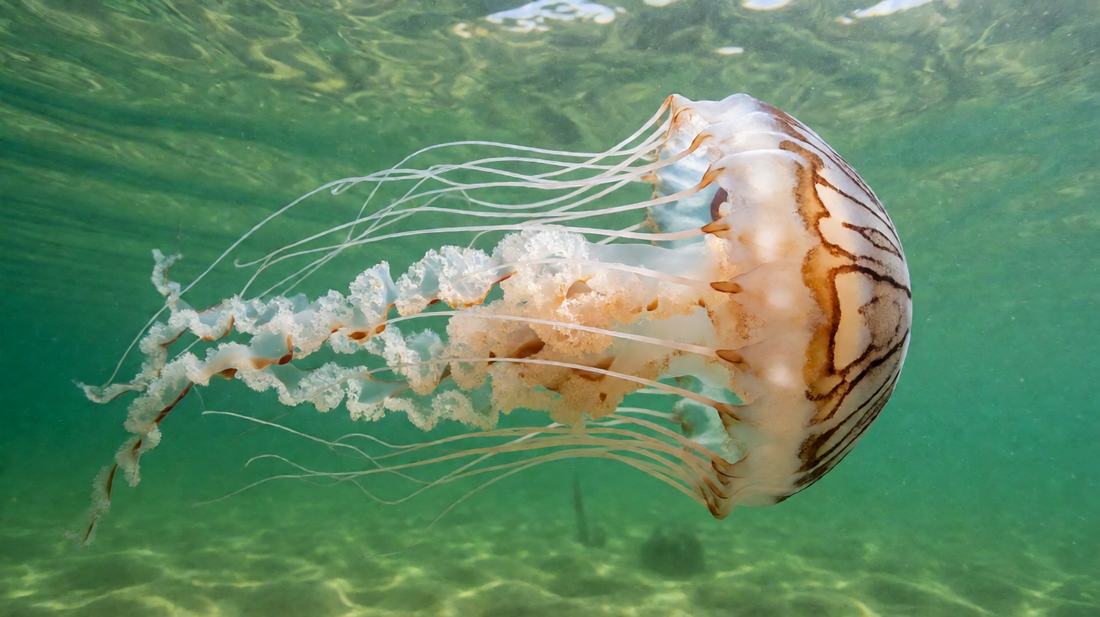
Chrysaora quinquecirrha | Atlantic Sea Nettle
Species Profile · Pelagiidae
Atlantic Sea Nettle
A stinging jellyfish of Atlantic estuaries whose clear bell carries dark stripes and whose tentacles trail metres behind it.
Not evaluated
Bell
Tentacles
Stripes
Diet
Sting
Rating
The Atlantic Sea Nettle
A stinging estuary jelly
This jelly drifts through Atlantic bays and estuaries. A saucer shaped bell reaches 40 cm across. Dark stripes run out from the centre.
Four frilly arms trail below. Up to 24 stinging tentacles hang with them. Because the sting hurts, crowded beaches sometimes close.
Blooms appear from May to September. Adults live about one year. Though the animal looks like a simple bag of water, it hunts with a nerve net that reacts to touch and chemicals, and it can swim against a slow current.
Family tree
Pelagiidae, the sea nettles
This jelly belongs to the class Scyphozoa. A Swiss worker, Desor, named it in 1848. The genus name honours Chrysaor, a figure from Greek myth. Its species name means five hair.
That refers to the tufts around the mouth, though the number varies. For 170 years, one name covered both bay and open ocean forms. A 2017 study split the two apart. The bay form now carries its own name.
Its nearest well known kin is the Moon Jellyfish. Because the split is so recent, old books, aquarium labels and beach signs still use one name for two animals.
25 cm of clear bell
How to tell one
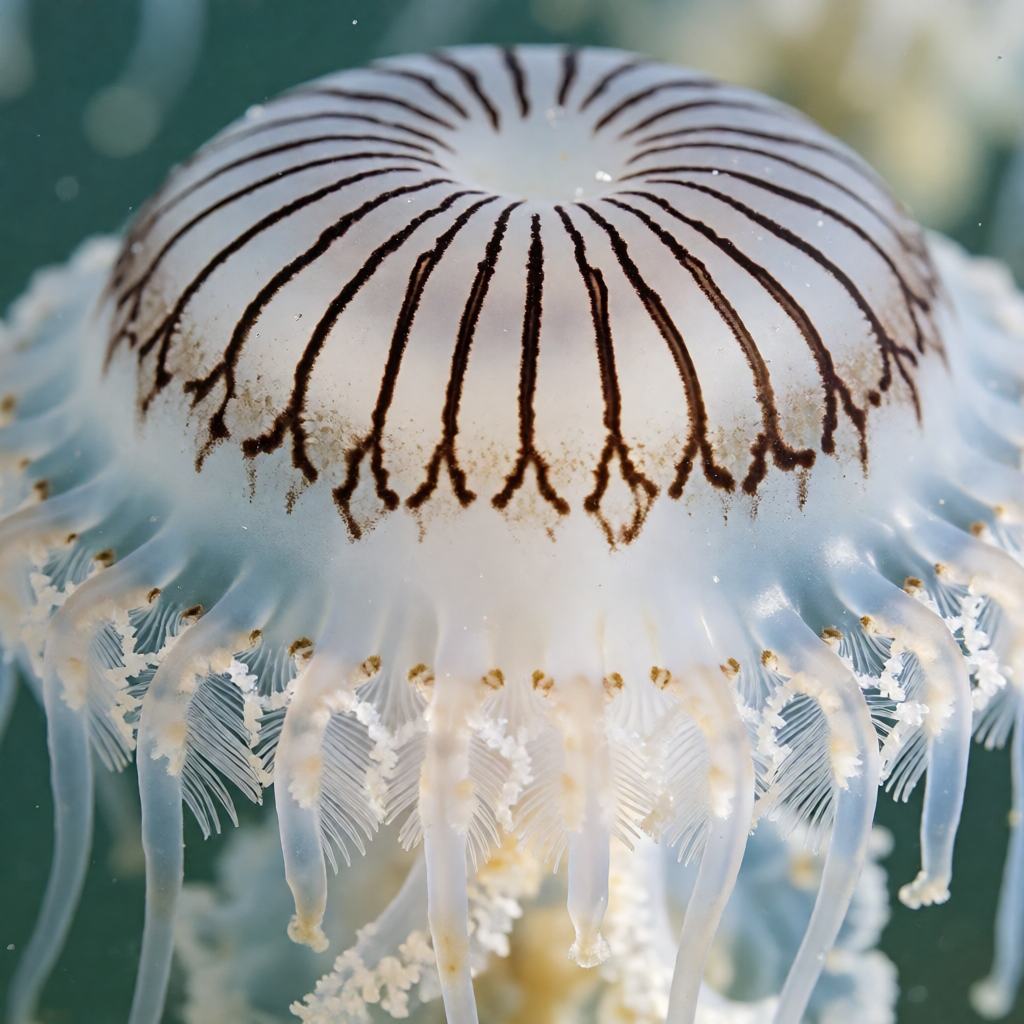
Adults carry a bell 25 cm to 40 cm wide. The bell looks like a shallow saucer. Its colour runs from white to pale brown, while the stripes stay dark. Dark lines spread from the middle.
Four oral arms hang like lace. Each arm carries folds that trap food. Tentacles grow in 8 groups. Every cell on them holds a stinging thread.
Water makes up 95 percent of the body, yet the animal can still sting. Because the tissue is so watery and the muscles so thin, the jelly cannot chase prey, and it must wait for food to drift into the tentacles.
1
2
3
Estuaries and coastal bays
Where it lives
Bays and estuaries are the main home. Atlantic North America holds most of them. Gulf of Mexico waters also bloom. Salinity can drop to 5 parts per thousand.
Few jellies tolerate water that fresh. Warm summers bring the largest swarms, since the young grow fast in heat. Winter currents carry animals offshore. Nutrient runoff feeds their prey.
That, however, can make blooms bigger. Although the jelly can live in brackish creeks where oysters grow, it needs saltier water to breed, so it moves between the two.
Small fish and plankton
What it eats
Comb jellies top the menu. Those animals eat oyster larvae, while the jelly eats them. That link helps oyster beds. Small crustaceans are taken too.
Fish eggs and larvae get caught as well. Worms and mosquito larvae also appear. Because the tentacles fire on contact, prey is paralysed at once. The arms then pass food to the mouth.
Digestion starts within seconds. Since one jelly can clear a litre of water an hour, a large bloom strips the plankton from a whole creek.
Two lives in one body
The breeding cycle
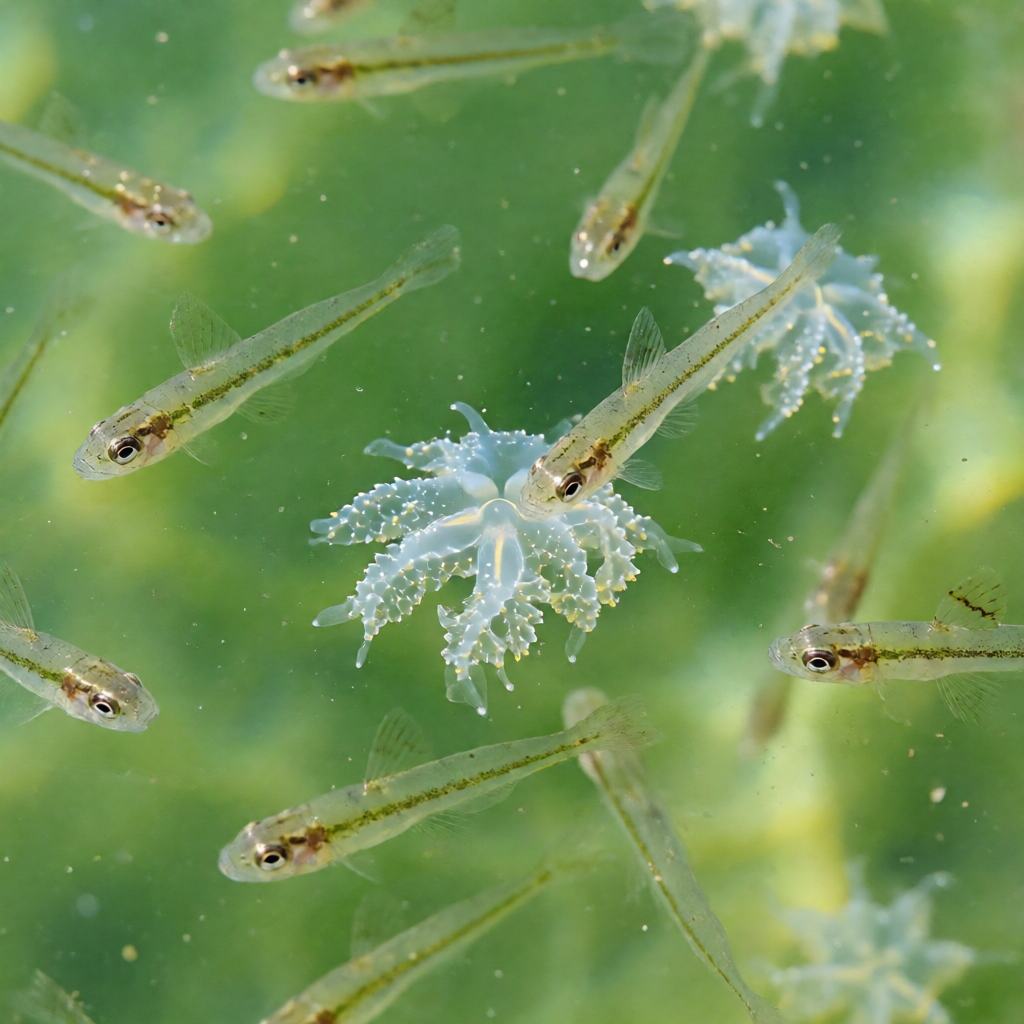
Adults release eggs and sperm into the water. A larva settles on a hard surface. It becomes a small polyp. The polyp grows buds.
Some buds make more polyps, though others take a different path. Others stack into a strobila. That stack splits into young jellies. Each one is called an ephyra.
An ephyra grows into an adult in weeks. Polyps can wait years for good conditions, while the adult lives only one summer.
No IUCN rating
Conservation
The IUCN has not assessed this jelly. No Red List entry exists for it. Numbers rise and fall with the weather. Blooms can grow huge in a warm year, though nobody counts them.
Pollution and runoff help them. Fishing removes some predators. Sea turtles and sunfish eat jellies. Both are in trouble.
Warmer seas, however, may favour the jelly further. Because no one knows how many exist, no one can say whether the species is winning or losing over the long run.
Side by side
How It Compares
| Trait | Atlantic Sea Nettle | Moon Jellyfish |
|---|---|---|
| Bell width | up to 40 cm | up to 40 cm |
| Tentacles | up to 24, in 8 groups | very short and fine |
| Sting | painful | mild |
| Water | tolerates brackish bays | needs full salt |
| Life cycle | polyp buds and strobilae | polyp strobilae |
| IUCN status | not assessed | not assessed |
Common misreadings
What People Get Wrong
- Every jellyfish sting needs a doctor. Most cause only a rash.
- Jellyfish have no nerves. They carry a simple nerve net.
- Bay and ocean nettles are one species. A 2017 study split them.
Going further
Sources and Further Reading
- IUCN Red List entry for Chrysaora quinquecirrha
- Wikipedia, Chrysaora quinquecirrha
- Bayha, K. M. et al. 2017. Multigene phylogeny of the scyphozoan jellyfish family Pelagiidae. PeerJ.
- Calder, D. R. 1972. Tentative outline for inventory of planktonic Cnidaria. Chesapeake Science.
Quick hits
Five things to remember
- Its name refers to the tufts near its mouth.
- It eats the comb jellies that eat oyster larvae.
- Bay and ocean forms became two species in 2017.
- A polyp can wait years for the right water.
- One sting can shut a beach.