 By Iris
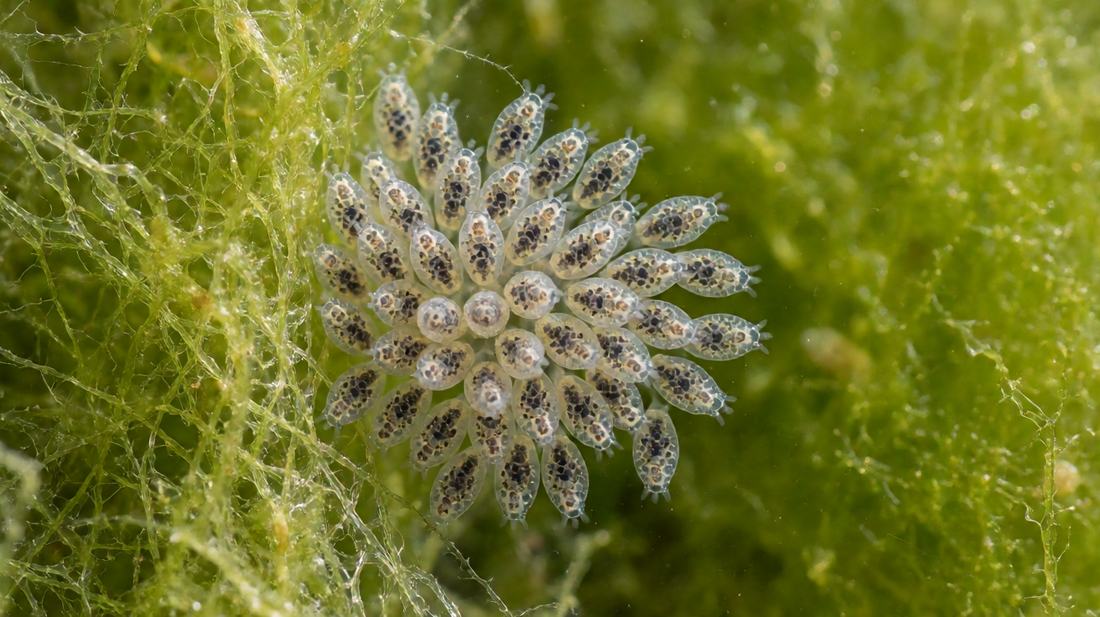
Brachionus calyciflorus | Calyciflorus Rotifer
Species Profile · Brachionidae
Calyciflorus Rotifer
A pond animal smaller than a grain of salt whose two beating rings of hairs look like turning wheels pulling food into its mouth.
No IUCN rating
Length
Hairs
Case
Eggs
Resting egg
Eye
The Calyciflorus Rotifer
Wheels in the water
This animal is so small it can barely be seen. It measures less than 1 mm across. It lives in still fresh water all over the world.
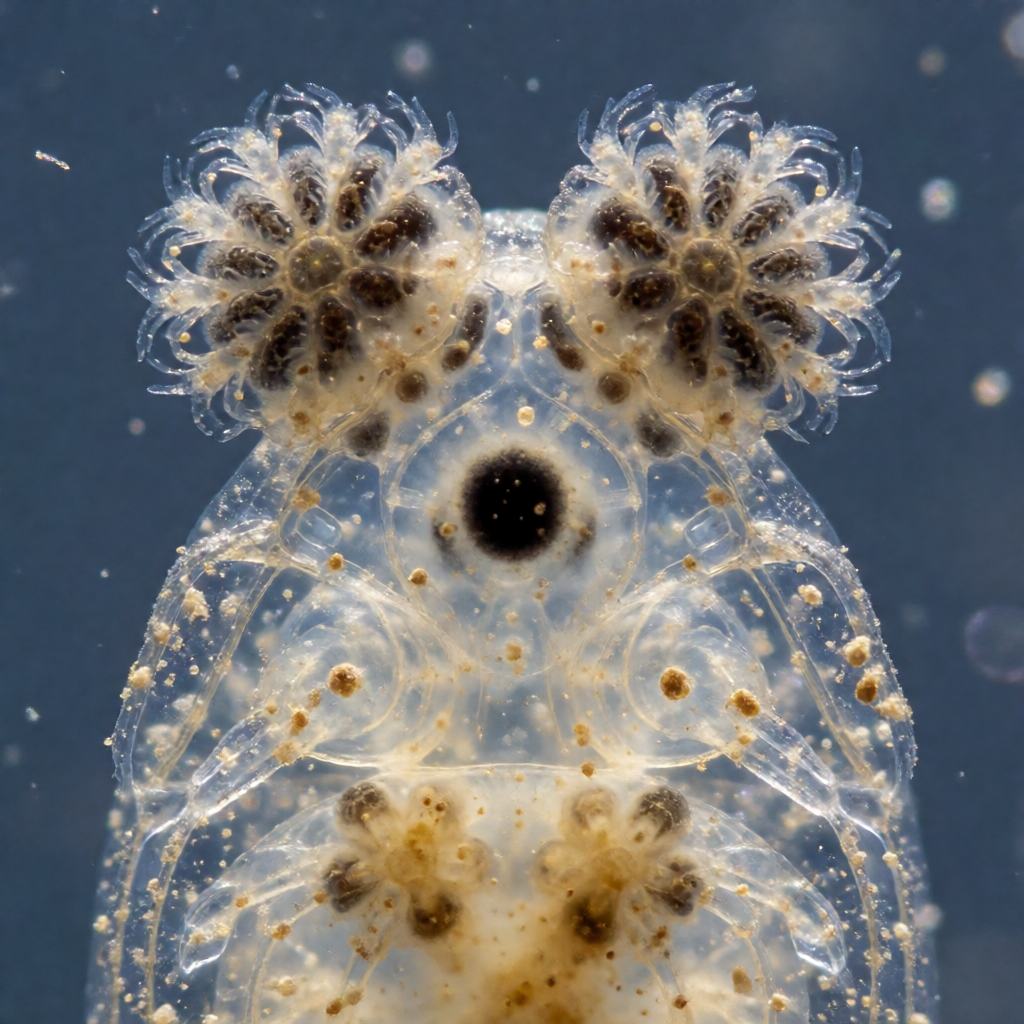
Two rings of fine hairs sit on its head. Those hairs beat in a circle and pull food towards the mouth. The movement looks like 2 turning wheels.
That is why the group is called wheel animals. It is one of the commonest small animals in ponds.
Family tree
Rotifera, the wheel animals
Brachionus calyciflorus is its Latin name. The animal sits in the class Monogononta. That group is part of the phylum Rotifera. Rotifers are among the smallest animals known.
They have a fixed number of cells in their bodies. Its nearest kin live in the same ponds. Some forms of this species carry long spines. Those spines make it harder for other animals to eat.
A Common Hydra shares the same pond water. Both animals are tiny hunters of even tinier prey.
0.5 mm of clear body
How to tell one
The body is about 0.2 to 0.5 mm long. It is shaped like a soft barrel. A hard outer case covers part of the body. That case ends in 4 to 6 points at the rear.
The head carries 2 rings of beating hairs. The animal has a simple eye spot. It has a short gut with a stomach and a bladder. The body is clear, so the gut shows through.
Some forms grow long spines when hunters are near. Others stay smooth and rounded.
1
2
3
Ponds, ditches and water butts
Where it lives
This animal lives in still fresh water. Ponds, ditches, lakes and slow rivers all suit it. It also lives in garden water butts.
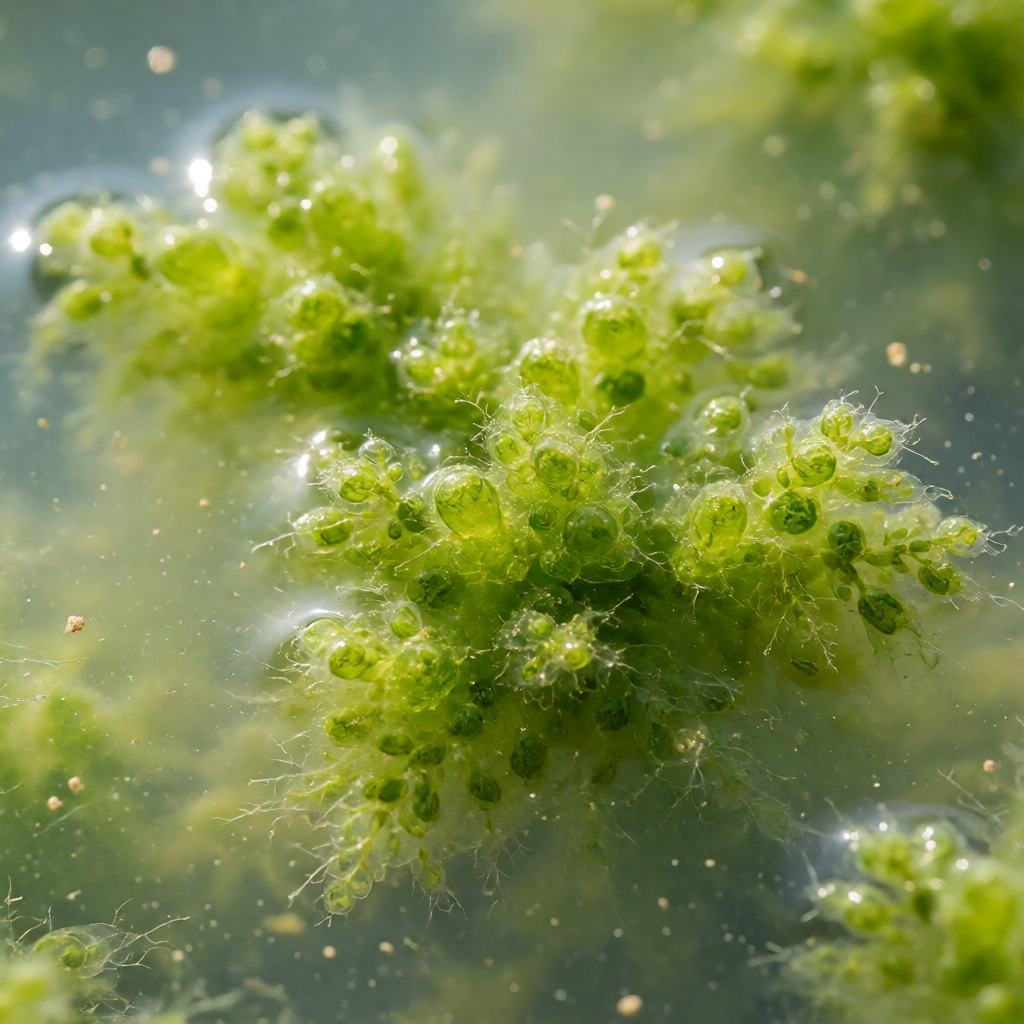
It prefers water rich in tiny plant cells. It can survive in very shallow puddles. The animal is found on every continent.
It is common from spring through autumn. Numbers fall when food runs short.
Tiny plant cells and bacteria
What it eats
The diet is made of tiny plant cells. It also eats bacteria and very small animals. The beating head hairs pull water towards the mouth.
Food particles are caught and pushed inside. The animal grazes on green films in the water. It can eat cells almost as large as its own head.
It feeds without stopping while the water is warm. It needs a great deal of food to breed fast.
Two kinds of egg
The breeding cycle
Summer females need no mate to breed. Each one lays eggs that hatch into females. All those young are copies of the mother.
This lets numbers rise very quickly. When food runs short, males appear. Mated females then lay thick-shelled eggs.
Those eggs sink and wait in the mud. They can survive drying and freezing. They hatch when the water becomes right again.
No IUCN rating
Conservation
No IUCN rating exists for this animal. It has not been checked against the global rules. It is very widespread and often abundant.
Water pollution is the main risk. Draining ponds removes whole populations. Farm chemicals can kill the small plants it eats.
It is also grown in fish farms as live food. Its numbers appear stable worldwide.
Quick hits
Five things to remember
- Its head hairs beat in a pattern like turning wheels.
- It has a fixed number of cells from birth.
- A thick-shelled resting egg can survive years of drought.
- It is used as live food for young fish.
- Some forms grow spines when hunters are near.