 By st20113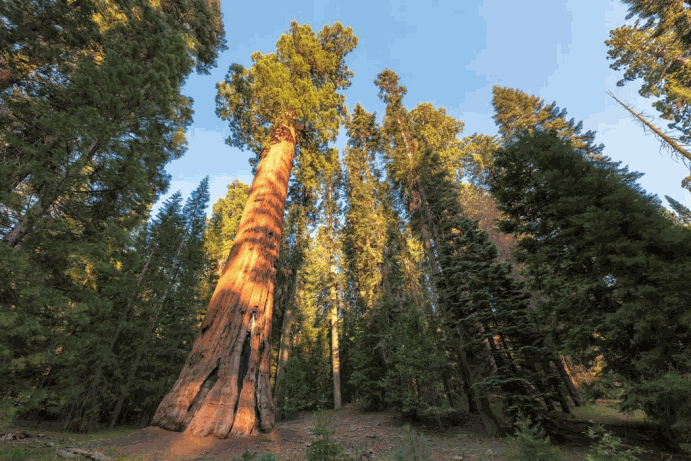
The Giant Sequoia (Sequoiadendron giganteum), also known as the Sierra Redwood or Wellingtonia, is the largest single living organism on Earth by volume. Found naturally only on the western slopes of California’s Sierra Nevada mountain range, these magnificent trees can live for over 3,000 years, reach heights exceeding 85 meters (280 feet), and develop trunks with diameters of 10-11 meters (30-35 feet) at the base. The General Sherman Tree in Sequoia National Park – the largest known living giant sequoia – stands 83.8 meters tall with a trunk volume of 1,487 cubic meters and an estimated weight of 1,385 tonnes, making it the most massive single living organism on the planet by weight. Giant sequoias are living cathedrals, ancient witnesses to millennia of human history, and critical keystone species supporting hundreds of dependent organisms.
Physical Characteristics and Growth
The giant sequoia’s sheer physical scale is difficult to comprehend without direct experience. The bark can grow to 90 cm (3 feet) thick – fire-resistant and rich in tannins that protect the living tissue beneath from insects, fungi, and the heat of forest fires. The bark’s reddish-brown color and fibrous texture give old-growth giant sequoia groves their distinctive cathedral-like atmosphere. The needles are small and scale-like, arranged spirally on the shoots, and the cones are proportionally small relative to the tree’s overall size – typically only 5-8 cm long, containing approximately 200-300 seeds per cone. Despite their modest cone size, giant sequoias produce enormous quantities of seeds, with a single large tree releasing 300-400 million seeds over its lifetime.
Giant sequoias grow most vigorously in the fire-adapted ecosystems of the Sierra Nevada, where periodic low-intensity fires clear competing conifers and enrich the soil with nutrients. The trees are remarkably fire-adapted: their thick bark protects the living cambium layer from the intense heat of surface fires, and fire stimulates cone opening and seed release, while fire-created mineral soil beds provide ideal conditions for germination. Paradoxically, fire suppression – a standard forestry practice throughout the 20th century – actually threatened giant sequoia recruitment, demonstrating the importance of natural disturbance processes in maintaining healthy forest ecosystems.
Ecological Significance
Giant sequoias are foundational keystone species – organisms that shape and define the entire structure of their ecosystem. The large, hollow bases of old-growth sequoias provide shelter for black bears, bobcats, mountain lions, and numerous smaller mammals. The dense canopy and extensive root systems regulate water flow, reduce erosion, and maintain humidity in the forest understory. Fallen giant sequoia logs – some measuring 3-4 meters in diameter – decompose slowly in the moist Sierra Nevada climate and provide critical habitat for amphibians, invertebrates, and nurse logs that support the regeneration of other plant species.
The giant sequoia’s ecological role has attracted scientific attention alongside its cultural significance. The trees support entire communities of dependent organisms: over 800 species of insects, dozens of vertebrate species, and numerous fungi and lichens have been documented in giant sequoia forests. The complex carbon cycling of giant sequoia groves – these trees store more carbon per hectare than almost any other forest type – has also made them important subjects of climate change research. As climate change intensifies drought and fire frequency in the Sierra Nevada, giant sequoia groves face unprecedented pressures, with severe fires in 2020-2021 killing an estimated 7,500-10,400 large sequoias – approximately 19% of the entire mature giant sequoia population.
Cultural Significance
Giant sequoias have inspired awe and reverence since their first scientific description by Europeans in the 1850s. The discovery of these enormous trees triggered debates about conservation that would eventually give rise to the national park movement – the Mariposa Grove of giant sequoias in Yosemite was first protected by Abraham Lincoln in 1864, decades before the creation of the National Park Service. Today, giant sequoia national parks and forests in California attract millions of visitors annually, and the trees remain powerful symbols of the need to protect wild places. Their extraordinary longevity – individual trees living through the rise and fall of civilizations – gives them an almost spiritual significance as living monuments to deep time and the enduring power of the natural world.