 By st20113
Classical Greece | Ancient Greece
Historical Profile · Aegean world
Classical Greece | Ancient Greece
A scatter of small states sharing one language produced direct democracy, public theatre and the habit of asking hard questions.
c. 800-146 BC
Period
States
Persian wars
Assembly
Theatre
The big picture
Introduction
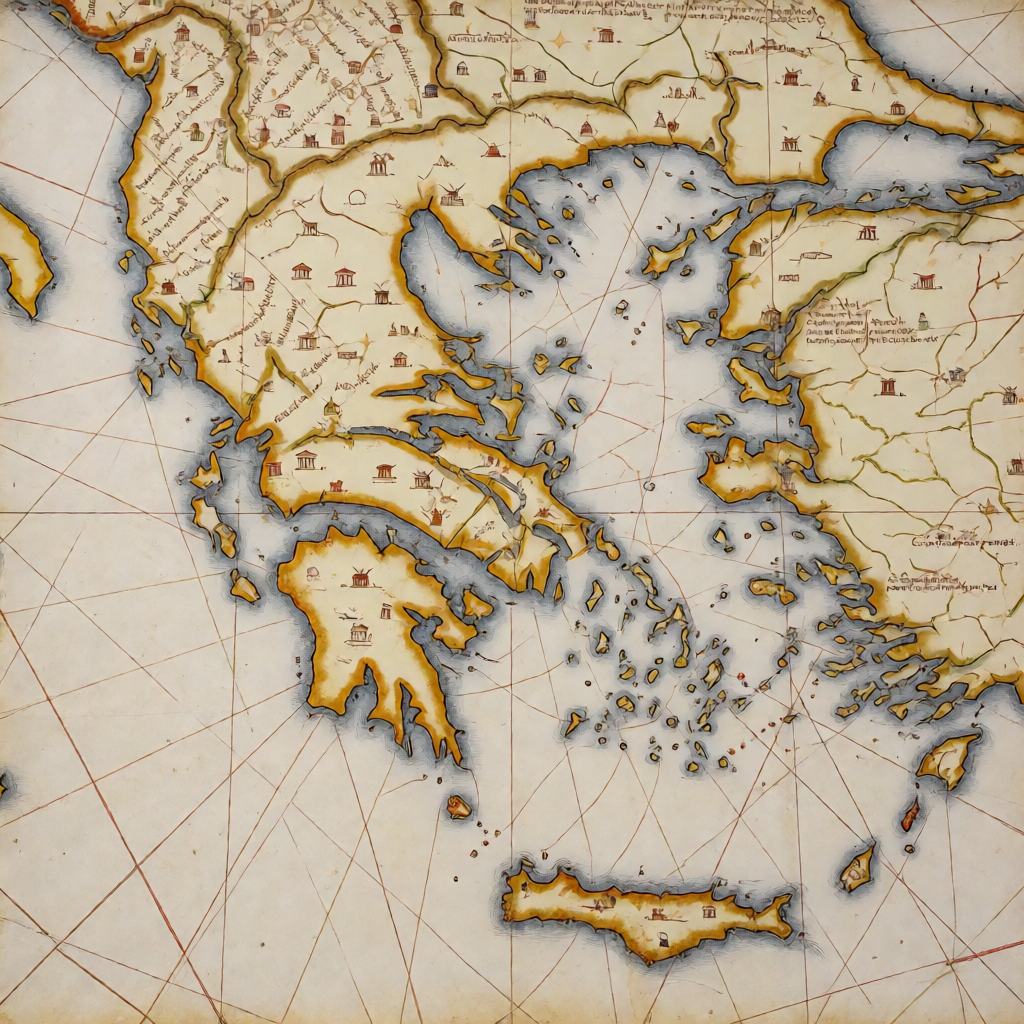
Greece was never one country. It was a crowd of small states. They lay across the south Balkans, the Aegean islands and the west coast of Asia.
They shared a language, a set of gods and a taste for argument. From about 800 BC to 146 BC they made a new kind of politics, theatre, history and thought. The rest of Europe has argued with it ever since.
The word democracy is Greek. So is the idea of writing history to find causes.
Setting
Historical Context
Greek land did the Greeks a favour and a curse at once. The land is hills and rock. The soil is thin. The coast breaks into hundreds of small valleys and bays. That made big kingdoms hard to build. It made small towns easy to defend. A typical state was called a polis.
It was a town with its farm land and a fort. There were several hundred of them. Athens and Sparta were the largest. Most were tiny. The land could not feed everyone. So the Greeks went to sea early. They planted colonies from the Black Sea to Sicily and south Italy.
By 600 BC Greek cities ringed the sea. Trade brought in grain, timber, metals and slaves. It carried out wine, olive oil and pots. It also brought ideas. One was letters from the Phoenicians. Another was money. The Greeks began to mint coins in the 6th century BC.
Turning points
Key Events
The Persian empire twice tried to take Greece. Twice it failed. At Marathon in 490 BC a force from Athens beat a much larger Persian army. Ten years later the Persians came back. The Greeks held the narrow pass. The fleet from Athens broke the Persian navy at Salamis in 480 BC. The land battle at Plataea in 479 BC ended the threat for good. Athens came out of the war as the head of a sea league. It used that league to build an empire of its own.
That empire caused the next war. Athens and Sparta fought for 27 years. That war ran from 431 BC to 404 BC. Sparta won. Athens was starved into surrender. Its walls came down and its fleet was taken. The city came back. But the states of Greece were worn out. In 399 BC a jury in Athens condemned Socrates to death.
In the north Macedon grew strong. Philip II beat the Greek states. His son Alexander the Great led an army into Asia. He broke the Persian empire. He marched as far as the Indus valley. He died in 323 BC. His generals then split the lands between them. Greece itself was swallowed by Rome. Rome crushed Corinth in 146 BC and made the region a province.
1
2
3
Who held power
People and Powers
Athens invented a bold way to rule. Ordinary men voted on laws, war and money. They met about 40 times a year. Any man could speak. A council of 500 was chosen by lot. It set the agenda. Most public posts were filled the same way. They did not trust experts.
It was not modern self-rule. Women, slaves and men from elsewhere had no vote. That left about one adult in six with any say. Sparta went the other way. Two kings and a council of elders ruled it. The whole society was built for war. Spartan men lived in barracks until they were 30. They ate in common messes.
Below them were the helots. These were enslaved farmers, and there were far more of them. They worked the land and they were watched with fear. One system was open and full of talk. The other was closed and built for war. The clash between them shaped the whole age.
Everyday world
Daily Life and Society
Most Greeks were farmers. Even in Athens many men owned a plot outside the walls. The diet was plain. It was barley cakes, olives, cheese, onions and salted fish. Meat came mostly at feasts. Wine was always mixed with water. Drinking it neat was thought to be a sign of rough taste.
Houses were built of mud brick around a court. The outside was plain on purpose. Public life was lived outdoors. Men spent the day in the market, the courts, the meeting or the gym. The gym was as much a social club as a place to train. Women of good family stayed in and ran the home. In Sparta they were freer and had to be fit.
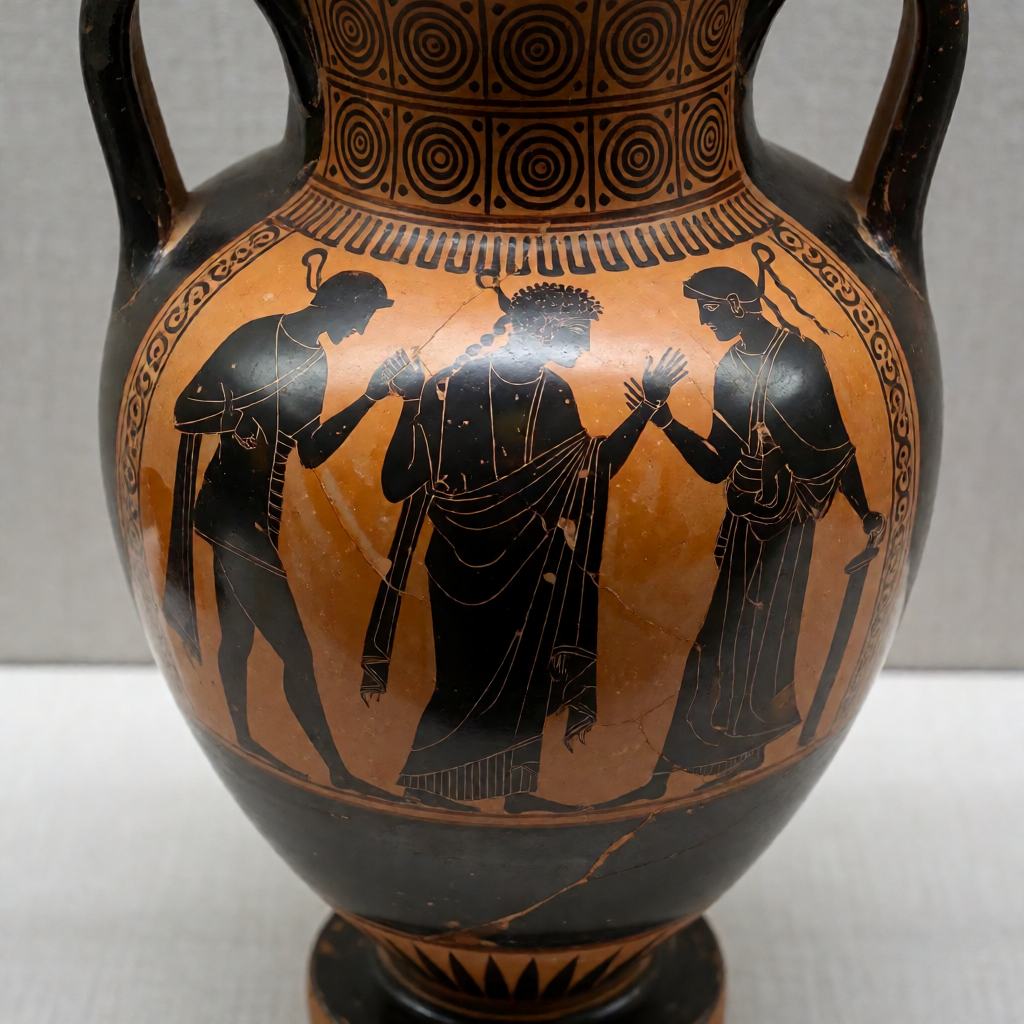
Slaves did much of the work, from farms to mines to schools. Theatre was a mass event, not just for a few. At the feast of Dionysus thousands of men sat through 3 days of plays. The open-air theatre held perhaps 15000 people. Juries of men judged the contests. The winners were cut into stone.
Craft and ideas
Trade, Technology and Ideas
Greek wealth rested on three things. They were wine, olive oil and pots. All three travelled well in sealed jars. Athens also had a silver mine at Laurion. Its output paid for the fleet that fought at Salamis. In return came grain from the Black Sea and Egypt. Timber for ships came from Macedon. Metals came from everywhere.
They had their own foods. Honey was the only sweet taste the Greeks had. The pale honey of Mount Hymettus, outside Athens, was famous across the sea. Keeping the European honey bee was a serious business. Honey kept fruit and cured wounds. Cakes soaked in it were given to gods. Aristotle wrote a long study of the bee. His notes on the work in a hive were not bettered for 2000 years.
The Greeks also began the habit of asking hard questions. Thales called an eclipse. Democritus guessed that matter was made of atoms. Hippocrates pulled medicine away from magic. Euclid set out shapes as a chain of proofs. Archimedes worked out the lever. Nothing quite like this had happened before. It happened because argument was public work.
What lasted
Legacy
Rome copied Greek art, writing and thought. Through Rome the Greek gift reached medieval Europe and then the modern world. The words democracy, politics, drama, history, physics, biology and mathematics are all Greek. The public legacy is harder.
Self-rule in Athens was limited, violent and brief. War ended it. Yet its main idea has never really gone away. That idea is simple.
Ordinary people can settle public questions by argument and vote, instead of obeying a king. Every modern parliament is a distant child of a meeting that sat on a hillside in Athens 2500 years ago.
Quick hits
Five Things to Remember
- Greece was several hundred small states, not one country.
- Athens invented direct rule by the people, but only about one adult in six could vote.
- The Persian wars ended with Greek wins at Salamis in 480 BC and Plataea in 479 BC.
- Honey from Mount Hymettus was the only sweet taste in Greek cooking.
- Rome crushed Corinth in 146 BC and made Greece a province.
[…] bridges, harbour walls and domes in every province. The columns on the outside were borrowed from Classical Greece. The three styles were stacked in order. The heaviest stood at the bottom and the lightest at the […]
[…] had sacked the capital itself. Italy’s trading cities took what was left of Byzantine trade. Classical Greece lay inside the old empire. Its cities were among the richest in the region. The sultans who […]
[…] end by who could keep a fleet at sea. The war also brought a new kind of writing. A historian from Classical Greece, Thucydides, was an Athenian general. He lost a command early in the […]