 By st20113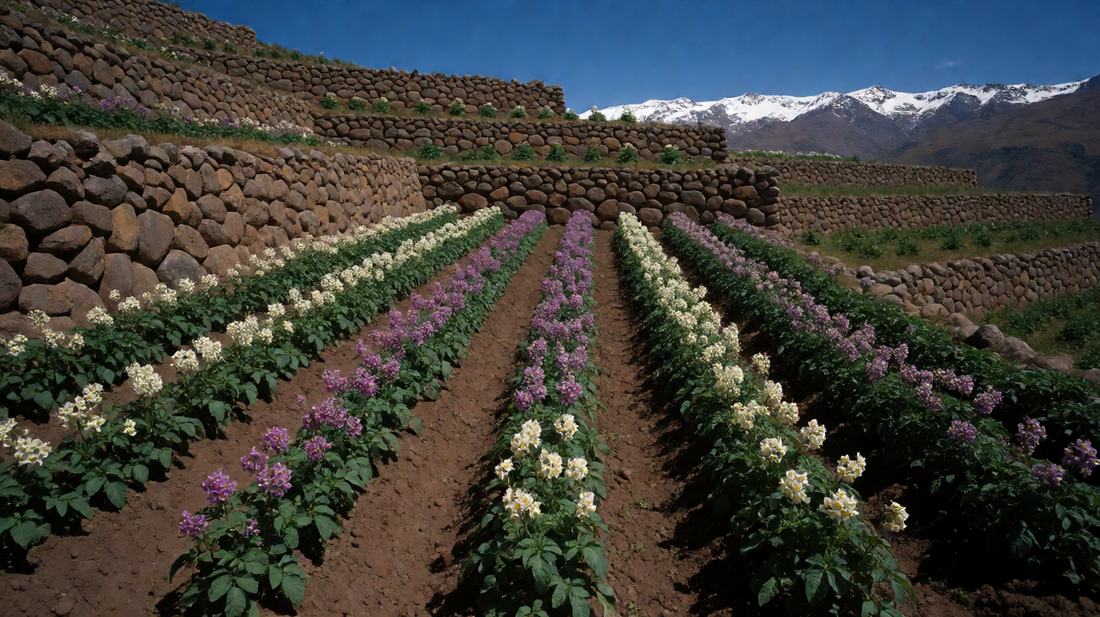
The Columbian Exchange | Columbus and the New World
Historical Profile · Atlantic World
The Columbian Exchange | Columbus and the New World
After 1492, plants, animals, people and germs crossed the Atlantic in both directions, rebuilding diets on every continent and killing most of the people already living in the Americas.
From AD 1492
Start
Name coined
Eastward
Westward
Cost
The big picture
Introduction
The Columbian Exchange is the name for a vast swap of life. Plants, animals, people and germs crossed the ocean. It began when European ships reached the New World in 1492. It went both ways and it never stopped.
Within 200 years, crops and stock had crossed the water. Diets were rebuilt on all continents. It was the largest event of its kind.
Setting
Historical Context
Before 1492 the two halves of the planet had been apart for thousands of years. The New World had its own farm crops. It had almost no big domestic stock. It had the llama, the alpaca and the dog. Eurasia and Africa had wheat, rice, cattle and horses. They also shared a long pool of plague and fever, so their people were partly immune.
The new lands had no such shared pool of germs. Measles and smallpox had moved back and forth there for centuries. People in those lands had built up some resistance. So a disease that killed few Europeans could kill most of a town in Mexico or Peru. Columbus reached the islands in October 1492. He sailed home to Spain the next year.
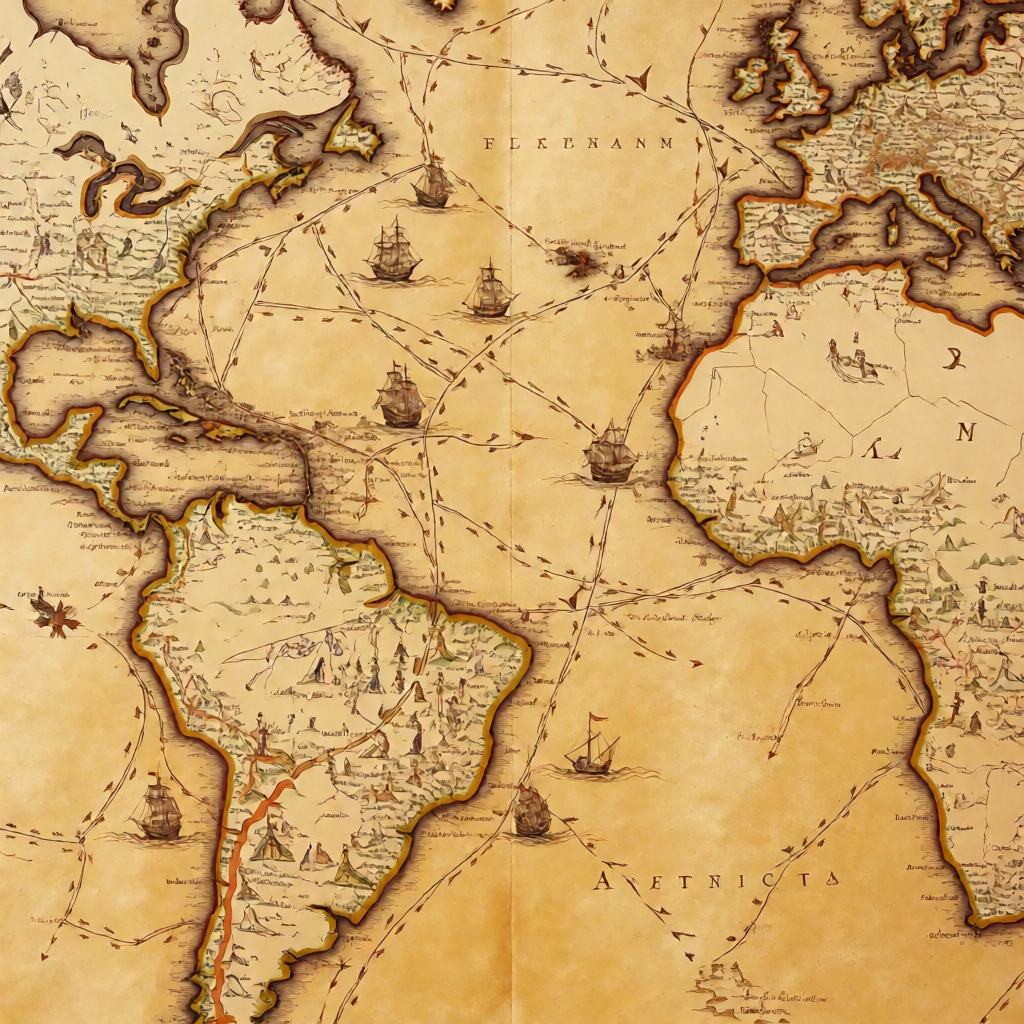
Settlement of Hispaniola began almost at once. Before long, ships were crossing the ocean on a fixed plan. Every voyage carried seed, livestock and, unknown to all, germs. The historian Alfred W. Crosby named the process in 1972. His book changed how the subject was taught.
Turning points
Key Events
The first result was a fall in numbers. Smallpox reached the islands in 1518. It hit the mainland soon after. In 1520 it destroyed the city of Tenochtitlan. The Spanish army outside its walls did the rest. Measles, influenza and typhus followed. Native peoples had never met them.
The diseases spread faster than any European could walk. They ran ahead of the explorers into lands no European had seen. Guesses at the native numbers vary. They run from about 40 million to more than 100 million. The sources do agree on the scale of the fall. Within roughly 150 years, native numbers dropped by as much as 90 per cent. The fall of the Inca and Aztec states cannot be understood without it.
Neither can the later import of slave labour, brought in to replace a lost workforce. The exchange also worked the other way. The potato reached Europe late in the 16th century. It spread through Ireland, Germany and Scandinavia in the 18th. Maize and the sweet potato reached Africa and China. They helped feed fast growth in numbers there. Chillies from Mexico were in use across India and South-East Asia within 50 years of the first landings.
1
2
3
Who held power
People and Powers
Spain and Portugal led the way. They had the ships, the sea ports and state backing. Spain claimed and ruled the mainland empires. Portugal built trading posts around Africa, India and Brazil. England, France and the Netherlands came later.
They took islands in the Caribbean and the North American coast. The people who paid did not write the records. Millions of native people died of disease, forced labour and war. Whole societies lost their languages and their histories. From the 16th century onwards, some 12 million Africans were carried across the ocean.
The sugar and cotton farms were built on their labour. The exchange was not a meeting of equals. It was conquest, carried by germs as much as by weapons.
Everyday world
Daily Life and Society
The clearest change was on the plate. An Italian cook in 1600 had never seen a tomato. By 1700 tomato sauce was being written about in Naples. An Irish farmer in 1700 ate oats and butter. By 1800 he ate potatoes with most meals.
A patch of potatoes fed far more people than the same patch of grain. Goulash needs the paprika that came from the new lands. Indian curries need the chilli. Farm stock changed daily life just as much. Horses and cattle were unknown there before 1492.
Escaped horses spread north across the Great Plains. By the 18th century many Plains peoples had rebuilt their whole way of life around the horse. Pigs breed fast and eat anything. They became the cheap meat of the islands and the south.
Craft and ideas
Trade, Technology and Ideas
The exchange created the first global market. Silver from Mexico and Bolivia went to Europe. Then it was shipped to Asia for silk, porcelain and spices. Much of it ended up in Chinese vaults. Sugar, coffee, cocoa and tobacco became mass goods. They were grown on New World farms and used in Europe.
Sugar and tobacco changed daily habits for good. Sugar cane came west with the Spanish. Tobacco went east. Both were grown by slaves on the islands. Coffee came from Africa and cocoa from the new lands. They met in the coffee houses of Europe.
Some new plants became factory crops. The common sunflower was first farmed in North America. It reached Europe in the 16th century as a garden plant. Later it was grown on a vast scale in Russia for its oil. Rubber came from the new lands too. It later became vital to industry.
What lasted
Legacy
The exchange made the modern world possible. It also made it unfair. It built the food supply that let the numbers of Europe grow. It built the trade that made its empires rich. It supplied the slave labour that made them pay.
It also caused the largest loss of human life on record. Dependence on one American crop carried its own risk. Potato blight reached Ireland in 1845 and lasted to 1852. Around 1 million people died and another 1 million left the country. Numbers fell from about 8 million in 1841 to about 6.5 million in 1851.
Its effects can still be measured. Potatoes, maize, tomatoes and chillies are now part of daily food in Europe and Asia. Most people assume they were always there. The exchange still shows in the map of farming. Brazil grows coffee and soy, Ireland grows grass, and the US Midwest grows wheat, a crop that did not exist there in 1492.
Quick hits
Five Things to Remember
- The exchange began with the voyages of 1492 and was named in 1972.
- Native numbers fell by as much as 90 per cent within about 150 years.
- Potatoes, maize, tomatoes and chillies went east; wheat and horses went west.
- The Irish famine of 1845 to 1852 showed the risk of one crop.
- Some 12 million Africans were carried across the ocean as slaves.