 By st20113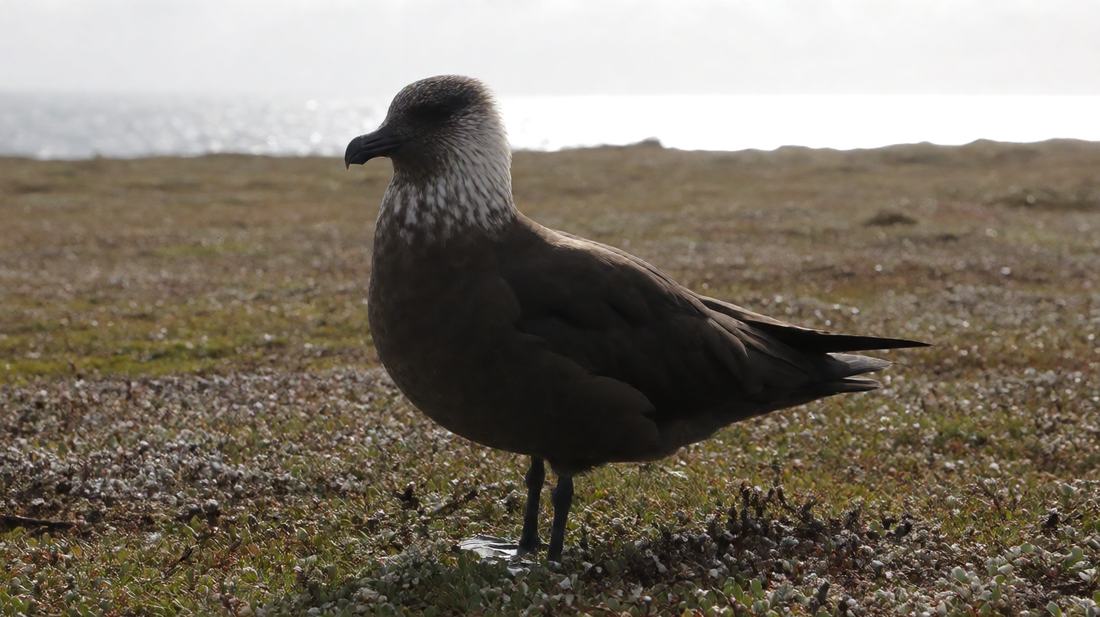
Stercorarius parasiticus | Arctic Skua
Species Profile · Stercorariidae
Arctic Skua
The pirate of the northern seas, a bird that makes terns and puffins give up their catch — and whose North Atlantic strongholds have collapsed by more than 80 per cent.
IUCN: Least Concern
Range
Length
Weight
Nest
Incubation
The pirate of the north
A seabird that lives by robbery
The Arctic Skua is a slim, fast, hawk-like seabird of the northern coasts. It has made a speciality of stealing its living rather than catching it. It is one of the best thieves in the bird world. It spends much of its life chasing other seabirds. It makes them disgorge the fish they have just swallowed. Then it catches the food before it reaches the water. The bird is 41 to 48 cm long. Its wings span 107 to 125 cm. It weighs 300 to 650 g. That makes it about the size of a small gull. Its shape is quite unlike a gull’s. The body is slender.
The wings are long, narrow and sharply pointed. The bill is hooked at the tip like a bird of prey’s. The 2 central tail feathers grow into long, fine streamers. They trail behind the bird in flight. That gives it a shape unlike anything else in northern waters. The species comes in 2 quite different colour forms, one pale and one dark. Both live in the same groups. They are not separated by sex or age. The pale form has a clean white breast and belly, a dark cap and a pale collar. The dark form is uniformly dark brown. It can look almost like a small Great Skua. The share of dark birds rises towards the south of the breeding range.
A colony in Scotland may be mostly dark. A colony in the high Arctic is mostly pale. The birds breed on the coastal tundra and moorland of the far north. Then they make one of the longest migrations of any seabird. They leave the Arctic in autumn and reach the southern hemisphere. They winter at sea off South America, southern Africa and Australia. So a bird that harasses a tern off Scotland in June may feed off Namibia in January. Its plight is one of the most useful lessons in seabird biology. It is classed as Least Concern on the global Red List because of its vast range. The same species is classed as Endangered on the IUCN European Red List. Numbers that depend most on theft have fallen by more than 80 per cent in Britain and the Faroe Islands.
Family tree
Stercorarius, the skuas
The Arctic Skua belongs to the family Stercorariidae, the skuas and jaegers. This is a small group of about 7 species. They are powerful, gull-like seabirds. They are now understood to be closer to the auks, the waders and the gulls than to any other group. They have webbed feet and hooked bills. They migrate strongly. They live by hunting and by robbing other birds. The family splits into 2 parts. The larger, heavier skuas live in the southern hemisphere and the Arctic. The smaller, lighter jaegers live in the northern hemisphere.
The Arctic Skua is one of the smallest members. It sits in the genus Stercorarius with the Long-tailed Skua and the Pomarine Skua. It resembles both in general structure and behaviour. It is told from them mainly by the length and shape of the tail streamers and by the pattern of the underwing. In North America the species is often called the Parasitic Jaeger. The 2 names are exact equivalents. One comes from the German word for hunter. The other comes from the bird’s habit of living off the labour of others. In the field it is often compared with the Black-headed Gull. That bird shares the same northern coasts and estuaries.
The gull is a small, sociable scavenger with rounded wings and a light, floating flight. The skua is a solitary and aggressive hunter. It has pointed wings, a heavier body, a hooked bill and a fast, direct, powerful flight. That flight is one of the best ways to pick a distant skua out of a mixed flock. The species was described by Linnaeus in 1758. It breeds right around the pole. No subspecies are widely accepted today. Birds from other parts of the Arctic seem to use separate winter grounds. That is one reason the North Atlantic falls are hard to read in global terms.
Pale form and dark form
How to identify one
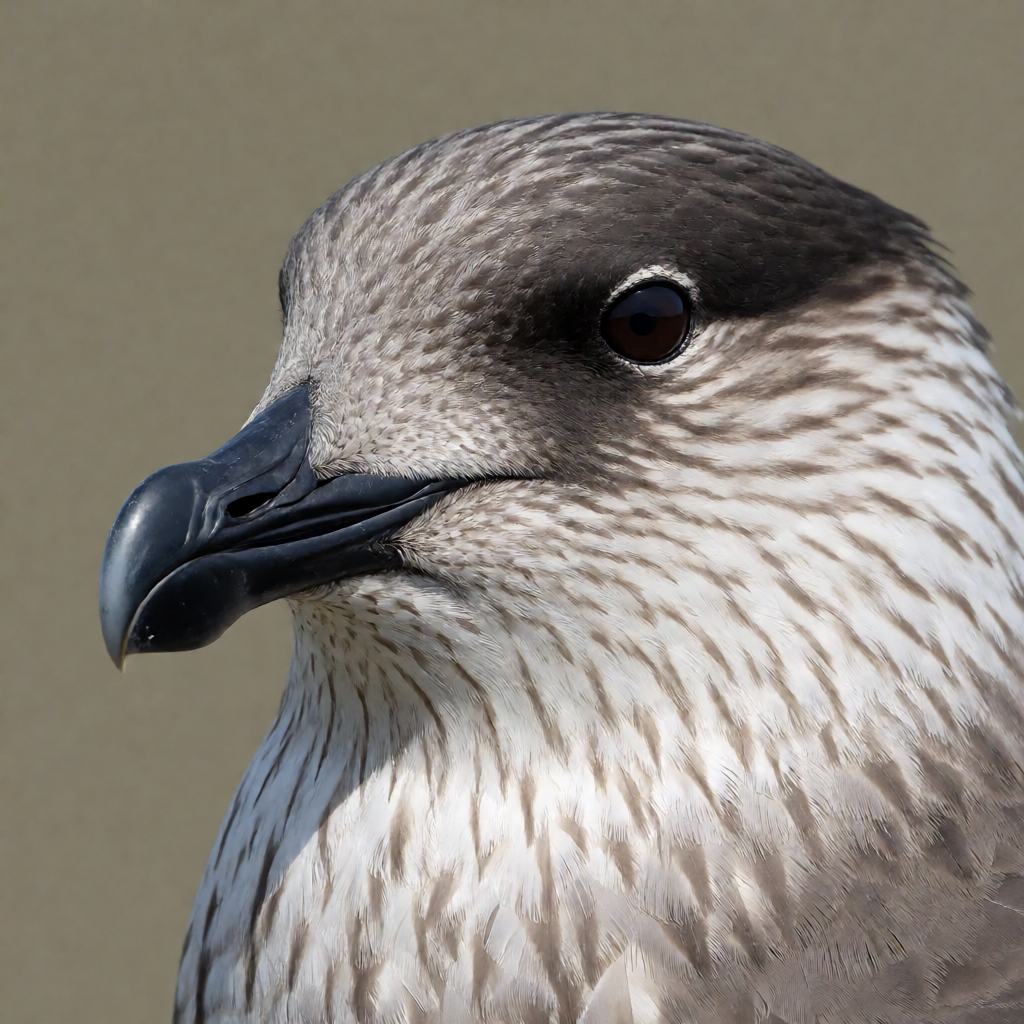
The Arctic Skua in flight is long, slender and angular. Its sharply pointed wings seem set further back than a gull’s. The central tail feathers project well beyond the rest of the tail. Those streamers are the main feature when the bird is seen from below. In a full adult they add a further 10 to 15 cm to the length of the tail. The bill is black and relatively short for the size of the bird. It is strongly hooked at the tip. A distinct upward curve gives the head an aggressive expression quite unlike a gull’s. The eye is dark. In the pale form the face is capped by a blackish crown. A pale yellow or whitish collar frames it.
The pale form is white below and mid brown above. It has a dark cap and a yellowish wash on the sides of the neck. Dark streaking on the breast varies. It often shows bright white flashes on the upper surface of the wing. Those are very conspicuous in flight. The dark form is a deep, uniform chocolate brown over the whole body. The cap and the rest of the head are barely darker than the mantle. Intermediate birds occur. They combine a dark cap, a pale belly and a heavily mottled breast. The 2 forms are controlled by the same gene combination. They occur in the same population.
The ratio between them shifts gradually across the range. That raises the question of why both should persist. One idea is that the 2 morphs suit different ways of getting food. Pale birds may specialise in piracy and dark ones in direct hunting. The evidence on this point is still incomplete. Young birds add a further complication. They are brown and heavily barred with pale fringes that make them look scaly. They have no long streamers at all. So a young bird in its first autumn is inconspicuous and genuinely hard to name at sea. It needs 2 or 3 years for the full adult plumage and the tail streamers to develop.
1
2
3
Tundra, moor and open ocean
Where it lives
The Arctic Skua breeds on the coasts and islands of the far north. Its breeding range runs around the Arctic. It reaches from northern Scandinavia and the Russian Arctic through Iceland, Greenland and Svalbard to the Canadian Arctic and Alaska. There it occupies coastal tundra and moorland. It also uses the shorelines of small lakes and pools. In the tundra zone it breeds further inland as well. It does so where small birds and small mammals are plentiful. It is a ground-nesting bird of open country. It prefers low vegetation to dense cover. It needs to watch for approaching predators. It also needs to launch into the air quickly.
Around the coast it favours the flat tops of cliffs. It uses the heathery slopes above beaches. It uses grassy islands where the birds can nest in loose groups. The groups are often small, with fewer than 20 pairs. Where conditions are right they may hold several hundred pairs. The birds are strongly attached to their breeding grounds. They return to the same area year after year. That makes the species fairly easy to monitor. It also makes it vulnerable, because the loss of a site hits the same birds again and again. Outside the breeding season the Arctic Skua lives on the open ocean. The North Atlantic birds move south along the coasts of Europe and western Africa.
It then crosses the equator. The birds spend the southern summer off the coast of south-western Africa. Some continue further and winter in the South Atlantic off Brazil and Argentina. It is largely a pelagic species in those months. It comes to land rarely. It feeds on fish, squid and the discards of fishing boats. This reliance on rich marine areas in winter exposes the species to conditions on the far side of the world. Food shortages on the winter and migration grounds may well drive the falls seen in northern groups. That remains one of the most important open questions about the species.
A thief, and a hunter
What it eats
The Arctic Skua is both a predator and a parasite. In the North Atlantic it is best known for the second role. It gets a very large part of its food by chasing other seabirds. It forces them to surrender what they have caught. The technique is called kleptoparasitism. The birds attacked are often terns, kittiwakes, small gulls and puffins. The method is simple and brutally effective. The skua selects a bird carrying food. It pursues it at high speed and close range and matches every turn. It dives at it or strikes it again and again. The victim then drops the fish or regurgitates it.
At that point the skua breaks off the chase. It drops or swoops to catch the food before it reaches the sea. The bird can make this calculation quickly. It will give up a poor chase and pick another victim. The best pirates succeed most often with the least effort. A skua that chases too hard spends more calories than it gains. Piracy matters most in season. It depends on other seabirds carrying food. That holds during the tern and kittiwake breeding season but not at other times. Outside the nesting period the birds hunt for themselves. They take small fish and squid at the surface of the sea.
They also eat carrion and the offal and discards of fishing boats. On the breeding grounds the diet broadens a great deal. Arctic Skuas take lemmings and voles. They take insects such as crane flies and beetles. They take the eggs and chicks of other birds. They take the young of waders and small passerines. Inland groups may depend on small rodents in good years. That is one reason the species is less strictly coastal in its habits than its winter range suggests. The bird is a generalist on land and a specialist thief at sea. So its food supply is measured in 2 quite different ways. A fall in either one can cut its breeding success.
Two eggs on bare ground
The breeding cycle
The Arctic Skua arrives at its breeding grounds from May onwards. The birds are in no hurry to nest. The whole season is timed to the arrival of the smaller seabirds whose food they will steal. It is also timed to the emergence of the insects and small rodents they will feed their chicks. Pairs form or renew on the breeding grounds. The species is monogamous over the season and often over many seasons. Pairs often return to the same territory year after year. The nest is a scrape in the ground. It usually sits on a patch of dry, well-drained ground among moss, lichen or short grass. In coastal colonies it lies within a few hundred metres of the sea.
In inland colonies it sits near the top of a small rise. From there the birds can see enemies coming. Two eggs are normally laid, occasionally 1 or 3. They are olive-brown with dark markings that make them hard to find against the tundra. Both adults share incubation for between 25 and 28 days. The sitting bird is fed by its partner. The territory is defended with a ferocity that has to be seen to be believed. Arctic Skuas will attack a person who walks within a few metres of the nest. They dive at the head from behind and strike with the feet. The chicks hatch covered in brown down.
They leave the nest within a day or 2. They can run and hide almost at once. They depend on their parents for food for a further 25 to 32 days before they fledge. The family party stays together for some time after that. The young birds follow their parents to sea. There they learn the techniques of piracy before their first migration. The brood is small and the period of dependence long. So the breeding rate of the species is very low. A pair that loses its clutch to a predator or bad weather in June may not recover that season. That makes the birds very sensitive to adult survival and to the state of the winter grounds.
Least Concern, or Data Deficient
Conservation
The Arctic Skua shows one of the clearest gaps between global and regional assessments. The species is evaluated as Least Concern in the global assessment. It is classed as Endangered on the IUCN European Red List. Both labels can be defended from the same evidence. The global label rests on the vast range of the bird and on large total numbers. A recent review compiled a minimum breeding population of 185,000 to 395,000 pairs. That covers Alaska, Canada, Greenland and Europe. A further 40,000 to 600,000 pairs may live in Asian Russia, where no counts exist. The total is still substantial. The species is far from the limits for a threatened group.
The difficulty is that the trends inside that total are wildly uneven. The data are very poor for much of the range. The best known birds are the North Atlantic ones. Those birds depend on stealing food from other seabirds. They have collapsed. Numbers have fallen by more than 80 per cent in Britain and in the Faroe Islands. So the same species that remains abundant in the high Arctic has become a rarity where it was once familiar. Several causes have been suggested. The smaller seabirds that the skuas rob have declined. Sandeel and other small fish stocks have fallen.
Marine prey has moved as the sea has warmed. New hunters such as mink and rats have reached the islands where the birds nest. The winter grounds off Africa have changed, though these remain poorly understood. The bird nests in small loose groups on open ground. So it is also vulnerable to human disturbance and to coastal development. Low breeding output plus falling adult survival makes recovery slow once the species is lost. A recent review has argued for a new label. Little is known about the numbers and trends of Arctic Skuas over most of their range. The global label of Least Concern might more honestly be called Data Deficient. That is a warning in itself.
Quick hits
Five things to remember
- The 2 central tail feathers of an adult are drawn out into streamers that add 10 to 15 cm to the bird’s length.
- Its usual way of getting a meal is to chase a tern or a puffin until it drops the fish it has caught.
- The species has a pale form and a dark form, and both breed together in the same groups.
- It is Least Concern worldwide but Endangered in Europe, and North Atlantic numbers have dropped by more than 80 per cent.
- Adults defend the nest by diving at the heads of intruders and striking with their feet.