 By st20113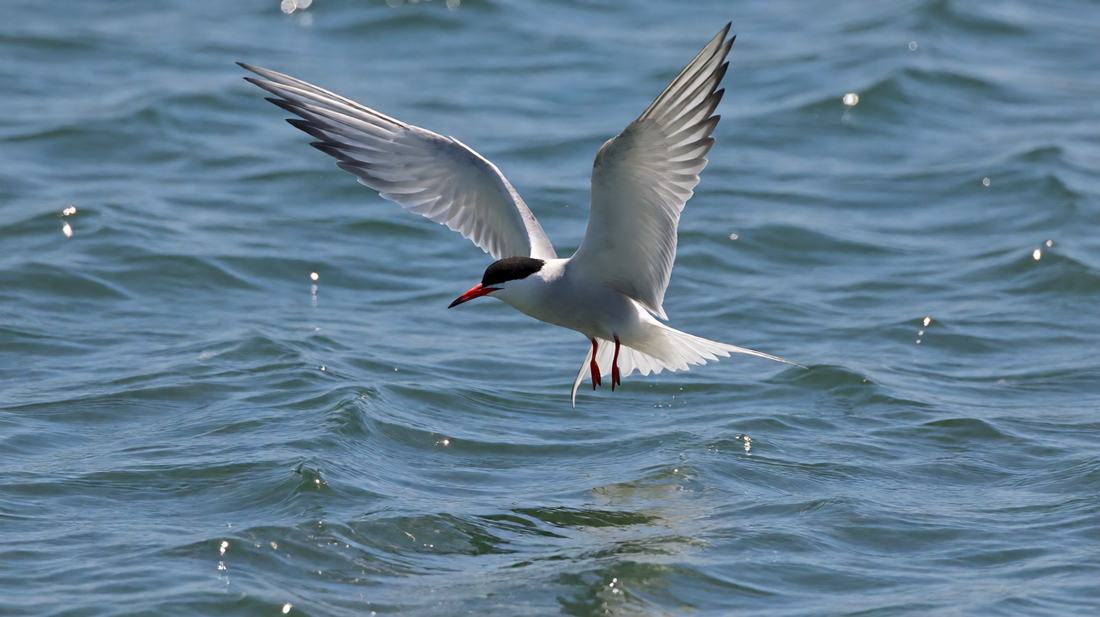
Sterna hirundo | Common Tern
Species Profile · Laridae
Common Tern
The sea swallow, a bird that hangs in the air above the water, folds its wings and drops — and then flies to Africa to spend the winter.
IUCN: Least Concern
Range
Length
Weight
Nest
Incubation
Hang, fold, plunge
A hunter of the surface layer
The Common Tern is a slender, long-winged seabird. Sailors and birdwatchers call it the sea swallow. The name comes from the way it hangs in the air above water. Its wings are raised and its forked tail streams behind. Then it folds its wings and drops into the sea. The plunge ends with a small silver fish held crosswise. The bird lives in two worlds. It breeds on the coasts and inland waters of the temperate north. It spends the rest of the year following fish shoals near the tropics. It is one of the longest-distance migrants among European nesting birds. Birds ringed on European coasts have been found thousands of km south.
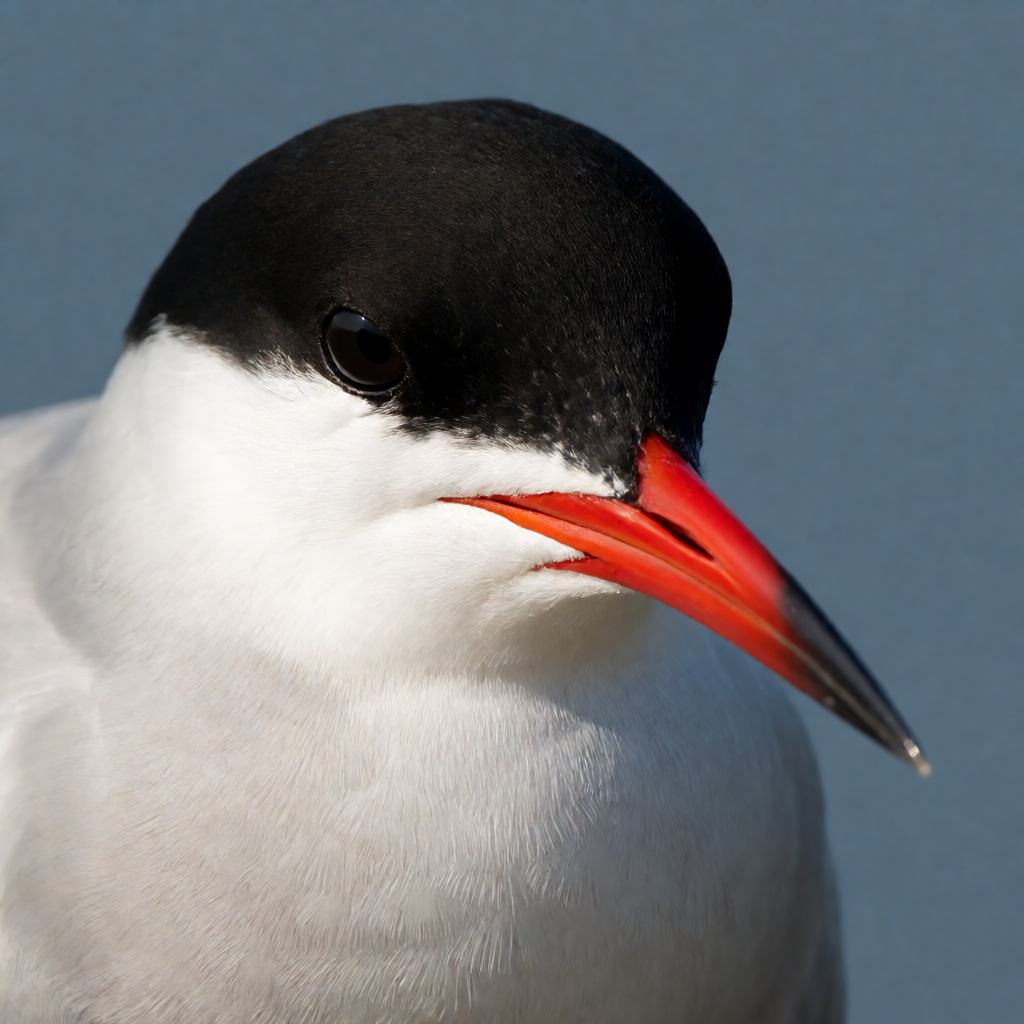
They turn up along the western seaboard of Africa. Adults in full breeding plumage are clean white below and pale grey above. They carry a glossy black cap that reaches down to the eye. The long bright red bill has a small black tip. That red bill with a black tip is the best single clue. It separates the bird from the very similar Arctic Tern. The Arctic Tern has an all red bill and a shorter neck. It also flies more slowly and buoyantly. The species nests in colonies. A busy ternery is one of the loudest places in the bird world. Hundreds of pairs nest within a few metres of each other on bare shingle or sand.
They drive off intruders of any size. They dive at their heads and strike with the bill. A walk through a breeding colony is an experience few people repeat. In the last century the bird has proved adaptable. It now nests on flat gravel roofs and on artificial rafts. It also uses islands created for it. That has let it survive where every natural shingle beach was built over. It is classed as Least Concern on the global Red List. Its European numbers have fallen a great deal. It is treated as a bird of conservation concern across much of its range. The main reasons are lost nesting sites, disturbance and a shortage of small fish.
Family tree
Sterna, the true terns
The Common Tern sits in the family Laridae. That family now holds the gulls, the terns and the skimmers. Within it the bird belongs to the subfamily Sterninae, the true terns. This group has about 40 species. They are slender and long-winged with short legs. They live from the Arctic to the Antarctic. They have a pointed bill and a forked tail. They plunge into water to take fish. The bird sits in the genus Sterna. That genus once held most of the world’s terns.
It has been split up over the last 30 years. The split rests on genetic and behavioural evidence. The genus is now a much smaller and more coherent group. Its close relatives include the Arctic Tern and the Roseate Tern. Both overlap with it across parts of its range. The Common Tern is a bird of the temperate zone rather than the high Arctic. Its identification is best tackled by comparing it with its relatives. Those differences are the ones skilled birders look for at once. The Black-headed Gull shares the same coasts. The terns stand out at once by their narrower wings and lighter build.
They also hover buoyantly and dive for food. They do not pick food from the surface. The scientific name is simple and descriptive. Sterna is the classical Latin term for a tern. Hirundo is Latin for swallow. The Latin name repeats the same image as the English folk name. The species was described by Linnaeus in 1758. Several subspecies are recognised across its huge range. European and western Asian birds belong to the nominate form. That is the one most often met in Europe.
Red bill, black tip
How to identify one
An adult is 31 to 35 cm long. Its wings span 77 to 98 cm. It weighs about 90 to 150 g. That is a remarkably light body for the size of the wings. It explains the bird’s mastery of the air. The bill is long, straight and pointed. In breeding adults it is bright orange-red with a black tip. The gape is red. A bird with an open bill appears to have a red mouth. That matters in the begging displays of the chicks. In summer the head carries a full glossy black cap. It reaches down to the level of the eye and around to the nape.
The short legs are red. In winter the same bird shows a white forehead and a black bill. The cap shrinks to a dark collar behind the neck. Young birds in their first autumn look different again. They have scaly brown and grey upperparts and a blackish bill. They also show a dark bar on the leading edge of the wing. The wings are long, narrow and pointed. The tail is deeply forked. It reaches well beyond the tips of the folded wings. That is where the swallow comparison comes from. A bird flying overhead is fairly easy to pick out. Look for the forked tail, thin wings and pale grey upper surface.
A white trailing edge helps too. In flight the bird is light and buoyant. It hovers with quick wing beats. Its head is held down and forward as it looks for fish. Then it folds its wings and drops in a steep dive. It breaks the dive with a splash. That sequence names a distant tern better than any plumage feature. The sexes are alike in plumage and size. There is no change in look once the bird matures in its third year. Only the tail gains the long outer streamers that young birds lack.
1
2
3
Shingle, islet and rooftop
Where it lives
The Common Tern breeds on coasts and inland waters of the temperate north. Its band runs across Europe, much of Asia and North America. In Europe it nests on shingle beaches and saltmarsh islands. It uses sand spits and exposed islets in lakes and rivers. It also uses the flat gravel roofs of buildings. It uses purpose-built rafts and platforms. These have grown important as natural sites are lost. On the breeding grounds it needs very little. It wants bare or sparsely vegetated ground within a few metres of open water. The site must be out of reach of land predators.
The water must hold a dependable supply of small fish. The bird will nest on any surface that fits. That can be a river gravel bar or a concrete roof. Outside the breeding season it lives on the open sea and the coast. It feeds over shore and offshore waters, estuaries and river mouths. It often joins other terns and small gulls. Sometimes the flocks are large where fishing is good. In winter the European population moves south. The birds then reach the coasts of western and southern Africa. They also reach the Mediterranean and the Middle East.
So one bird may breed on a European rooftop in June. By December it may fish off the coast of Senegal. Migration happens overland as well as along the coast. Flocks move south through the interior of Europe in late summer. They often follow river valleys. They pause at reservoirs and gravel pits to rest and feed. The bird is faithful to its breeding site. Birds usually return to the colony where they were reared. That makes the colony the key unit for its conservation. The loss of one long-established site can take many years to offset.
A plunge diver after small fish
What it eats
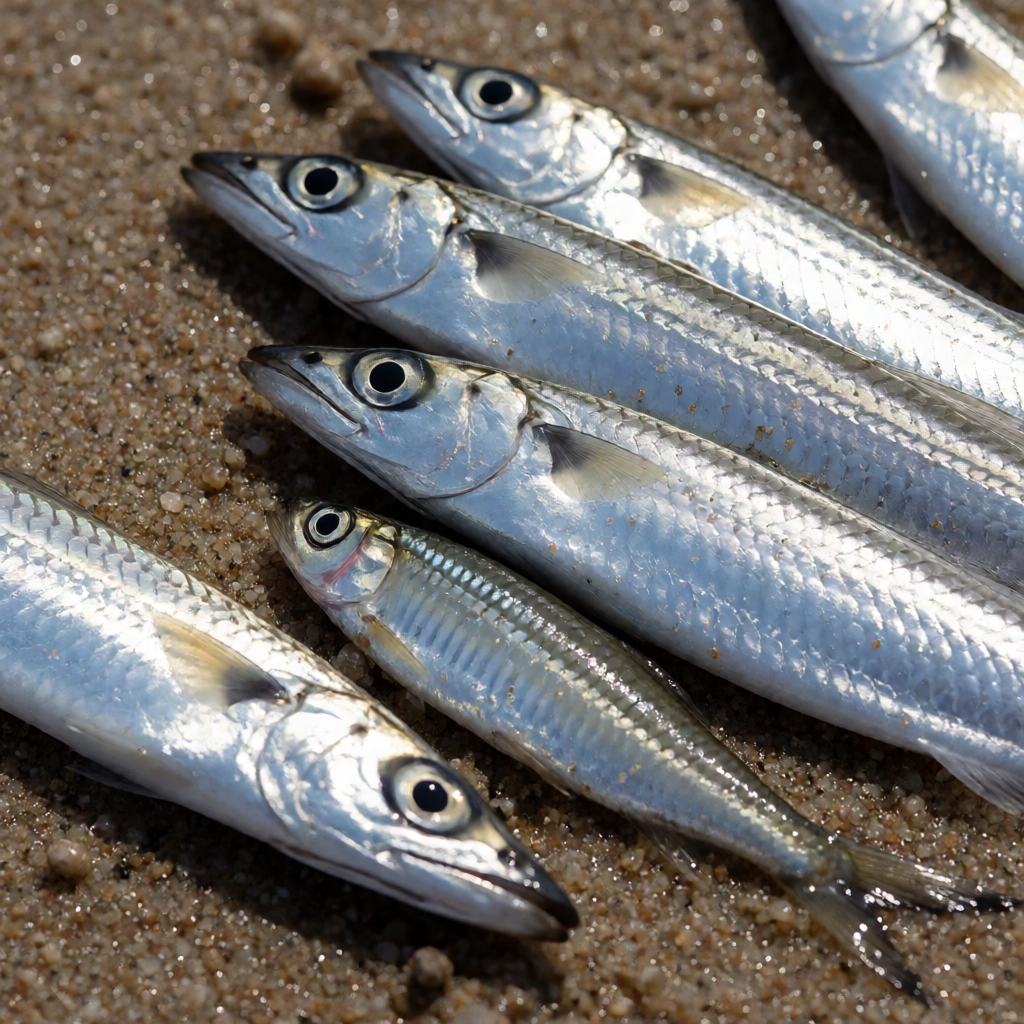
The Common Tern feeds mainly on small fish taken by plunge-diving. Its common prey include sandeels, sprats and small herring. It takes smelt, mackerel fry and the young of coastal species. It also eats a smaller quantity of crustaceans, shrimps and insects. Insects matter most for chicks in fresh-water colonies. Such sites may hold no fish of the right size. The bird flies about 5 to 10 m above the water. It hovers when it sees something worth taking. Then it drops with the wings half closed. It enters the water in a splash that is often audible from far off.
It rises with the fish held crosswise in the bill. It shakes off the water in the air. Prey is swallowed head first so that any spines lie flat. A bird bringing fish to the colony carries them crosswise. It usually carries one at a time. That is why a colony is so busy while chicks are growing. Adults arrive every few minutes through the hours of daylight. The species feeds at the surface and just below it. A plunge usually takes it no more than a metre down. So it depends on fish that come near enough to be seen from the air.
It will follow shoals of predatory fish such as mackerel. Those fish drive small fry upward where the terns can reach them. Feeding flocks form where currents, tides or upwellings gather small fish. The birds work across such an area in a steady pattern. They hover and plunge in succession. They sometimes join other tern species and shearwaters. The bird must find prey in the upper layer of the sea. So shifts in small fish numbers hit its colonies at once. Fishing, warming water and plankton changes all count.
A scrape in the open
The breeding cycle
The Common Tern nests in colonies. These range from a handful of pairs to several thousand. Most birds breed first at 3 or 4 years old. That means the loss of adults is hard for a colony to absorb. Nesting starts in late April or May in southern Europe and later further north. The nest is barely worthy of the name. It is a shallow scrape in shingle, sand or earth. On a roof colony it is nothing more than a hollow in the gravel. The eggs match the background so closely that a full nest is almost invisible. That holds until the sitting bird moves. Between 2 and 3 eggs are laid, most often 3.
Both adults incubate them for about 21 to 22 days. The chicks hatch covered in pale down with dark markings. That makes them equally hard to find on their substrate. They can walk within a day or so. They leave the nest scrape in search of shade or cover. They stay dependent on their parents for food for several weeks. The chicks fledge at between 22 and 28 days. The adults then feed them for a further period. Only later do they learn to fish for themselves. That process runs well into the autumn. Some young birds are still begging on the coasts of Africa.
The colony defends itself as a whole. The birds attack anything that comes near. Targets include foxes, crows, gulls, herons, dogs and people. They strike with the bill and often draw blood. That aggression is the main defence of the chicks. The camouflage of the eggs and young helps as well. Failure comes mainly from predation by mink, rats, foxes and large gulls. It is worst where colonies sit on islands linked to the mainland. Roof colonies reachable by rats suffer too. Flooding of low-lying sites by storms and high tides destroys whole seasons. It can happen in a single night.
Common, but pressed hard
Conservation
The Common Tern is classed as Least Concern on the global Red List. That rests on its very large range and large total population. The label hides a serious decline across much of Europe. There the species is treated as a bird of conservation concern. The loss of nesting sites has been steady for a century. The core problem is that terns and people want the same places. Flat, open, unshaded ground next to productive water is the common factor. A beach, a gravel pit, a river bank and a building site all fit. Coastal tourism has grown. Sea walls and promenades have spread.
Gravel has been taken from the rivers. Together these have removed an enormous amount of nesting habitat. Disturbance from people, dogs and water sports adds to the pressure. Adults may then leave the nest long enough for eggs to overheat. Gulls and crows take the eggs in that window. Large gulls, mink, rats and red foxes have all increased in many coastal areas. Tern colonies have shrunk over the same period. There is a feeding side too. The small fish the terns need face pressure from fishing and from changes in the sea. A colony that cannot find enough sandeels or sprats fledges fewer chicks.
That is true however safe the nest site is. The most successful measures have been simple and effective. People have created islands, rafts and platforms just for nesting. They have fenced and wardened existing colonies. They have encouraged roof nesting on buildings where the birds are left alone. Where these steps were taken, colonies have held up or grown. So the Common Tern can stay a familiar bird of European coasts and lakes. It needs somewhere to lay its eggs. The oldest known ringed birds have lived for more than 20 years. One bird can rear a great many young in that time.
Quick hits
Five things to remember
- A breeding adult has a black tip on an otherwise bright red bill, the quickest way to tell it from an Arctic Tern.
- It hovers over the water, then folds its wings and plunges, and the splash can be heard from far off.
- Chicks fledge at 22 to 28 days but keep begging from their parents well into the journey to Africa.
- A colony defends itself by diving at intruders and striking them with the bill.
- Flat gravel roofs have become real nesting sites where every natural shingle beach has been lost.