 By st20113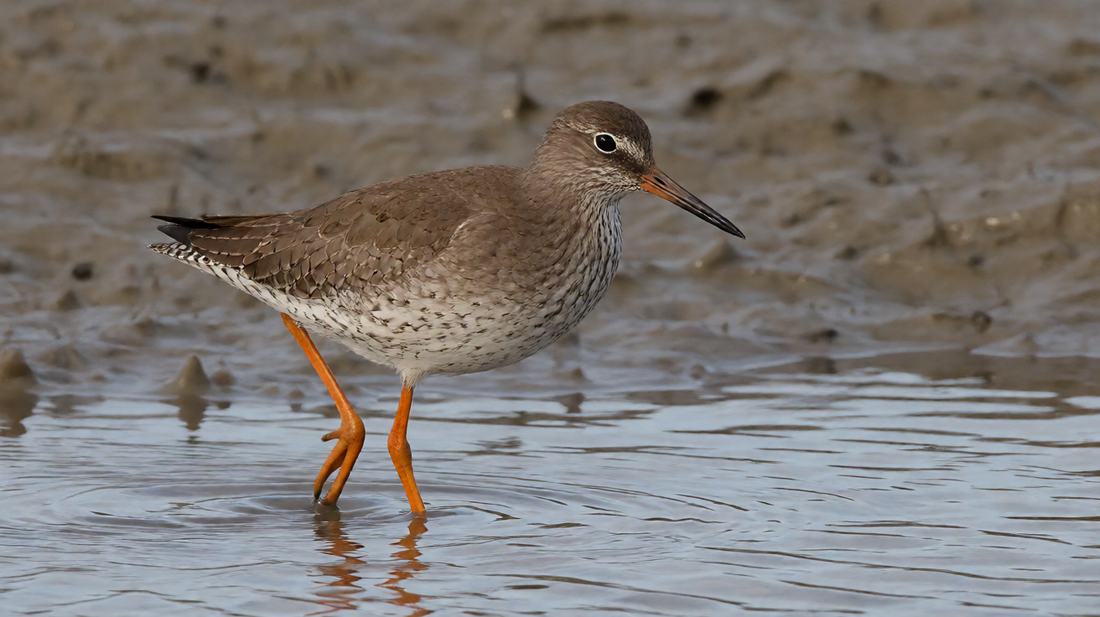
Tringa totanus | Common Redshank
Species Profile · Scolopacidae
Common Redshank
A noisy, long-legged wader of the wet meadow and the estuary whose scarlet legs and white wing flash mark it at once — and whose numbers have fallen with the draining of the marsh.
IUCN: Least Concern
Range
Length
Weight
Nest
Incubation
The sentinel of the marsh
A wader that calls at everything
The common redshank is a medium-sized wader. It belongs to the family Scolopacidae. It is one of the noisiest shorebirds of western Europe. It nests in wet meadows and saltmarshes. It spends the winter on estuaries and mudflats. Its orange-red legs stand out at once. So does its white wing bar.
Its loud alarm call is a familiar sound. That call gave the bird its name. You can hear it on nearly any winter estuary. The bird likes open wet ground. It needs soft mud full of small animals. It also needs short plants to hide its nest. So it lives on saltmarsh and grazing marsh.
It avoids dry fields and woodland. Those wet places have been drained. The grassland has been improved. Flood defences have been built. So the redshank is now in decline. It is a bird of concern in much of Europe.
Family tree
Tringa, the shanks and sandpipers
The common redshank sits in the genus Tringa. These are the shanks and sandpipers. They have a bill longer than the head. They also have a small hind toe. That sets them apart from the plovers. The curlews and godwits are larger. Their bills are longer and curved. The redshank is smaller and lighter. Its bill is short and straight.
It lives beside the Eurasian Curlew (Numenius arquata). That curlew is a big shorebird. Its long bill probes deep mud. Its numbers are falling too. Both birds belong to Scolopacidae. The family has split the wetlands between them. The shape of the bill decides the depth. Linnaeus named the redshank in 1758. Today we accept a few subspecies.
The nominate totanus lives on the mainland. The larger robusta lives in Iceland and the Faroes. Most other named races are not valid. The bird has a huge range. Its local forms have not drifted far apart. Ringing has tracked the migrations. Icelandic birds fly to Britain and Ireland. North Sea birds winter in the Low Countries. Far northern birds reach Africa.
Red legs and white wing
How to identify one
An adult redshank is 27 to 29 centimetres long. Its wingspan is 59 to 66 centimetres. It weighs 85 to 170 grams. That makes it a medium wader. It is bigger than a dunlin. It is smaller than a curlew. The female is usually the larger bird. Both sexes share the same pattern. The upper parts are a mottled brown and grey.
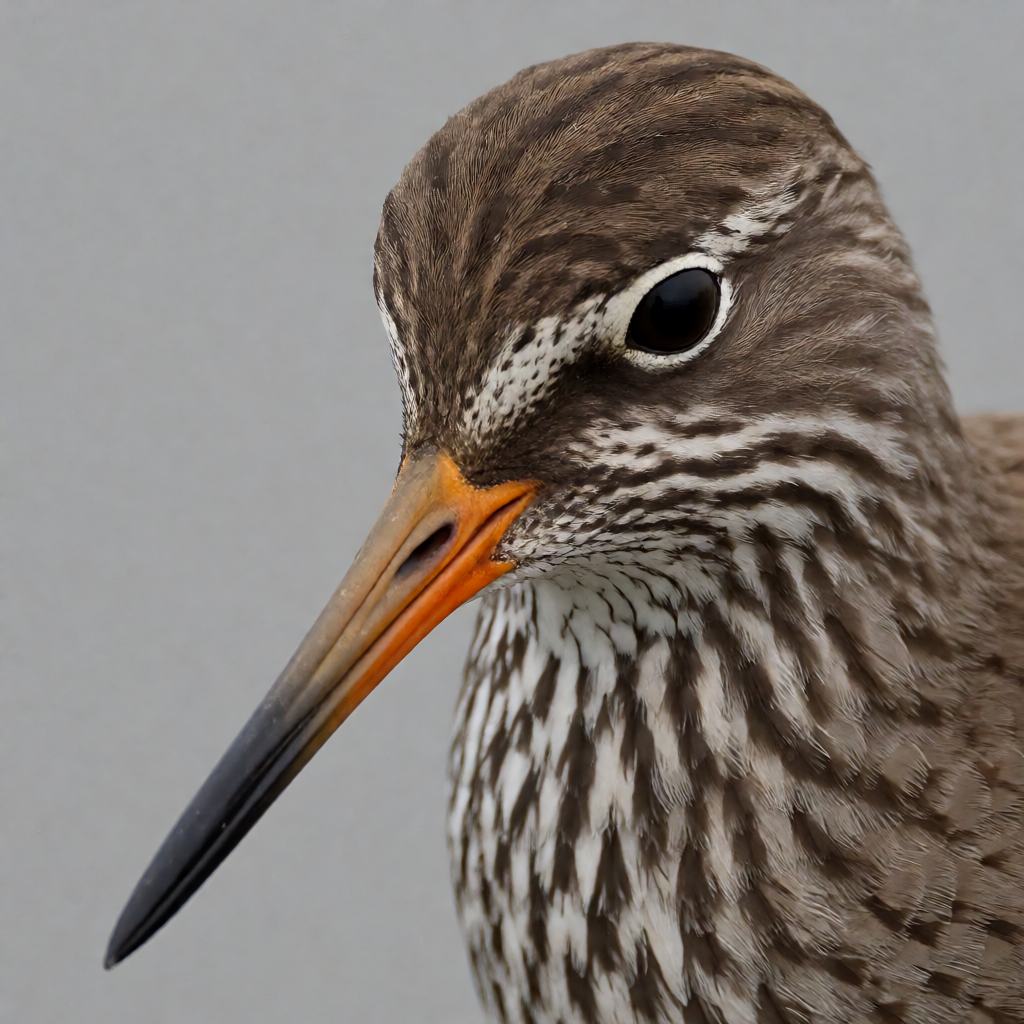
That colour matches the mud. So the bird is hard to see. The under parts are pale. In spring the breast carries dark streaks. Look for the orange-red legs. Look for the bill of 34 to 42 millimetres. Its base is orange-red. The tip is black. The wing has a broad white trailing edge.
In flight it shows a white wedge on the back. No other European wader combines these marks. The wings are long and pointed. The bird crosses the sea twice a year. Flight is fast, direct and slightly jerky. The feet trail past the tail. The bird bursts from the mud when alarmed. It moults its flight feathers in late summer.
1
2
3
Wet meadow and estuary
Where it lives
The common redshank wants wet, open ground. It wants soft mud that is rich in tiny prey. It also wants short, tussocky plants. There it hides its nest and chicks. So it avoids dry fields and rocky shores. It lives on saltmarsh and grazing marsh. It also uses wet meadows and flood plains. Its breeding range is huge.
It runs from Iceland to central Asia. It covers Scandinavia, the Baltic and the eastern plains. The densest groups sit on coastal grazing marsh. They also sit on traditionally managed hay meadows. In winter most birds move to the coast. They gather on estuaries and tidal flats. Those flats line the Atlantic and the North Sea. They also line the Mediterranean.
The flocks can hold many hundreds of birds. Dunlin and curlew and godwit often join them. The bird is a strong migrant. Ringing shows great loyalty to a site. A bird returns to the same marsh each spring. It returns to the same mud each winter. The lifespan can pass 15 years. So one estuary may hold much of a region’s birds.
A prober of soft mud
What it eats
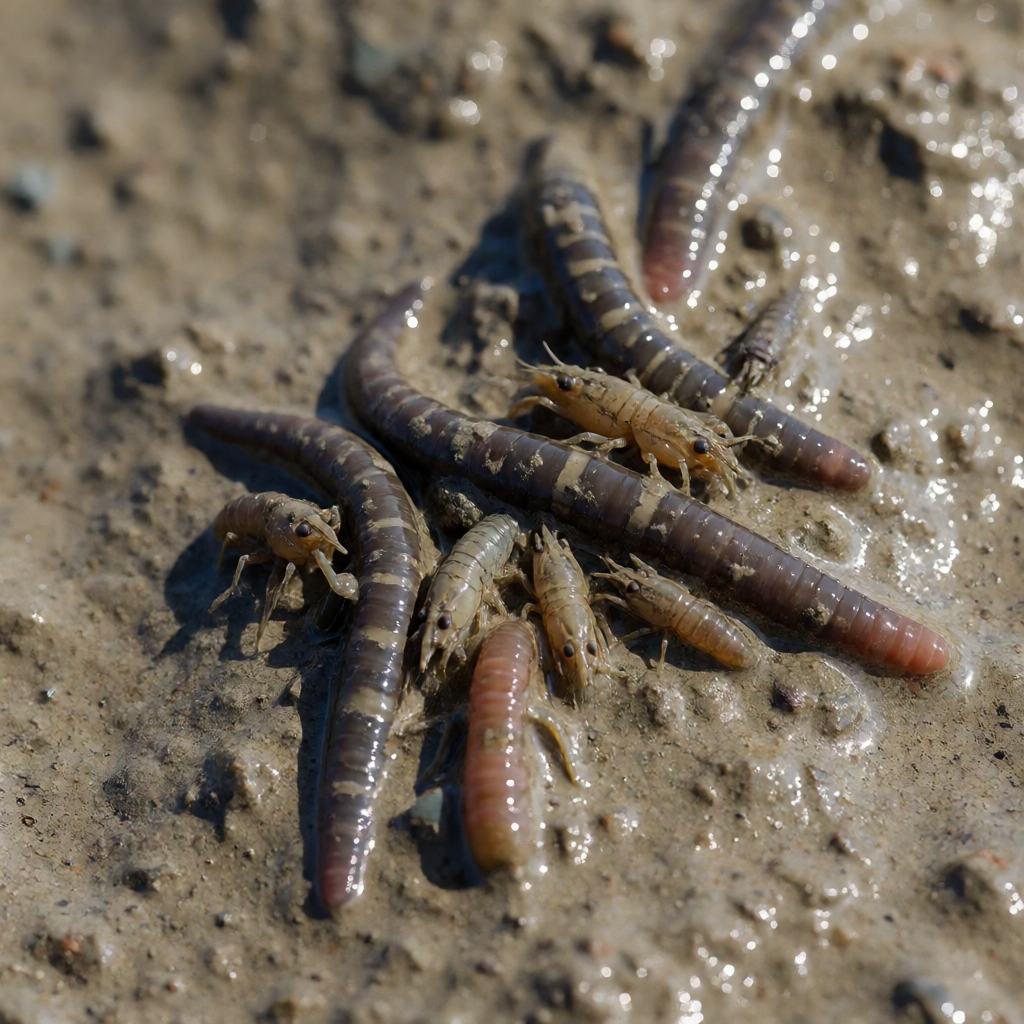
The common redshank eats invertebrates from soft ground. Its food lives in the top few centimetres of mud. Worms, crabs, molluscs and insects all feature. It finds them in three ways. It picks food from the surface. It probes with the sensitive bill tip. It also sweeps the bill through shallow water. Ragworms and lugworms are important.
So are small shore crabs and shrimps. So are tiny snails and bivalves. Beetles and flies and their larvae add to the list. It also takes small fish and fry. The bill is a fine sense organ. It carries many nerve endings. So the bird can feel a buried worm. It does not need to see it.
The bird feeds by sight and by touch. The tide shapes its day. High water pushes it off the flats. Then it roosts on a field or marsh. Or it feeds on grassland above the tide line. It feeds by day and by night. A small patch of rich mud may feed a whole region.
A scrape in the tussock
The breeding cycle
Redshanks pair in the spring. The bond normally lasts one season. The male holds a territory on the marsh. He performs a display flight and sings. Both adults defend the site. Both also care for the brood. In some groups the male guards the chicks more. Nesting starts in April and runs into June. The nest is a shallow scrape in the ground.
It is lined with a little grass. A tussock of grass or rush hides it. The clutch holds 3 to 5 eggs, most often 4. They are laid a day or two apart. Both parents sit for 22 to 25 days. The eggs are pale buff with dark blotches. That pattern hides them well in the marsh. The chicks are precocial. Their down is mottled buff and brown.
It matches the ground. They leave the nest within a day or two. The parents lead them to wetter ground. There the food is richer. The young can fly at 25 to 35 days. The parents lure enemies away from the brood. One bird trails a wing and runs off. The head is low and the tail is spread. This broken-wing display is famous.
A bird in decline
Conservation
The redshank is Least Concern on the global Red List. Its range is enormous. The world total still runs to hundreds of thousands. Yet it is one of the fastest falling waders of western Europe. British breeding numbers have dropped a lot in recent decades. The bird is now on the amber list. The main cause is the loss of wet grassland. Draining the marsh removed the soft ground.
Intensive grazing did the same. So did turning meadow into arable land. Fertiliser and reseeding removed the tussocky cover. Predators have added to the pressure. Foxes, crows, mink and rats take eggs and chicks. The changing climate has made nesting less reliable. Spring floods now arrive more often. Europe protects the species across most of its range.
Key sites are reserves and special protection areas. Managers keep the water table high. They keep the grass short in spring. Farmers are paid to graze lightly. They are paid to keep water on the land. Shooting pressure on autumn passage has fallen. So winter numbers have held up better than breeding numbers. The bird still winters well.
Quick hits
Five things to remember
- The bird’s English name comes from its alarm call. It is a clear piping note. Two or three syllables come out at the least disturbance. This habit earned it the name sentinel of the marsh.
- Look for the white trailing edge of the wing. Look also for the white wedge on the back. A flash of white from a rising bird is often the first clue. It shows a flock is present on a grey day.
- The clutch holds 3 to 5 eggs in a shallow scrape. The pattern hides them very well. The sitting bird is nearly invisible until it moves. It waits until an observer is a metre away.
- Redshanks are faithful to their sites. A chick ringed on one marsh may breed there for a decade. It may then winter on the same estuary each year.
- Icelandic and Faroese birds are larger and darker. They winter mostly in Britain and Ireland. So a bird on a Hebridean shore in January probably bred beside a volcano.