 By st20113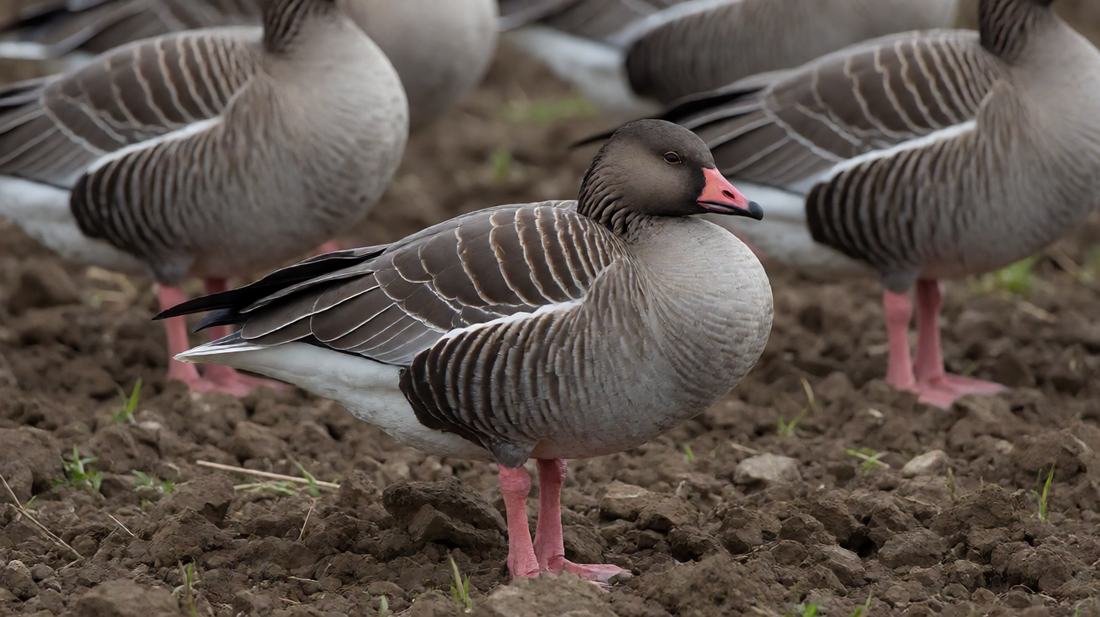
Anser brachyrhynchus | Pink-footed Goose
Species Profile · Anatidae
Pink-footed Goose
A compact grey goose of the arctic tundra that winters on the farmland of Britain and the Low Countries — small, dark, pink-billed, and among the most spectacular of the winter flocks.
IUCN: Least Concern
Range
Length
Weight
Nest
Migration
The goose of the north
An arctic breeder turned winter farmer
The pink-footed goose is a medium grey goose of the family Anatidae. It breeds farther north than almost any other wildfowl of western Europe. It is also one of the strongest migrants of the group. The same bird rears its young on the arctic tundra of Iceland, Greenland and Svalbard. It then spends most of the year on the lowlands of Britain, Denmark and the Netherlands. There it gathers in flocks of tens of thousands. These are among the grandest bird gatherings on the continent.
The goose is smaller and darker than the familiar greylag. Its short pink bill, pink legs and dark plumage set it apart. No other goose in the field can be confused with it. It feeds in tight packs on stubble and pasture. It roosts on shallow coastal water. It travels between the two in long, wavering lines and V shapes. In Scotland and east England it has become a common sight on winter farms and wetlands.
Fifty years ago it was a scarce bird on passage. Now it is the main goose of the winter fields. Its numbers have grown. It damages young cereals and lifted potatoes. This has brought it into conflict with farmers. The law protects it. Licensed scaring holds its numbers at a level the land can bear.
Family tree
Anser, the grey geese
The pink-footed goose belongs to the genus Anser, the grey geese. The grey geese differ from the black geese of Branta by the grey, not black, head and neck. They also lack the pale chinstrap marks of Branta. The pink-foot is close to the larger greylag and to the white-fronted geese. They share the shape of the bill and the look of the young bird. The species is kin to the Snow Goose (Anser caerulescens). That North American goose shows pied and blue colour forms.
It proves how varied the genus can be. The grey geese are a holarctic group. They spread to the open ground of the north at different times. Temminck described the bird in 1825. Experts now see two separate populations. They differ in where they breed and how they migrate. They also differ a little in their calls.
The birds of Iceland and central Greenland nest on high moor and cliff ledges. The birds of Svalbard nest on the arctic tundra north of Norway. The two groups are not split into species. Yet genes and behaviour show they have been apart for a long time. They are best treated as separate groups with their own needs.
Pink bill and pink legs
How to identify one
An adult pink-foot is 60 to 75 centimetres long. Its wingspan is 135 to 170 centimetres. It weighs 1.8 kilograms in the smaller female. The larger male can reach 3.4 kilograms. This size places it between the small ducks and the huge grey geese. A bird in the hand is told from a greylag by its short neck. The two sexes look alike.
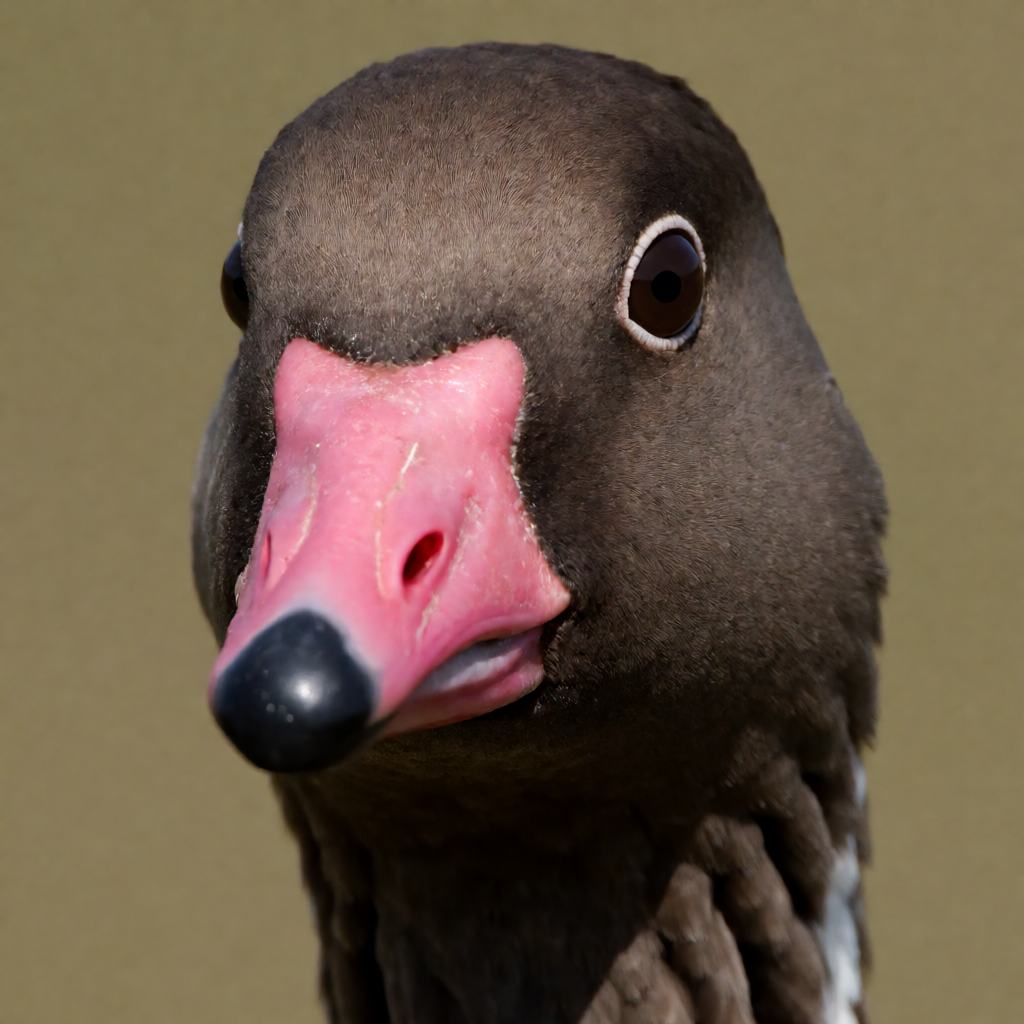
The head and neck are dark brown. The back and shoulder are pale blue-grey with white edges. The breast and belly are pale grey with light bars. The tail and rump are black against the paler back. The bill is short and pink with a black base and tip. The legs and feet are pink. No other European goose shares this.
The wings are long and narrow. Flight is fast and direct with steady beats. The bird crosses the North Sea in one flight of several hundred kilometres. Its call is a soft, musical, triple note. That call gives the species its English name. The wing feathers moult soon after breeding. The flightless adults gather on safe water for three or four weeks.
1
2
3
Tundra and winter stubble
Where it lives
The pink-foot lives in two stark worlds. In summer it needs the open tundra, the bog and the cliff ledges of the high arctic. In winter it needs the mild, rich lowlands of the temperate shore. Both hold short plants and open water near the feeding grounds. In Iceland the birds nest on inland moor and volcano ledges. In Greenland they nest on the coastal tundra by the ice.
In Svalbard they nest on the flat tundra north of the mainland. The short summer gives long light and a burst of plant growth. The goslings depend on this. In Britain the winter birds stay on the farms and coastal marshes of Scotland, north-east England and East Anglia. The largest groups are on the Solway, the Ythan and the Wash. They also line the firths of the north.
The bird is a strong, regular migrant. The Iceland and Greenland birds take a western route down the Atlantic. The Svalbard birds cross the Norwegian Sea to east Scotland. Rings show that a single bird may use the same nest and same field for life. That life can exceed twenty years.
Grass, roots and grain
What it eats
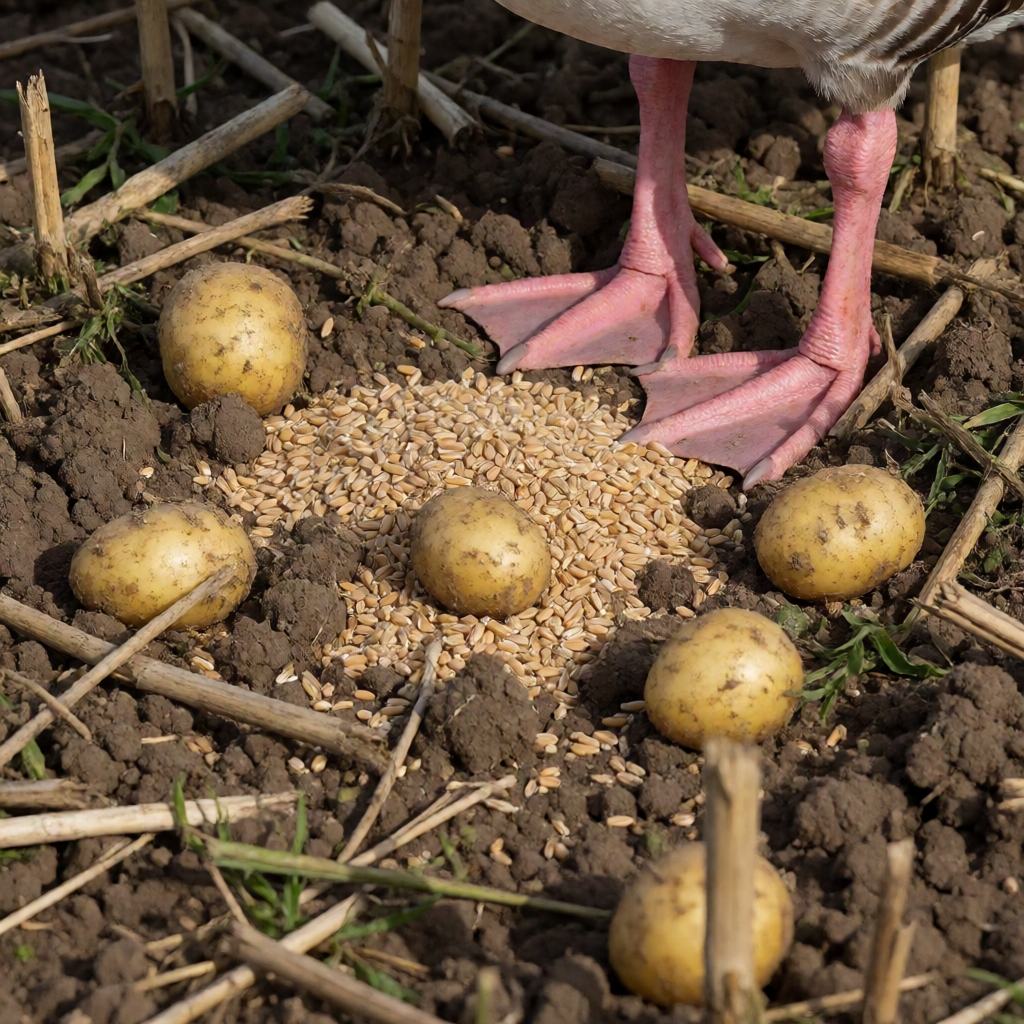
The pink-foot feeds almost wholly on plants. Its diet shifts with the season and the farm. A bird may graze winter cereal shoots in November. In January it may dig potato tubers and sugar-beet crowns from stubble. In March it may pull new grass from improved pasture. This flex is why the species has grown so fast in a farmed land.
The bill is not a fine sieve like a duck’s. It is a stout tool with a hard nail. The bird uses it to pull roots and break frozen crust. The birds feed in a dense line that crops the sward close. They also take spilled grain and the leaves and roots of water plants. At egg time they eat small animals for protein.
The goose cannot digest cellulose alone. It needs a large gizzard and a long gut. So it feeds through much of the day. It makes a heavy load of droppings. This enriches the marsh but hurts the farmer. A flock of thousands on one field can set back winter wheat in a week.
A scrape on the tundra
The breeding cycle
Pink-feet pair for life in most cases. A bird picks its mate in its second or third year. It stays with that mate through each move, moult and winter. The pair bond is among the strongest of wildfowl. The two adults return to the same nest area each spring. Nesting starts in late May and runs into June. The site is on the ground among tundra plants or on a cliff ledge above a lake.
The female builds a shallow scrape lined with moss, down and breast feathers. The clutch is three to six eggs. She lays one every day and a half. She sits on them alone for twenty-six to twenty-eight days. The male guards and drives off skuas, gulls and foxes. The goslings can walk soon after hatch. Their parents lead them to water.
They learn to feed under close care. They can fly at forty to fifty days. By then the short arctic summer is ending. The family moves to the coast and then south. The young stay with their parents until the next spring.
A conflict held in check
Conservation
The pink-foot is Least Concern on the global Red List. Its recent story is mostly a win. The Svalbard flock fell below ten thousand birds in the mid 1900s. Over-harvest and disturbance caused this. It has since recovered to more than ninety thousand. The Iceland and Greenland flock has passed three hundred thousand. The total is now counted in hundreds of thousands.
It still rises in most years. The species is protected across its range. In Britain the agencies and the farming unions share a deal. It allows controlled shooting outside the breeding season. It also funds scaring and other fields to cut crop loss. Both sides accept this rare compromise. It has held the conflict at a manageable level.
The main threats remain. A warming climate shifts the timing of arctic plant growth. Better farmland removes the weedy stubble the birds need. A hard winter on the wrong route could cut one isolated flock. Managing the goose means balancing its needs with the farmer’s across three countries and two halves of the world.
Quick hits
Five things to remember
- The pink-foot has the shortest bill and the most compact build of the grey geese. Its pink bill and pink legs are unique among European geese. This lets you tell it from the greylag at a glance, even far off.
- The Svalbard flock crosses the Norwegian Sea in one non-stop flight of several hundred kilometres to east Scotland. Birds have been found on the same Norfolk field more than twenty years later.
- A flock in flight gives a soft, laughing honk. The sound alone tells you the species. The birds call almost all the way as they travel.
- The birds feed in tight, co-ordinated lines. They leave the grass closely cropped behind them. A flock of thousands can set back a field of winter wheat in a week.
- The Iceland, Greenland and Svalbard flocks differ so much in where they breed and migrate that they are treated as separate groups. Yet they are not split into species.