 By st20113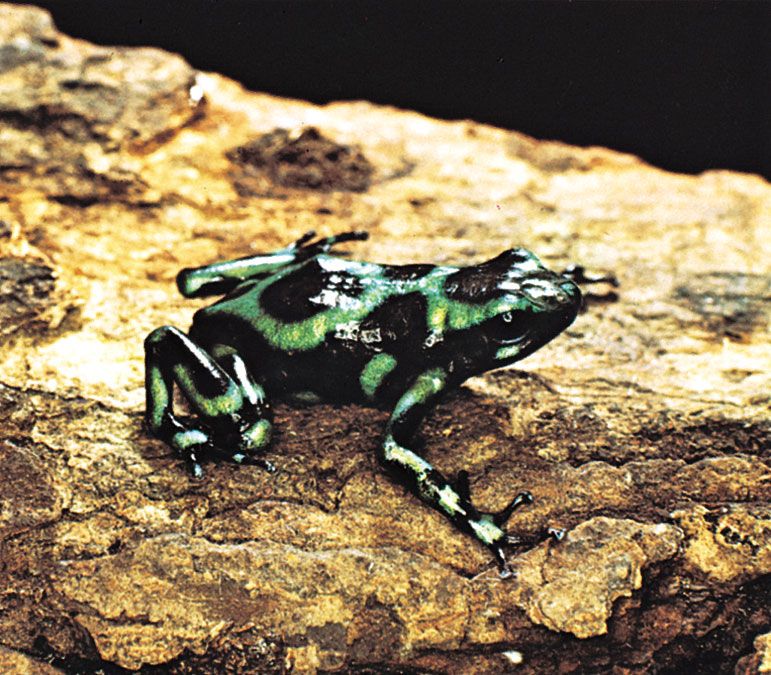
The Green and Black Poison Dart Frog (Dendrobates auratus), also known as the Green-and-Black Poison Arrow Frog, is a poison dart frog species native to Central America and northwestern South America. One of the most widely distributed dendrobatid frogs, it plays an important ecological role in its native rainforest habitat as both prey and consumer of small invertebrates.
Physical Characteristics: Dendrobates auratus displays striking aposematic coloration—vivid green patches against a jet-black background—that serves as a warning to predators of its toxicity. Individual frogs within the same clutch can exhibit widely varying patterns. Adults measure 2.5–4.2 cm in length. Like all dendrobatids, they possess toe pads adapted for climbing and gripping wet vegetation.
Toxicity: Derived from dietary sources—alkaloid compounds from ants, mites, beetles, and other small arthropods in the diet. These are sequestered in the skin and are effective at deterring predators. Captive-bred individuals have significantly reduced toxicity compared to wild specimens. Specific toxins include pumiliotoxins that affect predators’ calcium channels.
Distribution and Habitat: Found from Nicaragua through Costa Rica and Panama in Central America, and northwestern South America including Colombia. They inhabit the leaf litter layer of tropical rainforests, thriving in both primary and secondary-growth forests.
Parental Care: Like all poison dart frogs, they exhibit extensive parental care. Males guard eggs in leaf litter, and upon hatching, transport tadpoles on their back to suitable aquatic sites.
Conservation Status: Listed as Least Concern by the IUCN, though populations face pressure from habitat loss and disease.
to the movements of prey and predators in the dark, fast-flowing environment it calls home. The Poison Dart Frog shares the Hellbender sensitivity to environmental contamination, and both species serve as
[…] fur makes them nearly invisible against the canopy backdrop. These forests also host the colorful poison dart frog, though sloths share little of the frog’s vibrant coloration and active […]